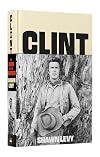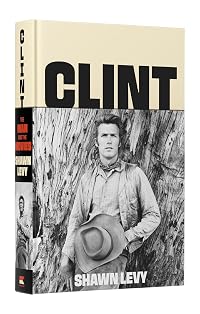
Clint: The Man and the Movies―A Comprehensive Biography of Hollywood's Most Iconic Actor-Director
by Shawn Levy
On This Page
Description
"C-L-I-N-T. That single short, sharp syllable has stood as an emblem of American manhood and morality and sheer bloody-minded will, on-screen and off-screen, for more than sixty years. Whether he's facing down bad guys on a Western street (Old West or new, no matter), staring through the lens of a camera, or accepting one of his movies' thirteen Oscars (including two for Best Picture), he is as blunt, curt, and solid as his name, a star of the old-school stripe and one of the most show more accomplished directors of his time, a man of rock and iron and brute force: Clint. To read the story of Clint Eastwood is to understand nearly a century of American culture. No Hollywood figure has so completely and complexly stood inside the changing climates of post-World War II America. At age ninety-five, he has lived a tumultuous century and embodied much of his time and many of its contradictions. We picture Clint squinting through cigarillo smoke in A Fistful of Dollars or The Good, the Bad and the Ugly; imposing rough justice at the point of a .44 Magnum in Dirty Harry; sowing vengeance in The Outlaw Josey Wales or Pale Rider or Unforgiven; grudgingly training a woman boxer in Million Dollar Baby; and standing up for his neighbors despite his racism in Gran Torino. Or we feel him present, powerfully, behind the camera, creating complex tales of violence, morality, and humanity, such as Mystic River, Letters from Iwo Jima, and American Sniper. But his roles and his films, however well cast and convincing, are two-dimensional in comparison to his whole life. As Shawn Levy reveals in this masterful biography--the most complete portrait yet of Eastwood--the reality is richer, knottier, and more absorbing. Clint: The Man and the Movies is a saga of cunning, determination, and conquest, a story about a man ascending to the Hollywood pantheon while keeping one foot firmly planted outside its door"-- show lessTags
Recommendations





Member Reviews
Clint Eastwood’s America
By Mike Norris
America’s best-known filmmaker was born in the first year of the Great Depression, just a few months after the stock market had crashed on October 29, 1929, remembered now as “Black Tuesday” – an event that plunged the nation into a deep crisis unparalleled to this day in its still-extent political, social, and economic impacts.
Clinton Eastwood Sr.’s burgeoning white-collar career as a stockbroker in San Francisco skidded to a quick stop; he soon found himself pumping gas and, like other Americans, chasing paying work wherever he could find it. He’d had some college training – rather unusual in the business world at that time – but it didn’t help.
“That’s how tough times show more were,” remembered his now 95-year-old son, who checked in on the 1930 Memorial Day weekend at 11-and-a-half pounds. “The guy had a year or two of college and that was the best job he could get.”
Yet, ever the optimistic Americans, his father and mother, Ruth, forged ahead. Despite hard times, “they weren’t desperate,” writes Shawn Levy, author of a new, thoroughly researched, 500-page biography, “Clint Eastwood: The Man and the Movies” (HarperCollins, 2025). Four years later, a second child, Jeanne, would be born.
Over time, his father would gradually continue improving the family’s fortunes, rising to executive positions in retail and by his tall son’s teen years, the Eastwoods would end up living in the Piedmont area of Oakland, Pacific Palisades, and other areas where the once ordinary, middle-class homes now routinely sell for a million dollars or more.
The life of Clint Eastwood, from boyhood to stardom, thus frames the American century – the tableaux of a nation and an individual who emerged through hard work from an uncertain and unforeseeable future to find their footing at the top. Levy calls it “an American tale.”
Like his father, Clint wandered about during the early years of his acting career – a worldwide search, as it turned out. His path to international celebrity began in that most American of stories – the western; in this case, “Rawhide,” one of many such programs on television at the time.
In this well-known part of his biography, he was “discovered” in his secondary role as a cattle-drive ramrod in “Rawhide,” by an Italian filmmaker, Sergio Leone, who subsequently made him world-famous in spaghetti westerns as the man who had neither a name nor any apparent political affiliation – an ambiguous figure who often played one side in a dispute against the other or others.
Pundits currently portray America as a nation divided, roughly equally, between liberals and conservatives, with the latter group now running the show as Republicans in competition with the former group, the Democrats.
Going back a few decades – let’s say to the end of the Second World War, when Clint was 15 – scholars suggest that Americans routinely swung back and forth between liberalism and conservatism, putting one party in power for a while, then reversing it in another election. Party differences were nominal on most issues.
But this pendulum effect is only true superficially; it does not adequately describe the actual, lived political history of the country or the myriad of ideologies involved in it. A rigidly binary analysis falls well short in that respect – just as the screen-based conception of Eastwood as a law-and-order icon does not do him true justice.
The matter becomes quite confused when using such tired labels as “liberal” and “conservative” – neither of which have much plausibility in the current phase of this American debate.
Since the end of the New Deal era and World War II, America has had only one president – Lyndon Johnson, a Texan – who can be defined as a classic “liberal” – meaning one who believes government can solve problems and implement solutions – or, at least, attempts at them.
Johnson’s War on Poverty was part of his Great Society initiatives, which marked their 60th anniversary in 2024. They were modeled on New Deal initiatives, of which he had been a part while working under Franklin Delano Roosevelt. They comprised a large myriad of economic, civil rights, educational, and social programs, including the Medicare and Medicaid additions to Social Security; Project Head Start; and VISTA.
This kind of government-led activity is typically associated with liberalism – yet in the years since 1968 most major government expansions have actually come courtesy of Republican presidents:
Richard M. Nixon (Environmental Protection Agency, Endangered Species Act, Clean Air Act, Controlled Substances Act, moon landing)
George H.W. Bush (North American Free Trade Agreement, Americans With Disabilities Act, Clean Air Act Amendments, tax increases)
George W. Bush (Medicare Part D, No Child Left Behind Act, two wars, creation of Department of Homeland Security, financial companies’ bailout)
Donald J. Trump (imposition of new tariffs, One Big Beautiful Bill Act, immigration-enforcement expansion, creation of the Department of Government Efficiency, deployment of troops to U.S. cities)
The four Democrat presidents since Johnson compiled comparatively moderate records. None can be said to have exceeded the overall Republican expansions and, in some cases, won approval of programs supported strongly by Republicans.
Jimmy Carter (deregulation of airlines and beer makers, bailout of Chrysler Corporation, expansion of mental health funding)
Bill Clinton (North American Free Trade Agreement, financial deregulation, welfare reform, Children’s Health Insurance Program, and elimination of the federal operating budget deficit)
Barack Obama (Affordable Care Act, recession recovery, extension of Bush tax cuts, and Wall Street Reform and Consumer Protection Act)
Joe Biden (COVID recovery legislation, infrastructure repair and expansion bills, and inflation-reduction law)
Broadly speaking, then, in some cases, Democrats – two of whom were southern governors at the time of their elections – were actually more conservative than Republicans, especially in fiscal matters. In addition, since Republican presidents outnumbered Democrats six to four – serving 32 versus 24 years in the Oval Office respectively – the nearly six decades that have passed since the Sixties have actually had a decidedly conservative cast, politically speaking.
Clint Eastwood is regarded, famously, as “conservative” – an attribution based mostly on his police procedurals like “Dirty Harry” and a few of his off-screen statements. That, at least, is his longstanding public image and one he has not actively encouraged or discouraged.
But, in fact, like the nation in which he grew up and achieved fame, the man is much more than he appears as a celluloid character.
As Levy points out, he has voted mostly for Republicans over the course of his adult life – in 2020, for example, he said he had voted only for GOP presidents – but “he didn’t necessarily consider himself a blind adherent” to their policies.
“He insisted on his own liberty and independence as a citizen, making decisions about people on an individual basis and, in general, demonstrating more compassion for racial, social, and sexual minorities than Reagan ever did,” Levy writes.
He has been honored by the National Association for the Advancement of Colored People (NAACP), for example, for advancing the careers of black actors. In addition, his lifelong interest in and support for jazz, as both a composer and pianist, is well-known. He turned it into a probative film about bebop saxophonist Charlie Parker. The great jazz baritone balladeer Johnny Hartman would probably be forgotten were it not for “Bridges of Madison County.”
At the age of 77, the non-college-graduate and one-time totem of law and order received an honorary degree from the decidedly liberal University of California at Berkeley, where the free speech movement had its roots.
Clint, like his home country, is much more than just Dirty Harry.
“His films (especially since he had begun to direct them) had come to speak more and more of his own vision of life in America,” novelist Norman Mailer wrote in Parade Magazine in 1983. And that vision is a complex one.
One of his films won four Oscars (best picture and best director for himself, best actress for Hilary Swank, and best supporting actor for Morgan Freeman) about a subject – female boxing – that was greeted dubiously, at best, at a major studio when he first proposed it. The non-Hollywood surprise ending further complicates matters.
Film scholar Tom Stempel called him “the most important and influential (because of the size of his audience) feminist filmmaker working in America today” – citing “Million Dollar Baby,” “The Outlaw Josey Wales,” and “Bronco Billy,” among others. In these films, Levy writes, the female characters are “all depicted and cast with detail and care and performed, in many cases, with more power and authority than the male roles in the same films.”
In “Pale Rider,” the man with no name takes “the side of hippie-ish mom-and-pop miners against industrial miners with land-scarring hydraulic equipment.” The theme reflects Clint’s own interest and investment in land conservation – not always a Republican Party priority. For example, he opposed Governor Arnold Schwarzenegger’s plan for a toll road in Southern California where he once surfed. He compromised when the Sierra Club fought his own Pebble Beach project. Environmentalists credit him with great respect for open space.
Though he once served as mayor of Carmel and spoke at a Republican national convention to an empty chair – symbolizing Obama – he called himself a “political nothing.” He resisted an attempt by George H.W. Bush to put him on the short list of possible vice-presidential candidates, citing the “negativity of politics” as his reason.
He joined the Screen Actors Guild (SAG), a labor union of which Republicans Charleton Heston and Ronald Reagan had served as president, but he was not active in it. As owner of several large homes and other properties, including his own film-production company, he took more interest in the activities of the Directors Guild.
More than three decades before Donald Trump was first elected, Clint warned his fellow SAG members presciently that he feared Americans were entering an era in which “people could be censured for being Democrats or Republicans or Libertarians or whatever.
“In fact,” he said at the time, “it wasn’t too many decades ago that many members of our industry suffered from another kind of censure called ‘blacklisting.’ ”
He was referring to the Red Scare of the early 1950s in which many actors, writers, and scholars lost their careers on the basis of false allegations, leveled during congressional hearings, that they were communists. Certainly, some steps taken by the Trump administration against dissenters are redolent of that unfortunate era.
Clint and so-called “conservatives” don’t always agree. The artist and the bureaucrats are often on opposing sides.
The Department of Defense and the Marine Corps withdrew their endorsements of “Heartbreak Ridge,” based partly on Reagan’s 1983 invasion of Grenada, for “profanity and distortion of historical events.” It opened at No. 2 at the box office. Once again, the movie-going public ignored the powers-that-be.
“White Hunter Black Heart,” his 1990 film study of filmmaker John Huston, demonstrated Clint’s “willingness to tackle difficult, even unfashionable, subjects,” said Variety magazine. Much the same can be said about “Bird,” his Charlie Parker biopic; “Bronco Billy;” and “Mule,” based on the true story of an American drug smuggler. “Midnight in the Garden of Good and Evil” features an actual drag queen hired from among local talent.
“That man, one of the most powerful anywhere,” she said, “he took a chance on me.”
Of course, his redefinition of the Hollywood western is, perhaps, his best-known artistic achievement in this respect. “Unforgiven,” winner of four Oscars, is the exemplar. A washed-up, widowed gunfighter-turned-pig farmer with two young children heads off to collect the thousand-dollar bounty offered by a group of prostitutes to anyone who kills the cowboys who victimized one of their number.
Nearing the film’s violent climax, the gunfighter Will Munny emerges from the dark into a saloon, where the prostitutes live, “below an American flag waving limply in a rain-drenched night, as if to tell us, in the vision of a director often mistakenly viewed as blindly patriotic, that Munny isn’t the only one in this country for whom killing is second nature.”
By the time, Clint undertook the two World War II films, “Flags of Our Fathers” and “Letters from Iwo Jima,” his film redefinition of standard Hollywood approaches had become second nature. “If you think you know Clint Eastwood, you haven’t thought about these films,” Levy writes.
He is one of only two directors to win Oscars for best picture and best director twice. Yet the man who can pick any film, its cast, and its score likes to shop at Marshalls and Ross Dress for Less. He favors health food, including sushi and salads. In filmdom, he is famous as the director who likes his films to be finished on time and under budget, often doing only one take for a particular scene.
He has eight kids by six women, although only two of them became wives. Certainly, for the fast-dwindling portion of Americans who live by “traditional family values,” it’s not the most “conservative” of arrangements. The Family Research Council is not likely to quote him, although many of its supporters probably like his movies.
Clint Eastwood cannot be categorized easily. A career spanning more than six decades has shown that his artistic inclinations and personal preferences brim with surprises – like the country in which he grew up. show less
By Mike Norris
America’s best-known filmmaker was born in the first year of the Great Depression, just a few months after the stock market had crashed on October 29, 1929, remembered now as “Black Tuesday” – an event that plunged the nation into a deep crisis unparalleled to this day in its still-extent political, social, and economic impacts.
Clinton Eastwood Sr.’s burgeoning white-collar career as a stockbroker in San Francisco skidded to a quick stop; he soon found himself pumping gas and, like other Americans, chasing paying work wherever he could find it. He’d had some college training – rather unusual in the business world at that time – but it didn’t help.
“That’s how tough times show more were,” remembered his now 95-year-old son, who checked in on the 1930 Memorial Day weekend at 11-and-a-half pounds. “The guy had a year or two of college and that was the best job he could get.”
Yet, ever the optimistic Americans, his father and mother, Ruth, forged ahead. Despite hard times, “they weren’t desperate,” writes Shawn Levy, author of a new, thoroughly researched, 500-page biography, “Clint Eastwood: The Man and the Movies” (HarperCollins, 2025). Four years later, a second child, Jeanne, would be born.
Over time, his father would gradually continue improving the family’s fortunes, rising to executive positions in retail and by his tall son’s teen years, the Eastwoods would end up living in the Piedmont area of Oakland, Pacific Palisades, and other areas where the once ordinary, middle-class homes now routinely sell for a million dollars or more.
The life of Clint Eastwood, from boyhood to stardom, thus frames the American century – the tableaux of a nation and an individual who emerged through hard work from an uncertain and unforeseeable future to find their footing at the top. Levy calls it “an American tale.”
Like his father, Clint wandered about during the early years of his acting career – a worldwide search, as it turned out. His path to international celebrity began in that most American of stories – the western; in this case, “Rawhide,” one of many such programs on television at the time.
In this well-known part of his biography, he was “discovered” in his secondary role as a cattle-drive ramrod in “Rawhide,” by an Italian filmmaker, Sergio Leone, who subsequently made him world-famous in spaghetti westerns as the man who had neither a name nor any apparent political affiliation – an ambiguous figure who often played one side in a dispute against the other or others.
Pundits currently portray America as a nation divided, roughly equally, between liberals and conservatives, with the latter group now running the show as Republicans in competition with the former group, the Democrats.
Going back a few decades – let’s say to the end of the Second World War, when Clint was 15 – scholars suggest that Americans routinely swung back and forth between liberalism and conservatism, putting one party in power for a while, then reversing it in another election. Party differences were nominal on most issues.
But this pendulum effect is only true superficially; it does not adequately describe the actual, lived political history of the country or the myriad of ideologies involved in it. A rigidly binary analysis falls well short in that respect – just as the screen-based conception of Eastwood as a law-and-order icon does not do him true justice.
The matter becomes quite confused when using such tired labels as “liberal” and “conservative” – neither of which have much plausibility in the current phase of this American debate.
Since the end of the New Deal era and World War II, America has had only one president – Lyndon Johnson, a Texan – who can be defined as a classic “liberal” – meaning one who believes government can solve problems and implement solutions – or, at least, attempts at them.
Johnson’s War on Poverty was part of his Great Society initiatives, which marked their 60th anniversary in 2024. They were modeled on New Deal initiatives, of which he had been a part while working under Franklin Delano Roosevelt. They comprised a large myriad of economic, civil rights, educational, and social programs, including the Medicare and Medicaid additions to Social Security; Project Head Start; and VISTA.
This kind of government-led activity is typically associated with liberalism – yet in the years since 1968 most major government expansions have actually come courtesy of Republican presidents:
Richard M. Nixon (Environmental Protection Agency, Endangered Species Act, Clean Air Act, Controlled Substances Act, moon landing)
George H.W. Bush (North American Free Trade Agreement, Americans With Disabilities Act, Clean Air Act Amendments, tax increases)
George W. Bush (Medicare Part D, No Child Left Behind Act, two wars, creation of Department of Homeland Security, financial companies’ bailout)
Donald J. Trump (imposition of new tariffs, One Big Beautiful Bill Act, immigration-enforcement expansion, creation of the Department of Government Efficiency, deployment of troops to U.S. cities)
The four Democrat presidents since Johnson compiled comparatively moderate records. None can be said to have exceeded the overall Republican expansions and, in some cases, won approval of programs supported strongly by Republicans.
Jimmy Carter (deregulation of airlines and beer makers, bailout of Chrysler Corporation, expansion of mental health funding)
Bill Clinton (North American Free Trade Agreement, financial deregulation, welfare reform, Children’s Health Insurance Program, and elimination of the federal operating budget deficit)
Barack Obama (Affordable Care Act, recession recovery, extension of Bush tax cuts, and Wall Street Reform and Consumer Protection Act)
Joe Biden (COVID recovery legislation, infrastructure repair and expansion bills, and inflation-reduction law)
Broadly speaking, then, in some cases, Democrats – two of whom were southern governors at the time of their elections – were actually more conservative than Republicans, especially in fiscal matters. In addition, since Republican presidents outnumbered Democrats six to four – serving 32 versus 24 years in the Oval Office respectively – the nearly six decades that have passed since the Sixties have actually had a decidedly conservative cast, politically speaking.
Clint Eastwood is regarded, famously, as “conservative” – an attribution based mostly on his police procedurals like “Dirty Harry” and a few of his off-screen statements. That, at least, is his longstanding public image and one he has not actively encouraged or discouraged.
But, in fact, like the nation in which he grew up and achieved fame, the man is much more than he appears as a celluloid character.
As Levy points out, he has voted mostly for Republicans over the course of his adult life – in 2020, for example, he said he had voted only for GOP presidents – but “he didn’t necessarily consider himself a blind adherent” to their policies.
“He insisted on his own liberty and independence as a citizen, making decisions about people on an individual basis and, in general, demonstrating more compassion for racial, social, and sexual minorities than Reagan ever did,” Levy writes.
He has been honored by the National Association for the Advancement of Colored People (NAACP), for example, for advancing the careers of black actors. In addition, his lifelong interest in and support for jazz, as both a composer and pianist, is well-known. He turned it into a probative film about bebop saxophonist Charlie Parker. The great jazz baritone balladeer Johnny Hartman would probably be forgotten were it not for “Bridges of Madison County.”
At the age of 77, the non-college-graduate and one-time totem of law and order received an honorary degree from the decidedly liberal University of California at Berkeley, where the free speech movement had its roots.
Clint, like his home country, is much more than just Dirty Harry.
“His films (especially since he had begun to direct them) had come to speak more and more of his own vision of life in America,” novelist Norman Mailer wrote in Parade Magazine in 1983. And that vision is a complex one.
One of his films won four Oscars (best picture and best director for himself, best actress for Hilary Swank, and best supporting actor for Morgan Freeman) about a subject – female boxing – that was greeted dubiously, at best, at a major studio when he first proposed it. The non-Hollywood surprise ending further complicates matters.
Film scholar Tom Stempel called him “the most important and influential (because of the size of his audience) feminist filmmaker working in America today” – citing “Million Dollar Baby,” “The Outlaw Josey Wales,” and “Bronco Billy,” among others. In these films, Levy writes, the female characters are “all depicted and cast with detail and care and performed, in many cases, with more power and authority than the male roles in the same films.”
In “Pale Rider,” the man with no name takes “the side of hippie-ish mom-and-pop miners against industrial miners with land-scarring hydraulic equipment.” The theme reflects Clint’s own interest and investment in land conservation – not always a Republican Party priority. For example, he opposed Governor Arnold Schwarzenegger’s plan for a toll road in Southern California where he once surfed. He compromised when the Sierra Club fought his own Pebble Beach project. Environmentalists credit him with great respect for open space.
Though he once served as mayor of Carmel and spoke at a Republican national convention to an empty chair – symbolizing Obama – he called himself a “political nothing.” He resisted an attempt by George H.W. Bush to put him on the short list of possible vice-presidential candidates, citing the “negativity of politics” as his reason.
He joined the Screen Actors Guild (SAG), a labor union of which Republicans Charleton Heston and Ronald Reagan had served as president, but he was not active in it. As owner of several large homes and other properties, including his own film-production company, he took more interest in the activities of the Directors Guild.
More than three decades before Donald Trump was first elected, Clint warned his fellow SAG members presciently that he feared Americans were entering an era in which “people could be censured for being Democrats or Republicans or Libertarians or whatever.
“In fact,” he said at the time, “it wasn’t too many decades ago that many members of our industry suffered from another kind of censure called ‘blacklisting.’ ”
He was referring to the Red Scare of the early 1950s in which many actors, writers, and scholars lost their careers on the basis of false allegations, leveled during congressional hearings, that they were communists. Certainly, some steps taken by the Trump administration against dissenters are redolent of that unfortunate era.
Clint and so-called “conservatives” don’t always agree. The artist and the bureaucrats are often on opposing sides.
The Department of Defense and the Marine Corps withdrew their endorsements of “Heartbreak Ridge,” based partly on Reagan’s 1983 invasion of Grenada, for “profanity and distortion of historical events.” It opened at No. 2 at the box office. Once again, the movie-going public ignored the powers-that-be.
“White Hunter Black Heart,” his 1990 film study of filmmaker John Huston, demonstrated Clint’s “willingness to tackle difficult, even unfashionable, subjects,” said Variety magazine. Much the same can be said about “Bird,” his Charlie Parker biopic; “Bronco Billy;” and “Mule,” based on the true story of an American drug smuggler. “Midnight in the Garden of Good and Evil” features an actual drag queen hired from among local talent.
“That man, one of the most powerful anywhere,” she said, “he took a chance on me.”
Of course, his redefinition of the Hollywood western is, perhaps, his best-known artistic achievement in this respect. “Unforgiven,” winner of four Oscars, is the exemplar. A washed-up, widowed gunfighter-turned-pig farmer with two young children heads off to collect the thousand-dollar bounty offered by a group of prostitutes to anyone who kills the cowboys who victimized one of their number.
Nearing the film’s violent climax, the gunfighter Will Munny emerges from the dark into a saloon, where the prostitutes live, “below an American flag waving limply in a rain-drenched night, as if to tell us, in the vision of a director often mistakenly viewed as blindly patriotic, that Munny isn’t the only one in this country for whom killing is second nature.”
By the time, Clint undertook the two World War II films, “Flags of Our Fathers” and “Letters from Iwo Jima,” his film redefinition of standard Hollywood approaches had become second nature. “If you think you know Clint Eastwood, you haven’t thought about these films,” Levy writes.
He is one of only two directors to win Oscars for best picture and best director twice. Yet the man who can pick any film, its cast, and its score likes to shop at Marshalls and Ross Dress for Less. He favors health food, including sushi and salads. In filmdom, he is famous as the director who likes his films to be finished on time and under budget, often doing only one take for a particular scene.
He has eight kids by six women, although only two of them became wives. Certainly, for the fast-dwindling portion of Americans who live by “traditional family values,” it’s not the most “conservative” of arrangements. The Family Research Council is not likely to quote him, although many of its supporters probably like his movies.
Clint Eastwood cannot be categorized easily. A career spanning more than six decades has shown that his artistic inclinations and personal preferences brim with surprises – like the country in which he grew up. show less
For more reviews and bookish posts visit: https://www.ManOfLaBook.com
Clint: The Man and the Movies by Shawn Levy is a biography of the prolific actor and director Clint Eastwood. Mr. Levy is a well-known film-critic and best-selling author.
When I was 10 years old, or so, my mother took me to the big city to see Disney’s The Black Hole, instead though the theater played A Fistful of Dollars. My mom figured “what the hell” and bought tickets anyway. Then year old me was disappointed but I loved movies even back then. Needless to say, I’ve never seen anything like it before, and a new Clint Eastwood fan was born.
Clint by Shawn Levy is an immensely enjoyable book. If this isn’t a definitive biography of Mr. Eastwood, I’m not show more sure one could suppress it.
I felt the book was balanced and honest. While the author is certainly a fan, he doesn’t shy away from the more complicated, complex, and dark sides of his subject. While the book certainly highlights the many achievements Mr. Eastwood has achieved, he does not mince words when it comes to his behavior and antics, especially when it comes to relationships with women.
All of this leads to fine, nuanced portrait of Clint Eastwood. Allowing us to see this flawed human being, made me appreciate his work even more and make him a relatable human, instead looking up to an American legend.
Even though this book is quite long, it’s packed with history, details, and anecdotes on every page which makes the reading a pleasure. I never got bored, learned a lot, and now have to go and re-watch Eastwood’s movie catalog once again.
And many years later, I finally got to see The Black Hole… A Fistful of Dollars was, and still is, much better. show less
Clint: The Man and the Movies by Shawn Levy is a biography of the prolific actor and director Clint Eastwood. Mr. Levy is a well-known film-critic and best-selling author.
When I was 10 years old, or so, my mother took me to the big city to see Disney’s The Black Hole, instead though the theater played A Fistful of Dollars. My mom figured “what the hell” and bought tickets anyway. Then year old me was disappointed but I loved movies even back then. Needless to say, I’ve never seen anything like it before, and a new Clint Eastwood fan was born.
Clint by Shawn Levy is an immensely enjoyable book. If this isn’t a definitive biography of Mr. Eastwood, I’m not show more sure one could suppress it.
I felt the book was balanced and honest. While the author is certainly a fan, he doesn’t shy away from the more complicated, complex, and dark sides of his subject. While the book certainly highlights the many achievements Mr. Eastwood has achieved, he does not mince words when it comes to his behavior and antics, especially when it comes to relationships with women.
All of this leads to fine, nuanced portrait of Clint Eastwood. Allowing us to see this flawed human being, made me appreciate his work even more and make him a relatable human, instead looking up to an American legend.
Even though this book is quite long, it’s packed with history, details, and anecdotes on every page which makes the reading a pleasure. I never got bored, learned a lot, and now have to go and re-watch Eastwood’s movie catalog once again.
And many years later, I finally got to see The Black Hole… A Fistful of Dollars was, and still is, much better. show less
An extensive biography on this all too used term "iconic man" of the motion picture creative arts. Do people still use the term motion picture? By the same token are there those out there of the youngest generation who wonder who this guy is? That's how far back Clint Eastwood goes, to the motion picture era. Well actually from the TV westerns series that dominated in the late 50's and early 60's. 1900's that is.
This biography by Shawn Levy is pretty extensive spanning not only the age of this subject now in his 90's but around 500 pages a lengthy read. I was wondering if would end. Many are wondering if Clint ever will. More power to him. He certainly lives the title of living legend. Levy talks a bit about past biographies of this man show more one pretty scathing the other considered a hagiography. I would say this version borders on hagiography also. Though Levy exposes some of the shallowness that makes up Clints' character, particularly in his relationships and his financial hoarding, he pretty much paints a good guy image of the man.
His achievements both in front of and behind the camera are mostly focused on to the detriment of not really drilling into the personal life side of the man. Just as Mr. Eastwood would want it. So we get a seemingly endless droning on about this movie and that and all the structural details that went into the planning and execution, we get glimpses of the complexities that make up the character himself. Yes we can draw a pretty good conclusion about the fellow but it does not go far enough in my opinion to get a grasp of the tick factors and the relentlessness specifically in the serial, I was going to say monogamy but in his case it does not seem to apply. We also get to see pieces of his obsessive nature of independence and defiance to the system that certainly is the movie making and performance arts business.
Eastwood we find is a real health nut especially relating to his diet, longevity supplements, and physical workouts, but we don't know much beyond what it really is that he does and believes. So outside of in depth analysis of his pictures we are still left with a shallowness of what is going on not behind the camera but the skull. A good read, just not a true enlightening one. show less
This biography by Shawn Levy is pretty extensive spanning not only the age of this subject now in his 90's but around 500 pages a lengthy read. I was wondering if would end. Many are wondering if Clint ever will. More power to him. He certainly lives the title of living legend. Levy talks a bit about past biographies of this man show more one pretty scathing the other considered a hagiography. I would say this version borders on hagiography also. Though Levy exposes some of the shallowness that makes up Clints' character, particularly in his relationships and his financial hoarding, he pretty much paints a good guy image of the man.
His achievements both in front of and behind the camera are mostly focused on to the detriment of not really drilling into the personal life side of the man. Just as Mr. Eastwood would want it. So we get a seemingly endless droning on about this movie and that and all the structural details that went into the planning and execution, we get glimpses of the complexities that make up the character himself. Yes we can draw a pretty good conclusion about the fellow but it does not go far enough in my opinion to get a grasp of the tick factors and the relentlessness specifically in the serial, I was going to say monogamy but in his case it does not seem to apply. We also get to see pieces of his obsessive nature of independence and defiance to the system that certainly is the movie making and performance arts business.
Eastwood we find is a real health nut especially relating to his diet, longevity supplements, and physical workouts, but we don't know much beyond what it really is that he does and believes. So outside of in depth analysis of his pictures we are still left with a shallowness of what is going on not behind the camera but the skull. A good read, just not a true enlightening one. show less
Ratings
Members
- Recently Added By
Author Information
9 Works 1,457 Members
Shawn Levy was educated at the University of Pennsylvania and the University of California, Irvine. He has been writing for The Oregonian since 1992. Before that, he was a senior editor of American Film magazine and an associate editor of Boxoffice magazine. He has written about film, pop culture, books and sports for numerous publications show more including the New York Times, the Los Angeles Times, the Guardian of London, the Independent of London, the San Francisco Chronicle, the Village Voice, and the Hollywood Reporter. He has written numerous books including The Last Playboy: The High Life of Porfirio Rubirosa; Ready, Steady, Go!: The Smashing Rise and Giddy Fall of Swinging London; Rat Pack Confidential: Frank, Dean, Sammy, Peter and Joey and the Last Great Showbiz Party; and King of Comedy: The Life and Art of Jerry Lewis. (Bowker Author Biography) show less
Awards and Honors
Distinctions
Classifications
- Genres
- Biography & Memoir, Nonfiction, General Nonfiction
- DDC/MDS
- 791.43028092 — Arts & recreation Recreation, sports, and performing arts Movies, TV, Video Motion pictures, radio, television, podcasting Motion pictures Standard subdivisions Acting and performance Standard subdivisions History, geographic treatment, biography Biography
- LCC
- PN2287 .E37 .L48 — Language and Literature Literature (General) Literature (General) Drama Dramatic representation. The theater Special regions or countries
- BISAC
Statistics
- Members
- 45
- Popularity
- 659,471
- Reviews
- 3
- Rating
- (4.33)
- Languages
- English
- Media
- Paper, Audiobook, Ebook
- ISBNs
- 3
- ASINs
- 2