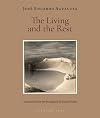
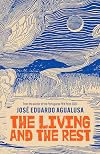
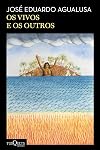
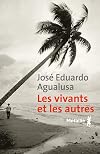
The Living and the Rest
by José Eduardo Agualusa
On This Page
Description
Daniel lives with artist Moira on her native Island of Mozambique. They are awaiting the birth of their child, while also organising the island's first literary festival. But as soon as the first festival guests arrive, the coast is hit by a cyclone. The island is spared, but the bridge to the mainland is left impassable, and telephone and internet connections are severed. The islanders and the writers who have come for the festival are cut off from the outside world. Left to their own show more devices, the authors forge new bonds and make the best of a situation that gets stranger each day. Some believe they're in an intermediate realm, a kind of limbo, and some have no choice but to write, as the boundaries between reality and fiction, past and future, and life and death begin to blur. Where do we go when it's all over? Perhaps to a small island. This is a novel about the nature of life and of time, and the extraordinary power of imagination and the written word, capable of creating anything and regenerating everything. show lessTags
Recommendations











Member Reviews
"For a long time, European critics used to demand that we only write about Africa. The Africa they imagined. An African writer who opted, oh, I don't know, to write a novel about the Spanish Civil War would be considered a lunatic. Fortunately, that's changed."
Jude, who had sat down on a lounger, facing the sea, turns towards Daniel, surprised.
"Has it really?"
This is a novel about an international writers's conference, located on Mozambique Island, just off the coast and connected by a causeway. It's being run by Daniel, who is originally from Angola, but now lives on this sleepy, post-colonial island with his pregnant wife. The writers arrive, they settle in, they have conversations about their writing, about the state of literature, show more they appear on panels and talks. And then a storm leaves them cut off from the mainland, without cellular coverage or electricity, but the writers continue to talk, to walk on the beach, occasionally wondering/complaining about when things will be back to normal. The fishing boats can't reach the mainland and the causeway can't be crossed. To conserve gas, generators only run a few hours a day, there is some worry about running out of beer. Then some of the characters from the authors's books start appearing in town, which is especially confusing for the authors who write autofiction. Things are weird and there's a lot of uncertainty.
This novel is doing a lot of things, and doing them well. A writers's conference where the writers come from different countries, but all are African, even if one or two are now living in London, and this gives the novel a glimpse of talented authors talking outside of the European/American paradigm and exchanging ideas and experiences. I honestly would have be completely happy with a book about this conference in which everything went as planned. But Agualusa is doing more than that, playing with the reality the writers all live in, in ways that words reflect and change reality. This was a fascinating novel and I look forward to reading more by this author. show less
Jude, who had sat down on a lounger, facing the sea, turns towards Daniel, surprised.
"Has it really?"
This is a novel about an international writers's conference, located on Mozambique Island, just off the coast and connected by a causeway. It's being run by Daniel, who is originally from Angola, but now lives on this sleepy, post-colonial island with his pregnant wife. The writers arrive, they settle in, they have conversations about their writing, about the state of literature, show more they appear on panels and talks. And then a storm leaves them cut off from the mainland, without cellular coverage or electricity, but the writers continue to talk, to walk on the beach, occasionally wondering/complaining about when things will be back to normal. The fishing boats can't reach the mainland and the causeway can't be crossed. To conserve gas, generators only run a few hours a day, there is some worry about running out of beer. Then some of the characters from the authors's books start appearing in town, which is especially confusing for the authors who write autofiction. Things are weird and there's a lot of uncertainty.
This novel is doing a lot of things, and doing them well. A writers's conference where the writers come from different countries, but all are African, even if one or two are now living in London, and this gives the novel a glimpse of talented authors talking outside of the European/American paradigm and exchanging ideas and experiences. I honestly would have be completely happy with a book about this conference in which everything went as planned. But Agualusa is doing more than that, playing with the reality the writers all live in, in ways that words reflect and change reality. This was a fascinating novel and I look forward to reading more by this author. show less
Ratings
Members
- Recently Added By
Author Information

53+ Works 2,195 Members
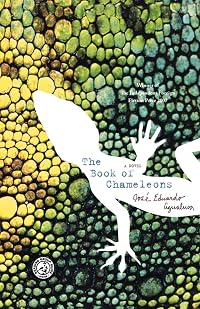
José Eduardo Agualusa was born on December 13, 1960 in Huambo, Angola. He studied agronomy and silviculture in Lison, Portugal. He has worked as a journalist for the Portuguese magazine LER, the Brazilian newspaper O Globo, and the Angolan portal Rede Angola. He is also the host of a radio program A Horas das Cigarras on the RDP Africa channel. show more He is an award-winning writer whose work has been translated into multiple languages. Those translated to English include Creole, winner of the Portuguese Grand Prize for Literature; The Book of Chameleons, which won the Independent Foreign Fiction Prize; My father's wives, and Rainy Season. He has written four plays W generation, O monologo, Chovem amores na Rua do Matador (written with Mia Couto), and A Caixa Preta (written with Mia Couto). His work also includes novellas, short stories, and poetry. His recent novels include A educacao sentimental dos passaros, A Vida no Ceu, and A Rainha Ginga, and a book of short stories O Livro dos Camaleoes. (Bowker Author Biography) show less
Awards and Honors
Classifications
- Genres
- Fiction and Literature, General Fiction
- DDC/MDS
- 869.35 — Literature & rhetoric Spanish Literature Literatures of Portuguese and Galician languages Portuguese fiction 21st Century
- LCC
- PQ9929 .A39 .V5813 — Language and Literature French, Italian, Spanish and Portuguese literatures Portuguese literature Provincial, local, colonial, etc.
- BISAC
Statistics
- Members
- 65
- Popularity
- 479,200
- Reviews
- 1
- Rating
- (3.83)
- Languages
- English, Portuguese (Portugal)
- Media
- Paper, Ebook
- ISBNs
- 7
- ASINs
- 2