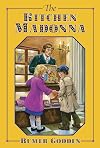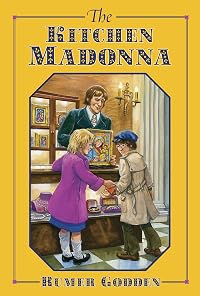
The Kitchen Madonna
by Rumer Godden
On This Page
Description
A boy's efforts to create an icon to please the family's new maid helps him to make new friends and discover an artistic talent.Tags
Recommendations














Member Recommendations

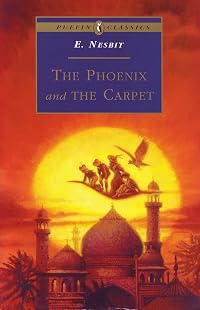
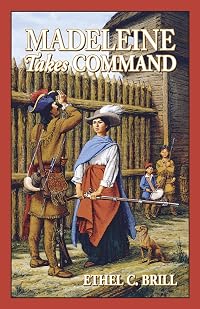
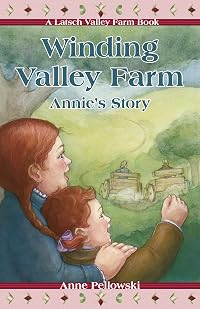
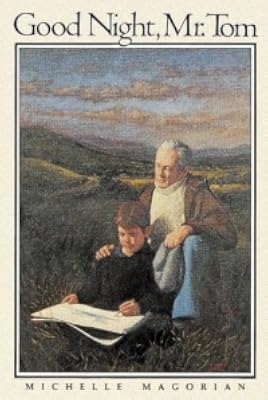
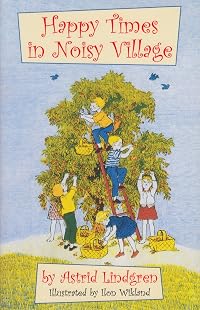
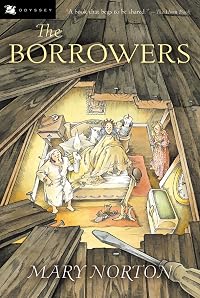
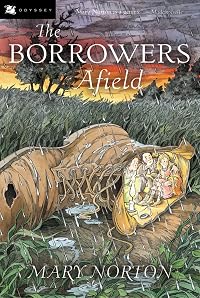
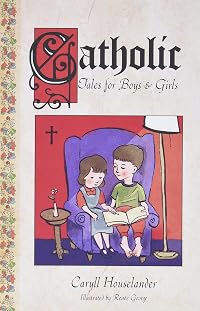
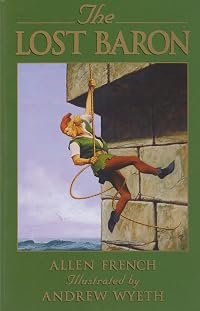
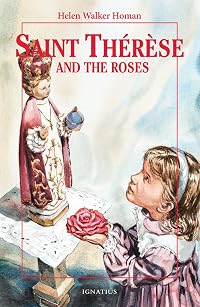
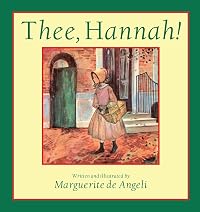
AbigailAdams26 If you enjoyed this story of a young boy who creates a religious object of great beauty, despite not sharing the faith of the person for whom it was made, you might also appreciate this tale of children working together to build something wonderful, crossing sectarian lines to do so.
Member Reviews
Spare and unsentimental, Rumer Godden's The Kitchen Madonna is a short children's novel of astonishing emotional power. Isolated and withdrawn, Gregory's own family find him cold, but buried beneath his reserve is a heart capable of being touched, and a spirit of compassion waiting to be awakened. When his new nanny Marta, a Ukrainian refugee, longs for a "good place" - a space in which to keep an altar and an icon of the Virgin and Child - Gregory sets out to provide her with one.
This is a deeply satisfying story, on so many levels. Gregory's ingenuity in creating a home-made icon will appeal to anyone who has ever felt that "where there's a will, there's a way." His gradual emotional awakening, and growing sense of connection to those show more around him, is a joy to observe. Never didactic or overdone, Godden's gentle narrative invites the reader to consider the connections between respect and compassion, and the fact that we do not need to share (or even understand) the spiritual beliefs of others in order to enter into their feelings. A beautiful, beautiful book. show less
This is a deeply satisfying story, on so many levels. Gregory's ingenuity in creating a home-made icon will appeal to anyone who has ever felt that "where there's a will, there's a way." His gradual emotional awakening, and growing sense of connection to those show more around him, is a joy to observe. Never didactic or overdone, Godden's gentle narrative invites the reader to consider the connections between respect and compassion, and the fact that we do not need to share (or even understand) the spiritual beliefs of others in order to enter into their feelings. A beautiful, beautiful book. show less
A lovely story that I fell into at once. It's about a brother and sister with busy parents, who live in London. The children have seen a number of nannies and house "help" come and go. They really like the new maid, Marta, who is a recent immigrant. But Marta is very unhappy and homesick. She tells them of some Ukranian customs, including how she used to keep an icon picture in her kitchen back home. The children fixate on the idea that if they can find an icon to help Marta feel at home, she won't leave like the previous helpers did. They search through London museums and specialty shops, but when they finally do find a suitable icon like the one Marta described, it is far too expensive for their pocket money. The girl is about to give show more up, but the boy stubbornly decides that he will make one. It's really delightful to read about his crafting: how he plans to make the picture, how he collects materials and enlists help from a few adults in the neighborhood, overcomes some setbacks, and the finally impression the image makes. Also wonderful is how real the characters all seem. The kids are naughty, kind and silly by turns. They do their best, make mistakes, keep going. Through the whole experience the boy goes from being rather aloof and unfriendly to finding ways to express how he cares about other people. I read it all in one day.
from the Dogear Diary show less
from the Dogear Diary show less
This is a simple, lovely work, of fine literary quality, about a thoroughly modern brother and sister and their blunt Ukrainian maid, who feels out-of-place in London and misses having a "good place" in the kitchen. A good place, according to Marta is something like this: "In my home, Ukrainian home, we make a good place...A place on top of cupboard, perhaps, or perhaps on shelf. Little place but it holy because we keep there Our Lady and Holy Child." When questioned by the children, she explained further. It wasn't a statue and not a picture. "Like picture but more beautiful. They in our churches too. Pictures, but prickled with gold."
The children wrap themselves up in the quest of finding a kitchen Madonna for their Marta. I shouldn't show more really tell you much more. It's a short story, though not really a kids story; a story for everyone. Very sadly, it is out of print; but it's well-worth your own quest. :) show less
The children wrap themselves up in the quest of finding a kitchen Madonna for their Marta. I shouldn't show more really tell you much more. It's a short story, though not really a kids story; a story for everyone. Very sadly, it is out of print; but it's well-worth your own quest. :) show less
The Kitchen Madonna. Rumer Godden. 1967. I knew I had to read this book when the lady who has taught me to “write” icons told me about it. It is a children’s book set in England. Marta, the housekeeper fascinates Gregory and Janet, but Gregory worries about her because she seems so unhappy. One afternoon Marta describes her mother’s kitchen in the Ukraine, and explains that every kitchen had a special place, a shelf or the top of a cabinet for a special picture—an icon of “Our Lady and the Holy Child.” Gregory decides Marta must have an icon to make her happy. When he realizes he cannot afford one, Janet encourages him to make one. “An icon is more than a painting. It is meant to be a link between earth and heaven, a show more window opening onto sacred things.” show less
Heartwarming without being sappy, this is a wonderful story. How unfortunate that it's out of print now. If you see it in a second-hand book shop, definitely give it a try.
Ratings
Members
- Recently Added By
Lists

Favorite Childhood Books
1,651 works; 515 members
1001 Children's Books You Must Read Before You Grow Up
774 works; 101 members

Recommend the 20 best books you've read in the last five years
2,168 works; 609 members

One Book, Many Authors
441 works; 40 members

Sonlight Books
1,487 works; 25 members
Author Information

89+ Works 15,358 Members
Margaret Rumer Godden was born Dec. 10, 1907, in Sussex, England. She was nine months old when her family moved to India, where her father ran a shipping line. She returned to London at age 20 to learn how to teach dance to children, and opened a school back in India. Returning to England while she was pregnant, she wrote her first book, "Chinese show more Puzzle," published in 1936. Her marriage to a stockbroker, Laurence Sinclair Foster, ended in 1941, leaving her penniless. In an effort to pay off her former husband's debts, Godden moved her family into a mountain cottage where she ran a school, made herbal teas for sale, and wrote books. Another novel of India, "The River," published in 1949, was one of her most acclaimed books and was made into a film by Jean Renoir in 1951. She returned to England to stay in 1945. Rumer Godden was the author of more than 60 books, including novels, short story collections, poetry, plays and non-fiction. She published her 21st novel, "Cromartie vs. the God Shiva," in 1997. Rumer Godden died a year later on November 8, 1998, in Thornhill, Scotland, at the age of 90. (Bowker Author Biography) show less
Some Editions
Awards and Honors
Work Relationships
Common Knowledge
- Original publication date
- 1967 (Viking)'\; 1966 (Ladies Home Journal Magazine) (Viking | Ladies Home Journal Magazine)
- Dedication
- For Elizabeth Rumer
- First words
- The children did not like it that Marta was unhappy.
- Last words
- (Click to show. Warning: May contain spoilers.)"I might be as famous as Faberge," said Gregory with a yawn and he turned over on his side to dream...
Classifications
Statistics
- Members
- 401
- Popularity
- 78,046
- Reviews
- 5
- Rating
- (4.14)
- Languages
- English
- Media
- Paper
- ISBNs
- 4
- ASINs
- 9