On This Page
Description
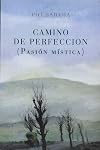
The Road to Perfection (Camino de Perfeccion) was written in 1901 and published the following year. It marked a pivotal point in Pio Baroja's development as a writer and thinker. It tells the story of Fernando Ossorio, a young man who makes a spiritual and physical journey through parts of central Spain. At the start of the book, Baroja narrates and guides Ossorio before leaving him to his own resources. On this epic journey Ossorio has an incestuous affair with his aunt, travels with a show more philosophical wagon driver, seeks spiritual purification, and finally gets married and becomes a father. The work has been subjected to much censorship in its time, and of all Baroja's works, this one has elicited the most enmity towards the views of its writer. This complete edition is the first time that this seminal work has appeared in English. Spanish text with facing-page translation, introduction and notes. show lessTags
Recommendations















Member Reviews
En CAMINO DE PERFECCIÓN (1902), el protagonista, Fernando Ossorio, un joven de espíritu confuso y atormentado, cuyas experiencias vitales han estado siempre ligadas a la muerte, emprende un viaje purificador, desde Madrid hasta Levante, durante el cual intenta superar sus desequilibrios anímicos y su indolencia, orientarse hacia la voluntad y la acción y recuperar el perdido contacto con la naturaleza. En esta novela tocada de misticismo y en la que se reiteran los contrastes entre vida y muerte, entre amor divino y humano y entre religiosidad y energía vital, Pío Baroja (1872-1956) trazó, en la línea de las inquietudes regeneracionistas de los escritores más beligerantes de la época, una visión crítica de la realidad show more española, tanto de las clases madrileñas acomodadas como del mundo rural. show less
Jul 6, 2022Spanish
Ratings
Members
- Recently Added By
Lists

Las cien mejores novelas escritas en español durante el siglo XX
22 works; 1 member

Las cien mejores novelas del siglo XX en lengua española
117 works; 1 member
Author Information

246+ Works 4,515 Members
Pio Baroja, whose works were admired by Ernest Hemingway, was one of Spain's foremost twentieth-century novelists. A socially conscious writer whose mission was to expose injustices, Baroja chose as central characters those who live outside society-bohemians, vagabonds, anarchists, degenerates, and tormented intellectuals. In The Restlessness of show more Shanti Andia (1911), Baroja uses Basque sailors as protagonists to dramatize his view of life as a constant struggle for survival and to present a shipboard world that functions outside society's laws. In The Tree of Knowledge (1911), medical student Andres Hurtado sees his intelligence as a disease and an incapacitating disgrace. Baroja's view that the concepts of beginning and end are human inventions to satisfy unattainable desires for meaning influences the form of his novels, often a series of episodes without cause and effect that end with unresolved problems. Baroja studied medicine, a discipline reflected in his works by an interest in the pathological. During the 1920s he was popular in the United States, where many of his novels appeared in translation. In 1936 he was elected to the Spanish Academy. Franco later banned all but one of his nearly 100 books, but Baroja continued to live and write, although less assertively, in Spain until his death. (Bowker Author Biography) show less
Some Editions
Awards and Honors
Series

Common Knowledge
- Original title
- Camino de perfección: pasión mística
- Original publication date
- 1902
Classifications
Statistics
- Members
- 53
- Popularity
- 575,436
- Reviews
- 1
- Rating
- (4.20)
- Languages
- English, Spanish
- Media
- Paper, Ebook
- ISBNs
- 11
- ASINs
- 2