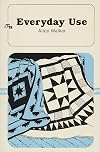
Everyday Use
by Alice Walker
On This Page
Description
Alice Walker's early story, "Everyday Use," has remained a cornerstone of her work. Her use of quilting as a metaphor for the creative legacy that African Americans inherited from their maternal ancestors changed the way we define art, women's culture, and African American lives. By putting African American women's voices at the center of the narrative for the first time, "Everyday Use" anticipated the focus of an entire generation of black women writers. This casebook includes an show more introduction by the editor, a chronology of Walker's life, an authoritative text of "Everyday Use" and of "In Search of Our Mothers' Gardens," an interview with Walker, six critical essays, and a bibliography. The contributors are Charlotte Pierce-Baker, Houston A. Baker, Jr., Thadious M. Davis, Margot Anne Kelley, John O'Brien, Elaine Showalter, and Mary Helen Washington. show lessTags
Recommendations






































Member Reviews
Know your place?
I know someone who has striven, since early teens, to mix with the upper classes and cultivate an aura that they belong among them. They tried to avoid taking friends to the family home - until they bought old portraits and trinkets to hint at the era when the family had money and status. Subsequent career choices and success cemented their sense of righteous belonging.
Reinventing oneself can lead to rootlessness, loneliness, and living in fear of being exposed. This is exquisitely portrayed in Nella Larsen’s classic, Passing, which I reviewed HERE, and in multi-faceted ways, in Brit Bennett’s The Vanishing Half, which I reviewed HERE.
There are aspects of that in this short story. “Uppity” is a term loaded show more with pejorative racial connotations in the US, but those who use it as a slur would readily apply it to Dee. Nevertheless, I’m not sure Dee’s trajectory will be as successful as the person I know, despite her being light-skinned.
Image: A house of roots. “'Uprooted' Colombian artist Doris Salcedo explores the idea of “putting down roots”—and being displaced—in a large-scale installation. (Photo: Juan Castro)” (Source)
Story
This is a short story from 1973 by Alice Walker, best known for The Color Purple. It's told by a barely-educated and somewhat masculine (her description) single mother of two daughters. Their previous home burned down a few years ago, but not by a racist mob: the strong suggestion of the cause takes the story in a complex and profound direction. Afterwards, the mother and church raised money to send the elder, pretty, clever girl away to school. She’s become confident and entitled.
“Who can even imagine me looking a strange white man in the eye? It seems to me I have talked to them always with one foot raised in flight… Dee, though. She would always look anyone in the eye.”
But she has style, her mother acknowledges. She also has a new name.
“I couldn’t bear it any longer being named after the people who oppress me.”
(Her mother points out she’s named after her aunt who was named after her grandmother.)
Maggie, the younger girl, is scarred by the fire and supposedly not very bright. She quietly accepts secondary, outsider status. She walks like a dog that’s been hit by a car that will “sidle up to someone who is ignorant enough to be kind to him”. Likened to a dog by her own mother, and even the pronoun is wrong.
The story focuses on Dee’s visit home as a young adult in college, interspersed with the mother’s reminiscences of what led up to this point. This line will make most GoodReaders wince:
“She used to read to us without pity; forcing words, lies, other folks’ habits, whole lives upon us two, sitting trapped and ignorant underneath her voice. She washed us in a river of make-believe, burned us with a lot of knowledge we didn’t necessarily need.”
Having earlier rejected her humble home, Dee now sees it as a kitsch cultural reserve to pillage in the name of preservation and display. Such things are not for everyday use. Nowadays, she’d be an Instagrammer.
It’s bitter satire that is more universal than it first seems. The mother sees all her daughters' faults, all the irony, and makes sharp asides, but she loves them both regardless.
Image: Charlotte Thomas and her quilt (Source, with lots of history about quilting in Louisiana.)
Use or preserve?
Should you use functional heirlooms, respecting their original purpose, or preserve them for future generations? Sometimes you can do both, but if it’s delicate, culturally-significant, and imbued with memories, like a family-made quilt, the stakes are higher. I wrestled with this question: I inherited an item that might be more sensible to sell or lock away, but my grandmother used it and wanted me to as well. In my mind, it’s risen in emotional value and fallen in financial value, which feels right.
Short story club
I reread this as one of the stories in The Art of the Short Story, by Dana Gioia, from which I'm aiming to read one story a week with The Short Story Club, starting 2 May 2022.
You can read this story here.
You can join the group here. show less
I know someone who has striven, since early teens, to mix with the upper classes and cultivate an aura that they belong among them. They tried to avoid taking friends to the family home - until they bought old portraits and trinkets to hint at the era when the family had money and status. Subsequent career choices and success cemented their sense of righteous belonging.
Reinventing oneself can lead to rootlessness, loneliness, and living in fear of being exposed. This is exquisitely portrayed in Nella Larsen’s classic, Passing, which I reviewed HERE, and in multi-faceted ways, in Brit Bennett’s The Vanishing Half, which I reviewed HERE.
There are aspects of that in this short story. “Uppity” is a term loaded show more with pejorative racial connotations in the US, but those who use it as a slur would readily apply it to Dee. Nevertheless, I’m not sure Dee’s trajectory will be as successful as the person I know, despite her being light-skinned.
Image: A house of roots. “'Uprooted' Colombian artist Doris Salcedo explores the idea of “putting down roots”—and being displaced—in a large-scale installation. (Photo: Juan Castro)” (Source)
Story
This is a short story from 1973 by Alice Walker, best known for The Color Purple. It's told by a barely-educated and somewhat masculine (her description) single mother of two daughters. Their previous home burned down a few years ago, but not by a racist mob: the strong suggestion of the cause takes the story in a complex and profound direction. Afterwards, the mother and church raised money to send the elder, pretty, clever girl away to school. She’s become confident and entitled.
“Who can even imagine me looking a strange white man in the eye? It seems to me I have talked to them always with one foot raised in flight… Dee, though. She would always look anyone in the eye.”
But she has style, her mother acknowledges. She also has a new name.
“I couldn’t bear it any longer being named after the people who oppress me.”
(Her mother points out she’s named after her aunt who was named after her grandmother.)
Maggie, the younger girl, is scarred by the fire and supposedly not very bright. She quietly accepts secondary, outsider status. She walks like a dog that’s been hit by a car that will “sidle up to someone who is ignorant enough to be kind to him”. Likened to a dog by her own mother, and even the pronoun is wrong.
The story focuses on Dee’s visit home as a young adult in college, interspersed with the mother’s reminiscences of what led up to this point. This line will make most GoodReaders wince:
“She used to read to us without pity; forcing words, lies, other folks’ habits, whole lives upon us two, sitting trapped and ignorant underneath her voice. She washed us in a river of make-believe, burned us with a lot of knowledge we didn’t necessarily need.”
Having earlier rejected her humble home, Dee now sees it as a kitsch cultural reserve to pillage in the name of preservation and display. Such things are not for everyday use. Nowadays, she’d be an Instagrammer.
It’s bitter satire that is more universal than it first seems. The mother sees all her daughters' faults, all the irony, and makes sharp asides, but she loves them both regardless.
Image: Charlotte Thomas and her quilt (Source, with lots of history about quilting in Louisiana.)
Use or preserve?
Should you use functional heirlooms, respecting their original purpose, or preserve them for future generations? Sometimes you can do both, but if it’s delicate, culturally-significant, and imbued with memories, like a family-made quilt, the stakes are higher. I wrestled with this question: I inherited an item that might be more sensible to sell or lock away, but my grandmother used it and wanted me to as well. In my mind, it’s risen in emotional value and fallen in financial value, which feels right.
Short story club
I reread this as one of the stories in The Art of the Short Story, by Dana Gioia, from which I'm aiming to read one story a week with The Short Story Club, starting 2 May 2022.
You can read this story here.
You can join the group here. show less
It's ironic that the one's with the uppity yet classless crass attitudes about the quilt will be better keepers of some heritage items than the one's veritably imbued therein, yet with such an ensuing collection lacking recollection.
And then there's this fascinating yet horror-filled take on reading:
"She used to read to us without pity; forcing words, lies, other folks' habits, whole lives upon us two, sitting trapped and ignorant underneath her voice. She washed us in a river of make-believe, burned us with a lot of knowledge we didn't necessarily need to know."
And then there's this fascinating yet horror-filled take on reading:
"She used to read to us without pity; forcing words, lies, other folks' habits, whole lives upon us two, sitting trapped and ignorant underneath her voice. She washed us in a river of make-believe, burned us with a lot of knowledge we didn't necessarily need to know."
Ratings
Members
- Recently Added By
Author Information

96+ Works 40,776 Members
Alice Walker won the Pulitzer Prize and the American Book Award for her novel The Color Purple. Her other bestselling novels include By the Light of My Father's Smile, Possessing the Secret of Joy, and The Temple of My Familiar. She is also the author of two collections of short stories, three collections of essays, five volumes of poetry, and show more several children's books. Her books have been translated into more than two dozen languages. Born in Eaton, Georgia, Walker now lives in Northern California. Like so many characters in her fiction, Alice Walker was born into a family of sharecroppers in Eaton, Georgia. She began Spelman College on a scholarship and graduated from Sarah Lawrence College in 1965. While still in college, Walker became active in the civil rights movement and continued her involvement after she graduated, serving as a voter registration worker in Georgia. She also worked in a Head Start program in Mississippi and was on the staff of the New York City welfare department. She has lectured and taught at several colleges and universities and currently operates a publishing house, Wild Trees Press, of which she is a co-founder. Walker began her literary career as a poet, publishing Once: Poems in 1968. The collection reflects her experiences in the civil rights movement and her travels in Africa. Her second collection of poetry, Revolutionary Petunias and Other Poems (1973), is a celebration of the struggle against oppression and racism. In between these two collections, she published her first novel, The Third Life of Grange Copeland (1970), the story of Ruth Copeland, a young black girl, and her grandfather, Grange, who brutalizes his own family out of the frustrations of racial prejudice and his own sense of inadequacy. Walker's first collection of short stories, In Love and Trouble: Stories of Black Women (1973), established her special concern for the struggles, hardships, loyalties, and triumphs of black women, a powerful force in the rest of her fiction. Meridian (1976), her second novel, is the story of Meridian Hill, a civil rights worker. In her second collection of short stories, You Can't Keep A Good Woman Down (1981), Walker again portrays black women struggling against sexual, racial, and economic oppression. Walker's third novel, The Color Purple (1982), brought her the national recognition denied her earlier works. Through this story of the sharecropper Celie and the abuses she endures, Walker draws together the themes that have run through her earlier work into a concentrated and powerful attack on racism and sexism, and produces a triumphant celebration of the spirit and endurance of black women. The book received the Pulitzer Prize and was made into a successful film. Walker describes her most recent novel, The Temple of My Familiar (1989) as "a romance of the last 500,000 years." The book is a blend of myth and history revolving around three marriages. As the married couples tell their stories, they explore both their origins and the inner life of modern African Americans. (Bowker Author Biography) show less
Work Relationships
Is contained in
Has as a study
Has as a commentary on the text
Has as a student's study guide
Common Knowledge
- Canonical title
- Everyday Use
- Original publication date
- 1973
Classifications
Statistics
- Members
- 88
- Popularity
- 364,628
- Reviews
- 2
- Rating
- (3.78)
- Languages
- English
- Media
- Paper, Ebook
- ISBNs
- 5
- ASINs
- 2