On This Page
Description
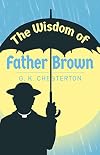
The star of these stories is Father Brown, a character created by writer G. K. Chesterton. Based on a parish priest who was partially responsible for Chesterton's conversion to Catholicism in 1922, Brown is a stubby Catholic priest equipped with a large umbrella, a formless outfit and a sharp insight into the human nature. The stories included here are The Absence of Mr Glass, The Paradise of Thieves, The Duel of Dr Hirsch, The Man in the Passage, The Mistake of the Machine, The Head of show more Caesar, The Purple Wig, The Perishing of the Pendragons, The God of the Gongs, The Salad of Colonel Cray, The Strange Crime of John Boulnois, and The Fairy Tale of Father Brown.. show less
Tags
Recommendations
















Member Reviews
The collection started off strong, but racism struck in "The Gong of Gods." It's real bad, friends. I strongly recommend the newer BBC show instead, as it deals with tough issues gracefully and with nuance.
I've only read one Father Brown short story before this, and was very much enjoying the others. And then I had to come abruptly into the racism in the story The God of the Gongs. If it hadn't been for that story I could have rated this a lot higher, rather than sitting and pondering the casual racism of the time - 1910 for this collection. The one story almost made me want to rate the whole as a one star - but to be fair, that's based on that one story, and how angry it made me. (I've been waffling between two and three stars for this, and it's completely hinging on my reaction to that one story.)
As an aside I should mention that it's not that I'm not used to racism in stories from this time, sadly. In fact I often wonder if, when some show more schools/parents raise issues about teaching Huckleberry Finn if the teachers shouldn't have students read some of the era's stories with overt and casual racism that have characters much less well developed than Jim. As much as I dislike it, I don't think we should refrain from making it clear that these thoughts/attitudes/stereotypes were in a lot of the literature. There are a a few authors I still enjoy despite their racism - Lovecraft for instance - but that doesn't mean I don't stop and cringe every time it comes up, even if I expect it. I just can't overlook this, even with the (poor) excuse of "that's the way everyone wrote/thought." When no, not everyone did. So there's the struggle - you can't exactly avoid it, but you - well, I - certainly can't enjoy it.
While several of the other stories have Italian or French characters that are stereotypical, the black characters of The God of the Gongs are much, much worse. It's not just the repeated use of the word nigger (or the fact that one character's name is Nigger Ned) - it's the way all the black characters are described.
If you can't understand why, after reading the quote, there were numerous things there that pissed me off - well, I can't help you. Besides the stereotypes in the description of dress there's the concept that you can wear clothes and walk in a way which supposedly everyone reads as insolent. And the line about lynching - just, no. Sorry, can't deal with the illogic and unfairness of this portrayal.
It doesn't make it any better that Father Brown is given a speech or two which I'm going to assume is supposed to preach tolerance:
I get the attempted message here - but after the previous quote, plus more I've not quoted, it's not enough. The ugliness of "everyone thinks this way" blots out any message of tolerance. Especially when the end of the story has to do with all blacks in the UK being under suspicion of the law and the public because of the murders by a group. Trying to preach tolerance in this context makes Chesterton seem smug, self-satisfied and completely unaware of how much stronger the stereotypes are than the platitudes.
I enjoy the way Chesterton writes, but I'm not totally sold on the character of Brown (I got tired of the repeated descriptions of how "child-like" he is). Still if anything keeps me from finishing the rest of Chesterton (I have several more ebooks) it will be the bad impressions of this one story. It's going to take me a while to get those images out of my head. show less
As an aside I should mention that it's not that I'm not used to racism in stories from this time, sadly. In fact I often wonder if, when some show more schools/parents raise issues about teaching Huckleberry Finn if the teachers shouldn't have students read some of the era's stories with overt and casual racism that have characters much less well developed than Jim. As much as I dislike it, I don't think we should refrain from making it clear that these thoughts/attitudes/stereotypes were in a lot of the literature. There are a a few authors I still enjoy despite their racism - Lovecraft for instance - but that doesn't mean I don't stop and cringe every time it comes up, even if I expect it. I just can't overlook this, even with the (poor) excuse of "that's the way everyone wrote/thought." When no, not everyone did. So there's the struggle - you can't exactly avoid it, but you - well, I - certainly can't enjoy it.
While several of the other stories have Italian or French characters that are stereotypical, the black characters of The God of the Gongs are much, much worse. It's not just the repeated use of the word nigger (or the fact that one character's name is Nigger Ned) - it's the way all the black characters are described.
(72% in) "...He was buttoned and buckled up to his bursting eyeballs in the most brilliant fashion. A tall black hat was tilted on his broad black head - a hat of the sort that the French wit has compared to eight mirrors. But somehow the black man was like the black hat. He also was black, and yet his glossy skin flung back the light at eight angles or more. It is needless to say that he wore white spats and a white slip inside his waistcoat. The red flower stood up in his button hole aggressively, as if it had suddenly grown there. And in the way he carried his cane in one hand and his cigar in the other there was a certain attitude - an attitude we must always remember when we talk of racial prejudices: something innocent and insolent - the cake walk.
"Sometimes," said Flambeau, looking after him, "I'm not surprised that they lynch them." "
If you can't understand why, after reading the quote, there were numerous things there that pissed me off - well, I can't help you. Besides the stereotypes in the description of dress there's the concept that you can wear clothes and walk in a way which supposedly everyone reads as insolent. And the line about lynching - just, no. Sorry, can't deal with the illogic and unfairness of this portrayal.
It doesn't make it any better that Father Brown is given a speech or two which I'm going to assume is supposed to preach tolerance:
(76% in) "...I dare say he has some Italians with him, but our amiable friends are not Italians. They are octoroons and African half-bloods of various shades, but I fear we English think all foreigners are much the same so long as they are dark and dirty. Also," he added, with a smile, "I fear the English decline to draw any fine distinction between the moral character produced by my religion and that which blooms out of Voodoo."
I get the attempted message here - but after the previous quote, plus more I've not quoted, it's not enough. The ugliness of "everyone thinks this way" blots out any message of tolerance. Especially when the end of the story has to do with all blacks in the UK being under suspicion of the law and the public because of the murders by a group. Trying to preach tolerance in this context makes Chesterton seem smug, self-satisfied and completely unaware of how much stronger the stereotypes are than the platitudes.
I enjoy the way Chesterton writes, but I'm not totally sold on the character of Brown (I got tired of the repeated descriptions of how "child-like" he is). Still if anything keeps me from finishing the rest of Chesterton (I have several more ebooks) it will be the bad impressions of this one story. It's going to take me a while to get those images out of my head. show less
A collection of Encyclopedia Brown-esque short mystery stories starring an unprepossessing priest. I liked the first collection a lot more. In a typical story, Father Brown will, after hearing the details of a case, make an unlikely declaration about what happened, then point out the guilty party: inevitably it is whoever in the cast of characters represents the position farthest from Chesterton politically or culturally.
Enjoyable stories involving a likable character. Definitely of their time with occasional unfortunate racism and stereotypes but I hesitate to judge too much as we are all influenced by our current situation. Great, readable stories.
One of the weaker Father Brown collections. But even weak Chesterton is at times strong liquor. Several stories which are otherwise disposable have descriptions -- of the weather, of natural surroundings -- that are indelible.
"I am never surprised by any work of hell"
"I am never surprised by any work of hell"
Read on my Kindle, although I have a paperback edition too. Twelve short stories; not crime fiction, exactly, as the solution of most of the cases rely on local knowledge and insight. Instead they're character-based, featuring the delightful and unassuming Father Brown, a Catholic priest in the early part of the 20th century.
Long-winded at times, relying too much on politics and intrigue, but with believable conversations and clever plots. Father Brown is gifted with a great deal of intuition and logical deduction, and I enjoyed (on the whole) following his thought processes.
I would have rated this book with four stars, but I was shocked by chapter nine, which is on the topic of boxing (a subject I abhor) and - worse - peppered with show more racist language. Perhaps it wasn't considered offensive over a hundred years ago but I very much hope modern editions have modified or even removed this chapter.
Still, the other eleven chapters, if a bit wordy, are worth reading in odd moments if you like short stories of this genre. show less
Long-winded at times, relying too much on politics and intrigue, but with believable conversations and clever plots. Father Brown is gifted with a great deal of intuition and logical deduction, and I enjoyed (on the whole) following his thought processes.
I would have rated this book with four stars, but I was shocked by chapter nine, which is on the topic of boxing (a subject I abhor) and - worse - peppered with show more racist language. Perhaps it wasn't considered offensive over a hundred years ago but I very much hope modern editions have modified or even removed this chapter.
Still, the other eleven chapters, if a bit wordy, are worth reading in odd moments if you like short stories of this genre. show less
An invisible killer, a family curse, a voodoo cult, a murdered prince, and a stolen salad dressing. Strange events call for a detective like no other, and Father Brown has a tendency to see to the heart of things. G. K. Chesterton’s famous priest-detective shines in this crime anthology, packed with mystery and paradox. From ‘The Absence of Mr. Glass’ to ‘The Head of Caesar’, Father Brown and his thief-turned-detective sidekick, Flambeau, return for a series of adventures that range from philosophical quibbles to the most fundamental matters of morality. This collection of crime short stories will tickle fans of Sherlock Holmes and Dirk Gently alike with satirical wit and enticingly clever cases. Gilbert Keith Chesterton (1874 show more – 1936) was an English writer, journalist, philosopher, and literary critic. An unparalleled essayist, he produced over four thousand essays during his lifetime, alongside eighty novels and two hundred short stories. Tackling topics of politics, history, philosophy and theology with tenacious wit and humour, G. K. Chesterton was often considered a master of the paradox. Himself both a modernist and devout Catholic, he is remembered best for his priest-detective short stories ‘Father Brown’, and his metaphysical thriller ‘The Man Who Was Thursday’. In his lifetime Chesterton befriended and debated some of the greatest thinkers of the age, such as George Bernard Shaw, H. G. Wells, and Bertrand Russell, while his works went on to inspire figures including T. S. Eliot, Michael Collins, and Mahatma Gandhi. show less
Members
- Recently Added By
Lists

Crime-Solving Clerics
57 works; 3 members

1910s
90 works; 16 members

Detective Stories
343 works; 5 members

Books mentioned in Julian Symons’ Bloody Murder
438 works; 6 members

Out of Copyright
244 works; 14 members

Art Bourgeau's Favorites [Mystery Lovers Companion, 1986]
124 works; 2 members
Author Information

Gilbert Keith Chesterton was born in London, England, in 1874. He began his education at St Paul's School, and later went on to study art at the Slade School, and literature at University College in London. Chesterton wrote a great deal of poetry, as well as works of social and literary criticism. Among his most notable books are The Man Who Was show more Thursday, a metaphysical thriller, and The Everlasting Man, a history of humankind's spiritual progress. After Chesterton converted to Catholicism in 1922, he wrote mainly on religious topics. Chesterton is most known for creating the famous priest-detective character Father Brown, who first appeared in "The Innocence of Father Brown." Chesterton died in 1936 at the age of 62. (Bowker Author Biography) show less
Some Editions
Series

Belongs to Publisher Series
Work Relationships
Is contained in
The Collected Works of G. K. Chesterton, Vol. 12: Father Brown Stories, Part 1: The Innocence of Father Brown, The Wisdom of Father Brown, The Donnington Affair by G. K. Chesterton (indirect)
The Father Brown Omnibus: Including The Innocence of Father Brown; The Wisdom of Father Brown; The Incredulity of Father Brown; The Secret of Father Brown by G. K. Chesterton
Chesterton's Mysteries: 4-The Incredulity of Father Brown & The Secret of Father Brown by G. K. Chesterton (indirect)
The Collected Works of G. K. Chesterton, Vol. 13: Father Brown Stories, Part 2: The Incredulity of Father Brown, The Secret of Father Brown, The Scandal of Father Brown, The Vampire of the Village, The Mask of Midas by G. K. Chesterton (indirect)
Contains
Common Knowledge
- Canonical title
- The Wisdom of Father Brown
- Original title
- The Wisdom of Father Brown
- Original publication date
- 1913
- People/Characters
- Father Brown; Flambeau
- Important places
- Chicago, Illinois, USA; Illinois, USA; Italy; London, England, UK; North Yorkshire, England, UK; Paris, France (show all 8); Scarborough, North Yorkshire, England, UK; Tuscany, Italy
- Dedication
- To Lucian Oldershaw
- First words
- The consulting-rooms of Dr. Orion Hood, the eminent criminologist and specialist in certain moral disorders, lay along the sea-front at Scarborough, in a series of very large and well-lighted french windows, which showed the ... (show all)North Sea like one endless outer wall of blue-green marble. ("The Absence of Mr Glass")
The great Muscari, most original of the young Tuscan poets, walked swiftly into his favourite restaurant, which overlooked the Mediterranean, was covered by an awning and fenced by little lemon and orange trees. ("The Paradis... (show all)e of Thieves")
M. Maurice Brun and M. Armand Armagnac were crossing the sunlit Champs Elyseés with a kind of vivacious respectability. ("The Duel of Dr Hirsch")
Two men appeared simultaneously at the two ends of a sort of passage running along the side of the Apollo Theatre in the Adelphi. ("The Man in the Passage")
Flambeau and his friend the priest were sitting in the Temple Gardens about sunset; and their neighbourhood or some such accidental influence had turned their talk to matters of legal process. ("The Mistake of the Machine")
There is somewhere in Brompton or Kensington an interminable avenue of tall houses, rich but largely empty, that looks like a terrace of tombs. ("The Head of Caesar")
Mr Edward Nutt, the industrious editor of the Daily Reformer, sat at his desk, opening letters and marking proofs to the merry tune of a typewriter, worked by a vigorous young lady. ("The Purple Wig")
Father Brown was in no mood for adventures. ("The Perishing of the Pendragons")
It was one of those chilly and empty afternoons in early winter, when the daylight is silver rather than gold and pewter rather than silver. ("The God of the Gongs")
Father Brown was walking home from Mass on a white weird morning when the mists were slowly lifting - one of those mornings when the very element of light appears as something mysterious and new. ("The Salad of Colonel Cray")
Mr Calhoun Kidd was a very young gentleman with a very old face, a face dried up with its own eagerness, framed in blue-black hair and a black butterfly tie. ("The Strange Crime of John Boulnois")
The picturesque city of Heiligwaldenstein was one of those toy kingdoms of which certain parts of the German Empire still consist. ("The Fairy Tale of Father Brown") - Last words
- (Click to show. Warning: May contain spoilers.)Then, advancing into the middle of the room with a bow, he produced from his pocket a big bill printed in blue and red, which announced that ZALADIN, the World's Greatest Conjurer, Contortionist, Ventriloquist and Human Kangaroo would be ready with an entirely new series of Tricks at the Empire Pavilion, Scarborough, on Monday next at eight o'clock precisely. ("The Absence of Mr Glass")
(Click to show. Warning: May contain spoilers.)'In short,' said Muscari, 'to the real Paradise of Thieves.' ("The Paradise of Thieves")
(Click to show. Warning: May contain spoilers.)A few moments later a roar of popular applause from the street beyond announced that Dr Hirsch had once more appeared on the balcony. ("The Duel of Dr Hirsch")
(Click to show. Warning: May contain spoilers.)Father Brown blinked even more painfully than before; then he stammered, 'Really, my lord, I don't know...unless it's because I don't look at it so often.' ("The Man in the Passage")
(Click to show. Warning: May contain spoilers.)Mr Greenwood Usher lifted his eyes, but Father Brown was gone. ("The Mistake of the Machine")
(Click to show. Warning: May contain spoilers.)'I think,' said Flambeau, 'that, in spite of everything, they are probably getting on very well.' ("The Head of Caesar")
(Click to show. Warning: May contain spoilers.)As Miss Barlow rattled away cheerfully, he crumpled up the copy and tossed it into the waste-paper basket; but not before he had, automatically and by mere force of habit, altered the word 'God' to the word 'circumstances'. ("The Purple Wig")
(Click to show. Warning: May contain spoilers.)He received no answer: Father Brown was asleep. ("The Perishing of the Pendragons") - Disambiguation notice
- This collection contains the following stories:
1. The Absence of Mr. Glass
2. The Paradise of Thieves
3. The Duel of Dr. Hirsch
4. The Man in the Passage
5. The Mistake of the Machine
6. The Head of Caesar... (show all)
7. The Purple Wig
8. The Perishing of Pendragons
9. The God of the Gongs
10. The Salad of Colonel Cray
11. The Strange Crime of John Boulnois
12. The Fairy Tale of Father Brown
Classifications
Statistics
- Members
- 955
- Popularity
- 27,581
- Reviews
- 22
- Rating
- (3.55)
- Languages
- 11 — Danish, Dutch, English, French, German, Hungarian, Italian, Norwegian (Bokmål), Portuguese (Portugal), Slovenian, Spanish
- Media
- Paper, Audiobook, Ebook
- ISBNs
- 190
- UPCs
- 1
- ASINs
- 41