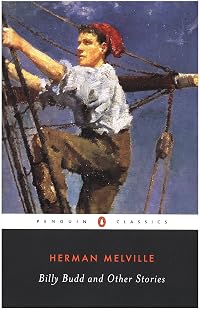
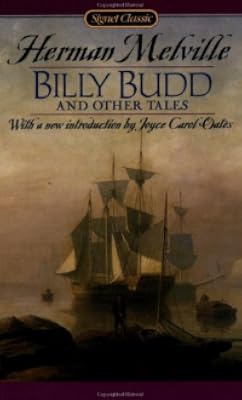
Billy Budd and Other Stories
by Herman Melville 
On This Page
Description
Billy Budd and Other Stories is a collection of author Herman Melville's most remarkable short stories. In the titular story, unfinished at the time of the author's death, Billy Budd's life takes an unexpected turn when he is pressed into service in the Royal Navy, and runs afoul of the jealous master-at-arms as the result of a rash, though sorely provoked, act. This collection also includes "Bartleby, the Scrivener," "The Encantadas," and "The Piazza," among others. Now considered to be a show more master-storyteller, Herman Melville's work was poorly received during his lifetime. He is one of the most studied novelists in English literature, and was the first writer to be collected and published by the Library of America. show lessTags
Recommendations


















Member Reviews
I'm glad that Moby Dick isn't the only good thing Melville ever wrote - after having finally actually read it, it was great to be reminded how satisfying it is when something that's been endlessly lauded manages to live up to that reputation. Melville's short stories don't have the iconic status that Moby Dick does, but no one capable of turning out that masterpiece could fail to show some signs of that talent for exploring human nature in his lesser works, and there's plenty for anyone who likes his distinctively discursive but acute style to enjoy here. "Bartleby, the Scrivener", "The Encantadas", and "Benito Cereno" are excellent, with other stories like "Billy Budd, Sailor" still being highly enjoyable.
- "Bartleby, the Scrivener". show more This is possibly the greatest story ever written about the importance of an HR department, as well as a good look at how people cope with the inexplicable in their daily lives. It reads like a 19th century ancestor of the movie Office Space, with the title character's battle cry of "I would prefer not to" encapsulating the oppressed office drone's secret wish of being able to assert at least some volition in a world of meaningless drudgery. That Bartleby was driven into his catatonia of productivity by working in a dead-letter office before his scrivener position in the law firm prefigures a surprising amount about the modern workplace, and the mysterious inability of the unnamed narrator to just fire Bartleby and replace him with someone more like his other copyist assistants is also pretty interesting: when an immovable object like Bartleby drops into your life, what do you do, and what does that say about your management style? A management consultant might have a lot to say about the impact of one bad apple on teamwork and productivity; most other people will identify either with the narrator's inexplicably determined kindness, or Bartleby's justified horror of scrivening and steadfast determination to do his own thing.
- "The Piazza". I read this as a straightforward study in perception vs reality wrapped in parody of pastoralism. Behind the dense, Shakespearean verbiage, the difficulty the narrator and Marianna have communicating about what they each see as desirable is a good, if somewhat anodyne elaboration on "the grass is always greener".
- "The Encantadas". One of Melville's great gifts is how good he is at turning something insanely boring into a riveting, almost hypnotic journey. This starts off as a series of "sketches" of Galapagos-ish islands, with Melville seemingly determined to describe every rock and tortoise in ten thousand leagues, but slowly he builds it up until you find yourself actually enjoying things like his slurs on that noble avian the pelican:
"But look, what are yon wobegone regiments drawn up on the next shelf above? what rank and file of large strange fowl? what sea Friars of Orders Gray? Pelicans. Their elongated bills, and heavy leathern pouches suspended thereto, give them the most lugubrious expression. A pensive race, they stand for hours together without motion. Their dull, ashy plumage imparts an aspect as if they had been powdered over with cinders. A penitential bird, indeed, fitly haunting the shores of the clinkered Encantadas, whereon tormented Job himself might have well sat down and scraped himself with potsherds."
The nature descriptions alone would be fine, the envy of travel writers everywhere, but eventually he gets to the adventures of the visitors and inhabitants of the islands and it gets really good. Melville is always very interested in how human nature deals with nature nature, and I see this as a response to the "state of nature" philosophy like Hobbes's work that was so popular in the 18th century. He spends so much time describing how miserable and hellish the islands are so that you're hardly surprised that human beings use them for murder, piracy, slavery, and all that other fun stuff in the sixth through ninth sketches. In particular, the eighth sketch about the marooned newlywed who's lost her husband, brother, and most of her dogs would make the whole story worth the read by itself.
- "The Bell-Tower". A criticism I had with this one is that Melville tips his hand too early that Banadonna, the chief horologist who's seeking to create the finest clock tower in Italy, is up to something sinister and hubristic. It's fine to drop Tower of Babel allusions on the first page (his creation of the servant automaton Haman also obviously parallels Frankenstein), but the continuous reminder that something about the project is off got a bit repetitive, and made the comeuppance ending anti-climactic.
- "Benito Cereno". In contrast, this was a fantastic case of well-built tension, where the hints of something amiss actually worked well. A big challenge for an author is to let the reader know things the characters don't from the first person without just coming out and saying so. American captain Amasa Delano's rescue of Spanish captain Benito Cereno's seemingly weather-damaged slave-ship proceeds through a lot of curious incidents, but while the Big Clues in "The Bell-Tower" were clumsily telegraphed, in this story Delano's attempts to rationalize away Cereno's odd behavior in the presence of his sinister "assistant" Babo are actually pretty psychologically revealing. Just like in "Bartleby", when confronted with unusual situations, people with power and authority are just as susceptible to strange lapses as anyone. The contrast between Delano's assessment of the character of the ethnicities and their actual capabilities is another example of skillful ironic juxtaposition, and the climactic reveal of the other meaning of the "follow your leader" slogan is also well-done.
- "The Paradise of Bachelors and the Tartarus of Maids". An extended analogy about sexism which boils down to: sucks to be a woman. He contrasts the lavish lifestyle of London lawyers with the grim existence of mill-workers, about which you could probably write some good essays for a gender studies course, or about how different social classes spent the Industrial Revolution.
- "Billy Budd, Sailor". Cobbled together from draft notes dating from 40 years after Moby Dick, and very reminiscent of its more famous older brother, this is an entertaining but somewhat odd story of a sailor who ends up on trial for a murder at sea. Set in the immediately pre-Napoleonic era following famous British naval mutinies, this is apparently often cited in Law and Literature-type classes for passages like the following, which somewhat reminds me of the parts in Heinlein novels where he'd go off for a few pages about how great military discipline is:
"We proceed under the law of the Mutiny Act. In feature no child can resemble his father more than that Act resembles in spirit the thing from which it derives - War. In His Majesty's service - in this ship, indeed - there are Englishmen forced to fight for the King against their will. Against their conscience, for aught we know. Though as their fellow creatures some of us may appreciate their position, yet as navy officers what reck we of it? Still less recks the enemy. Our impressed men he would fain cut down in the same swath with our volunteers. As regards the enemy's naval conscripts, some of whom may even share our own abhorrence of the regicidal French Directory, it is the same on our side. War looks but to the frontage, the appearance. And the Mutiny Act, War's child, takes after the father. Budd's intent or non-intent is nothing to the purpose."
Even though I liked the story for the most part, there's a weird tone to the whole thing, in particular the constant reminders of how good-looking and Christ-like the title character is to the rest of the crew, that keeps this from being truly great, especially in comparison with Moby Dick. Budd is no Ishmael, Captain Vere is no Ahab, the central impulsive crime that Budd is tried for lacks the resonance of Ahab's obsession, there's a closing "what really happened here?" section that doesn't add much thematically, and just in general this can't help but suffer in comparison. In part this is due to its unfinished nature, however it's still well-written in typical Melville style, and he never forgets to leave you with thoughtful metaphors for his themes:
"Who in the rainbow can draw the line where the violet tint ends and the orange tint begins? Distinctly we see the difference of the colors, but where exactly does the one first blendingly enter into the other? So with sanity and insanity. In pronounced cases there is no question about them. But in some supposed cases, in various degrees supposedly less pronounced, to draw the exact line of demarcation few will undertake, though for a fee becoming considerate some professional experts will. There is nothing nameable but that some men will, or undertake to, do it for pay."
Good stuff. show less
- "Bartleby, the Scrivener". show more This is possibly the greatest story ever written about the importance of an HR department, as well as a good look at how people cope with the inexplicable in their daily lives. It reads like a 19th century ancestor of the movie Office Space, with the title character's battle cry of "I would prefer not to" encapsulating the oppressed office drone's secret wish of being able to assert at least some volition in a world of meaningless drudgery. That Bartleby was driven into his catatonia of productivity by working in a dead-letter office before his scrivener position in the law firm prefigures a surprising amount about the modern workplace, and the mysterious inability of the unnamed narrator to just fire Bartleby and replace him with someone more like his other copyist assistants is also pretty interesting: when an immovable object like Bartleby drops into your life, what do you do, and what does that say about your management style? A management consultant might have a lot to say about the impact of one bad apple on teamwork and productivity; most other people will identify either with the narrator's inexplicably determined kindness, or Bartleby's justified horror of scrivening and steadfast determination to do his own thing.
- "The Piazza". I read this as a straightforward study in perception vs reality wrapped in parody of pastoralism. Behind the dense, Shakespearean verbiage, the difficulty the narrator and Marianna have communicating about what they each see as desirable is a good, if somewhat anodyne elaboration on "the grass is always greener".
- "The Encantadas". One of Melville's great gifts is how good he is at turning something insanely boring into a riveting, almost hypnotic journey. This starts off as a series of "sketches" of Galapagos-ish islands, with Melville seemingly determined to describe every rock and tortoise in ten thousand leagues, but slowly he builds it up until you find yourself actually enjoying things like his slurs on that noble avian the pelican:
"But look, what are yon wobegone regiments drawn up on the next shelf above? what rank and file of large strange fowl? what sea Friars of Orders Gray? Pelicans. Their elongated bills, and heavy leathern pouches suspended thereto, give them the most lugubrious expression. A pensive race, they stand for hours together without motion. Their dull, ashy plumage imparts an aspect as if they had been powdered over with cinders. A penitential bird, indeed, fitly haunting the shores of the clinkered Encantadas, whereon tormented Job himself might have well sat down and scraped himself with potsherds."
The nature descriptions alone would be fine, the envy of travel writers everywhere, but eventually he gets to the adventures of the visitors and inhabitants of the islands and it gets really good. Melville is always very interested in how human nature deals with nature nature, and I see this as a response to the "state of nature" philosophy like Hobbes's work that was so popular in the 18th century. He spends so much time describing how miserable and hellish the islands are so that you're hardly surprised that human beings use them for murder, piracy, slavery, and all that other fun stuff in the sixth through ninth sketches. In particular, the eighth sketch about the marooned newlywed who's lost her husband, brother, and most of her dogs would make the whole story worth the read by itself.
- "The Bell-Tower". A criticism I had with this one is that Melville tips his hand too early that Banadonna, the chief horologist who's seeking to create the finest clock tower in Italy, is up to something sinister and hubristic. It's fine to drop Tower of Babel allusions on the first page (his creation of the servant automaton Haman also obviously parallels Frankenstein), but the continuous reminder that something about the project is off got a bit repetitive, and made the comeuppance ending anti-climactic.
- "Benito Cereno". In contrast, this was a fantastic case of well-built tension, where the hints of something amiss actually worked well. A big challenge for an author is to let the reader know things the characters don't from the first person without just coming out and saying so. American captain Amasa Delano's rescue of Spanish captain Benito Cereno's seemingly weather-damaged slave-ship proceeds through a lot of curious incidents, but while the Big Clues in "The Bell-Tower" were clumsily telegraphed, in this story Delano's attempts to rationalize away Cereno's odd behavior in the presence of his sinister "assistant" Babo are actually pretty psychologically revealing. Just like in "Bartleby", when confronted with unusual situations, people with power and authority are just as susceptible to strange lapses as anyone. The contrast between Delano's assessment of the character of the ethnicities and their actual capabilities is another example of skillful ironic juxtaposition, and the climactic reveal of the other meaning of the "follow your leader" slogan is also well-done.
- "The Paradise of Bachelors and the Tartarus of Maids". An extended analogy about sexism which boils down to: sucks to be a woman. He contrasts the lavish lifestyle of London lawyers with the grim existence of mill-workers, about which you could probably write some good essays for a gender studies course, or about how different social classes spent the Industrial Revolution.
- "Billy Budd, Sailor". Cobbled together from draft notes dating from 40 years after Moby Dick, and very reminiscent of its more famous older brother, this is an entertaining but somewhat odd story of a sailor who ends up on trial for a murder at sea. Set in the immediately pre-Napoleonic era following famous British naval mutinies, this is apparently often cited in Law and Literature-type classes for passages like the following, which somewhat reminds me of the parts in Heinlein novels where he'd go off for a few pages about how great military discipline is:
"We proceed under the law of the Mutiny Act. In feature no child can resemble his father more than that Act resembles in spirit the thing from which it derives - War. In His Majesty's service - in this ship, indeed - there are Englishmen forced to fight for the King against their will. Against their conscience, for aught we know. Though as their fellow creatures some of us may appreciate their position, yet as navy officers what reck we of it? Still less recks the enemy. Our impressed men he would fain cut down in the same swath with our volunteers. As regards the enemy's naval conscripts, some of whom may even share our own abhorrence of the regicidal French Directory, it is the same on our side. War looks but to the frontage, the appearance. And the Mutiny Act, War's child, takes after the father. Budd's intent or non-intent is nothing to the purpose."
Even though I liked the story for the most part, there's a weird tone to the whole thing, in particular the constant reminders of how good-looking and Christ-like the title character is to the rest of the crew, that keeps this from being truly great, especially in comparison with Moby Dick. Budd is no Ishmael, Captain Vere is no Ahab, the central impulsive crime that Budd is tried for lacks the resonance of Ahab's obsession, there's a closing "what really happened here?" section that doesn't add much thematically, and just in general this can't help but suffer in comparison. In part this is due to its unfinished nature, however it's still well-written in typical Melville style, and he never forgets to leave you with thoughtful metaphors for his themes:
"Who in the rainbow can draw the line where the violet tint ends and the orange tint begins? Distinctly we see the difference of the colors, but where exactly does the one first blendingly enter into the other? So with sanity and insanity. In pronounced cases there is no question about them. But in some supposed cases, in various degrees supposedly less pronounced, to draw the exact line of demarcation few will undertake, though for a fee becoming considerate some professional experts will. There is nothing nameable but that some men will, or undertake to, do it for pay."
Good stuff. show less
Billy Budd and Benito Cereno make up the meat of this book, but both are long walks with simple punch lines. Reveling in Melville's verbose and detailed descriptions are their chief enjoyment. I thought the best pieces were his odd Bartleby and the sketches of the Galapagos Islands.
My favorite quote is from the description of Captain Vere:
My favorite quote is from the description of Captain Vere:
He loved books... With nothing of that literary taste which less heeds the thing conveyed than the vehicle, his bias was toward those books to which every serious mind of superior order … in the world naturally inclines: books treating of actual men and events no matter of what era—history, biography, and unconventional writers like Montaigne, who, free from cant and convention, honestly and in theshow more
spirit of common sense philosophize upon realities. In this line of reading he found confirmation of his own more reserved thoughts—confirmation which he had vainly sought in social converse, so that as touching most fundamental topics, there had got to be established in him some positive convictions which he forefelt would abide in him essentially unmodified so long as his intelligent part remained unimpaired... His settled convictions were as a dike against those invading waters of novel opinion social, political, and otherwise, which carried away as in a torrent no few minds in those days, minds by nature not inferior to his own...show less
With minds less stored than his and less earnest, … with whom at times he would necessarily consort, found him lacking in the companionable quality, a dry and bookish gentleman, as they deemed.
Distinctly we see the difference of the colors, but where exactly does the one first blendingly enter into the other? So with sanity and insanity.
Billy and Bartleby are old friends, portraits of bejeweled philosophy. Strange as it may appear, the selection which punched me in the jaw was Cock-A-Doodle-Do: a tale told by a fellow traveler (he drinks porter and reads Rabelais) about a magical fowl which is a fount of bliss, an actual agent of earthly happiness.
Billy and Bartleby are old friends, portraits of bejeweled philosophy. Strange as it may appear, the selection which punched me in the jaw was Cock-A-Doodle-Do: a tale told by a fellow traveler (he drinks porter and reads Rabelais) about a magical fowl which is a fount of bliss, an actual agent of earthly happiness.
All I can say is thank goodness that's over with. No, wait...I can also say that it's a good thing Bartleby was the first story in the collection or I never would have continued. Bartleby, though rather gloomy, is the best of the bunch. I couldn't bear The Encantadas...practically skimmed them before feeling guilty (read this for a class)and going back to read them fully. Not my cuppa tea. I really am sorry...Melville was Maurice Sendak's favorite and I did admire Sendak so.
Very difficult story to read, with Melville often distracted from the task at hand. However, if you can persevere the fabulous story manages to shine through the verbose prose.
I read Billy Budd for a book club I belong to. (I didn't read the other stories.) I found it incredibly slow going. I wouldn't even attempt to read it without access to Wikipedia or some other such source. Especially at the beginning, it makes a lot of cultural references with which I was completely unacquainted, e.g., Anacharis Cloots, Kaspar Hauser and Titus Oates. This made the meaning of some passages incomprehensible without some research.
The characters are all stereotypes. I found the plot unrealistic. I also found it just plain exasperating that we are not told what Vere said to Budd after Budd was condemned to death.
The characters are all stereotypes. I found the plot unrealistic. I also found it just plain exasperating that we are not told what Vere said to Budd after Budd was condemned to death.
Anyone who could ever in good conscience write and publish a sentence like the following (from "Benito Cereno"):
"But whatever misgivings might have obtruded on first seeing the stranger, would almost, in any seaman's mind, have been dissipated by observing that, the ship, in navigating into the harbor, was drawing too near the land; a sunken reef making out off her bow."
should be taken out and shot. Provides some interesting food for literary analysis, but I never will be able to figure out how someone who achieved perhaps one coherent, flowing, well-written sentence out of every hundred ever came to be considered a "classic" writer.
"But whatever misgivings might have obtruded on first seeing the stranger, would almost, in any seaman's mind, have been dissipated by observing that, the ship, in navigating into the harbor, was drawing too near the land; a sunken reef making out off her bow."
should be taken out and shot. Provides some interesting food for literary analysis, but I never will be able to figure out how someone who achieved perhaps one coherent, flowing, well-written sentence out of every hundred ever came to be considered a "classic" writer.
Members
- Recently Added By
Lists

1001 Books You Must Read Before You Die
1,448 works; 1,133 members

Classics you know you should have read but probably haven't
421 works; 407 members

Short Story Collections and Anthologies
261 works; 42 members

Northern Exposure's Chris in the Morning Reading List
31 works; 1 member

Classical Conversations Challenge I Exposition
20 works; 1 member
Author Information

658+ Works 78,479 Members
Herman Melville (August 1, 1819 - September 28, 1891) was born into a seemingly secure, prosperous world, a descendant of prominent Dutch and English families long established in New York State. That security vanished when first, the family business failed, and then, two years later, in young Melville's thirteenth year, his father died. Without show more enough money to gain the formal education that professions required, Melville was thrown on his own resources and in 1841 sailed off on a whaling ship bound for the South Seas. His experiences at sea during the next four years were to form in part the basis of his best fiction. Melville's first two books, Typee (1846) and Omoo (1847), were partly romance and partly autobiographical travel books set in the South Seas. Both were popular successes, particularly Typee, which included a stay among cannibals and a romance with a South Sea maiden. During the next several years, Melville published three more romances that drew upon his experiences at sea: Redburn (1849) and White-Jacket (1850), both fairly realistic accounts of the sailor's life and depicting the loss of innocence of central characters; and Mardi (1849), which, like the other two books, began as a romance of adventure but turned into an allegorical critique of contemporary American civilization. Moby Dick (1851) also began as an adventure story, based on Melville's experiences aboard the whaling ship. However, in the writing of it inspired in part by conversations with his friend and neighbor Hawthorne and partly by his own irrepressible imagination and reading of Shakespeare and other Renaissance dramatists Melville turned the book into something so strange that, when it appeared in print, many of his readers and critics were dumbfounded, even outraged. By the mid-1850s, Melville's literary reputation was all but destroyed, and he was obliged to live the rest of his life taking whatever jobs he could find and borrowing money from relatives, who fortunately were always in a position to help him. He continued to write, however, and published some marvelous short fiction pieces Benito Cereno" (1855) and "Bartleby, the Scrivener" (1853) are the best. He also published several volumes of poetry, the most important of which was Battle Pieces and Aspects of the War (1866), poems of occasionally great power that were written in response to the moral challenge of the Civil War. His posthumously published work, Billy Budd (1924), on which he worked up until the time of his death, became Melville's last significant literary work, a brilliant short novel that movingly describes a young sailor's imprisonment and death. Melville's reputation, however, rests most solidly on his great epic romance, Moby Dick. It is a difficult as well as a brilliant book, and many critics have offered interpretations of its complicated ambiguous symbolism. Darrel Abel briefly summed up Moby Dick as "the story of an attempt to search the unsearchable ways of God," although the book has historical, political, and moral implications as well. Melville died at his home in New York City early on the morning of September 28, 1891, at age 72. The doctor listed "cardiac dilation" on the death certificate. He was interred in the Woodlawn Cemetery in The Bronx, New York, along with his wife, Elizabeth Shaw Melville. (Bowker Author Biography) show less
Herman Melville has a Legacy Library. Legacy libraries are the personal libraries of famous readers, entered by LibraryThing members from the Legacy Libraries group.
Some Editions
Series
Belongs to Publisher Series
Work Relationships
Common Knowledge
- Canonical title
- Billy Budd and Other Stories
- Original title
- Billy Buid, Sailor
- Original publication date
- 1924
- Important places
- Abdera, Thrace, Greece
- First words
- In the time before steamships, or then more frequently than now, a stroller along the docks of any considerable seaport would occasionally have his attention arrested by a group of bronzed mariners, men-of-war's men or mercha... (show all)nt sailors in holiday attire, ashore on liberty.
- Last words
- (Click to show. Warning: May contain spoilers.)And so pride went before the fall.
- Original language
- English
Classifications
Statistics
- Members
- 2,295
- Popularity
- 8,667
- Reviews
- 15
- Rating
- (3.54)
- Languages
- English, French, Italian, Swedish
- Media
- Paper, Ebook
- ISBNs
- 28
- ASINs
- 20