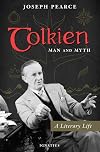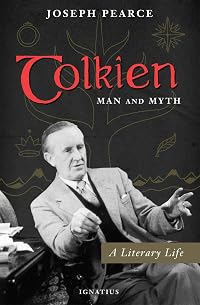
Tolkien: Man and Myth
by Joseph Pearce
On This Page
Description
J.R.R. Tolkien's The Lord of the Rings took first place in a recent national poll to find the greatest book of the century. He may be the most popular writer of our age, but Tolkien is often misunderstood. This major new study of his life, his character and his work reveals the facts and confronts the myths. It explores the background to the man and the culture in which he wrote. Tolkien: Man and Myth observes the relationships that the master writer had with his closest literary colleagues. show more It reveals his uneasy relationship with C.S. Lewis, the writer of the Narnia books, and the roots of their estrangement. In this original book about a leading literary life, Joseph Pearce enters the world created by Tolkien in the seven books published during his lifetime. He explores the significance of Middle Earth and what it represented in Tolkien's thinking. Myth, to him, was not a leap from reality but a leap into reality. The impact of his great notoriety, his relationship with material possessions and his traditional religious faith are all explored, making it possible to understand both the man and the myth he created. - Back cover. "He may be the must popular writer of our age, but Tolkien is often misunderstood. This major new study of his life, his character and his work reveals the facts and confronts the myths. It explores the background to the man and the culture in which he wrote."--Jacket. show lessTags
Recommendations










Member Reviews
Sometimes a flat coat of paint just won't do.
J. R. R. Tolkien was a very unusual man -- linguist, author, teacher, recluse. Few of us can ever hope to capture the whole essence of the man.
Unfortunately, Joseph Pearce seems to think that, just because others can't see all of Tolkien, he can. He rejects psychological studies (with, it must be admitted, some justice) -- but then starts digging into Tolkien's brain in his own way. The result places most of its attention on Tolkien's Catholicism.
This is important, and Pearce is right that we cannot understand the Middle-Earth cycle without seeing it through a Catholic prism. But Tolkien's world has many facets: His languages, his religion, his ethics, his personality. Trying to squeeze show more everything through one filter just won't work.
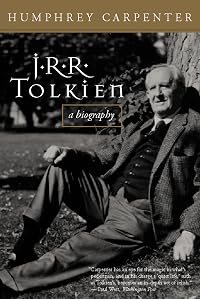
The result is sometimes rather tedious, and it isn't a true biography; it's a strange mix of literary criticism and biography. It is a useful book -- but certainly not the place to start when studying Tolkien. The best biography is probably still Humphrey Carpenter's, and if you want literary insight, the works of Tom Shippey come close to being definitive. show less
J. R. R. Tolkien was a very unusual man -- linguist, author, teacher, recluse. Few of us can ever hope to capture the whole essence of the man.
Unfortunately, Joseph Pearce seems to think that, just because others can't see all of Tolkien, he can. He rejects psychological studies (with, it must be admitted, some justice) -- but then starts digging into Tolkien's brain in his own way. The result places most of its attention on Tolkien's Catholicism.
This is important, and Pearce is right that we cannot understand the Middle-Earth cycle without seeing it through a Catholic prism. But Tolkien's world has many facets: His languages, his religion, his ethics, his personality. Trying to squeeze show more everything through one filter just won't work.
The result is sometimes rather tedious, and it isn't a true biography; it's a strange mix of literary criticism and biography. It is a useful book -- but certainly not the place to start when studying Tolkien. The best biography is probably still Humphrey Carpenter's, and if you want literary insight, the works of Tom Shippey come close to being definitive. show less
When it comes to Tolkien's writings, religion must be considered as an important influential element. It is true that if one considers Roman-Catholicism in The Silmarillion, The Hobbit and The Lord of the Rings, the books become more profound. But the love of nature, tradition, languages and religion are merged in his works and to focus on one of them does not give full credit to these writings. Joseph Pearce also tends to be too narrow.
Pearce puts the emphasis on Roman-Catholicism, which isn't unexpected as he himself is a converted Roman-Catholic like Tolkien's mother. Putting emphasis on Christian themes, however, he neglects most of Tolkien's love for Norse mythology, mentioning it only once or twice, and The Silmarillion being a show more myth for his self-invented Elvish languages. By having read Tolkien Man and Myth the reader must conclude Tolkien wrote The Silmarillion, The Hobbit and The Lord of the Rings out of piety, whilst religion was only one cornerstone.
This narrow view on Tolkien gives, however, more insight in the religious aspect of Tolkien's writings. By leaving the other main topics out of sight, Pearce can elaborate on the religious side of Middle-Earth. Most of the arguments cut ice and using Tolkien's letters to support himself, Pearce' biography is a sensible one. One drawback is Pearce's attention for G.K. Chesterton and C.S. Lewis, who were unsurprisingly devout Christians. Although some connections can be seen as important (especially of C.S. Lewis), one might wonder at some point the relevance of such prodigious attention to these writers.
This biography is well written, though some parts become too religious and one is advised to read Tolkien Man and Myth in addition to other biographies, otherwise the myth-adoring, nature loving, philologist and Roman-Catholic Tolkien would get less credit for what made his works extraordinary profound. show less
Pearce puts the emphasis on Roman-Catholicism, which isn't unexpected as he himself is a converted Roman-Catholic like Tolkien's mother. Putting emphasis on Christian themes, however, he neglects most of Tolkien's love for Norse mythology, mentioning it only once or twice, and The Silmarillion being a show more myth for his self-invented Elvish languages. By having read Tolkien Man and Myth the reader must conclude Tolkien wrote The Silmarillion, The Hobbit and The Lord of the Rings out of piety, whilst religion was only one cornerstone.
This narrow view on Tolkien gives, however, more insight in the religious aspect of Tolkien's writings. By leaving the other main topics out of sight, Pearce can elaborate on the religious side of Middle-Earth. Most of the arguments cut ice and using Tolkien's letters to support himself, Pearce' biography is a sensible one. One drawback is Pearce's attention for G.K. Chesterton and C.S. Lewis, who were unsurprisingly devout Christians. Although some connections can be seen as important (especially of C.S. Lewis), one might wonder at some point the relevance of such prodigious attention to these writers.
This biography is well written, though some parts become too religious and one is advised to read Tolkien Man and Myth in addition to other biographies, otherwise the myth-adoring, nature loving, philologist and Roman-Catholic Tolkien would get less credit for what made his works extraordinary profound. show less
Ratings
Members
- Recently Added By
Lists

BEST BOOKS TO UNDERSTAND TOLKIEN
14 works; 5 members
Author Information

72+ Works 3,468 Members
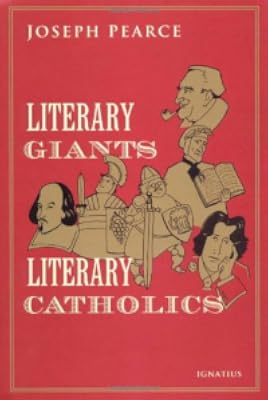
Joseph Pearce has written ground-breaking biographical books on authors. Oscar Wilde, J. R. R. Tolkien, C. S. Lewis, Alexander Solzhenitsyn, and William Shakespeare. His books covering more than one author include Literary Converts and Catholic Literary Giants. He is the editor of the multi-volume Ignatius Critical Editions series.
Awards and Honors
Awards
Common Knowledge
- Original publication date
- 1998
- People/Characters
- J. R. R. Tolkien; G. K. Chesterton; C. S. Lewis; Father Francis Xavier Morgan; Edith Tolkien; Christopher Tolkien (show all 9); Michael Tolkien; Priscilla Tolkien; Charles Williams
- Dedication
- For
Owen Barfield
1898-1997
In Memoriam - First words
- Preface
When Tolkien's The Lord of the Rings was voted the 'greatest book of the century' in a nationwide poll at the beginning of 1997 the critical response was not one of approbation but of opprobrium.
Classifications
- Genres
- Literature Studies and Criticism, Biography & Memoir, Nonfiction, Fiction and Literature, Fantasy
- DDC/MDS
- 828.91209 — Literature & rhetoric English & Old English literatures English miscellaneous writings English miscellaneous writings 1900- English miscellaneous writings 1900-1999 English miscellaneous writings 1900-1945 Individual authors not limited to or chiefly identified with one specific form.
- LCC
- PR6039 .O32 .Z788 — Language and Literature English English Literature 1900-1960
- BISAC
Statistics
- Members
- 372
- Popularity
- 84,541
- Reviews
- 2
- Rating
- (3.80)
- Languages
- 5 — Dutch, English, Polish, Portuguese, Spanish
- Media
- Paper, Ebook
- ISBNs
- 11
- UPCs
- 1
- ASINs
- 3