On This Page
Description
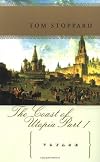
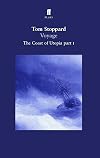
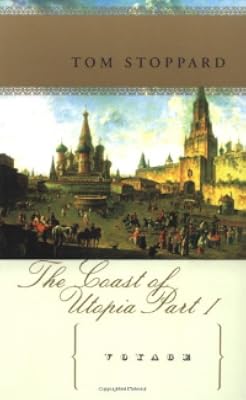
Comprising of three sequential plays, The Coast of Utopia chronicles the story of romantics and revolutionaries caught up in a struggle for political freedom in an age of emperors. The Coast of Utopia is Tom Stoppard's long-awaited and monumental trilogy that explores a group of friends who come of age under the Tsarist autocracy of Nicholas I, and for whom the term 'intelligentsia' was coined. Among them are the anarchist Michael Bakunin, who was to challenge Marx for the soul of the show more masses; Ivan Turgenev, author of some of the most enduring works in Russian literature; the brilliant, erratic young critic Vissarion Belinsky; and Alexander Herzen, a nobleman's son and the first self-proclaimed socialist in Russia, who becomes the main focus of this drama of politics, love, loss and betrayal. In The Coast of Utopia, Stoppard presents an inspired examination of the struggle between romantic anarchy, utopian idealism and practical reformation. show lessTags
Recommendations

















Member Reviews
Why does one go on a voyage? Sometimes you voyage to return to a place where you had previously visited, but you may choose to voyage to a completely new place, adventure in the unknown and perhaps into the future. This play is about the latter type of voyage. It is about young idealists centered around the polarizing and exciting figure of Michael Bakunin. It is about his family, their domestic relationships, and his friends. Stoppard presents these characters and develops situations that demonstrate Russia in the wake of the Decembrists.
The opening scene is a dinner scene with the Bakunin family, four daughters, mother, and at the head of the table father Alexander. He boasts of his daughters' learning and nostalgically remembers his show more own youthful Rousseau-based liberalism with the ghosts of the Bastille. The return from Moscow of son Michael is the first clash demonstrating the impact of change and new ideas on tradition presented in scenes of the young idealists, including Bakunin, Belinsky, Stankevich, and Herzen, with their elders, teachers, acting in the shadow of the minions of Tsar Nicholas I.
The young idealists discuss new ideas like "transcendental idealism" and question the nature of "objective reality". The world of ideas, represented by German philosophers like Kant, Hegel and Schelling, is changing rapidly leaving Russia "Stuck between dried up old French reasoning and the new German idealism which explains everything." The philosophical response of Michael Bakunin is that "Hegel shows that objective reality cannot be ignored," while Belinsky's approach is artistic invoking Pushkin. For Belinsky "The divine spark in man is not reason after all, but something else, some kind of intuition or vision, perhaps like the moment of inspiration experienced by the artist . . ."
Belinsky's approach seems closer to that of Stoppard himself. His play, for all of its intense intellectual dialogue, is multifaceted with domestic relations among the Bakunin women mirroring the changes being discussed by the young idealistic philosophers. We gradually see the budding of the intelligentsia whose ideas would be the tinder for the coming fires of revolution, first in the rest of Europe and only later in Russia. The drama of Voyage leads the reader on a journey that raises questions on almost every page. One answer to the central questions of the play is presented by Belinsky as the play nears its end:
"Don't you bother with reading, Katya, words just lead you on. They arrange themselves every which way with no can to carry for the promises they can't keep, and off you go! "The objective world is the still unconscious poetry of the soul." What do these words mean? "The spiritual communion of beautiful souls attaining harmony with the Absolute." What do they mean? . . . Nothing, and I understood them perfectly!"
The final scene is set again at the family estate, a final farewell for old Alexander Bakunin. The stage directions even point out the old man's age again ("aged seventy six"), one more reminder to emphasize the end is nigh. Immediately his wife warns "You'll catch your death !". Oh yes, and he's watching the sunset. An age is over, and new times are coming, the voyage begun. "The words just lead you on" and in the end you remain in a state of wonder, still seeking The Coast of Utopia. show less
The opening scene is a dinner scene with the Bakunin family, four daughters, mother, and at the head of the table father Alexander. He boasts of his daughters' learning and nostalgically remembers his show more own youthful Rousseau-based liberalism with the ghosts of the Bastille. The return from Moscow of son Michael is the first clash demonstrating the impact of change and new ideas on tradition presented in scenes of the young idealists, including Bakunin, Belinsky, Stankevich, and Herzen, with their elders, teachers, acting in the shadow of the minions of Tsar Nicholas I.
The young idealists discuss new ideas like "transcendental idealism" and question the nature of "objective reality". The world of ideas, represented by German philosophers like Kant, Hegel and Schelling, is changing rapidly leaving Russia "Stuck between dried up old French reasoning and the new German idealism which explains everything." The philosophical response of Michael Bakunin is that "Hegel shows that objective reality cannot be ignored," while Belinsky's approach is artistic invoking Pushkin. For Belinsky "The divine spark in man is not reason after all, but something else, some kind of intuition or vision, perhaps like the moment of inspiration experienced by the artist . . ."
Belinsky's approach seems closer to that of Stoppard himself. His play, for all of its intense intellectual dialogue, is multifaceted with domestic relations among the Bakunin women mirroring the changes being discussed by the young idealistic philosophers. We gradually see the budding of the intelligentsia whose ideas would be the tinder for the coming fires of revolution, first in the rest of Europe and only later in Russia. The drama of Voyage leads the reader on a journey that raises questions on almost every page. One answer to the central questions of the play is presented by Belinsky as the play nears its end:
"Don't you bother with reading, Katya, words just lead you on. They arrange themselves every which way with no can to carry for the promises they can't keep, and off you go! "The objective world is the still unconscious poetry of the soul." What do these words mean? "The spiritual communion of beautiful souls attaining harmony with the Absolute." What do they mean? . . . Nothing, and I understood them perfectly!"
The final scene is set again at the family estate, a final farewell for old Alexander Bakunin. The stage directions even point out the old man's age again ("aged seventy six"), one more reminder to emphasize the end is nigh. Immediately his wife warns "You'll catch your death !". Oh yes, and he's watching the sunset. An age is over, and new times are coming, the voyage begun. "The words just lead you on" and in the end you remain in a state of wonder, still seeking The Coast of Utopia. show less
The death of a child has no more meaning than the death of armies, of nations. Was the child happy while he lived? That is a proper question, the only question. If we can't arrange our own happiness, it's a conceit beyond vulgarity to arrange the happiness of those who come after us.
I bought the trilogy for my wife just before we went to NYC to see it performed life at Lincoln Center. Stoppard provided an astonishing intellectual history. I thoroughly enjoyed the performances as well. The evening reached its zenith when John Lithgow and I had our moment.
I bought the trilogy for my wife just before we went to NYC to see it performed life at Lincoln Center. Stoppard provided an astonishing intellectual history. I thoroughly enjoyed the performances as well. The evening reached its zenith when John Lithgow and I had our moment.
Ratings
Members
- Recently Added By
Author Information

113+ Works 23,618 Members
When the National Theatre needed a last-minute substitute for a canceled production of As You Like It, Kenneth Tynan decided to stage Rosencrantz and Guildenstern Are Dead, a work by an unfamiliar author that had received discouraging notices from provincial critics at its Edinburgh Festival debut. Of course, the play, when it opened in April show more 1967, met with universal acclaim. In New York the next year, it was chosen best play by the Drama Critics Circle. In such an unlikely way, Tom Stoppard came to light. Born in Czechoslovakia, a country he left (for Singapore) when he was an infant, he began his literary career as a journalist in Bristol, where play reviewing led to playwriting. After Rosencrantz and Guildenstern, Stoppard's reputation suffered through the production of a number of minor works, whose intellectual preoccupations were shrugged off by reviewers: Enter a Free Man (1968; "an adolescent twinge of a play," N.Y. Times), The Real Inspector Hound (1968; "lightweight," N.Y. Times), and After Magritte. But in the 1970s, the initial enthusiasms aroused by Rosencrantz and Guildenstern were more than vindicated by the production of two full-length plays, Jumpers (1974) and the antiwar play Travesties (1975), whose immense verbal and theatrical inventiveness made them absolute successes on both sides of the Atlantic. Stoppard's method from the start has been to contrive explanations for highly unlikely encounters---of objects (the ironing board, old lady, and bowler hat of After Magritte), characters (Joyce, Lenin, and Tzara in Travesties), and even plays (Hamlet, Rosencrantz and Guildenstern, The Importance of Being Earnest, Travesties, and The Real Thing, 1982). In the 1970s, Tynan called for Stoppard---as a Czech and as an artist---to engage himself politically. But although political subjects have since found their way into pieces from Every Good Boy Deserves Favor (1977) to Squaring the Circle (1985), politics and art seem to have become just two more of the playwright's irreconcilables, which meet, but never join, in the logical frames of his comedy. The presence of political material---such as the Lenin sections that nearly ruin the second part of Travesties---has occasionally strained the structure of the plays. But in The Real Thing Stoppard is comfortable enough with the satire on art and activism to bring a third subject, love, into the mix. Stoppard has acknowledged his Eastern European heritage nonpolitically, in a series of adaptations of plays by Arthur Schnitzler (see Vol. 2), Johann Nestroy, and Ferenc Molnar. (Bowker Author Biography) Tom Stoppard is the author of many plays, including Rosencrantz and Guildenstern Are Dead, Jumpers, Travesties, and The Invention of Love. He lives in London. (Publisher Provided) show less
Series

Work Relationships
Is contained in
Common Knowledge
- Original title
- Voyage: The Coast of Utopia Part I
- Original publication date
- 2002
- Original language
- English
Classifications
Statistics
- Members
- 182
- Popularity
- 180,281
- Reviews
- 3
- Rating
- (3.96)
- Languages
- English
- Media
- Paper, Ebook
- ISBNs
- 6
- ASINs
- 1