On This Page
Description
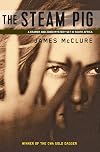
In the debut mystery featuring Lieutenant Kramer and Detective Sergeant Mickey Zondi set in South Africa, a beautiful blonde has been killed by a bicycle spoke to the heart, Bantu gangster style. Why?Tags
Recommendations





























Member Recommendations

Member Reviews
A tricky one to interpret, this. Let’s get the basics out of the way: it’s set in a fictional South African town at the height of apartheid; it follows a police investigation of the murder of a young woman; the main characters are an Afrikaner inspector, Kramer, and his Black sergeant, Zondi. The possessive “his” seems particularly appropriate here. Kramer treats Zondi very much as a dogsbody—at least in public.
That’s indicative of what’s at the surface of the book. It’s straightforwardly reflective of its times and its place, and the reflection isn’t pretty. Almost everyone is horrible to everyone else: uncaring, rude, brutal. The casual racial slurs pile up fast, and they seem to be meant. The baleful influence of show more apartheid legislation is apparent throughout, not as a focal matter but as scenery. It is just matter-of-factly the case that this zone is for whites and this for non-whites and that’s how things are.
All that’s grim enough, and then there’s the descriptive register in which the book is written. The stock of metaphor and simile and reference is relentlessly scatological—piss stains in pants, things that feel warm “like a recently used toilet seat”, and so on.
So on the surface, this book just seems unpleasant, dated, an unhappy artefact of an unhappy time. But here’s the thing: read a little about McClure and you find that he was a campaigner against apartheid, a journalist whose reporting on police violence upset the South African authorities so much that he felt he had to leave the country in 1965 to escape their harassment. Would such a person write a book that unthinkingly, uncritically uses the South African situation as mere interesting backdrop? It seems unlikely. So what is going on here?
A few online sources locate the subversiveness of the story in the fact that Kramer and Zondi are actually quite nice to each other in private. They are, and it’s also true that they are the only two characters who seem to have any kind of soft side. But they are also relentlessly mean to many other people, and not at all above a bit of casual police brutality of their own. So if this is it, it’s thin stuff.
Perhaps, then, it’s more like this: simply showing what’s happening is a way of exposing it, and exposure is all that’s needed to demonstrate the appalling nature of apartheid, and so the book is such a demonstration. That might be it, and that might make sense of the surely deliberate unpleasant register of the description—a subtle bit of editorialising, as it were.
But I wonder if there’s more than that. Essentially, the entire plot of the book, the crime, the victim’s susceptibility, the culprit’s motive, all arise precisely because of apartheid legislation. The victim is trying to “pass” as white, having been arbitrarily declared “coloured”. The culprits kill her because they couldn’t possibly be caught in a compromising position with a non-white woman. It’s a bit like those novels from 1950s Britain that read like adverts for the liberalisation of divorce laws. None of this pointless, horrible stuff would have to happen if the laws weren’t as they were.
That might be overthinking, but it’s the right kind of explanation of how an apparently grim book could in fact be doing the work the author wants. Which is all nice and clever, and well done, but I’m not sure I’ll be rushing to read the rest of the Kramer-Zondi books. show less
That’s indicative of what’s at the surface of the book. It’s straightforwardly reflective of its times and its place, and the reflection isn’t pretty. Almost everyone is horrible to everyone else: uncaring, rude, brutal. The casual racial slurs pile up fast, and they seem to be meant. The baleful influence of show more apartheid legislation is apparent throughout, not as a focal matter but as scenery. It is just matter-of-factly the case that this zone is for whites and this for non-whites and that’s how things are.
All that’s grim enough, and then there’s the descriptive register in which the book is written. The stock of metaphor and simile and reference is relentlessly scatological—piss stains in pants, things that feel warm “like a recently used toilet seat”, and so on.
So on the surface, this book just seems unpleasant, dated, an unhappy artefact of an unhappy time. But here’s the thing: read a little about McClure and you find that he was a campaigner against apartheid, a journalist whose reporting on police violence upset the South African authorities so much that he felt he had to leave the country in 1965 to escape their harassment. Would such a person write a book that unthinkingly, uncritically uses the South African situation as mere interesting backdrop? It seems unlikely. So what is going on here?
A few online sources locate the subversiveness of the story in the fact that Kramer and Zondi are actually quite nice to each other in private. They are, and it’s also true that they are the only two characters who seem to have any kind of soft side. But they are also relentlessly mean to many other people, and not at all above a bit of casual police brutality of their own. So if this is it, it’s thin stuff.
Perhaps, then, it’s more like this: simply showing what’s happening is a way of exposing it, and exposure is all that’s needed to demonstrate the appalling nature of apartheid, and so the book is such a demonstration. That might be it, and that might make sense of the surely deliberate unpleasant register of the description—a subtle bit of editorialising, as it were.
But I wonder if there’s more than that. Essentially, the entire plot of the book, the crime, the victim’s susceptibility, the culprit’s motive, all arise precisely because of apartheid legislation. The victim is trying to “pass” as white, having been arbitrarily declared “coloured”. The culprits kill her because they couldn’t possibly be caught in a compromising position with a non-white woman. It’s a bit like those novels from 1950s Britain that read like adverts for the liberalisation of divorce laws. None of this pointless, horrible stuff would have to happen if the laws weren’t as they were.
That might be overthinking, but it’s the right kind of explanation of how an apparently grim book could in fact be doing the work the author wants. Which is all nice and clever, and well done, but I’m not sure I’ll be rushing to read the rest of the Kramer-Zondi books. show less
WARNING: This review contains spoilers.
****
This book started out really neat and then just kind of fizzled out toward the end. I'm not sure how much of it I can chalk up to the fact that I was reading it on the bus and how much of it is actually the book's fault. I was interested in this book because of its being placed on a Top 100 Mystery Novels list (either the British or American one; can't remember at the moment and don't feel like looking it up, but it's on Wikipedia somewhere). The setting of South Africa was also a draw, as was the fact that the detecting duo was mixed-race (one an Afrikaner, one a Zulu), and the reviews that said the book was in the tradition of John D. MacDonald and Ed McBain.
Well, this was like a weaker entry show more in the Ed McBain series. The beginning was certainly strong. We begin with two dead women at the undertaker's. One of the women is supposed to be cremated right away and one is supposed to be autopsied. But the undertaker screws up and sends the wrong body to the crematorium. The doctor didn't realize he was doing an autopsy on the wrong body until he was finished, but it was a good thing the undertaker kept her instead -- it turns out that she was very sneakily murdered using a bicycle spoke poked strategically between the ribs and into the aorta. Yikes. So naturally Kramer and Zondi have to investigate this death, especially because the murder method is peculiar to black hitmen in this book, and the victim is white (or so it seems). What could she have been mixed up in that would lead to her death in such a manner? You'll have to read for yourself, because I kind of lost the thread a few times and then wasn't sure how Kramer came to the conclusions he did, and the ending just left me shaking my head because I was pretty well lost.
However, all is not lost with McClure. He certainly deserves points for nastiness, as the quote from the Times Literary Supplement promises we shall find in this book. And even though this is the first book in the series, the characters feel established -- there's no steaming piles of backstory shovelled in to orient the reader. His writing is also very descriptive. I didn't bookmark any quotable quotes, but the part about the would-be mob boss getting a bicycle spoke in the spinal cord and being made a quadriplegic was absolutely chilling. I'm still getting the shivers thinking about it. His sense of atmosphere is also very good. But the plot kind of fell apart on me about 2/3 of the way through and never recovered. Borrow this from the library if you're interested in it. show less
****
This book started out really neat and then just kind of fizzled out toward the end. I'm not sure how much of it I can chalk up to the fact that I was reading it on the bus and how much of it is actually the book's fault. I was interested in this book because of its being placed on a Top 100 Mystery Novels list (either the British or American one; can't remember at the moment and don't feel like looking it up, but it's on Wikipedia somewhere). The setting of South Africa was also a draw, as was the fact that the detecting duo was mixed-race (one an Afrikaner, one a Zulu), and the reviews that said the book was in the tradition of John D. MacDonald and Ed McBain.
Well, this was like a weaker entry show more in the Ed McBain series. The beginning was certainly strong. We begin with two dead women at the undertaker's. One of the women is supposed to be cremated right away and one is supposed to be autopsied. But the undertaker screws up and sends the wrong body to the crematorium. The doctor didn't realize he was doing an autopsy on the wrong body until he was finished, but it was a good thing the undertaker kept her instead -- it turns out that she was very sneakily murdered using a bicycle spoke poked strategically between the ribs and into the aorta. Yikes. So naturally Kramer and Zondi have to investigate this death, especially because the murder method is peculiar to black hitmen in this book, and the victim is white (or so it seems). What could she have been mixed up in that would lead to her death in such a manner? You'll have to read for yourself, because I kind of lost the thread a few times and then wasn't sure how Kramer came to the conclusions he did, and the ending just left me shaking my head because I was pretty well lost.
However, all is not lost with McClure. He certainly deserves points for nastiness, as the quote from the Times Literary Supplement promises we shall find in this book. And even though this is the first book in the series, the characters feel established -- there's no steaming piles of backstory shovelled in to orient the reader. His writing is also very descriptive. I didn't bookmark any quotable quotes, but the part about the would-be mob boss getting a bicycle spoke in the spinal cord and being made a quadriplegic was absolutely chilling. I'm still getting the shivers thinking about it. His sense of atmosphere is also very good. But the plot kind of fell apart on me about 2/3 of the way through and never recovered. Borrow this from the library if you're interested in it. show less
First Line: For an undertaker George Henry Abbott was a sad man.
In this first book in the Kramer and Zondi mystery series set in South Africa and originally published in 1971, a beautiful blonde has been killed by a bicycle spoke to the heart. The use of bicycle spokes as murder weapons is the signature of Bantu gangsters. Why would the Bantu kill a white woman in this manner? It's something that Kramer and his Bantu partner, Zondi, are going to have to find out.
This is a series that I've been meaning to sample for a long time because I've heard so many good things about it. Although I found McClure's gritty, almost terse, writing style a bit confusing from time to time and his characters not very well fleshed out, I found a lot to like show more about The Steam Pig.
I found the well-paced plot to contain several surprises, but more than anything I loved McClure's subtlety. This book was written during the time of apartheid, and McClure's books were wildly popular in South Africa when they were first published. This means that these mysteries had to appeal to both supporters and opponents of the system of racial segregation that finally came to an end in 1994.
You can find the language of racism in The Steam Pig. There are kaffirs, "boys", etc.-- but the language is applied with a light touch. The races are segregated. The laws are being upheld. But they are being upheld by a mixed race partnership that is really a friendship if you take the time to look deep enough. And it will take time because Kramer and Zondi are experts at toeing the "boss and boy" line when in company. They don't stand out; they blend in. But for anyone who cares to observe closely, it's easy to see that the laws Kramer and Zondi insist upon being upheld first aren't the laws of racial segregation; they're the laws of human decency and finding killers regardless of the color of the victim's skin.
Although I really wish Kramer and Zondi had been fleshed out a bit more, I was-- and still am-- in awe of McClure's skill. He put together an engrossing mystery that's all about what's beneath the surface. I'm looking forward to reading the other books in the series. show less
In this first book in the Kramer and Zondi mystery series set in South Africa and originally published in 1971, a beautiful blonde has been killed by a bicycle spoke to the heart. The use of bicycle spokes as murder weapons is the signature of Bantu gangsters. Why would the Bantu kill a white woman in this manner? It's something that Kramer and his Bantu partner, Zondi, are going to have to find out.
This is a series that I've been meaning to sample for a long time because I've heard so many good things about it. Although I found McClure's gritty, almost terse, writing style a bit confusing from time to time and his characters not very well fleshed out, I found a lot to like show more about The Steam Pig.
I found the well-paced plot to contain several surprises, but more than anything I loved McClure's subtlety. This book was written during the time of apartheid, and McClure's books were wildly popular in South Africa when they were first published. This means that these mysteries had to appeal to both supporters and opponents of the system of racial segregation that finally came to an end in 1994.
You can find the language of racism in The Steam Pig. There are kaffirs, "boys", etc.-- but the language is applied with a light touch. The races are segregated. The laws are being upheld. But they are being upheld by a mixed race partnership that is really a friendship if you take the time to look deep enough. And it will take time because Kramer and Zondi are experts at toeing the "boss and boy" line when in company. They don't stand out; they blend in. But for anyone who cares to observe closely, it's easy to see that the laws Kramer and Zondi insist upon being upheld first aren't the laws of racial segregation; they're the laws of human decency and finding killers regardless of the color of the victim's skin.
Although I really wish Kramer and Zondi had been fleshed out a bit more, I was-- and still am-- in awe of McClure's skill. He put together an engrossing mystery that's all about what's beneath the surface. I'm looking forward to reading the other books in the series. show less
Set in Trekkersburg, a small unfashionable town just north of Durban, South Africa this police drama sets itself down smack dab in the middle of 1960’s apartheid. Bantu gangsters fill the town with crime which Kramer and his surprising side kick, Sergeant Zondi, a Bantu native get to solve. Zondi is able to get the other kaffirs to open up to him where they would not have to a white police officer and so the remarkable team gains a foothold on local crime.
The surprise we find in The Steam Pig is that the criminals are local politicians who get themselves mixed up with a Miss Le Roux, who it turns out is a mixed-race female passing herself off as white. Unable to face that they have had a relationship with the young lady she turns up show more on the slab at the mortuary.
Kramer seems to stumble through the mystery, the debut novel in a series starring the two policemen, as clues seem to get dropped at his feet. Luckily for him he is astute enough to recognize them and along with the information passed on from the Bantu informant, the unfortunate Shoe Shoe, and the invalid Indian Moosa, who watches the neighborhood from his upstairs bedroom window, the mystery begins to unravel as the pieces fall in place.
Just the title alone, The Steam Pig, spoke of a juicy, mouth-watering story. I knew in an instance that is somehow referred to the beautiful blonde laying on the stone slab, but McClure keeps the secret literally until the last page. A taut, secretive story that leans on the hate of an apartheid society, to the shocking conclusion that shows that nothing is as it appears, and that even a mother cannot grieve publically for her daughter in case the secret of their life is revealed show less
The surprise we find in The Steam Pig is that the criminals are local politicians who get themselves mixed up with a Miss Le Roux, who it turns out is a mixed-race female passing herself off as white. Unable to face that they have had a relationship with the young lady she turns up show more on the slab at the mortuary.
Kramer seems to stumble through the mystery, the debut novel in a series starring the two policemen, as clues seem to get dropped at his feet. Luckily for him he is astute enough to recognize them and along with the information passed on from the Bantu informant, the unfortunate Shoe Shoe, and the invalid Indian Moosa, who watches the neighborhood from his upstairs bedroom window, the mystery begins to unravel as the pieces fall in place.
Just the title alone, The Steam Pig, spoke of a juicy, mouth-watering story. I knew in an instance that is somehow referred to the beautiful blonde laying on the stone slab, but McClure keeps the secret literally until the last page. A taut, secretive story that leans on the hate of an apartheid society, to the shocking conclusion that shows that nothing is as it appears, and that even a mother cannot grieve publically for her daughter in case the secret of their life is revealed show less
Set in Trekkersburg, a small unfashionable town just north of Durban, South Africa this police drama sets itself down smack dab in the middle of 1960’s apartheid. Bantu gangsters fill the town with crime which Kramer and his surprising side kick, Sergeant Zondi, a Bantu native get to solve. Zondi is able to get the other kaffirs to open up to him where they would not have to a white police officer and so the remarkable team gains a foothold on local crime.
The surprise we find in The Steam Pig is that the criminals are local politicians who get themselves mixed up with a Miss Le Roux, who it turns out is a mixed-race female passing herself off as white. Unable to face that they have had a relationship with the young lady she turns up show more on the slab at the mortuary.
Kramer seems to stumble through the mystery, the debut novel in a series starring the two policemen, as clues seem to get dropped at his feet. Luckily for him he is astute enough to recognize them and along with the information passed on from the Bantu informant, the unfortunate Shoe Shoe, and the invalid Indian Moosa, who watches the neighborhood from his upstairs bedroom window, the mystery begins to unravel as the pieces fall in place.
Just the title alone, The Steam Pig, spoke of a juicy, mouth-watering story. I knew in an instance that is somehow referred to the beautiful blonde laying on the stone slab, but McClure keeps the secret literally until the last page. A taut, secretive story that leans on the hate of an apartheid society, to the shocking conclusion that shows that nothing is as it appears, and that even a mother cannot grieve publically for her daughter in case the secret of their life is revealed show less
The surprise we find in The Steam Pig is that the criminals are local politicians who get themselves mixed up with a Miss Le Roux, who it turns out is a mixed-race female passing herself off as white. Unable to face that they have had a relationship with the young lady she turns up show more on the slab at the mortuary.
Kramer seems to stumble through the mystery, the debut novel in a series starring the two policemen, as clues seem to get dropped at his feet. Luckily for him he is astute enough to recognize them and along with the information passed on from the Bantu informant, the unfortunate Shoe Shoe, and the invalid Indian Moosa, who watches the neighborhood from his upstairs bedroom window, the mystery begins to unravel as the pieces fall in place.
Just the title alone, The Steam Pig, spoke of a juicy, mouth-watering story. I knew in an instance that is somehow referred to the beautiful blonde laying on the stone slab, but McClure keeps the secret literally until the last page. A taut, secretive story that leans on the hate of an apartheid society, to the shocking conclusion that shows that nothing is as it appears, and that even a mother cannot grieve publically for her daughter in case the secret of their life is revealed show less
Set in Trekkersburg, a small unfashionable town just north of Durban, South Africa this police drama sets itself down smack dab in the middle of 1960’s apartheid. Bantu gangsters fill the town with crime which Kramer and his surprising side kick, Sergeant Zondi, a Bantu native get to solve. Zondi is able to get the other kaffirs to open up to him where they would not have to a white police officer and so the remarkable team gains a foothold on local crime.
The surprise we find in The Steam Pig is that the criminals are local politicians who get themselves mixed up with a Miss Le Roux, who it turns out is a mixed-race female passing herself off as white. Unable to face that they have had a relationship with the young lady she turns up show more on the slab at the mortuary.
Kramer seems to stumble through the mystery, the debut novel in a series starring the two policemen, as clues seem to get dropped at his feet. Luckily for him he is astute enough to recognize them and along with the information passed on from the Bantu informant, the unfortunate Shoe Shoe, and the invalid Indian Moosa, who watches the neighborhood from his upstairs bedroom window, the mystery begins to unravel as the pieces fall in place.
Just the title alone, The Steam Pig, spoke of a juicy, mouth-watering story. I knew in an instance that is somehow referred to the beautiful blonde laying on the stone slab, but McClure keeps the secret literally until the last page. A taut, secretive story that leans on the hate of an apartheid society, to the shocking conclusion that shows that nothing is as it appears, and that even a mother cannot grieve publically for her daughter in case the secret of their life is revealed show less
The surprise we find in The Steam Pig is that the criminals are local politicians who get themselves mixed up with a Miss Le Roux, who it turns out is a mixed-race female passing herself off as white. Unable to face that they have had a relationship with the young lady she turns up show more on the slab at the mortuary.
Kramer seems to stumble through the mystery, the debut novel in a series starring the two policemen, as clues seem to get dropped at his feet. Luckily for him he is astute enough to recognize them and along with the information passed on from the Bantu informant, the unfortunate Shoe Shoe, and the invalid Indian Moosa, who watches the neighborhood from his upstairs bedroom window, the mystery begins to unravel as the pieces fall in place.
Just the title alone, The Steam Pig, spoke of a juicy, mouth-watering story. I knew in an instance that is somehow referred to the beautiful blonde laying on the stone slab, but McClure keeps the secret literally until the last page. A taut, secretive story that leans on the hate of an apartheid society, to the shocking conclusion that shows that nothing is as it appears, and that even a mother cannot grieve publically for her daughter in case the secret of their life is revealed show less
white/Bantu team solve murder of white woman really colored, interesting view of apartheid
Members
- Recently Added By
Lists

Top 100 Mystery Novels of All Time
98 works; 9 members

501 Must-Read Books
529 works; 72 members

Best Crime Fiction
262 works; 39 members
Author Information

22+ Works 1,118 Members
Awards and Honors
Series

Belongs to Publisher Series
Etiqueta Negra (110)
Work Relationships
Is abridged in
Common Knowledge
- Canonical title
- The Steam Pig
- Original title
- The Steam Pig
- Original publication date
- 1971
- People/Characters
- Mickey Zondi (Sergeant); Trompie Kramer (Lieutenant)
- Dedication
- To Lorly
- First words
- For an undertaker George Henry Abbott was a sad man.
- Original language*
- English
- Canonical DDC/MDS
- 823.914
- Canonical LCC
- PR9369.M394
*Some information comes from Common Knowledge in other languages. Click "Edit" for more information.
Classifications
Statistics
- Members
- 252
- Popularity
- 129,071
- Reviews
- 11
- Rating
- (3.45)
- Languages
- 5 — Danish, Dutch, English, German, Spanish
- Media
- Paper, Ebook
- ISBNs
- 20
- ASINs
- 12