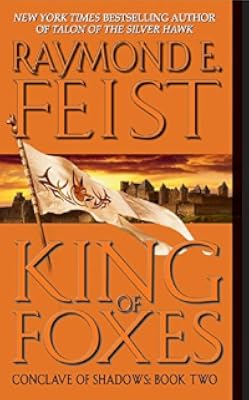
King of Foxes
by Raymond E. Feist
Conclave of Shadows (2), The Riftwar Cycle: Publication (Series Blocks) (22), The Riftwar Cycle: Publication (Series Name) (Conclave of Shadows, 2), The Riftwar Cycle, Alternative Reading Order (21 (Conclave of the Shadows 02)), The Riftwar Cycle: Chronological (21 (Conclave of the Shadows 02))
On This Page
Description
In the mountains of Midkemia, a boy came brutally of age in blood and in terror. And now he lives for one purpose alone ... revenge! An exceptionally skilled swordsman, young Tal Hawkins was the only survivor of the massacre of his village -- rescued, recruited, and trained by the mysterious order of magicians and spies, the Conclave of Shadows. Now one of the secret society's most valuable agents, he gains entrance into the court of Duke Olasko, the bloodthirsty and powerful despot whose show more armies put Tal's village to the sword, by posing as a nobleman from the distant Kingdom of the Isles. But the enemy is cunning and well protected -- in league with the foul necromancer Leso Varen, dark master of death-magic -- and to gain the Duke's trust and confidence, Tal Hawkins must first sell his soul. show lessTags
Recommendations

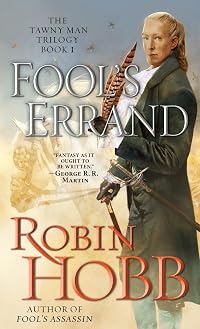
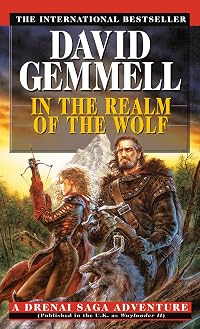

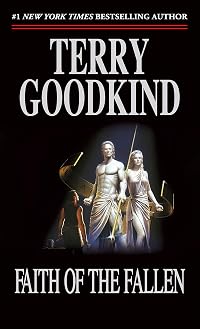
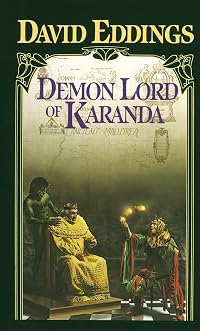
Member Reviews
This one turned out quite a bit darker than the first, happily, and the hero of our tale got himself very nicely snagged as a minor noble in a big chaotic game of the Duke.
The duke is, of course, the king of foxes, and he really won’t be outfoxed.
All told, I had a good time, enjoying a lot of intrigue fluff, long-game revenge planning, and natural reversals. It’s game of thrones, Feist-style.
There is nothing groundbreaking here, but it was entertaining, and that’s all I’m looking for at the moment. :)
The duke is, of course, the king of foxes, and he really won’t be outfoxed.
All told, I had a good time, enjoying a lot of intrigue fluff, long-game revenge planning, and natural reversals. It’s game of thrones, Feist-style.
There is nothing groundbreaking here, but it was entertaining, and that’s all I’m looking for at the moment. :)
An unworthy follow-up to the first of this trilogy, King of Foxes bore little of what made Talon of the Silver Hawk worthwhile and even twisted up some of it so that it came out badly.
In the second half of the previous novel, Talon became a somewhat generic character, though it was somewhat excusable since he was playing a role and crafting a persona for himself. However, for the vast majority of King of Foxes, that person is the only character Tal evinces. Talon became almost completely subsumed beneath Talwin, and rather than being a character-driven novel, this became event-driven. Tal's character became stagnant, and the only instances of anything other than the generic Midkemian noble appearing were short, awkward, and emotionally show more forced. Feist attempted to weave the crafted persona and underlying character together at the end, but it was accomplished in 15 pages with little progression done beforehand to justify the changes in Tal necessary for him to come to such a place. Tal's character development was simply unrealistic and forced and seemingly done only to tie up loose ends.
In addition, Feist used a number of fairly miraculous happenings to drive the plot along in ways that were too cliched to be worthwhile. Some of his choices seemed to lack creativity or serious thought, which makes me wonder if he felt under time constraints from his publisher or internally that he could not spend the time to work out more interesting and novel ways of solving the problems he established for his characters. Toward the end, the circumstances suddenly expanded to encompass most of the eastern world in ways that the rest of the storyline did not quite justify, which came off feeling like grandiosity for its own sake.
(From Goodreads) show less
In the second half of the previous novel, Talon became a somewhat generic character, though it was somewhat excusable since he was playing a role and crafting a persona for himself. However, for the vast majority of King of Foxes, that person is the only character Tal evinces. Talon became almost completely subsumed beneath Talwin, and rather than being a character-driven novel, this became event-driven. Tal's character became stagnant, and the only instances of anything other than the generic Midkemian noble appearing were short, awkward, and emotionally show more forced. Feist attempted to weave the crafted persona and underlying character together at the end, but it was accomplished in 15 pages with little progression done beforehand to justify the changes in Tal necessary for him to come to such a place. Tal's character development was simply unrealistic and forced and seemingly done only to tie up loose ends.
In addition, Feist used a number of fairly miraculous happenings to drive the plot along in ways that were too cliched to be worthwhile. Some of his choices seemed to lack creativity or serious thought, which makes me wonder if he felt under time constraints from his publisher or internally that he could not spend the time to work out more interesting and novel ways of solving the problems he established for his characters. Toward the end, the circumstances suddenly expanded to encompass most of the eastern world in ways that the rest of the storyline did not quite justify, which came off feeling like grandiosity for its own sake.
(From Goodreads) show less
In the course of book 1 the main character was getting less and less likeable. But in this book he starts to realise that not all changes are good. The struggle he has with his own personality was more interesting than the physical fights. Though I felt that there was one situation that got resolved a little too easily. It's under the spoiler tag.
his arm gets cut off, but later on they restore it with magic.
Oh and it's definitely a guy book. The main character is super talented and all the women fawn over him. That got boring pretty quickly fortunately the ongoing plot is interesting enough to keep reading anyway.
Oh and it's definitely a guy book. The main character is super talented and all the women fawn over him. That got boring pretty quickly fortunately the ongoing plot is interesting enough to keep reading anyway.
Talwin Hawkins, Talon, the last of the Orosini, infiltrates the court of Duke Kaspar of Olasko, the man who destroyed his people, to seek vengeance, only to face betrayal and a desperate quest to survive.
Tal poses as a dashing noble to become a trusted operative for Duke Kaspar, engaging in political maneuvering, military strategy, and dirty work in a corrupt court. Kaspar is allied with a powerful, evil necromancer, Leso Varen, making Tal's mission incredibly dangerous and forcing him to confront moral compromises.
After refusing to compromise his principles, Tal is betrayed, maimed, and left to die in the brutal Fortress of Despair.
Tal poses as a dashing noble to become a trusted operative for Duke Kaspar, engaging in political maneuvering, military strategy, and dirty work in a corrupt court. Kaspar is allied with a powerful, evil necromancer, Leso Varen, making Tal's mission incredibly dangerous and forcing him to confront moral compromises.
After refusing to compromise his principles, Tal is betrayed, maimed, and left to die in the brutal Fortress of Despair.
The Conclave of Shadows trilogy continues, again with the focus on Talon, one of a new generation of heroes. I like what Feist has done with this trilogy, he has recaptured some of the freshness and interest of the very first Midkemia books. By constantly coming up with new heroes, with different personalities and motivations, backed up by the familiar Pug and his family, he makes a connection between the new and the old while making it fresh again. Good stuff.
In dit boeken volgen wij Klauw (Claus) tijdens zijn verdere pogingen om wraak te nemen op Hertog Kasper. Hij komt voor grote dilemmas te staan als hij aan het einde van het boek een keuze moet maken.
De eerste helft van het boek was nogal cliche-vol. In de twee helft werd het boek heel wat beter,zo ongeveer na de ontsnapping van Klauw en de overige gevangene uit het fort met veel actie.
De titel is naar mijn mening niet gelukkig gekozen. Er was geen enkele verwijzing naar of connectie naar een Koning der Vossen.
Op naar het derde deel De Terugkeer van de Banneling
De eerste helft van het boek was nogal cliche-vol. In de twee helft werd het boek heel wat beter,
De titel is naar mijn mening niet gelukkig gekozen. Er was geen enkele verwijzing naar of connectie naar een Koning der Vossen.
Op naar het derde deel De Terugkeer van de Banneling
(Alistair) Not quite back to the old Feist form, as I noted in the above-mentioned previous booklogging, but a definite pick-up from where we were with Talon. Characters fill out nicely, as does the plot.
Speaking of which, an interesting thing is that this middle book in many ways feels like a final book; inasmuch as the first-book-eponymous protagonist, Talon, completes his plot arc and has his revenge on those who destroyed his people, the main villain and the main-er villain receive their comeuppance, and except for a few dangling threads, we receive plot closure...
It looks, in fact, as if the protagonist hat for Exile's Return - based on hints, the title, and the short extract we see at the back of the book - will switch to one of show more those former main villains, the now-exiled-on-the-far-side-of-the-world Duke Kaspar of Olasko. That's an interesting trick, and seeing as said Olasko has been built up as quite an interesting character in his own right over the course of this book, one I hope comes off well.
( http://weblog.siliconcerebrate.com/cerebrate/2009/07/king_of_foxes_raymond_e_fei... ) show less
Speaking of which, an interesting thing is that this middle book in many ways feels like a final book; inasmuch as the first-book-eponymous protagonist, Talon, completes his plot arc and has his revenge on those who destroyed his people, the main villain and the main-er villain receive their comeuppance, and except for a few dangling threads, we receive plot closure...
It looks, in fact, as if the protagonist hat for Exile's Return - based on hints, the title, and the short extract we see at the back of the book - will switch to one of show more those former main villains, the now-exiled-on-the-far-side-of-the-world Duke Kaspar of Olasko. That's an interesting trick, and seeing as said Olasko has been built up as quite an interesting character in his own right over the course of this book, one I hope comes off well.
( http://weblog.siliconcerebrate.com/cerebrate/2009/07/king_of_foxes_raymond_e_fei... ) show less
Members
- Recently Added By
Lists

Best Fantasy Novels
821 works; 361 members
Favourite High Fantasy Books
113 works; 23 members
Author Information

156+ Works 96,826 Members
Fantasy writer Raymond E. Feist was born in Southern California. He received a B.A. in Communication Arts with honors from the University of California at San Diego in 1977. His first novel, Magician, published in 1982 is the first book of The Riftwar Saga. His other series include The Serpentwar Saga, The Empire Trilogy, The Riftwar Legacy, show more Krondor's Sons, Legends of the Riftwar, Conclave of Shadows, Darkwar Saga, Chaoswar Saga, Demonwar Saga, and The Firemane Saga. Feist's work appears regularly on the bestseller lists of The New York Times and The Times of London. He has also worked with Sierra Studios and PyroTechnix to produce a role-playing game. (Bowker Author Biography) show less
Series

Conclave of Shadows
3 works (2)

The Riftwar Cycle: Publication (Series Blocks)
30 works (22)

The Riftwar Cycle: Publication (Series Name)
31 works (Conclave of Shadows, 2)

The Riftwar Cycle, Alternative Reading Order
33 works (21 (Conclave of the Shadows 02))

The Riftwar Cycle: Chronological
32 works (21 (Conclave of the Shadows 02))
Work Relationships
Common Knowledge
- Canonical title
- King of Foxes
- Original title
- King of Foxes
- Original publication date
- 2004
- People/Characters
- Aglaranna
- Epigraph*
- In dienst van Caesar is alles gewettigd - Pierre Corneille - La Mort de Pompée
- Dedication*
- Voor Jessica, met alle liefde die een vader mogelijkerwijs kan geven.
- First words
- A bird soared over the city.
- Last words
- (Click to show. Warning: May contain spoilers.)He grinned.
- Original language*
- Englisch
*Some information comes from Common Knowledge in other languages. Click "Edit" for more information.
Classifications
Statistics
- Members
- 2,340
- Popularity
- 8,449
- Reviews
- 22
- Rating
- (3.74)
- Languages
- 9 — Czech, Dutch, English, French, German, Hungarian, Italian, Polish, Swedish
- Media
- Paper, Audiobook, Ebook
- ISBNs
- 31
- ASINs
- 20