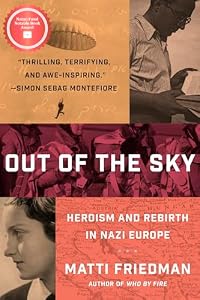
Out of the Sky: An Untold Story of Heroism and Rebirth in Nazi Europe
by Matti Friedman
On This Page
Description
"In Out of the Sky, Matti Friedman unravels one of the strangest episodes of World War II: In 1944, a team of young women and men who had escaped the Holocaust made the inconceivable choice to parachute back into Nazi-occupied Europe under the cover of a British military operation. Yet by the end of the mission, not a single Nazi was harmed and not a single Jew was saved, and many of the parachutists died in the process. Even so, some of their names would become legendary, especially that of show more twenty-three-year-old Hannah Senesh, the author of the beloved Hebrew song "Eli, Eli." Their story would become one of the young state of Israel's founding myths--but what exactly was the mission, and what had the parachutists actually accomplished? What made them heroes? Using thousands of original documents from once-secret files, manuscripts, memoirs, and unpublished letters, Matti Friedman follows four of the parachutists from the spring of 1944 to the operation's dramatic end that winter. In Out of the Sky, he tells the gripping and surprising tale of a forgotten moment, demonstrating how storytelling itself can have a power even greater than warfare. And in exploring the line between myth and reality, heroism and futility, he creates an argument that has resonance in our own time."-- show lessTags
Member Reviews
Out of the sky: An Untold Story of Heroism and Rebirth in
Nazi Europe, Matti Friedman, author and narrator
Friedman focuses his research and writing on the volunteer parachutists,
all Jewish, that the British sent back behind enemy lines in Europe, even
though these young Jews had already been lucky enough to escape from the yoke
of Nazi control. Little is known about them because their lives ended
prematurely, before they even had much of a chance to succeed in their mission
to rescue others. All of these largely unsung heroes had agreed to return to
help others who were trapped behind enemy lines, soldiers and Jews alike. For
me, that makes them all true heroes, regardless of how many or how few, if any
at all, that they were able to rescue. show more They put the needs of others, the lives
of others, before their very own. How many reading this book today would do the
same then or now?
The effort to send these young Jewish underground resistance fighters back
behind enemy territory, was sponsored and supported by MI 9, an intelligence arm
of the British government. The campaign to drop them back into Nazi occupied
Europe, began in 1944, shortly before the war’s end, but the desperation of the
Germans had no effect on their success or failure. The Germans were as determined
to succeed in their genocide, as the volunteers were determined to try and save
those trapped behind enemy lines. The program was not well thought out or
planned, however, and was perhaps conceived out of desperation, as well. The
volunteers were not trained well enough. The odds were against them. They did
not succeed.
At the time of The Holocaust, the British controlled the area in the Middle
East that eventually became the state of Israel. The British had given the area
the name of Palestine. It was not known by that name, otherwise. The author
concentrates on the lives of four of the Jews who had made it to freedom in “Palestine”,
four who were willing to return to Hitler’s hateful war zone to save others. One
of the names stands out for me because it has been often given larger than life
status in books and movies, but that status is, according to the author,
largely mythical. Hannah Senesh disappeared soon after she was parachuted into
Europe. Much of the information about her is gleaned largely from her own
writing, and much of it is embellished by others.
I do not believe that the efforts of the parachutists, 32 in all, can be
measured by ordinary standards. Whether or not they succeeded is irrelevant.
They were heroes for being willing to die for their heritage, and for fellow
Jews and others who had no other hope of escape to safety. They were thirty-two
young Jews who were willing to parachute back into the Nazi occupied areas of
Europe from which they had already perilously escaped. In the end, very few of
them saved anyone else and few survived very long. They were captured quickly.
Hannah Senesh was one of the parachutists. This book sheds light on what really
happened to her, and to the others, but in my mind, even as it exposes myths surrounding
their efforts, they are still heroic figures. Few would have done what Hannah
Senesh and the others were willing to do. They were fully aware of the fact
that they would probably never return home to the relative safety of the Middle
East. In actuality, even afterwards, the area, now known as Israel, has never
been relatively safe. War has been continuous. Perhaps more important is the
idea that the valor and bravery of the Jewish people has never diminished.
Most often, an author should never read his/her own book. Authors are either
too invested in their own message or the voice is not modulated well or
resonant enough. Friedman’s voice is monotonous and tends to make me zone out. Still,
the story is so meaningful, that I downloaded a print copy, as well. I was hard
pressed to figure out if the author supported these well-known heroes or meant
to disprove their heroic status, and to what end. At times, it seemed disjointed.
I decided to give the author the benefit of the doubt, however, and I interpreted
his efforts as though they were trying to shed light on a subject that is dying
in darkness today, as antisemitism is once again in the forefront of the news.
Friedman also reveals facts about a Jew trapped in Hitler’s world, a Jew
perhaps punished unfairly and defined disastrously. Rezso Kasztner was a man
who saved many Jews, and in that capacity had to wear many hats. Therefore, he
was accused of being a collaborator, and essentially, he was by necessity or
choice. He was tried and convicted, then the sentence was reversed, but not
before he was assassinated because of his perceived crimes.
Friedman reminds us of October 7ths massacre of Jews. I am hard
pressed to understand how, after such a brutal event, the villains and
assassins, terrorists and fanatics are being applauded and the Jews are being
denigrated. Once again, the circumstances are inconceivable and the response is
undeniably necessary to most of us who believe in the right of Jews to exist
and in the country of Israel’s right to exist. I think the hateful antisemitism
and antizionism exists because the positive message is sparse and so the
negative message takes hold. Israel’s right to exist is unclear and muddied as
their people are sullied, as well, and like in this book that confuses me as to
the reason the author is writing it, the world is confused as to who the guilty
villains really are and does not understand or object to the truly innocent
Jews and the country of Israel’s persecution.
The four that the author concentrates on are Haim Hermesh, 25 years old, Hannah Senesh,
22 years old, Enzo Seremi, 39 years old, and Haviva Reick who was 30 years old.
All were Zionists and Socialists. Some of the names are aliases. I hope this book leads you to make your own decision as to the current situation
that exists today by doing the research necessary to know all of the facts
involved. show less
Nazi Europe, Matti Friedman, author and narrator
Friedman focuses his research and writing on the volunteer parachutists,
all Jewish, that the British sent back behind enemy lines in Europe, even
though these young Jews had already been lucky enough to escape from the yoke
of Nazi control. Little is known about them because their lives ended
prematurely, before they even had much of a chance to succeed in their mission
to rescue others. All of these largely unsung heroes had agreed to return to
help others who were trapped behind enemy lines, soldiers and Jews alike. For
me, that makes them all true heroes, regardless of how many or how few, if any
at all, that they were able to rescue. show more They put the needs of others, the lives
of others, before their very own. How many reading this book today would do the
same then or now?
The effort to send these young Jewish underground resistance fighters back
behind enemy territory, was sponsored and supported by MI 9, an intelligence arm
of the British government. The campaign to drop them back into Nazi occupied
Europe, began in 1944, shortly before the war’s end, but the desperation of the
Germans had no effect on their success or failure. The Germans were as determined
to succeed in their genocide, as the volunteers were determined to try and save
those trapped behind enemy lines. The program was not well thought out or
planned, however, and was perhaps conceived out of desperation, as well. The
volunteers were not trained well enough. The odds were against them. They did
not succeed.
At the time of The Holocaust, the British controlled the area in the Middle
East that eventually became the state of Israel. The British had given the area
the name of Palestine. It was not known by that name, otherwise. The author
concentrates on the lives of four of the Jews who had made it to freedom in “Palestine”,
four who were willing to return to Hitler’s hateful war zone to save others. One
of the names stands out for me because it has been often given larger than life
status in books and movies, but that status is, according to the author,
largely mythical. Hannah Senesh disappeared soon after she was parachuted into
Europe. Much of the information about her is gleaned largely from her own
writing, and much of it is embellished by others.
I do not believe that the efforts of the parachutists, 32 in all, can be
measured by ordinary standards. Whether or not they succeeded is irrelevant.
They were heroes for being willing to die for their heritage, and for fellow
Jews and others who had no other hope of escape to safety. They were thirty-two
young Jews who were willing to parachute back into the Nazi occupied areas of
Europe from which they had already perilously escaped. In the end, very few of
them saved anyone else and few survived very long. They were captured quickly.
Hannah Senesh was one of the parachutists. This book sheds light on what really
happened to her, and to the others, but in my mind, even as it exposes myths surrounding
their efforts, they are still heroic figures. Few would have done what Hannah
Senesh and the others were willing to do. They were fully aware of the fact
that they would probably never return home to the relative safety of the Middle
East. In actuality, even afterwards, the area, now known as Israel, has never
been relatively safe. War has been continuous. Perhaps more important is the
idea that the valor and bravery of the Jewish people has never diminished.
Most often, an author should never read his/her own book. Authors are either
too invested in their own message or the voice is not modulated well or
resonant enough. Friedman’s voice is monotonous and tends to make me zone out. Still,
the story is so meaningful, that I downloaded a print copy, as well. I was hard
pressed to figure out if the author supported these well-known heroes or meant
to disprove their heroic status, and to what end. At times, it seemed disjointed.
I decided to give the author the benefit of the doubt, however, and I interpreted
his efforts as though they were trying to shed light on a subject that is dying
in darkness today, as antisemitism is once again in the forefront of the news.
Friedman also reveals facts about a Jew trapped in Hitler’s world, a Jew
perhaps punished unfairly and defined disastrously. Rezso Kasztner was a man
who saved many Jews, and in that capacity had to wear many hats. Therefore, he
was accused of being a collaborator, and essentially, he was by necessity or
choice. He was tried and convicted, then the sentence was reversed, but not
before he was assassinated because of his perceived crimes.
Friedman reminds us of October 7ths massacre of Jews. I am hard
pressed to understand how, after such a brutal event, the villains and
assassins, terrorists and fanatics are being applauded and the Jews are being
denigrated. Once again, the circumstances are inconceivable and the response is
undeniably necessary to most of us who believe in the right of Jews to exist
and in the country of Israel’s right to exist. I think the hateful antisemitism
and antizionism exists because the positive message is sparse and so the
negative message takes hold. Israel’s right to exist is unclear and muddied as
their people are sullied, as well, and like in this book that confuses me as to
the reason the author is writing it, the world is confused as to who the guilty
villains really are and does not understand or object to the truly innocent
Jews and the country of Israel’s persecution.
The four that the author concentrates on are Haim Hermesh, 25 years old, Hannah Senesh,
22 years old, Enzo Seremi, 39 years old, and Haviva Reick who was 30 years old.
All were Zionists and Socialists. Some of the names are aliases. I hope this book leads you to make your own decision as to the current situation
that exists today by doing the research necessary to know all of the facts
involved. show less
Members
- Recently Added By
Lists

Globe and Mail | Canadian Non-Fiction: April 4, 2026
10 works; 1 member
Author Information
6 Works 939 Members
Classifications
Statistics
- Members
- 17
- Popularity
- 1,442,465
- Reviews
- 1
- Rating
- (3.00)
- Languages
- English
- Media
- Paper
- ISBNs
- 2