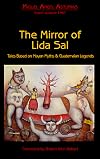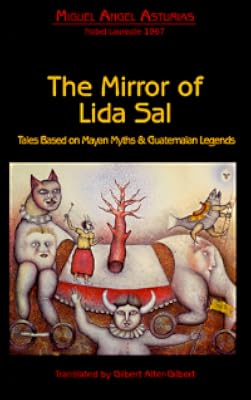
The Mirror of Lida Sal: Tales Based on Mayan Myths and Guatemalan Legends
by Miguel Ángel Asturias
On This Page
Description
"First English-language edition of El espejo de Lida Sal (see HLAS 30:3268), in which the Nobel laureate melds Mayan and Guatemalan myth and folklore in 10 stories whose hallucinatory prose challenges the reader. 'Everything unfolds in a land of natural dreamscapes...The imagination reels.' Although lacking a table of contents and translator's note, the superb translation recommends the work for classroom use"--Handbook of Latin American Studies, v. 58.Tags
Recommendations















































Member Reviews
This collection of stories based on Mayan and Guatemalan traditions appeared in 1967, the same year that Asturias was awarded the Nobel. Although the underlying myths are pre-Columbian, most of the stories here are placed in a more contemporary context, the supernatural New World elements mingling with bits of Catholic, Spanish or African tradition: you can see why Asturias is often cited as a precursor of the "Latin American Boom".
The title story has a woman trying to capture the heart of the man she wants to marry by secretly putting on the costume that he is to wear at a coming festival. She comes to grief, Narcissus-style, when she goes to a river in the moonlight to look at her reflection in the splendid costume. The stories go on show more to look at heroes who challenge their prescribed destiny, origin myths, and myths about creative art, finishing with "Leyenda de la campana difunta", where Catholic/capitalist order comes into direct contact with American disturbing forces in a conflict about the founding of a bell, and the whirlwind duelling dance of "Leyenda de las Matachines", which is at one level a knife-fight between two gauchos over a woman and at another a complicated pattern of identity-shifting Mayan deities.
Not my usual sort of thing, and I don't know much about the background traditions, but all very interesting, and full of complicated, intense, poetic writing. show less
The title story has a woman trying to capture the heart of the man she wants to marry by secretly putting on the costume that he is to wear at a coming festival. She comes to grief, Narcissus-style, when she goes to a river in the moonlight to look at her reflection in the splendid costume. The stories go on show more to look at heroes who challenge their prescribed destiny, origin myths, and myths about creative art, finishing with "Leyenda de la campana difunta", where Catholic/capitalist order comes into direct contact with American disturbing forces in a conflict about the founding of a bell, and the whirlwind duelling dance of "Leyenda de las Matachines", which is at one level a knife-fight between two gauchos over a woman and at another a complicated pattern of identity-shifting Mayan deities.
Not my usual sort of thing, and I don't know much about the background traditions, but all very interesting, and full of complicated, intense, poetic writing. show less
Desde que publicó sus Leyendas de Guatemala, en 1930, Miguel Ángel Asturias había venido incubando -según propia confesión- estos relatos y leyendas. Hay un hilo conductor mágico, lo popular, en los relatos de Lida Sal y los Juanes, y un hilo mítico en las leyendas. Relatos son, y leyendas, de la Guatemala de Miguel Ángel Asturias, esa Guatemala intensa y dolorosa de Juanantes y de la -campana difunta-, esa que los Matachines recorren haciendo brillar sus machetes y que Lida Sal refleja en su espejo de agua, esa que a fuerza de tallar y tallar va apareciendo en la -máscara de cristal-, esa que sube y gira con Juan Girador y sus hijos, esa que se esconde tras Girador y sus hijos, esa que se esconde tras Juan Hormiguero y las show more -tablillas que cantan-, esa, en fin, de Quincajú, esa de dioses y hombres, esa legendaria, la de Miguel Ángel Asturias. show less
Jun 21, 2022Spanish
Ratings
Members
- Recently Added By
Author Information

156+ Works 3,196 Members
Novelist, playwright, poet, translator, and diplomat, Miguel Asturias received the Nobel Prize for Literature in 1967 for what was considered highly colored writing rooted in national individuality and Indian tradition. His first novel, El Senor Presidente, a fictional account of the period of violence and human degradation under the Guatemalan show more dictator Estrada Cabrera, was completed in 1932 but not published until 1946 for political reasons. It was pioneering in its use of surrealistic structures and Indian myth as integrated parts of the novel's structure. Mulata (1963) uses a Guatemalan version of the legend of Faust as a point of departure for Asturias's inventive use of Indian myth. In 1966, Asturias received the Lenin Peace Prize for writings that expose American intervention against the Guatemalan people. Following the 1954 uprising, Asturias was deprived of his citizenship by the new government and lived in exile for eight years. After the election of President Julio Cesar Mendez Montenegro in 1967, he was restored to his country's diplomatic services as ambassador to Paris and continued to publish. (Bowker Author Biography) show less
Some Editions
Series
Belongs to Publisher Series
Work Relationships
Is contained in
Common Knowledge
- Canonical title
- The Mirror of Lida Sal: Tales Based on Mayan Myths and Guatemalan Legends
- Original publication date
- 1967
Classifications
- Genre
- Fiction and Literature
- DDC/MDS
- 398.2 — Society, government, & culture Customs, etiquette & folklore Folklore & Folktales Folk literature
- LCC
- PQ7499 .A75 .E8 — Language and Literature French, Italian, Spanish and Portuguese literatures Spanish literature Provincial, local, colonial, etc. Spanish America
- BISAC
Statistics
- Members
- 73
- Popularity
- 432,839
- Reviews
- 2
- Rating
- (3.25)
- Languages
- English, German, Portuguese, Spanish
- Media
- Paper
- ISBNs
- 6
- ASINs
- 5