"Master Harold" … and the Boys
by Athol Fugard
On This Page
Description
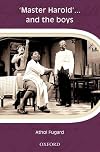
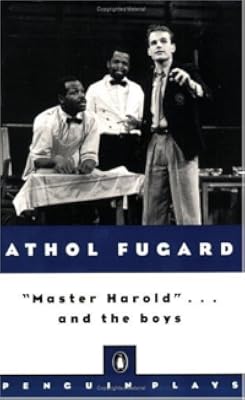
Academy-Award winner Athol Fugard, one of theatre's most acclaimed playwrights, finds humor and heartbreak in the friendship of Harold, a 17-year old white boy in 1950's South Africa, and the two middle aged black servants who raised him. Racism unexpectedly shatters Harold's childhood and friendships in this absorbing, affecting coming of age play. The play, initially banned from production in South Africa, is a Drama Desk Award winner for Outstanding New Play. An L.A. Theatre Works show more full-cast performance featuring Leon Addison Brown, Keith David and Bobby Steggert. show lessTags
Recommendations











Member Reviews
"Master Harold" and the boys is a short play that has an immense impact upon first reading. The playwright Athol Fugard manages to imagine a relationship between a boy and two Black servants in early 1950s in South Africa and make it become a universal experience that continues to resonate with readers in the Twenty-first century. I was impressed with the economy of words that were used to express multiple levels of feeling and meaning throughout the play. The culture of England, long the colonial power in this country, is also ever present in language and simple things such the names of towns.
The basic story is a simple tale of a boy, Hal, on the verge of manhood struggling with his education and his relationship both with his friends, show more the Black servants Sam and Willie, and his father who is nearing the end of what must have been a tyrannical patriarchy. Hal, who is "Master Harold" to Willie and plain Hally to Sam and everyone else, struggles through the issues of his relationships and what they mean until the difficulties with his father overtake him and he lashes out at the Black servants, reminding the reader that this is the era of apartheid and this is South Africa. One of the most powerful metaphors is that of the dance that is used from the opening of the play and culminates in a beautiful moment as the linchpin for transcendent beauty and the meaning of art. The day ends with tentative attempts at reconciliation, but we are left wondering whether the next day will bring a new level of maturity and hope for the master and his boys or more of the same tensions that make compassionate friendship crumble in this moving drama. show less
The basic story is a simple tale of a boy, Hal, on the verge of manhood struggling with his education and his relationship both with his friends, show more the Black servants Sam and Willie, and his father who is nearing the end of what must have been a tyrannical patriarchy. Hal, who is "Master Harold" to Willie and plain Hally to Sam and everyone else, struggles through the issues of his relationships and what they mean until the difficulties with his father overtake him and he lashes out at the Black servants, reminding the reader that this is the era of apartheid and this is South Africa. One of the most powerful metaphors is that of the dance that is used from the opening of the play and culminates in a beautiful moment as the linchpin for transcendent beauty and the meaning of art. The day ends with tentative attempts at reconciliation, but we are left wondering whether the next day will bring a new level of maturity and hope for the master and his boys or more of the same tensions that make compassionate friendship crumble in this moving drama. show less
Audience: Grade 9 and Up
South Africa, 1950. Sam and Willie, black men in their mid-forties, are working at a tearoom. The men are practicing for an upcoming ballroom competition when Harry, the white seventeen-year-old son of the owners, arrives from school. Harry and Sam engage in intellectual sparing as they discuss men of magnitude. The lively conversation turns into reminiscing as Sam remembers his first interactions with Harry. The tone is friendly until Harry receives news that his father is leaving the hospital to return home. Harry’s mood turns sour, and he takes his anger out on Sam and Willie. The angrier Harry gets, the uglier his behavior becomes, and Sam and Willie are faced with humiliation as Harry repeats his show more father’s language of the apartheid. A line is crossed that will forever change Harry and Sam’s relationship.
Athol Fugard’s “Master Harold”…and the Boys is a one-act play that exposes the injustices of the apartheid system. The grown men know that standing up to the teenager’s humiliation would mean paying a price too high that neither one can afford. It is hard not to cringe when Harry devolves into a bigot and repeats the words of his father to subjugate Sam and Willie. The tearoom becomes a microcosm of a country where policy dictated one’s place in society based on one’s skin color. The play is a study in power—who has it and who does not, and the implications to interpersonal relationships. Harry sees himself as Sam’s mentor, therefore in power; when Sam seeks to dissuade Harry from speaking poorly of his father, Sam’s reaction is to dig deep into the discourse of bigotry to put Sam back in his place. The play offers rich material for discussions about racism, bigotry, power, and human relations. show less
South Africa, 1950. Sam and Willie, black men in their mid-forties, are working at a tearoom. The men are practicing for an upcoming ballroom competition when Harry, the white seventeen-year-old son of the owners, arrives from school. Harry and Sam engage in intellectual sparing as they discuss men of magnitude. The lively conversation turns into reminiscing as Sam remembers his first interactions with Harry. The tone is friendly until Harry receives news that his father is leaving the hospital to return home. Harry’s mood turns sour, and he takes his anger out on Sam and Willie. The angrier Harry gets, the uglier his behavior becomes, and Sam and Willie are faced with humiliation as Harry repeats his show more father’s language of the apartheid. A line is crossed that will forever change Harry and Sam’s relationship.
Athol Fugard’s “Master Harold”…and the Boys is a one-act play that exposes the injustices of the apartheid system. The grown men know that standing up to the teenager’s humiliation would mean paying a price too high that neither one can afford. It is hard not to cringe when Harry devolves into a bigot and repeats the words of his father to subjugate Sam and Willie. The tearoom becomes a microcosm of a country where policy dictated one’s place in society based on one’s skin color. The play is a study in power—who has it and who does not, and the implications to interpersonal relationships. Harry sees himself as Sam’s mentor, therefore in power; when Sam seeks to dissuade Harry from speaking poorly of his father, Sam’s reaction is to dig deep into the discourse of bigotry to put Sam back in his place. The play offers rich material for discussions about racism, bigotry, power, and human relations. show less
Studied this play in an adult ed class. Really liked the play, the class discussion, and the final-class viewing of the video production of Matthew Broderick's performance as Harold.
Seventeen-year old Hally, also known as Master Harold, get into trouble with Sam and Willie two black men who work for his family, due to the frustration and fear he feels about his crippled and alcoholic father getting out of the hospital. This play has a mature subject matter about race relations in South Africa. It could be used to compare aspects of apartheid with segregation in the United States in the classroom.
Everyone should read this play. It's truly powerful.
Everyone should read this play. It's truly powerful.
Everyone should read this play. It's truly powerful.
Members
- Recently Added By
Lists

Plays I Like
230 works; 31 members
Blue Pyramid 1,276 Best Books of All Time
1,248 works; 32 members
Stage Plays/Screenplays/Dialogues/Anything Dialogue-Storytelling Related
81 works; 2 members

Every Non-Musical Play Nominated for a Tony Award
64 works; 3 members

AP Lit
363 works; 6 members
Essential/Recognized Stage Plays
115 works; 4 members
My Play Collection
769 works; 3 members
Author Information

54+ Works 2,500 Members
Born in Cape Town and educated at Port Elizabeth Technical College and Cape Town University, Athol Fugard is a leading white South African playwright. After finishing his education, Fugard worked as a seaman and journalist before becoming an actor, director, and playwright. His commitment to the antiapartheid struggle through his plays and other show more dramatic productions is as long as it is effective in portraying the traumas of racial tensions in the lives of both white and black South Africans. The setting of his plays is contemporary South Africa, but the bleakness and frustrations of life they present, especially for those on the fringes of society, raise the plays to the level of universal human tragedy. Because of their subject, his plays have sometimes met with official opposition. Blood Knot (1960), about two coloured brothers, one light-skinned and one dark-skinned, was censored, and some of his other works have only been published abroad. Fugard has frequently collaborated in his productions with black playwrights and actors, like John Kani and Winston Ntsona, with whom he produced the highly acclaimed and frequently produced plays, Siswe Bansi Is Dead (1973) and Statements (1972). His work is quite popular in England, and later plays, Master Harold and the Boys (1982), The Road to Mecca (1984), and A Place With the Pigs (1987), have been staged at the National Theatre. Fugard has also written screenplays and a novel, Tsotsi (1980) which was adapted to the screen in 2005 and received an Academy Award for Best Foreign Language Film. His recent works are Exits and Entrances (2004), Booitjie and the Oubaas (2006), Victory (2007), Coming Home (2009), Have you seen Us (2009), and The Train Driver (2010). (Bowker Author Biography) show less
Awards and Honors
Awards
Notable Lists
Work Relationships
Is contained in
Has the adaptation
Common Knowledge
- Canonical title
- "Master Harold" … and the Boys
- Alternate titles
- Master Harold and the Boys
- Original publication date
- 1982
- People/Characters
- Hally; Sam; Willie
- Important places
- South Africa
- Related movies
- 'Master Harold'... and the Boys (1985 | IMDb); 'Master Harold' ... And the Boys (2010 | IMDb)
- First words
- The St. Georges Park Tea Room on a wet and windy Port Elizabeth afternoon.
- Last words
- (Click to show. Warning: May contain spoilers.)Better go to sleep now; little man, you've had a busy day. (etc, etc. The men dance together).
Classifications
Statistics
- Members
- 860
- Popularity
- 31,764
- Reviews
- 9
- Rating
- (3.66)
- Languages
- Afrikaans, English
- Media
- Paper, Audiobook
- ISBNs
- 15
- UPCs
- 1
- ASINs
- 7