The Things We Never Say
by Elizabeth Strout
On This Page
Tags
Recommendations














Member Reviews
In conversation with my GR friend K, I mentioned that all of my reviews of Elizabeth Strout books were 4 or 5-star reviews. Strout is an exceptionally consistent writer. She has a brand, you know you are reading Strout, and many themes are the same from book to book, yet every book feels fresh and offers up lovely surprises to the reader. All that said, though all the books are good, some are better than others. IMO, this was not one of the books that lead the Strout pack.
For some time, Strout has been swimming in the cold waters of Maine with both her Lucy Barton and Olive Kitteridge series (and with The Burgess Boys before that). In her last book, she even found a way to blend the various universes. I love a lot of those books, like show more really love them, but I was also ready for a change of scenery. I was delighted in this book to follow a new character, Artie Dam, as he struggled to thrive, or even to want to live, in a world that seems to have thrown away all the good things and agreed to be led by a "lunatic". Boy, do I relate to that. I have felt much the same way for nearly two years. I take no joy in this ugly country, and in having to come ot terms with the fact that truths I had been led to believe were self-evident were not truths at all, that people did not care about the rule of law or the advantages of reason and critical thought. I had to accept, and Artie did here, that most Americans were willing to suffer as long as it meant they could watch others suffer more. That acceptance brought with it a deep tunnel of grief. My heart was broken far more comprehensively than it has ever been by a simple love affair's end or even by the death of people I cared about deeply. Nothing I believed in is true, and that makes my whole life pretty useless. So my point is that Artie and I got on just fine. And I liked that Strout created a gaping pit of untruth in Artie's personal life that mirrored the lies many of us Americans told ourselves throughout the last century. I thought it was cool that a sense of love and community was built around the knowledge of the falsity, that separation between the knowers and those in the dark, in both the larger world and between Artie and friends and family. That was really well done.
So there was a lot to like here. What am I complaining about? Can I not just appreciate the gift of a really good book? I can, and I did appreciate this. I enjoyed the read overall. But Strout hits her points too hard, and it starts to feel like one of the boring rants I subject those around me to, and that is no fun for anyone but the ranter. This is never more apparent than in the long and, frankly, exhausting epilogue. Strout is in her 70's now, and I get that she does not want to commit to another lengthy book series. I like to think she is kicking back in the South of France, the Costa de Sol, or on some Uruguayan beach without a laptop in sight. But not planning a sequel does not mean that she has to close every possible road and answer every possible question about all these characters in the epilogue. And the ending story for Arite's son, Rob, was, honestly, overwrought and kind of silly. Overall, I liked the book quite a bit, but it could have been much better if Strout had shown a little restraint and relinquished a bit of control over the characters. Still worth the read for Strout fans. A 3.5, I think. show less
For some time, Strout has been swimming in the cold waters of Maine with both her Lucy Barton and Olive Kitteridge series (and with The Burgess Boys before that). In her last book, she even found a way to blend the various universes. I love a lot of those books, like show more really love them, but I was also ready for a change of scenery. I was delighted in this book to follow a new character, Artie Dam, as he struggled to thrive, or even to want to live, in a world that seems to have thrown away all the good things and agreed to be led by a "lunatic". Boy, do I relate to that. I have felt much the same way for nearly two years. I take no joy in this ugly country, and in having to come ot terms with the fact that truths I had been led to believe were self-evident were not truths at all, that people did not care about the rule of law or the advantages of reason and critical thought. I had to accept, and Artie did here, that most Americans were willing to suffer as long as it meant they could watch others suffer more. That acceptance brought with it a deep tunnel of grief. My heart was broken far more comprehensively than it has ever been by a simple love affair's end or even by the death of people I cared about deeply. Nothing I believed in is true, and that makes my whole life pretty useless. So my point is that Artie and I got on just fine. And I liked that Strout created a gaping pit of untruth in Artie's personal life that mirrored the lies many of us Americans told ourselves throughout the last century. I thought it was cool that a sense of love and community was built around the knowledge of the falsity, that separation between the knowers and those in the dark, in both the larger world and between Artie and friends and family. That was really well done.
So there was a lot to like here. What am I complaining about? Can I not just appreciate the gift of a really good book? I can, and I did appreciate this. I enjoyed the read overall. But Strout hits her points too hard, and it starts to feel like one of the boring rants I subject those around me to, and that is no fun for anyone but the ranter. This is never more apparent than in the long and, frankly, exhausting epilogue. Strout is in her 70's now, and I get that she does not want to commit to another lengthy book series. I like to think she is kicking back in the South of France, the Costa de Sol, or on some Uruguayan beach without a laptop in sight. But not planning a sequel does not mean that she has to close every possible road and answer every possible question about all these characters in the epilogue. And the ending story for Arite's son, Rob, was, honestly, overwrought and kind of silly. Overall, I liked the book quite a bit, but it could have been much better if Strout had shown a little restraint and relinquished a bit of control over the characters. Still worth the read for Strout fans. A 3.5, I think. show less
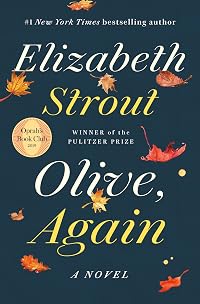
This is my first book by Elizabeth Strout, and I absolutely loved it! I loved it so much, I got Olive Kitteridge (she got the Pulitzer for that one) to keep this streak going.
Artie Dam is a middle aged History teacher. He has been married for 30 years, and has a son called Rob.
Through this short, but punchy book, we come to know Artie’s secret and get to see his innermost thoughts.
Also, a secret is revealed to Artie by Rob that will change the way he sees the world, coming to the understanding that we never really know one another.
My only blah moment with this book, is when she touches on politics. I am fed up with the left, and its view of people who do not think like them. I read books to escape these intolerant maniacs, not to have show more their ideas shoved down my throat yet again.
I gave it five stars because the way Strout delivers interior life is a brilliance on its own. Makes you think a lot. show less
Artie Dam is a middle aged History teacher. He has been married for 30 years, and has a son called Rob.
Through this short, but punchy book, we come to know Artie’s secret and get to see his innermost thoughts.
Also, a secret is revealed to Artie by Rob that will change the way he sees the world, coming to the understanding that we never really know one another.
My only blah moment with this book, is when she touches on politics. I am fed up with the left, and its view of people who do not think like them. I read books to escape these intolerant maniacs, not to have show more their ideas shoved down my throat yet again.
I gave it five stars because the way Strout delivers interior life is a brilliance on its own. Makes you think a lot. show less
I felt so sad when it ended. I missed Artie, whom I had come to know so well over the past days. Strout is my favorite author, and this is up with the best - Olive, Oh William, Amy and Isabelle. The things we never say are the secrets we keep (which Artie kept from his wife, only telling the stranger who saved his life), the feelings we never share with others, the vast unknowingness of others.
While some readers were critical of the entrance of our buffoon evil dangerous president into a novel, for me it was validating. These days it is nearly impossible to separate one's views on current events from our feelings about another person.
I wonder what she'll do next.
While some readers were critical of the entrance of our buffoon evil dangerous president into a novel, for me it was validating. These days it is nearly impossible to separate one's views on current events from our feelings about another person.
I wonder what she'll do next.
Beautiful story of one man's inner turmoil of depression, finding out his son is not really his son, and finding joy in his life again. It is an interesting accounting of what he loves and doesn't love about his daily life. We find that he is loved by the students he teaches and he becomes much closer to "son". He finds a good friend to whom he feels comfortable talking about the things he does not find comfortable talking to wife about. Glad I read.
ReaderswithWrinkles: I finished listening to The Things We Never Say by Elizabeth Strout last night at 3:30 am, and then I lay there for an hour thinking about it. There’s something almost unsettling about a quiet book that knows you better than you know yourself. The kind that doesn’t show more shout or dazzle but lingers. This is the kind of book.
If you’ve read Strout before—especially her Pulitzer Prize–winning Olive Kitteridge—you already know she has an uncanny ability to slip past your defenses. She writes about ordinary people in such an unflinching, intimate way that you start to feel exposed. Seen, even. And here, she does it again—but somehow softer, sadder, and more urgent.
This isn’t a book you rush through. It’s a gift—but one that has to be unwrapped slowly, layer by careful layer. Each page reveals something tender, something uncomfortable, something quietly devastating. Strout doesn’t deal in grand plot twists or dramatic spectacle. Instead, she leans into the fragile, complicated spaces between people—the things we swallow, the words we hold back, and the emotional negotiations we make just to get through the day.
And maybe that’s why it hits so hard right now.
Because beneath its intimate character work, this novel feels eerily reflective of the current American moment. There’s a tension humming beneath the surface, a sense of fracture—of people talking past each other, of emotional distance widening in ways that feel both subtle and irreversible. Strout vividly portrays the experience of living in a country that appears to be slowly unraveling. Not with explosions, but with silence. With things unsaid.
What makes this book so powerful isn’t that it offers answers. It doesn’t. Instead, it invites you to sit in the discomfort—to recognize pieces of yourself in its characters, even when you’d rather not. Especially when you’d rather not.
So if you’re looking for a story that will entertain you, this might not be it. But if you’re willing to feel something real—to reflect, to ache a little, to see the world (and yourself) a bit more clearly—then this is a book worth your time.
Just don’t expect it to let you go easily.
Kirkus: A diverting midlife story plucks at the secrets good people carry to the grave.
As a reader, Artie Dam—the protagonist of Strout’s 11th book—encounters Olive Kitteridge, “a crotchety old woman from Maine” and Strout’s most celebrated fictional character. Artie picked up the Pulitzer-anointed book centered on Olive after his wife, Evie, loved it, “oh, years ago now.” Strout is having a bit of fun—that “oh” is a trademark—even though she marbles her latest novel with marital infidelity, political anxiety, and suicide. Indeed, it is the fact that Olive’s father died by suicide that Artie, 57 and gaining a paunch, recalls now in his own dismalness. As the story begins, he is pondering the most discreet way to die, despite having been Massachusetts’ Teacher of the Year five years earlier. Artie seems the inverse of irascible Olive: beloved by his students; by his grown son, Rob; and by the English teacher, Anne, who quietly pines for him. But like Olive, Artie has distressing impulses—he steals a comb, then some expensive shirts. Much of the text bobs along on Artie’s stocktaking memories, chunked out in short, occasionally abrupt paragraphs. Strout’s storytelling is thinning a bit, like middle-aged hair. Then, midbook, she clobbers Artie with a brutal existential shock. In its wake, Strout surfs the nature of loneliness, corrosive secrets, and the convulsions of the 2024 presidential election. Hers is an unremittingly Blue State book, although Artie has one friend who, unbeknownst to him, supported Donald Trump. On the day after the election, Artie somberly concludes that his “country was committing suicide.” This is the first novel in which Strout entirely vacates Maine for another setting. But she sticks with Artie and, on the final pages, delivers him a satisfying finale.
Vivid characters are set adrift in a “ripped from the headlines” tableau that complicates the story, and the storytelling. show less
ReaderswithWrinkles: I finished listening to The Things We Never Say by Elizabeth Strout last night at 3:30 am, and then I lay there for an hour thinking about it. There’s something almost unsettling about a quiet book that knows you better than you know yourself. The kind that doesn’t show more shout or dazzle but lingers. This is the kind of book.
If you’ve read Strout before—especially her Pulitzer Prize–winning Olive Kitteridge—you already know she has an uncanny ability to slip past your defenses. She writes about ordinary people in such an unflinching, intimate way that you start to feel exposed. Seen, even. And here, she does it again—but somehow softer, sadder, and more urgent.
This isn’t a book you rush through. It’s a gift—but one that has to be unwrapped slowly, layer by careful layer. Each page reveals something tender, something uncomfortable, something quietly devastating. Strout doesn’t deal in grand plot twists or dramatic spectacle. Instead, she leans into the fragile, complicated spaces between people—the things we swallow, the words we hold back, and the emotional negotiations we make just to get through the day.
And maybe that’s why it hits so hard right now.
Because beneath its intimate character work, this novel feels eerily reflective of the current American moment. There’s a tension humming beneath the surface, a sense of fracture—of people talking past each other, of emotional distance widening in ways that feel both subtle and irreversible. Strout vividly portrays the experience of living in a country that appears to be slowly unraveling. Not with explosions, but with silence. With things unsaid.
What makes this book so powerful isn’t that it offers answers. It doesn’t. Instead, it invites you to sit in the discomfort—to recognize pieces of yourself in its characters, even when you’d rather not. Especially when you’d rather not.
So if you’re looking for a story that will entertain you, this might not be it. But if you’re willing to feel something real—to reflect, to ache a little, to see the world (and yourself) a bit more clearly—then this is a book worth your time.
Just don’t expect it to let you go easily.
Kirkus: A diverting midlife story plucks at the secrets good people carry to the grave.
As a reader, Artie Dam—the protagonist of Strout’s 11th book—encounters Olive Kitteridge, “a crotchety old woman from Maine” and Strout’s most celebrated fictional character. Artie picked up the Pulitzer-anointed book centered on Olive after his wife, Evie, loved it, “oh, years ago now.” Strout is having a bit of fun—that “oh” is a trademark—even though she marbles her latest novel with marital infidelity, political anxiety, and suicide. Indeed, it is the fact that Olive’s father died by suicide that Artie, 57 and gaining a paunch, recalls now in his own dismalness. As the story begins, he is pondering the most discreet way to die, despite having been Massachusetts’ Teacher of the Year five years earlier. Artie seems the inverse of irascible Olive: beloved by his students; by his grown son, Rob; and by the English teacher, Anne, who quietly pines for him. But like Olive, Artie has distressing impulses—he steals a comb, then some expensive shirts. Much of the text bobs along on Artie’s stocktaking memories, chunked out in short, occasionally abrupt paragraphs. Strout’s storytelling is thinning a bit, like middle-aged hair. Then, midbook, she clobbers Artie with a brutal existential shock. In its wake, Strout surfs the nature of loneliness, corrosive secrets, and the convulsions of the 2024 presidential election. Hers is an unremittingly Blue State book, although Artie has one friend who, unbeknownst to him, supported Donald Trump. On the day after the election, Artie somberly concludes that his “country was committing suicide.” This is the first novel in which Strout entirely vacates Maine for another setting. But she sticks with Artie and, on the final pages, delivers him a satisfying finale.
Vivid characters are set adrift in a “ripped from the headlines” tableau that complicates the story, and the storytelling. show less
Artie, a history teacher in his late 50s, goes about his day as if everything is fine, but inside is filled with turmoil about the state of the world and the meaning of life. Attempts to discuss his concerns are met with anything from quizzical looks to dismissal, even from his wife, Evie. Artie feels increasingly isolated, which is exacerbated by learning a shocking secret about his past. Even though it reorients his entire world view, Artie can’t bring himself to discuss this with others. He realizes how little he knows about most people, even those closest to him. Everyday interactions leave much unsaid; for example, party conversations that gloss over life’s more challenging moments.
Artie’s story is set in the contemporary show more United States, and through him Elizabeth Strout candidly reveals the far-reaching consequences of the 2024 election. But rather than a political novel, The Things We Never Say explores the ways in which we may never truly know one another simply by what we choose not to share. Strout incorporates this into her narrative with parenthetical comments describing a future event which, if known to the characters, might have changed the way they related to one another.
Elizabeth Strout’s prose and character development are brilliant, and her novels never fail to strike an emotional chord and stay with me long after I’ve finished reading. show less
Artie’s story is set in the contemporary show more United States, and through him Elizabeth Strout candidly reveals the far-reaching consequences of the 2024 election. But rather than a political novel, The Things We Never Say explores the ways in which we may never truly know one another simply by what we choose not to share. Strout incorporates this into her narrative with parenthetical comments describing a future event which, if known to the characters, might have changed the way they related to one another.
Elizabeth Strout’s prose and character development are brilliant, and her novels never fail to strike an emotional chord and stay with me long after I’ve finished reading. show less
Artie Dam, a history teacher, cherishes his students as much as they value him. Despite being married for over three decades and having a loving son, he often feels lonely and isolated. His existence takes an unexpected turn when he discovers a hidden truth about his life, leading him to begin a profound reframing of his perception of the world.
Elizabeth Strout’s latest novel is another masterpiece that showcases her exceptional writing skills. Her idiosyncratic characters are beautifully drawn and captivating, each with their own unique quirks and complexities. The novel is meticulously crafted, weaving a tapestry of humor, insight, and pathos that resonates deeply with the reader. Strout’s characters are profound in their simple show more observations of life, yet there is also a reflection of the larger world and the divided country in which we now live. This novel is heartwarming and heartbreaking and provides the reader with much about which to think. Five plus stars!
Thanks to @NetGalley and @RandomHouse for the DRC. show less
Elizabeth Strout’s latest novel is another masterpiece that showcases her exceptional writing skills. Her idiosyncratic characters are beautifully drawn and captivating, each with their own unique quirks and complexities. The novel is meticulously crafted, weaving a tapestry of humor, insight, and pathos that resonates deeply with the reader. Strout’s characters are profound in their simple show more observations of life, yet there is also a reflection of the larger world and the divided country in which we now live. This novel is heartwarming and heartbreaking and provides the reader with much about which to think. Five plus stars!
Thanks to @NetGalley and @RandomHouse for the DRC. show less
After my initial disappointment that Elizabeth Strout's new book is not about the characters whom I have gotten to know in her earlier novels, I quickly became engaged by this new cast of characters. Strout has the ability to make us see the interior lives of people who appear completely normal on the exterior. Artie Damm is the teacher students always remember in later life, he is the kind of cocktail party guest we enjoy hosting and conversing with, he is jovial, compassionate, and considerate. But in this novel we are introduced to what lies beneath the surface, his introspection and doubts. Then a doozy of a secret becomes known to him, elevating his doubts and convictions to a new level. Without being heavy-handed, Strout's show more language is eloquent. She wrote about an accident, "it was as though the three of them had been walking on their lawn down by the water, peacefully, unknowingly, happily, and then the ocean itself had suddenly risen up, the whole world became an ocean overwhelming them with huge waves that swept over them and pulled them under, and they were all gasping and choking in the water." show less
Members
- Recently Added By
Lists

To Read
140 works; 1 member

Books Read in 2026
2,042 works; 68 members

Five star books
1,767 works; 110 members

LoanStars | Adult List: May 2026
10 works; 1 member

Economist book reviews (July 2026-)
13 works; 1 member

LRB 48(12)
13 works; 1 member
Author Information

23+ Works 33,508 Members
Elizabeth Strout (born January 6, 1956) is an American author of fiction. She was born in Portland, Maine. After graduating from Bates College, she spent a year in Oxford, England. In 1982 she graduated with honors, and received both a law degree from the Syracuse University College of Law and a Certificate of Gerontology from the Syracuse School show more of Social Work. Strout wrote Amy and Isabelle over the course of six or seven years, which when published was shortlisted for the 2000 Orange Prize and nominated for the 2000 PEN/Faulkner Award for fiction. Amy and Isabelle was made into a television movie starring Elisabeth Shue and was produced by Oprah Winfrey's studio, Harpo Films. Strout was a NEH (National Endowment for the Humanities) professor at Colgate University during the Fall Semester of 2007, where she taught creative writing. She was also on the faculty of the MFA program at Queens University of Charlotte in Charlotte, North Carolina. In 2009 Strout was honored with a Pulitzer Prize for Fiction for Olive Kitteridge, a collection of connected short stories she wrote about a woman and her immediate family who lived on the coast of Maine. Strout also wrote The Burgess Boys in 2013 which made The New York Times Best Seller List. Ms. Strout's title, My name is Lucy Barton, made the New York Times Best Seller List in 2016. Her newest title, Anything is Possible (2017), won the 2018 Story Prize. (Bowker Author Biography) show less
Some Editions
Awards and Honors
Distinctions
The Guardian Book of the Day (2026-04-27)
Notable Lists
Common Knowledge
- Canonical title
- The Things We Never Say
- Original publication date
- 2026
- People/Characters
- Artie Dam; Flossie MacDonald; Evie Dam; Rob Dam; Reginald MacDonald; Francesca Dam (show all 11); Danny Marino; Rhonda Lazarre; Anne Merrill; Kenneth Moynihan; Maria Dam
- Important places
- Massachusetts, USA
- Epigraph
- Loneliness does not come from having no people about one, but from being unable to communicate the things that seem important to oneself, or from holding certain views which others find inadmissible.
—-Carl Jung - Dedication
- For my husband, Jim Tierney
And for Molly Friedrich and Lucy Carson
And Kathy Chamberlain - First words
- It was the middle of June and the sun all day had kept right on shining with sweet mightiness.
- Quotations
- All of us live with a huge blind spot before our eyes, meaning that no matter what we think we know we can never fully understand how we appear to others.
“… Fears are very often private things. Part of being human is realizing how . . . well, how private our fears are.”
“Why don't people ever say anything real.”
And now he knew why. Because to say anything real was to say things that nobody wanted to know. Or if they wanted to know, they would not care in the right way. Or even... (show all) understand.
It was a private thing to be alive. He understood this now. - Last words
- (Click to show. Warning: May contain spoilers.)Danny went and found the still-weeping Rhonda, and they left the reception together. They did not realize—-of course—-that they were stepping past Kenneth Moynihan, who was speaking to the father of Heather Morrison, who had come to attend the funeral of Artie Dam.
Classifications
Statistics
- Members
- 528
- Popularity
- 56,733
- Reviews
- 31
- Rating
- (4.15)
- Languages
- English
- Media
- Paper, Audiobook, Ebook
- ISBNs
- 4
- ASINs
- 4