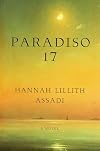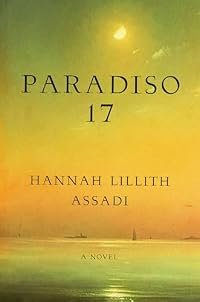
Paradiso 17
by Hannah Lillith Assadi
On This Page
Description
"The intimate, sweeping tale of one man's restless search for home the world over, as the pendulum of fate swings between loss and life, grief and euphoria, regret and hope All his life, exile has been the shadow stitched to the sole of Sufien's shoe. Born in Palestine on the precipice of 1948's Nakba, Sufien is forced to leave the only home he's ever known, the one on the hill with a beautiful blue door. This is the precise moment when time stops making sense. He spends the rest of his life show more propelled forward, always on the way-although in search of what, he is never quite sure. In the dusty, oil-rich desert of Kuwait, he meets his first love and decides he must leave his family. In a small Italian university town, he spends his youth wrapped up in the sweet promise of the West and the forgetful assurance of wine. When life takes him to a gritty New York, he discovers his true vocation and falls for a Jewish woman born into a wholly different world. Finally, he finds himself recalled to the wild, vast open skies of the desert, in Arizona. Sufien's life spans friendships lost and maintained, a stint selling leathers at a tanner's stall, the ineffable company of cats, and the freedom of the open road, the glowing pride of fatherhood, Sufi myths, prophetic dreams, and visions of the afterlife-and always, always, no matter how far he chases joy, the sweet, treacherous song of a balcony urging him to fly, to fall, to fall. The lyrical pages of Paradiso 17 weave in and out of time and space, beginning at the end and ending at the beginning. They are haunting, haunted with grief, struck through, as Dante once wrote, with "the arrow that the bow of exile / shoots first," and yet they throb with light-not just the light that Sufien sees as he approaches his own end, but the brilliant light of a life lived. Like all of our dead, Sufien still tries to speak, the book begins. Listen, this is his story"-- Provided by publisher. show lessTags
Recommendations




























Member Reviews
This is a vivid tribute to one man’s life as well as a personal meditation on displacement and the meaning of home. By placing the Palestinian experience of exile at the very heart of her late father’s experiences, Assadi gives her readers a living, breathing sense of how loss feels to her countrymen.
We first meet Sufien at the end of a life shaped by forced removal and relentless movement. As a five-year-old, his family was uprooted from their ancestral home in Palestine. This event inflicts a wound that never fully heals and motivates a restless search for belonging across many lands. From a crowded refugee camp in Damascus his family moves to the oil-rich deserts of Kuwait. Sufien then leaves them behind to seek an education in show more the historic Italian city of Florence. From there he moves to the mean streets of New York City and finally finds a simulacrum to his Palestine home in the deserts of Arizona. The story of Sufien’s peripatetic wanderings unfolds like some kind of modern Odessey. Each setting offers its own moments of joy and connection, but none ever really replaces his deep sense of dislocation. Ultimately, the title encapsulates the novel’s central tension. If “Paradiso” gestures toward heaven or ultimate peace, “17” grounds that longing in lived experience: a place you could once point to on a map. Sufien’s lived reality is not paradise but displacement. For him, paradise is not simply heaven after death; it is the impossible dream of return, of wholeness, of a homeland unstolen.
Assad roots her father’s story in his sense of displacement, memory and ideas of home. Sufien’s travels reflect the broader Palestinian diaspora experience of a life punctuated by exile, adaptation, and longing. Even as he builds a family and close relationships he carries within a sense of loss that began when he was 5 years old. Assad uses Sufien’s ambivalence to underscore the idea that what is gained is inextricably tied to what has been lost.
Assad’s prose moves fluidly between memories and moments with a dreamlike quality. She evokes disparate settings like cities, deserts and marketplaces while never moving far from the inner life of a man who is both charming and deeply flawed. Indeed, Sufien is an unforgettable literary creation, and his story is a tribute to the complexity of belonging, the weight of memory, and the unyielding human impulse to seek home even in the face of profound loss. show less
We first meet Sufien at the end of a life shaped by forced removal and relentless movement. As a five-year-old, his family was uprooted from their ancestral home in Palestine. This event inflicts a wound that never fully heals and motivates a restless search for belonging across many lands. From a crowded refugee camp in Damascus his family moves to the oil-rich deserts of Kuwait. Sufien then leaves them behind to seek an education in show more the historic Italian city of Florence. From there he moves to the mean streets of New York City and finally finds a simulacrum to his Palestine home in the deserts of Arizona. The story of Sufien’s peripatetic wanderings unfolds like some kind of modern Odessey. Each setting offers its own moments of joy and connection, but none ever really replaces his deep sense of dislocation. Ultimately, the title encapsulates the novel’s central tension. If “Paradiso” gestures toward heaven or ultimate peace, “17” grounds that longing in lived experience: a place you could once point to on a map. Sufien’s lived reality is not paradise but displacement. For him, paradise is not simply heaven after death; it is the impossible dream of return, of wholeness, of a homeland unstolen.
Assad roots her father’s story in his sense of displacement, memory and ideas of home. Sufien’s travels reflect the broader Palestinian diaspora experience of a life punctuated by exile, adaptation, and longing. Even as he builds a family and close relationships he carries within a sense of loss that began when he was 5 years old. Assad uses Sufien’s ambivalence to underscore the idea that what is gained is inextricably tied to what has been lost.
Assad’s prose moves fluidly between memories and moments with a dreamlike quality. She evokes disparate settings like cities, deserts and marketplaces while never moving far from the inner life of a man who is both charming and deeply flawed. Indeed, Sufien is an unforgettable literary creation, and his story is a tribute to the complexity of belonging, the weight of memory, and the unyielding human impulse to seek home even in the face of profound loss. show less
This was a good read. She is a good writer. It is about a daughter and her dying father. It starts at the Nakba and proceeds telling a life from that point onward. It is about Palestine (but avoids many of the trappings of other novels about Palestinians). That's not to say that it is in the background, it's in the foreground but not ostensibly focused on it. It is much more about displacement and the longing for home and family. The book is a linear but fragmented travelogue of memories. A series of arrivals and departures across countries and continents. A book about a flawed man written in a style that is self-assured and skillful (even if at time, a little too florid)
very disappointed in this book. no doubt being homeless, stateless, and country less is traumatic, and different people act differently. sufien's lack of feeling for most he interacted with, including his wife, was appalling. the portrayal of his jewish wife was stereotypically offensive. her and her father's great interest in $ added nothing.
As life begins to end at the very beginning, this book starts at the end.
"The intimate, sweeping tale of one Palestinian man’s restless search for home the world over, as the pendulum of fate swings between loss and life, grief and euphoria, regret and hope"
An uneven, episodic story of a Palestinian refugee who manages to move to America.
Not always a fluid read, as specific words relating to the Muslim religion and Palestinian nation meant that I had to stop reading to be sure that I was understanding what I read.
There are platitudes (“Why is it that we always realize how much we will miss a place on the eve of leaving it?”) but they usually work in the story.
I was annoyed/disappointed/frustrated by the introduction of the blackmail thread into the story. It was just so sad, but derivative.
Also by the annoying lack of novelistic detail on how Sufien and Sarah become bankrupt (and again). Perhaps this isn’t what Assadi wanted the reader to concentrate on, but the lack of story show more bothered me. This reinforced the feeling that the author wasn’t trying to write a novel. That she had got bored with the rounded character.
Some good writing and imagery lifted the book, but overall too uneven. show less
Not always a fluid read, as specific words relating to the Muslim religion and Palestinian nation meant that I had to stop reading to be sure that I was understanding what I read.
There are platitudes (“Why is it that we always realize how much we will miss a place on the eve of leaving it?”) but they usually work in the story.
I was annoyed/disappointed/frustrated by the introduction of the blackmail thread into the story. It was just so sad, but derivative.
Also by the annoying lack of novelistic detail on how Sufien and Sarah become bankrupt (and again). Perhaps this isn’t what Assadi wanted the reader to concentrate on, but the lack of story show more bothered me. This reinforced the feeling that the author wasn’t trying to write a novel. That she had got bored with the rounded character.
Some good writing and imagery lifted the book, but overall too uneven. show less
Apr 17, 2026English (UK)
Ratings
Members
- Recently Added By
Lists

2026 Women's Prize for Fiction Longlist
16 works; 12 members

2026
16 works; 1 member
Author Information
3 Works 188 Members
Awards and Honors
Awards
Distinctions
Common Knowledge
- Canonical title
- Paradiso 17
Classifications
Statistics
- Members
- 44
- Popularity
- 670,340
- Reviews
- 6
- Rating
- (3.83)
- Languages
- English
- Media
- Paper, Ebook
- ISBNs
- 3
- ASINs
- 1