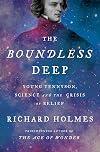
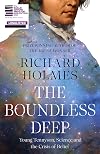
The Boundless Deep: Young Tennyson, Science, and the Crisis of Belief
by Richard Holmes
On This Page
Description
"In this dazzling new biography, Richard Holmes, critically acclaimed author of The Age of Wonder, discovers in Young Tennyson an astonishingly magnetic and mercurial personality, a secretly expressive and highly emotional man haunted by the great intellectual and scientific issues of his time"-- Provided by publisher.Tags
Recommendations










Member Reviews
"When that which drew out
the boundless deep
Turns again home."
Richard Holmes delivered a brilliantly researched and smooth flowing tale of Young Tennyson!
The entire first chapter is devoted to THE KRAKEN. This may make people feel sorry for it since
it is clearly not bothering anyone, "far far beneath the abysmal sea."
Adopted by an owl when he was a boy, Alfred kept a life long respect for all animals.
The author follows him from the Somersby Rectory through all his jaunts through Mablethorpe
and on into London and Europe. Haunted by the loss of his best friend, Hallam, Tennyson's
deep recurring depression guided his solitude and his eventual wondrous poetry,
as it wound from Faith through Astronomy and Geology and back again.
The accompanying show more photographs are truly amazing.
Still hard to understand is Tennyson's exclusion and ignoring of his good, trusted and faithful Friend, FitzGerald, from his later life, as Alfred became the renowned poet laureate. show less
the boundless deep
Turns again home."
Richard Holmes delivered a brilliantly researched and smooth flowing tale of Young Tennyson!
The entire first chapter is devoted to THE KRAKEN. This may make people feel sorry for it since
it is clearly not bothering anyone, "far far beneath the abysmal sea."
Adopted by an owl when he was a boy, Alfred kept a life long respect for all animals.
The author follows him from the Somersby Rectory through all his jaunts through Mablethorpe
and on into London and Europe. Haunted by the loss of his best friend, Hallam, Tennyson's
deep recurring depression guided his solitude and his eventual wondrous poetry,
as it wound from Faith through Astronomy and Geology and back again.
The accompanying show more photographs are truly amazing.
Still hard to understand is Tennyson's exclusion and ignoring of his good, trusted and faithful Friend, FitzGerald, from his later life, as Alfred became the renowned poet laureate. show less
As a young teen I discovered Tennyson’s poetry in anthologies and responded to his theme of nostalgia and grief for lost times and people. This book caught my attention for it’s study of how the rising scientific discoveries in natural history impacted his world and his poetry. This was a totally new Tennyson for me.
In the early 19th c, theories to explain new scientific discoveries upset the old paradigm based on the Bible. Lyell. Herschel. Babbage. Evolution, fossils of unknown life forms, glimpses of other solar systems through monstrous telescopes, theories of a changing Earth. Tennyson devoured all the cutting edge science books. Holmes details how Tennyson’s poetry is filled with images and references to natural show more history.
Tennyson also struggled with the tragic early death of his beloved friend from Trinity College, Arthur Hallam, working out his grief in the poem In Memoriam, which he worked on for seventeen years.
How can scientific theory and faith coexist?
I think back on my grandfather who was ordained and interested in historical geology. He corresponded with researchers and raised funds for their work. He presented his ideas on the next Ice Age on public broadcasting. A Sunday afternoon ride was a teaching moment on the geological history of the landscape while at dinner we heard the latest news on Project Moho or other research. His sermons referenced the geological processes! I never considered how science fit into his faith.
Back to this book. I found the intersection of science and poetry fascination reading. Holmes includes excerpts from the poems to illustrate their connection to the science he believes inspired Tennyson. Not being a deep student of the poet, I didn’t always get the connection, but I trust Holmes understands the poet’s words on a deeper level.
Thanks to Pantheon for a free book. show less
In the early 19th c, theories to explain new scientific discoveries upset the old paradigm based on the Bible. Lyell. Herschel. Babbage. Evolution, fossils of unknown life forms, glimpses of other solar systems through monstrous telescopes, theories of a changing Earth. Tennyson devoured all the cutting edge science books. Holmes details how Tennyson’s poetry is filled with images and references to natural show more history.
Tennyson also struggled with the tragic early death of his beloved friend from Trinity College, Arthur Hallam, working out his grief in the poem In Memoriam, which he worked on for seventeen years.
How can scientific theory and faith coexist?
I think back on my grandfather who was ordained and interested in historical geology. He corresponded with researchers and raised funds for their work. He presented his ideas on the next Ice Age on public broadcasting. A Sunday afternoon ride was a teaching moment on the geological history of the landscape while at dinner we heard the latest news on Project Moho or other research. His sermons referenced the geological processes! I never considered how science fit into his faith.
Back to this book. I found the intersection of science and poetry fascination reading. Holmes includes excerpts from the poems to illustrate their connection to the science he believes inspired Tennyson. Not being a deep student of the poet, I didn’t always get the connection, but I trust Holmes understands the poet’s words on a deeper level.
Thanks to Pantheon for a free book. show less
I knew a few of Tennyson’s most famous poems, but my real draw to read this book was the author and the consideration of the ideas in the early nineteenth century.
I was not disappointed, as this is a masterful evocation of Tennyson and his English milieu from the 1820’s to 1850’s.
For me, it also touched upon many books read and exhibitions experienced over the past thirty odd years engaging with Victorian art, science and literature, which richly enhanced my enjoyment and understanding
An outstanding portrait of an artist, actively engaged with the issues of his time.
I was not disappointed, as this is a masterful evocation of Tennyson and his English milieu from the 1820’s to 1850’s.
For me, it also touched upon many books read and exhibitions experienced over the past thirty odd years engaging with Victorian art, science and literature, which richly enhanced my enjoyment and understanding
An outstanding portrait of an artist, actively engaged with the issues of his time.
May 3, 2026English (UK)
Ratings
Members
- Recently Added By
Published Reviews
"...Yeats, as Holmes triumphantly proves in this generous book, was entirely mistaken in his belief that Tennyson’s preoccupation with science had ruined his poetry. Unlike the Romantics, Tennyson did not quarry scientific terms and deploy them merely because they made novel or striking metaphors. Rather, he metabolized the original documents of the great scientific age, wrestled with their show more implications, and then produced poetry to help with the soul-bruising dilemma of how to endure in a world from which God appeared to have fled." show less
added by rasdhar
Author Information

22+ Works 5,882 Members
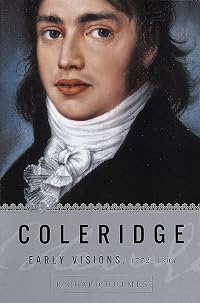
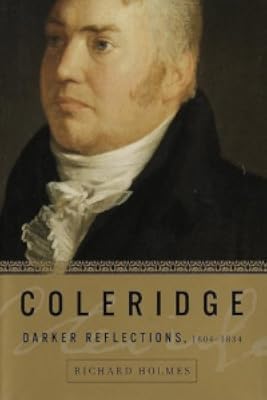
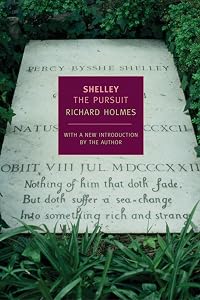
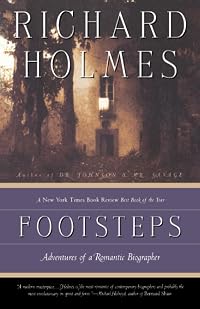
Richard Holmes is the author of Footsteps: Adventures of a Romantic Biographer; Dr. Johnson & Mr. Savage; Shelley: The Pursuit; Coleridge: Early Visions, 1772-1804; and Coleridge: Darker Reflections, 1804-1834, which was a 1999 New York Times Book Review Editor's Choice and a National Book Critics Circle Awards finalist. He lives in England. show more (Bowker Author Biography) show less
Awards and Honors
Awards
Distinctions
Classifications
Statistics
- Members
- 78
- Popularity
- 407,645
- Reviews
- 3
- Rating
- (4.70)
- Languages
- English
- Media
- Paper, Audiobook, Ebook
- ISBNs
- 4
- ASINs
- 4