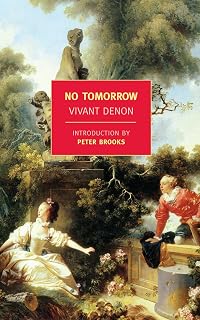
No Tomorrow
by Vivant Denon
On This Page
Description
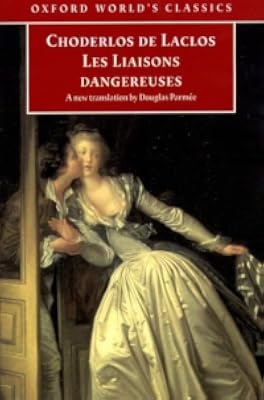
A Bilingual New York Review Books Original Vivant Denon's No Tomorrow is one of the masterpieces of eighteenth-century French libertine literature, a book to set beside Choderlos de Laclos' Les Liaisons dangereuses, except that where Laclos' icy novel tells of hellish depravity, Denon's ravishing novella is a paradisal diversion. This tale of seduction is itself a seduction, with a plot that could be said to slowly unveil itself before arriving at last at an unexpected consummation. Summoned show more by Madame de T---- to her country house, the young hero of Denon's novella is taken on a tour of the grounds, only the beginning of a night that not only will be full of unanticipated delights but will give rise to unforeseen, perhaps unanswerable, questions. Lydia Davis's definitive translation of Denon's slim masterpiece is accompanied by the French text. Peter Brooks's illuminating introduction explores the mysteries of No Tomorrow's original publication and the subtleties of Denon's ethics of pleasure. show lessTags
Recommendations











Member Reviews
Point de lendemain is a beautifully written short story set in 18th century France. It covers one night, which the narrator spends with a married woman who is the friend of his mistress. First the meeting at the opera, then the flirtation, and finally consummation. It's not at all vulgar, or dirty, or graphic, though. It's sweet, and romantic. The publishers blurb compares it to the works of de Sade and de Laclos, but it isn't at all like those (besides the French setting). It isn't a love story, necessarily, or the falling-in-love story commonly thought of as a love story. Very much worth reading.
This NYRB classics edition includes both the original French story and the English translation.
This NYRB classics edition includes both the original French story and the English translation.
 This review was written for LibraryThing Early Reviewers.
"One of the loveliest pieces of French prose," writes Milan Kundera in a blurb on this book's cover. Why not read it, I think? I skip, for the moment, the long intro as I am afraid of spoilers, and set off on this very slight 'diversion' that details an intimate, yet playful, seduction in the French court in, say, the late 18th century. In this slight yet alluring tale the reader's challenge is to determine just who is seducing whom: the older, womanly sophisticate, or the younger rakish lothario? So, there I was, the torrid pages growing hot and heavy, eagerly turning to page 37, when the text suddenly changes to French! What happened? It seems I had just read the entire book (or was it a novella or even a short story?), whose editor show more kindly decided to include the original French version as well. Sadly, for me, when I am sauntering down the broad boulevards of Paris, and some women gesture in my direction, saying, "Voulez Vous Coucher Avec Moi," I can only jauntily reply, "Me no speak the language!" But my thanks to the translator for her noble effort. And the once ignored intro told me more about author Vivant Denon; apparently, other than writing this one delectable bit of prose, he assembled the great art collections inside the Louvre. And I can also state that I am "woke" enough to realize that this makes him, not an aesthete, but a looter and a plunderer! show less
A delightful piece of French froth, published first in 1777 by the man better remembered as the director of the Louvre. It is the story of a young man, in love with one older woman, and going off with another to make love in her husband's home where she hasn't been for eight years. The three have dinner, although the sickly husband only takes milk. He goes to bed early, and his wife and her young friend amble in the gardens, and finally make passionate love. The woman's real lover appears, who is loved by the object of the young man's affections.
It is not clear to me why the husband is so welcoming of these lovers, or why he accepts his wife again. Why she chose to seduce the young man and present that fait accompli to her lover, who show more also appears, is quite a mystery. The woman loved by the young man is only alluded to but does not appear.
It reminds me of The Rules of the Game, or La Ronde, or The Last of Cheri. The little book has the original French version following the translation, which rarely occurs in editions of prose rather than poetry. The published version has the French and English on facing pages.
The characters are supposed to have real feeling for the ones offstage, and only have sexual play with those on stage. I may be too much of a puritan to enjoy such froth, but the French prose is exquisite. For those who don''t read French, it is probably like looking at a Fragonard while listening to Rameau. A romp. It should make a wonderful study tool for students of French, who want to have some fun while they study. show less
It is not clear to me why the husband is so welcoming of these lovers, or why he accepts his wife again. Why she chose to seduce the young man and present that fait accompli to her lover, who show more also appears, is quite a mystery. The woman loved by the young man is only alluded to but does not appear.
It reminds me of The Rules of the Game, or La Ronde, or The Last of Cheri. The little book has the original French version following the translation, which rarely occurs in editions of prose rather than poetry. The published version has the French and English on facing pages.
The characters are supposed to have real feeling for the ones offstage, and only have sexual play with those on stage. I may be too much of a puritan to enjoy such froth, but the French prose is exquisite. For those who don''t read French, it is probably like looking at a Fragonard while listening to Rameau. A romp. It should make a wonderful study tool for students of French, who want to have some fun while they study. show less
This review was written for LibraryThing Early Reviewers.On my first read, I was a little underwhelmed. But on a re-read, I felt I was able to appreciate it more. Partially for turns of phrases like this:
And sentences that just seem so true like this:
Partially for all the indirect stuff in here. All the unspoken things alluded to and in the background. For example, here's the opening paragraph:
That paragraph is so wonderfully confusing and circuitous, that I didn't really think much about its meaning on first read. The rest of the story does not concern Comtesse de _____. Instead, the main character (who is older now) is being slowly seduced by Mme de T_____. Then, lost in all the paragraphs somewhere, Mme de T____ talks about Comtesse de _____:
Only on second read did I connect what Mme de T___ said here with the first paragraph and come out with a fuller view of what the main character was talking about in that first paragraph. His relationship with the Comtesse is otherwise veiled. Also, it is another layer of fun to note that "artful woman" line since that is exactly what Mme de T_____ is also. "all four of you were content" could refer to the current story's actors (Mme de T___, her husband, her lover, and the main character). A little later down the page, the now older/wiser narrator realizes this:
"The moon was setting, and its last rays soon lifted the veil of a modesty that was, I think, becoming rather tiresome."
And sentences that just seem so true like this:
"Love demands multiple tokens: it thinks it hasn't won anything as long as something is still left to be won."
Partially for all the indirect stuff in here. All the unspoken things alluded to and in the background. For example, here's the opening paragraph:
I was desperately in love with the Comtesse de ______ ; I was twenty years old and I was naive. She deceived me, I got angry, she left me. I was naive, I missed her. I wasshow more
twenty years old, she forgave me, and, because I was twenty years old, because I was naive – still deceived, but no longer abandoned, I thought myself to be the best-loved lover, and therefore the happiest of men. She was a friend of Mme de T______, who seemed to have some designs on me yet did not wish to compromise her dignity. As we shall see, Mme de T______ possessed certain principles of decency to which she was scrupulously attached.
That paragraph is so wonderfully confusing and circuitous, that I didn't really think much about its meaning on first read. The rest of the story does not concern Comtesse de _____. Instead, the main character (who is older now) is being slowly seduced by Mme de T_____. Then, lost in all the paragraphs somewhere, Mme de T____ talks about Comtesse de _____:
she's a Proteus of forms, she charms with her manners--she attracts, she eludes. How many roles I've seen her play! Between you and me, how many dupes surround her! How she has mocked the Baron!...How many tricks she has played on the Marquis! When she took up with you, it was to regain her hold over two overly imprudent rivals who were about to expose her. She had accommodated them too much, they had had time to observe her; eventually, they would have caused a scandal. But she brought you onto the scene, gave them a hint of your attentions, led them to pursue her anew, drove you to despair, pitied you, consoled you--and all four of you were content. Oh what power an artful woman has over you!"
Only on second read did I connect what Mme de T___ said here with the first paragraph and come out with a fuller view of what the main character was talking about in that first paragraph. His relationship with the Comtesse is otherwise veiled. Also, it is another layer of fun to note that "artful woman" line since that is exactly what Mme de T_____ is also. "all four of you were content" could refer to the current story's actors (Mme de T___, her husband, her lover, and the main character). A little later down the page, the now older/wiser narrator realizes this:
"I felt that a blindfold had just been lifted from my eyes, and I didn't see the new one with which it was replaced."show less
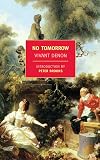
No Tomorrow by Vivant Denon—or really, shouldn't it be "No Tomorrow," as this is more a short story than anything else—is a small, fine thing, not unlike the figures that grace its cover in the new NYRB edition. The 1777 erotic tale is clear and precise without being explicit or coarse. It is not even erotic so much as addressed at the idea of eroticism, the story of a libertine affair mature enough to examine the ethics of pleasure, but without removing the pleasure of the affair itself.
Denon has fabulous control: "The night was superb; it revealed things in glimpses, and seemed only to veil them so as to give free rein to the imagination." The narrator, looking back on a night spent with Madame de T— when he was just twenty show more years old, perfectly foreshadows how both the evening and the story will unfold. He is whisked off by Mme de T— (though they both have other lovers) to her husband's chateau, on the night when she reconciles with him after eight years apart. A strange situation to be sure, but Mme de T— is undisturbed and leads the narrator on a stroll, where she first acts coy, talking about his friend the Countess.
I hardly need to say where that goes, and our narrator begs us to remember that he was only twenty years old, implying that he knows better now, before telling us of more of his missteps. The whole thing is highly mannered and perfect for an eighteenth century era when everyone wore the mask of high society all the time.
But Mme de T—, no matter what the light of the next morning may bring, is "decent," cannot lose her dignity in the narrator's eyes. What does he really think of the ethics of pleasure, then—and when there is point de lendemain, "point de questions, point de résistance" and—a moral?—“point"?
(more at http://www.bibliographing.com/2009/11/04/emno-tomorrowem-vivant-denon/ ) show less
Denon has fabulous control: "The night was superb; it revealed things in glimpses, and seemed only to veil them so as to give free rein to the imagination." The narrator, looking back on a night spent with Madame de T— when he was just twenty show more years old, perfectly foreshadows how both the evening and the story will unfold. He is whisked off by Mme de T— (though they both have other lovers) to her husband's chateau, on the night when she reconciles with him after eight years apart. A strange situation to be sure, but Mme de T— is undisturbed and leads the narrator on a stroll, where she first acts coy, talking about his friend the Countess.
I hardly need to say where that goes, and our narrator begs us to remember that he was only twenty years old, implying that he knows better now, before telling us of more of his missteps. The whole thing is highly mannered and perfect for an eighteenth century era when everyone wore the mask of high society all the time.
But Mme de T—, no matter what the light of the next morning may bring, is "decent," cannot lose her dignity in the narrator's eyes. What does he really think of the ethics of pleasure, then—and when there is point de lendemain, "point de questions, point de résistance" and—a moral?—“point"?
(more at http://www.bibliographing.com/2009/11/04/emno-tomorrowem-vivant-denon/ ) show less
This review was written for LibraryThing Early Reviewers.I love reading books on history. Occasionally I grow tired of heavy, dry tomes and want something lighter and fanciful. I don’t care much for modern literature, preferring books written a century or more ago. But not because they are historical. I like them because they were written by people living at that time in history. They allow us to experience the feelings and dreams of people who lived long ago.
Often historical novels or Hollywood films get all the details are correct but the thoughts and emotions of the characters are modern. I understand that this makes the characters more accessible to modern audiences but I hunger for authenticity.
Vivant Denon was no ordinary author. In fact, “No Tomorrow” is the only fiction he is show more known to have written. The rest of his works were travelogues. He was an engraver, a courtier and a diplomat. He accompanied Napoleon on his military campaign in Egypt. Denon was the first Director of French Museums. He was largely responsible for the collections in the Louvre. It is safe to say that Vivant Denon was no hack writer.
This brief tale of a young man’s seduction by an older married woman is a window into the past. The opera house where they first meet is seen through the eyes of an author who had spent many hours in opera houses. Their long flight by coach to her husband’s secluded estate necessitates changing horses multiple times much as we would refill the tanks in our cars. Just as we use water to symbolize intimacy, the lovers consummate their affair to the sounds of a stream that runs past the summer house where they sought privacy.
On an emotional level, modern readers may be shocked to learn that sex in France during that era was regarded very differently from our own more puritanical outlook. This is the authenticity that I seek. To be able to vicariously experience the emotions and outlook of a world so different from our own. Not to be titillated, but to actually live, however briefly, in that time.
“No Tomorrow” is not graphic. It is not pornography. It is more dreamlike than erotic. It is a story in the Romantic tradition. An age that ended with the French Revolution and the guillotine. Knowing this as you read it lends poignancy to the story. show less
Often historical novels or Hollywood films get all the details are correct but the thoughts and emotions of the characters are modern. I understand that this makes the characters more accessible to modern audiences but I hunger for authenticity.
Vivant Denon was no ordinary author. In fact, “No Tomorrow” is the only fiction he is show more known to have written. The rest of his works were travelogues. He was an engraver, a courtier and a diplomat. He accompanied Napoleon on his military campaign in Egypt. Denon was the first Director of French Museums. He was largely responsible for the collections in the Louvre. It is safe to say that Vivant Denon was no hack writer.
This brief tale of a young man’s seduction by an older married woman is a window into the past. The opera house where they first meet is seen through the eyes of an author who had spent many hours in opera houses. Their long flight by coach to her husband’s secluded estate necessitates changing horses multiple times much as we would refill the tanks in our cars. Just as we use water to symbolize intimacy, the lovers consummate their affair to the sounds of a stream that runs past the summer house where they sought privacy.
On an emotional level, modern readers may be shocked to learn that sex in France during that era was regarded very differently from our own more puritanical outlook. This is the authenticity that I seek. To be able to vicariously experience the emotions and outlook of a world so different from our own. Not to be titillated, but to actually live, however briefly, in that time.
“No Tomorrow” is not graphic. It is not pornography. It is more dreamlike than erotic. It is a story in the Romantic tradition. An age that ended with the French Revolution and the guillotine. Knowing this as you read it lends poignancy to the story. show less
This review was written for LibraryThing Early Reviewers.A very short story that was at least probably written by Vivant Denon, who is better known for having assembled the art Napoleon stole while waging war across Europe in the Louvre. It’s touted as being a masterpiece of seduction and stylishly erotic, but I have to say, it’s so incredibly short that there isn’t enough time for true seduction to take place. It was refreshing that the book was not misogynistic as others in this genre and time period often are, and I liked how the woman was in control, keeping her husband and her official lover under control while she manipulated a young man into a tryst one evening. However, it still reads as male fantasy, and a pretty thin one at that. There is something to be said for the show more simplicity, and indeed, the morality of the exchange of pleasure and desire without entanglement or regard for ‘tomorrow’.
Just this quote, on ‘after’:
“Besides, I’ve exhausted all the resources a heart possesses to bind you. What could you still hope for from me now? What could you still desire? And if a woman leaves a man with nothing to desire or to hope, what will become of her? I have given you everything I could; perhaps one day you will forgive me for the pleasures that, once the moment of intoxication has passed, return you to the severity of your judgment.” show less
Just this quote, on ‘after’:
“Besides, I’ve exhausted all the resources a heart possesses to bind you. What could you still hope for from me now? What could you still desire? And if a woman leaves a man with nothing to desire or to hope, what will become of her? I have given you everything I could; perhaps one day you will forgive me for the pleasures that, once the moment of intoxication has passed, return you to the severity of your judgment.” show less
Members
- Recently Added By
Lists

Favorite French Fiction
252 works; 110 members
Author Information

Some Editions
Series
Belongs to Publisher Series
Work Relationships
Is contained in
Inspired
Common Knowledge
- Canonical title
- No Tomorrow
- Original title
- Point de lendemain
- Alternate titles*
- Wordt niet vervolgd : novelle
- Original publication date
- 1812
- People/Characters
- Vivant Denon
- Epigraph*
- La lettre tue, et l'esprit vivifie.
E.D.S.P. - First words*
- J'aimais éperdument la comtesse de ... ; j'avais vingt ans, et j'étais ingénu ; elle me trompa, je me fâchai, elle me quitta.
- Last words*
- (Click to show. Warning: May contain spoilers.)Je cherchais bien la morale de toute cette aventure, et...je n'en trouvais point.
- Original language
- French
- Disambiguation notice
- Please do not combine with Point de lendemain suivi de La Petite Maison.
*Some information comes from Common Knowledge in other languages. Click "Edit" for more information.
Classifications
Statistics
- Members
- 229
- Popularity
- 143,004
- Reviews
- 13
- Rating
- (3.52)
- Languages
- 8 — Catalan, Dutch, English, French, German, Italian, Portuguese, Spanish
- Media
- Paper, Ebook
- ISBNs
- 23
- ASINs
- 2