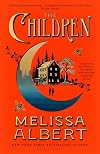
The Children
by Melissa Albert
On This Page
Tags
Recommendations









Member Reviews
Guinevere and Ennis are enchanted children. Well, in the books their mother writes they are. I reality they live in a remote place, home schooled but without any adult instruction, neglected by their mother who demands isolation for her writing and a father who is charming but feckless. Left to themselves, they roam the forests around the wooden house that’s full of strange carvings, acquiring scars and scrapes, bound together by their rural isolation as their mother’s books, a fantasy series, becomes a bestselling phenomenon, their fictionalized selves celebrities. Though they host loud house parties, their father’s acting career withers and the marriage sours. It all ends abruptly when Guin is eleven years old. There’s a show more mysterious fire, and all of the adults perish in the fire-engulfed house while the children escape into the woods. The final book in the fantasy series is lost, too, as well as Guin and Ennis’s close relationship.
The story is in two interwoven time frames, the children’s childhood and their estranged adulthood. Guin has drifted, unmoored and unsure of herself, unable to find her evasive sibling who has rejected his mother’s fame and become a celebrated creator of immersive installations, always disappearing whenever she gets close. She becomes a public spokeswoman for her mother’s still-popular books, her name on a ghostwritten memoir that glosses over the reality of a childhood marked by neglect, hunger, and danger while her parents argued and threw boozy parties.
But Guin’s false front is starting to crack. As she goes on a demanding book tour to sell a memoir she didn’t write she finds her mask slipping, especially when she learns her brother has a new installation about to open. It’s called Mother, and she knows it will change the way people understand how different their lives were from the Guin and Ennis of the books. Readers think they know her and envy her magical life, echoed in the false memoir, but in reality “there was always some lack or ache or unappeased appetite, and it all held her in a perpetual state of noticing… Need pinned her so neatly inside her skin, made her live hour to hour like an animal. She was underfed and isolated; she was envied and dreamed about.” It’s a state that can only be resolved by a rupture between fantasy and reality – or total surrender to the fantasy.
This is a strange, compelling, and often astonishingly poetic story that peers behind the glossiness of fame and the innocence of fairy tales to show something darker, examining the power of the imagination to take us to unexpected places, and the ways that popular parasocial relationships with books can become a mass desire to enter a fantasy world. The ending is truly surprising, and much is left unresolved, drawing on potent hints scattered throughout, like the eerie and evocative carvings that a woman once created throughout the house, a house that seems in some ways possessed, and possessive.
It’s a story that is likely to possess anyone who reads it, leaving behind lots to think about and a weird, tingling sense of the uncanny slipping out between the pages. show less
The story is in two interwoven time frames, the children’s childhood and their estranged adulthood. Guin has drifted, unmoored and unsure of herself, unable to find her evasive sibling who has rejected his mother’s fame and become a celebrated creator of immersive installations, always disappearing whenever she gets close. She becomes a public spokeswoman for her mother’s still-popular books, her name on a ghostwritten memoir that glosses over the reality of a childhood marked by neglect, hunger, and danger while her parents argued and threw boozy parties.
But Guin’s false front is starting to crack. As she goes on a demanding book tour to sell a memoir she didn’t write she finds her mask slipping, especially when she learns her brother has a new installation about to open. It’s called Mother, and she knows it will change the way people understand how different their lives were from the Guin and Ennis of the books. Readers think they know her and envy her magical life, echoed in the false memoir, but in reality “there was always some lack or ache or unappeased appetite, and it all held her in a perpetual state of noticing… Need pinned her so neatly inside her skin, made her live hour to hour like an animal. She was underfed and isolated; she was envied and dreamed about.” It’s a state that can only be resolved by a rupture between fantasy and reality – or total surrender to the fantasy.
This is a strange, compelling, and often astonishingly poetic story that peers behind the glossiness of fame and the innocence of fairy tales to show something darker, examining the power of the imagination to take us to unexpected places, and the ways that popular parasocial relationships with books can become a mass desire to enter a fantasy world. The ending is truly surprising, and much is left unresolved, drawing on potent hints scattered throughout, like the eerie and evocative carvings that a woman once created throughout the house, a house that seems in some ways possessed, and possessive.
It’s a story that is likely to possess anyone who reads it, leaving behind lots to think about and a weird, tingling sense of the uncanny slipping out between the pages. show less
Guin and her brother, Ennis, the unwilling stars of an international bestselling series of fantasy novels written by their mother, were almost each others' entire worlds even before they were orphaned at 11 and 13. But Guin, now thirty, has neither seen nor spoken to her brother since. On the cusp of the release of a farcically dishonest, anodyne memoir about her childhood, Ennis's threatened re-emergence throws Guin out of orbit, as she recalls and is tormented by her memories of childhood, Ennis's absence since, and her brushes over the years with his unreal works of art.
I could not believe the ending while it was happening but immediately afterward knew it was the only possible way it could have gone down. A really upsetting, show more fantastic novel about, art, theft, magic, and exploitation.
Pour one out for more of the monstrous children of narcissistic parents show less
I could not believe the ending while it was happening but immediately afterward knew it was the only possible way it could have gone down. A really upsetting, show more fantastic novel about, art, theft, magic, and exploitation.
As kids we love make-believe. Pretending to live out in the forest with no parental supervision. Fighting off dragons. Can you even imagine, though, if you really were a feral child? Raising yourself in a home where occasionally the parental units might remember they had children? Welcome to The Children.
Ennis and Guinevere are the children of once promising actor Llewellyn and children’s author Edith Sharpe. Edith was a child herself when she married Llewellyn and had Ennis and Guin. They lived an artist’s itinerant lifestyle, first in New York City and later in Italy. Then one day they are on a plane across the Atlantic, in the car driving for hours, to a strange land with a magical house.
It is here that the children will become show more feral creatures. With an orchard and strange artistic types coming and going from the giant home. It is here that their mother will finally become the author she wants to be, writing fantastic novels about The Ninth City.
Guinevere is all grown now, the keeper of her mother’s legacy, and recent ‘author’ of her memoir. She travels to book events and panels sharing what it was like to be one of two primary characters in her mother’s books. Guin is almost rootless. Engaged, somewhat employed, but emotionally walled off from the rest of the world. Because of Ennis. Ennis who left Guin to fend for herself. Ennis who has been missing from Guin’s life for more than a decade. Guin is emotionally rootless.
I feel like I’ve been so blessed to read so many great novels lately. This novel is captivating, flipping back and forth between adult Guin and child Guin. Sharing her life story past and present with us. The strange story of growing up with neglectful parentage. Such a beautifully written novel of loss and love and extreme sibling codependence. There is nothing to not love about this book. In ways it is mysterious and fantastical. Sometimes sad. But a captivating novel worth reading.
Definitely recommend. show less
Ennis and Guinevere are the children of once promising actor Llewellyn and children’s author Edith Sharpe. Edith was a child herself when she married Llewellyn and had Ennis and Guin. They lived an artist’s itinerant lifestyle, first in New York City and later in Italy. Then one day they are on a plane across the Atlantic, in the car driving for hours, to a strange land with a magical house.
It is here that the children will become show more feral creatures. With an orchard and strange artistic types coming and going from the giant home. It is here that their mother will finally become the author she wants to be, writing fantastic novels about The Ninth City.
Guinevere is all grown now, the keeper of her mother’s legacy, and recent ‘author’ of her memoir. She travels to book events and panels sharing what it was like to be one of two primary characters in her mother’s books. Guin is almost rootless. Engaged, somewhat employed, but emotionally walled off from the rest of the world. Because of Ennis. Ennis who left Guin to fend for herself. Ennis who has been missing from Guin’s life for more than a decade. Guin is emotionally rootless.
I feel like I’ve been so blessed to read so many great novels lately. This novel is captivating, flipping back and forth between adult Guin and child Guin. Sharing her life story past and present with us. The strange story of growing up with neglectful parentage. Such a beautifully written novel of loss and love and extreme sibling codependence. There is nothing to not love about this book. In ways it is mysterious and fantastical. Sometimes sad. But a captivating novel worth reading.
Definitely recommend. show less
I feel like we use the word "haunting" to describe too many reads, but I honestly don't know how else to talk about The Children. There's this cloak of fog that hangs over the story and probably is an apt description of Guin's own life as she tries to reconcile her past with her present.
At times I kept thinking that the was purposefully writing the narrative of a happy, sunny childhood at the Farmhouse where she lived with her bohemian parents and older brother Ennis, but I feel like it's mainly due to the fact that there's so much she's either repressing or blanking out on completely. Where her mother - Edith Sharpe - wrote what became a wildly successful and beloved children's book series - Ninth City - that also happened to feature show more Guinevere and Ennis Sharpe as characters. Also where Edith Sharpe died too soon before finishing the series.
Now, twenty years later, Guin is releasing her own book, but not the conclusion to the series everyone is hoping for. No, she's releasing a memoir about her life at the Farmhouse and all its golden-hued happiness. However, the book doesn't sit right with her brother Ennis who, now a well-regarded artist, has been estranged from Guin since their parents died. Ennis also has a new exhibit opening the aptly titled "Mother".
A good chunk of the book is spent with present day Guin searching for present day Ennis to almost no avail. He's such a presence throughout that it's one of the driving forces of the story. The other side of the book is infused with flashbacks to Guin and Ennis' childhood at the Farmhouse with their parents. This section of the story is driving toward what happened the night Edith died.
It's like these two timelines are trains on the same track heading toward one another. The crash is inevitable and it opens up things for Guin that she had spent too long repressing. But it's not a quick read by any means. It's twisting and slow to unfold with many secrets kept or implied that a young Guin couldn't fully comprehend but an adult Guin is all too aware.
Also, I don’t think I can leave a review without mention the juxtaposition between real-life Guin and Ennis and the fictionalized version of them that everyone thinks they “knew” because they read the books. Brings to mind actors who inhabit a character that they are known for and because we love the characters we believe that we know or understand the people behind them despite really knowing nothing. Guin has, maybe begrudgingly, embraced this by advocating for her mother’s estate/work and kind of inhabiting her role as “Guinevere” of the stories. Whereas Ennis pushed that away and is almost a recluse in his world of art where his rare appearances typically only coincide with the release of an installation.
And here we are weeks after finishing and I'm still trying to put words together to form a cohesive review. It's certainly a story that has stuck with me. The images it conjures are often sinister and ones I cannot quite escape. If you love a complicated family read that takes the more charming tropes of magical realism and completely twists it, you'll really enjoy this book. show less
At times I kept thinking that the was purposefully writing the narrative of a happy, sunny childhood at the Farmhouse where she lived with her bohemian parents and older brother Ennis, but I feel like it's mainly due to the fact that there's so much she's either repressing or blanking out on completely. Where her mother - Edith Sharpe - wrote what became a wildly successful and beloved children's book series - Ninth City - that also happened to feature show more Guinevere and Ennis Sharpe as characters. Also where Edith Sharpe died too soon before finishing the series.
Now, twenty years later, Guin is releasing her own book, but not the conclusion to the series everyone is hoping for. No, she's releasing a memoir about her life at the Farmhouse and all its golden-hued happiness. However, the book doesn't sit right with her brother Ennis who, now a well-regarded artist, has been estranged from Guin since their parents died. Ennis also has a new exhibit opening the aptly titled "Mother".
A good chunk of the book is spent with present day Guin searching for present day Ennis to almost no avail. He's such a presence throughout that it's one of the driving forces of the story. The other side of the book is infused with flashbacks to Guin and Ennis' childhood at the Farmhouse with their parents. This section of the story is driving toward what happened the night Edith died.
It's like these two timelines are trains on the same track heading toward one another. The crash is inevitable and it opens up things for Guin that she had spent too long repressing. But it's not a quick read by any means. It's twisting and slow to unfold with many secrets kept or implied that a young Guin couldn't fully comprehend but an adult Guin is all too aware.
Also, I don’t think I can leave a review without mention the juxtaposition between real-life Guin and Ennis and the fictionalized version of them that everyone thinks they “knew” because they read the books. Brings to mind actors who inhabit a character that they are known for and because we love the characters we believe that we know or understand the people behind them despite really knowing nothing. Guin has, maybe begrudgingly, embraced this by advocating for her mother’s estate/work and kind of inhabiting her role as “Guinevere” of the stories. Whereas Ennis pushed that away and is almost a recluse in his world of art where his rare appearances typically only coincide with the release of an installation.
And here we are weeks after finishing and I'm still trying to put words together to form a cohesive review. It's certainly a story that has stuck with me. The images it conjures are often sinister and ones I cannot quite escape. If you love a complicated family read that takes the more charming tropes of magical realism and completely twists it, you'll really enjoy this book. show less
Melissa Albert's The Children is one of the best goths I've read in quite some time It's not gothic in the sense of historical era. It moves back and forth in time, but with the exception of some passing references, no action takes place earlier than my own lifetime—and I'm not that old yet, despite how I feel some mornings.
The promo material offers a succinct explanation of the novel's contents: "the estranged adult children of a legendary author, written into their dead mother’s beloved fantasy series, contend with the vine-like creep of legacy, memory, and magic."
The children are Guinevere and Ennis Sharpe: Ennis, the older of the two, is an artist in his adult life; Guin (our narrator), who once dreamed of becoming a writer show more herself, is instead employed by her mother's publisher as a sort well-behaved spokeswoman. The publisher flies her to events and sends her out for interviews. She carefully offers continued curation of her mother's image. When the novel opens Guin is doing publicity events for her autobiography, a book that was actually ghost-written.
The parents are Llewellyn and Edith Sharpe. Llewellyn was well-known Shakespearean actor before he met and seduced the much younger Edith. His career hasn't quite recovered and he's trying to remake himself as a painter. Edith is the disturbing hub around which the family revolves. Never a particularly committed parent, when she writes a children's book that become a smash best-seller, and follows it up with four more books in the same series she becomes even less attentive.
The family lives in large house deep in a forest. The children are essentially feral. They do some reading, but primarily explore the forest together. They don't attend school. They are left to their own devices more often than might be advisable.
Llewellyn paints badly and has affairs with models.
Edith finally writes the book she's been hoping to write when she makes her children its central characters.
Because of the popularity of Edith's books, there are essentially two Guins and two Ennises. The children know who they are—but most of the world sees them as the characters in their mother's books and doesn't want to see them any other way. People track them down, want to hear about their "magical" childhood. Girls—and adult women—start making passes at Ennis early-on.
Can you see how this could get goth? Unsupervised children in a forest, a father who drinks and is a shadow of his former self, and a mother who surrounds herself with admirers, discarding those admirers for new ones once the current admirers grow boring. Guin maintaining an adult identity still essentially that of "the girl in the book." Adult Ennis creates installations for audiences to experience. His skills are remarkable; his creations almost seem impossible. And—his past is marked with a set of tragedies in which he may or may not have been actively involved.
Albert is a skilled writer who knows exactly what details to offer to bring a location or character to life. None of the characters are all that likeable, but readers can feel empathy for them and gradually come to understand how they are the people they are.
I'm more providing context here than actually reviewing the book—but the context is what makes this novel such a satisfying read. When you're ready for something a bit dark that is both entertaining and intellectually engaging, you'll be well set if you pick up a copy of Albert's The Children.
I received a free electronic review copy of this title from the publisher via NetGalley; the opinions are my own. show less
The promo material offers a succinct explanation of the novel's contents: "the estranged adult children of a legendary author, written into their dead mother’s beloved fantasy series, contend with the vine-like creep of legacy, memory, and magic."
The children are Guinevere and Ennis Sharpe: Ennis, the older of the two, is an artist in his adult life; Guin (our narrator), who once dreamed of becoming a writer show more herself, is instead employed by her mother's publisher as a sort well-behaved spokeswoman. The publisher flies her to events and sends her out for interviews. She carefully offers continued curation of her mother's image. When the novel opens Guin is doing publicity events for her autobiography, a book that was actually ghost-written.
The parents are Llewellyn and Edith Sharpe. Llewellyn was well-known Shakespearean actor before he met and seduced the much younger Edith. His career hasn't quite recovered and he's trying to remake himself as a painter. Edith is the disturbing hub around which the family revolves. Never a particularly committed parent, when she writes a children's book that become a smash best-seller, and follows it up with four more books in the same series she becomes even less attentive.
The family lives in large house deep in a forest. The children are essentially feral. They do some reading, but primarily explore the forest together. They don't attend school. They are left to their own devices more often than might be advisable.
Llewellyn paints badly and has affairs with models.
Edith finally writes the book she's been hoping to write when she makes her children its central characters.
Because of the popularity of Edith's books, there are essentially two Guins and two Ennises. The children know who they are—but most of the world sees them as the characters in their mother's books and doesn't want to see them any other way. People track them down, want to hear about their "magical" childhood. Girls—and adult women—start making passes at Ennis early-on.
Can you see how this could get goth? Unsupervised children in a forest, a father who drinks and is a shadow of his former self, and a mother who surrounds herself with admirers, discarding those admirers for new ones once the current admirers grow boring. Guin maintaining an adult identity still essentially that of "the girl in the book." Adult Ennis creates installations for audiences to experience. His skills are remarkable; his creations almost seem impossible. And—his past is marked with a set of tragedies in which he may or may not have been actively involved.
Albert is a skilled writer who knows exactly what details to offer to bring a location or character to life. None of the characters are all that likeable, but readers can feel empathy for them and gradually come to understand how they are the people they are.
I'm more providing context here than actually reviewing the book—but the context is what makes this novel such a satisfying read. When you're ready for something a bit dark that is both entertaining and intellectually engaging, you'll be well set if you pick up a copy of Albert's The Children.
I received a free electronic review copy of this title from the publisher via NetGalley; the opinions are my own. show less
Guin and her older brother Ennis move with their parents from New York to Venice to a farmhouse upstate, where Edith begins to write the series of children's fantasy books called The Ninth City. Early on, it's clear there is something wrong with the house - some kind of spirit that possesses and leaches the creative lifeforce of any inhabitant who makes a deal (and loses a finger). After a horrific fire that kills their parents and a few other visitors, Ennis and Guin are split up, and she doesn't see him again for years and years. But now, Ennis is putting on an art installation in Brooklyn, and Guin accepts the invitation.
See also: Starling House by Alix Harrow, The Starless Sea by Erin Morgenstern, Arcadia by Lauren Groff
Quotes
"The show more time we like the best of all / is when the shadows creepy crawl" (79)
She would forget how it felt, this cellular gratitude that made her ill and ecstatic at once. (97)
Her brother's anger could simmer for hours. Hers went up like a match. (117)
"I'd rather be failing than stuck." (Llewellyn, 124)
...she didn't know the rules here yet. At the Farmhouse there were no rules, which really meant there were lots of them, all left unspoken, so you had to learn them the hard way one by one. (148)
Desperate to...shake her sense that this life - everything she was living after the Farmhouse and the fire - was only epilogue. (195)
Her world was populated almost entirely by boundaryless grown-ups. (215)
Overcome at intervals by nostalgia and anxiety, a sense of transformation rushing toward her like a breaker. (237)
...the dream she couldn't remember sat like a lock in her middle. She kept trying to pick it. (248)
The haunting was in the weave, the whole place built in bad faith for some unfathomable purpose. (295)
A prelude, surely, to a fairy tale. Life since then had swept the glitter from her eyes. But now she was back in that timeless place, wishing for the clockwork of some other narrative to catch and carry her away from this one. (337)
"Why not a thousand? Why not ten thousand doors, all at once?" (Ennis, 381) show less
See also: Starling House by Alix Harrow, The Starless Sea by Erin Morgenstern, Arcadia by Lauren Groff
Quotes
"The show more time we like the best of all / is when the shadows creepy crawl" (79)
She would forget how it felt, this cellular gratitude that made her ill and ecstatic at once. (97)
Her brother's anger could simmer for hours. Hers went up like a match. (117)
"I'd rather be failing than stuck." (Llewellyn, 124)
...she didn't know the rules here yet. At the Farmhouse there were no rules, which really meant there were lots of them, all left unspoken, so you had to learn them the hard way one by one. (148)
Desperate to...shake her sense that this life - everything she was living after the Farmhouse and the fire - was only epilogue. (195)
Her world was populated almost entirely by boundaryless grown-ups. (215)
Overcome at intervals by nostalgia and anxiety, a sense of transformation rushing toward her like a breaker. (237)
...the dream she couldn't remember sat like a lock in her middle. She kept trying to pick it. (248)
The haunting was in the weave, the whole place built in bad faith for some unfathomable purpose. (295)
A prelude, surely, to a fairy tale. Life since then had swept the glitter from her eyes. But now she was back in that timeless place, wishing for the clockwork of some other narrative to catch and carry her away from this one. (337)
"Why not a thousand? Why not ten thousand doors, all at once?" (Ennis, 381) show less
For more reviews and bookish posts visit: https://www.ManOfLaBook.com
The Children by Melissa Albert follows a brother and sister, from a dysfunctional family, that their mother used their actual names in a successful fantasy series she wrote. Ms. Albert is a best-selling author and blogger whose books have been translated to many languages.
Guinevere and Ennis Sharpe grew up in the shadow of their famous mother. In the secluded Vermont farmhouse, Mrs. Sharpe wrote her world famous Ninth City books, where two kinds named... Guinevere and Ennis Sharpe go through magical adventures.
Now an adult, Guin, still in the shadow of her famous mother, is promoting her ghost-written biography. Mid interview, live on TV, she finds out that her show more brother, now an artist, has created a new exhibition about "Mother". Guin coolness begins to crack as memories come back, and fantasy starts to mix with reality.
I must admit that at first I didn't care about the book. I was on vacation and it's not a "vacation book". But once I got home, it really kicked in and it was difficult to put down.
I also must admit that The Children by Melissa Albert screwed with my head a bit. Fractured childhood memories, and blurred lines between reality and fiction are something that, I believe, most of us experience when thinking or reevaluating our childhood.
I have never read any of the author's books, but was very impressed with the ornate, Gothic writing style. It's dense, eerie, but readable and beautiful at the same time. Ms. Albert also manages to move between timelines very smoothly, where the future references the past, and somehow the past references the future.
Guin built her whole life quarantining memories, running away from her childhood. When her brother shows up in her sphere again, her psychological firewalls break down, forcing her to face reality. As the story progresses, however, it seems that her mother's creation, the Ninth City, might not have been entirely fictional. Just like the most of humanity, Guin must face the terrifying truth is that her parent's world, real or imagined - it doesn't matter -still has an active, physical hold on the next generation.
The core of the book is the way art can influence people and stay with them. Most of the time, let's face it, it's the art which brings darkness that has the most influence and stays with us the longest- and this book captures it beautifully. show less
The Children by Melissa Albert follows a brother and sister, from a dysfunctional family, that their mother used their actual names in a successful fantasy series she wrote. Ms. Albert is a best-selling author and blogger whose books have been translated to many languages.
Guinevere and Ennis Sharpe grew up in the shadow of their famous mother. In the secluded Vermont farmhouse, Mrs. Sharpe wrote her world famous Ninth City books, where two kinds named... Guinevere and Ennis Sharpe go through magical adventures.
Now an adult, Guin, still in the shadow of her famous mother, is promoting her ghost-written biography. Mid interview, live on TV, she finds out that her show more brother, now an artist, has created a new exhibition about "Mother". Guin coolness begins to crack as memories come back, and fantasy starts to mix with reality.
I must admit that at first I didn't care about the book. I was on vacation and it's not a "vacation book". But once I got home, it really kicked in and it was difficult to put down.
I also must admit that The Children by Melissa Albert screwed with my head a bit. Fractured childhood memories, and blurred lines between reality and fiction are something that, I believe, most of us experience when thinking or reevaluating our childhood.
I have never read any of the author's books, but was very impressed with the ornate, Gothic writing style. It's dense, eerie, but readable and beautiful at the same time. Ms. Albert also manages to move between timelines very smoothly, where the future references the past, and somehow the past references the future.
Guin built her whole life quarantining memories, running away from her childhood. When her brother shows up in her sphere again, her psychological firewalls break down, forcing her to face reality. As the story progresses, however, it seems that her mother's creation, the Ninth City, might not have been entirely fictional. Just like the most of humanity, Guin must face the terrifying truth is that her parent's world, real or imagined - it doesn't matter -still has an active, physical hold on the next generation.
The core of the book is the way art can influence people and stay with them. Most of the time, let's face it, it's the art which brings darkness that has the most influence and stays with us the longest- and this book captures it beautifully. show less
Members
- Recently Added By
Lists

Read with Jenna
91 works; 2 members

The New Yorker Briefly Noted book reviews (Jul 2026 - )
4 works; 1 member
Author Information

8+ Works 7,344 Members
Awards and Honors
Distinctions
The Guardian Book of the Day (2026-06-05)
Notable Lists
Common Knowledge
- Canonical title
- The Children
Classifications
Statistics
- Members
- 284
- Popularity
- 113,500
- Reviews
- 10
- Rating
- (3.79)
- Languages
- English
- Media
- Paper
- ISBNs
- 3