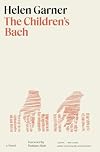
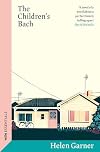
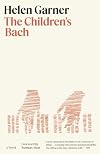
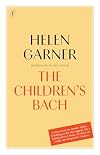
The Children's Bach
by Helen Garner
On This Page
Description
"Helen Garner has been a literary institution in Australia for decades. Her perfectly formed novels embodied Australia's tumultuous 70s and 80s, and her incisive nonfiction evokes the keen eye of the New Journalists. The Atlantic dubbed her "the Joan Didion of Australia." Now, The Children's Bach, the beloved work that solidified her place among the masters of modern international letters, is available in a new US edition. The Children's Bach follows Dexter and Athena Fox, a husband and wife show more who live with their two sons in the inner suburbs of early-1980s Melbourne. Dexter is gregarious, opinionated, and old fashioned. Athena is a dutiful wife and mother, stoic yet underestimated. Though their son's disability strains the family at times, they appear to lead otherwise happy lives. But when a friend from Dexter's past resurfaces, she and her cast of beguiling companions reveal another world to Dexter and Athena: a bohemian underground, unbound by routine and driven by desire, where choice seems to exist independent of consequence. And as Athena delves deeper into this other kind of life, the tenuous bonds that hold the Fox family together begin to fray. Painted on a small canvas and with a subtle musical backdrop, The Children's Bach is "a jewel" among Garner's revered catalog (Ben Lerner), a finely etched masterpiece that weighs the burdens of commitment against the costs of liberation"-- show lessTags
Recommendations


















Member Reviews
Rating: 4.5* of five
The Publisher Says: from Netgalley
Set in suburban Melbourne in the early 1980s, The Children’s Bach centers on Dexter and Athena Fox, their two sons, and the insulated world they’ve built together. Despite the routine challenges of domestic life, they are largely happy. But when a friend from Dexter’s past resurfaces and introduces the couple to the city’s bohemian underground—unbound by routine and driven by desire—Athena begins to wonder if life might hold more for her, and the tenuous bonds that tie the Foxes together start to fray.
A literary institution in Australia, Helen Garner’s perfectly formed novels embody the tumultuous 1970s and 1980s. Drawn on a small canvas and with a subtle musical show more backdrop, The Children’s Bach is “a jewel” (Ben Lerner) within Garner’s revered catalogue, a beloved work that solidified her place among the masters of modern letters, a finely etched masterpiece that weighs the burdens of commitment against the costs of liberation.
from Goodreads
Helen Garner has been a literary institution in Australia for decades. Her perfectly formed novels embodied Australia’s tumultuous 70s and 80s, and her incisive nonfiction evokes the keen eye of the New Journalists. Dubbed “the Joan Didion of Australia.” Now, the beloved work that solidified her place among the masters of modern international letters, is available in a new US edition.
The Children's Bach follows Dexter and Athena Fox, a husband and wife who live with their two sons in the inner suburbs of early-1980s Melbourne. Dexter is gregarious, opinionated, and old fashioned. Athena is a dutiful wife and mother, stoic yet underestimated. Though their son’s disability strains the family at times, they appear to lead otherwise happy lives.
But when a friend from Dexter’s past resurfaces, she and her cast of beguiling companions reveal another world to Dexter and Athena: a bohemian underground, unbound by routine and driven by desire, where choice seems to exist independent of consequence. And as Athena delves deeper into this other kind of life, the tenuous bonds that hold the Fox family together begin to fray.
Painted on a small canvas and with a subtle musical backdrop, is “a jewel” among Garner’s revered catalog (Ben Lerner), a finely etched masterpiece that weighs the burdens of commitment against the costs of liberation.
I RECEIVED A DRC FROM THE PUBLISHER VIA NETGALLEY. THANK YOU.
My Review: How times have changed in forty years! Athena's bald, bold statement, referring to her "retarded" son, "'I’ve abandoned him, in my heart,' said Athena. 'It’s work. I’m just hanging on till we can get rid of him.'" is so very, very out of step with modern sensibilities that I suspect it will cause some readers to bail out on the read.
I think that's a pity. The writing of this polyvocal récit (yes yes yes, Gotcha Gang, I know so please just put a sock in it) is as modern as Modernism itself, is as pure and imagined with such honesty that it should not be ignored over some nasty, unkind thoughts by a mother about her child.
It WILL bother you. I suspect, without proof, that it's meant to. I know no one in this story is meant to be a comfy PoV character like you fans of Elizabeth Strout's Olive Kitteridge like to have. The Children's Bach is certainly in that domestic story genre. The characters are married, the events of the tale are within the marriage, the tone and tenor take little to no notice of anything outside the interests of the married partners. The others who appear in story are not interested in things outside Athena and Dexter's purview. It's a very closed world.
It doesn't exactly narrate itself to you, either. It's like song lyrics are, or some of the less-unbearable poetry is: Elliptical in the way it leaves you to go on the ride then build the tracks afterward. I really enjoy that in a read, though not in a LONG one, which makes this under-200-page story of domestic reality exactly the best length for the technique to be interesting and involving without overstaying its welcome.
What appeals to me the most about the read is the very unlikeability of Athena and Dexter. I know where I realized, like Rumaan Alam says in her Foreword, that I remember always where I was when I read, "She washed, she washed, she washed," though her moment was different from mine; but this is, like other Helen Garner books, the kind where the quotidian and the internal are polished well past the point of brummagem shininess into the glint of the knife that flenses you.
No, they aren't nice; they aren't pleasant; they aren't, by my standards anyway, good people. They're interesting, they're unbearably shallow and pretentious. Everyone in this story fails as a person in catalogable ways. This is proof if one needs it that the dismissive, condescending label "domestic fiction" is toothless in the face of Helen Garner's violent assault on domesticity, her ramming-into of the delimiting front door od The Family Home with her well-aimed ute/pickup truck.
But what a glorious car-crash it is. show less
The Publisher Says: from Netgalley
Set in suburban Melbourne in the early 1980s, The Children’s Bach centers on Dexter and Athena Fox, their two sons, and the insulated world they’ve built together. Despite the routine challenges of domestic life, they are largely happy. But when a friend from Dexter’s past resurfaces and introduces the couple to the city’s bohemian underground—unbound by routine and driven by desire—Athena begins to wonder if life might hold more for her, and the tenuous bonds that tie the Foxes together start to fray.
A literary institution in Australia, Helen Garner’s perfectly formed novels embody the tumultuous 1970s and 1980s. Drawn on a small canvas and with a subtle musical show more backdrop, The Children’s Bach is “a jewel” (Ben Lerner) within Garner’s revered catalogue, a beloved work that solidified her place among the masters of modern letters, a finely etched masterpiece that weighs the burdens of commitment against the costs of liberation.
from Goodreads
Helen Garner has been a literary institution in Australia for decades. Her perfectly formed novels embodied Australia’s tumultuous 70s and 80s, and her incisive nonfiction evokes the keen eye of the New Journalists. Dubbed “the Joan Didion of Australia.” Now, the beloved work that solidified her place among the masters of modern international letters, is available in a new US edition.
The Children's Bach follows Dexter and Athena Fox, a husband and wife who live with their two sons in the inner suburbs of early-1980s Melbourne. Dexter is gregarious, opinionated, and old fashioned. Athena is a dutiful wife and mother, stoic yet underestimated. Though their son’s disability strains the family at times, they appear to lead otherwise happy lives.
But when a friend from Dexter’s past resurfaces, she and her cast of beguiling companions reveal another world to Dexter and Athena: a bohemian underground, unbound by routine and driven by desire, where choice seems to exist independent of consequence. And as Athena delves deeper into this other kind of life, the tenuous bonds that hold the Fox family together begin to fray.
Painted on a small canvas and with a subtle musical backdrop, is “a jewel” among Garner’s revered catalog (Ben Lerner), a finely etched masterpiece that weighs the burdens of commitment against the costs of liberation.
I RECEIVED A DRC FROM THE PUBLISHER VIA NETGALLEY. THANK YOU.
My Review: How times have changed in forty years! Athena's bald, bold statement, referring to her "retarded" son, "'I’ve abandoned him, in my heart,' said Athena. 'It’s work. I’m just hanging on till we can get rid of him.'" is so very, very out of step with modern sensibilities that I suspect it will cause some readers to bail out on the read.
I think that's a pity. The writing of this polyvocal récit (yes yes yes, Gotcha Gang, I know so please just put a sock in it) is as modern as Modernism itself, is as pure and imagined with such honesty that it should not be ignored over some nasty, unkind thoughts by a mother about her child.
It WILL bother you. I suspect, without proof, that it's meant to. I know no one in this story is meant to be a comfy PoV character like you fans of Elizabeth Strout's Olive Kitteridge like to have. The Children's Bach is certainly in that domestic story genre. The characters are married, the events of the tale are within the marriage, the tone and tenor take little to no notice of anything outside the interests of the married partners. The others who appear in story are not interested in things outside Athena and Dexter's purview. It's a very closed world.
It doesn't exactly narrate itself to you, either. It's like song lyrics are, or some of the less-unbearable poetry is: Elliptical in the way it leaves you to go on the ride then build the tracks afterward. I really enjoy that in a read, though not in a LONG one, which makes this under-200-page story of domestic reality exactly the best length for the technique to be interesting and involving without overstaying its welcome.
What appeals to me the most about the read is the very unlikeability of Athena and Dexter. I know where I realized, like Rumaan Alam says in her Foreword, that I remember always where I was when I read, "She washed, she washed, she washed," though her moment was different from mine; but this is, like other Helen Garner books, the kind where the quotidian and the internal are polished well past the point of brummagem shininess into the glint of the knife that flenses you.
No, they aren't nice; they aren't pleasant; they aren't, by my standards anyway, good people. They're interesting, they're unbearably shallow and pretentious. Everyone in this story fails as a person in catalogable ways. This is proof if one needs it that the dismissive, condescending label "domestic fiction" is toothless in the face of Helen Garner's violent assault on domesticity, her ramming-into of the delimiting front door od The Family Home with her well-aimed ute/pickup truck.
But what a glorious car-crash it is. show less
I've never been to Melbourne, Australia and I've never had children or gotten married. But I've read some good novels, so please trust me when I say that this is one of those, a word-perfect, how-did-she-do-it, tiny miracle of a book. As others have pointed out, "The Children's Bach" is something of a formal experiment: a loosely structured novel that takes an entire group of friends as its subject rather than a single story, character, or consciousness. It's still narrated in an not-always-indirect third, though, so readers who decried Jay McInerney's "Bright Lights, Big City" or Joshua Farris's "Then We Came to the End" as gimmicky won't have room to complain here.
Well, others might complain that nothing happens during in the show more two-hundred pages that comprise "The Children's Bach," and while it's true that the book is short on twists or car chases, it also seems like everything happens: people meet each other, friendships begin and end, people fall in and out love, kids grow up a little while other adults seemingly refuse to do the same. At the risk of getting maudlin, it might be fair to say that we, the reader, see life being lived here, specifically, the sorts of lives that were lived during a slice of the late seventies or early eighties when people -- even those living in relatively off-the-map places like the Melbourne suburbs -- began to absorb the cultural shocks of the preceding ten-to-fifteen years in more intimate, personal ways. In the hands of a lesser writer, this might have all devolved into a series of sex scenes and a sort of prudes vs. flower children plot, but the author has an almost preternatural ability to describe and even sympathise with the older, more conservative Australians that hover around her novel's diffuse center. She's also composed enough to writer to casta relatively straightforward gaze on the rest of her characters. Their happiness, ambition, lust, foibles, and mistakes, are shown to be both part of themselves and part of the age in which they live. You might say that that feels a lot like life, too.
True to form, there isn't much of an arc here: the only character who seems slightly adrift at the book's end is the one who most firmly insists on tradition and the immutability of social forms. He's also, according to the writer who wrote the introduction to my digital copy of "The Children's Bach," the one that he -- and perhaps many readers -- are most likely to identify with. But even so, Garner -- who I simply can't believe I've never heard of before -- lets him down gently. His is a bittersweet sense of loneliness that is often the reward of age. The book still sands as a near-miraculous portrait of life in a certain place, at a certain time, within a certain social circle. That something so specific could be said to somehow approximate the full reach of life is a testament to the author's astonishing talent. show less
Well, others might complain that nothing happens during in the show more two-hundred pages that comprise "The Children's Bach," and while it's true that the book is short on twists or car chases, it also seems like everything happens: people meet each other, friendships begin and end, people fall in and out love, kids grow up a little while other adults seemingly refuse to do the same. At the risk of getting maudlin, it might be fair to say that we, the reader, see life being lived here, specifically, the sorts of lives that were lived during a slice of the late seventies or early eighties when people -- even those living in relatively off-the-map places like the Melbourne suburbs -- began to absorb the cultural shocks of the preceding ten-to-fifteen years in more intimate, personal ways. In the hands of a lesser writer, this might have all devolved into a series of sex scenes and a sort of prudes vs. flower children plot, but the author has an almost preternatural ability to describe and even sympathise with the older, more conservative Australians that hover around her novel's diffuse center. She's also composed enough to writer to casta relatively straightforward gaze on the rest of her characters. Their happiness, ambition, lust, foibles, and mistakes, are shown to be both part of themselves and part of the age in which they live. You might say that that feels a lot like life, too.
True to form, there isn't much of an arc here: the only character who seems slightly adrift at the book's end is the one who most firmly insists on tradition and the immutability of social forms. He's also, according to the writer who wrote the introduction to my digital copy of "The Children's Bach," the one that he -- and perhaps many readers -- are most likely to identify with. But even so, Garner -- who I simply can't believe I've never heard of before -- lets him down gently. His is a bittersweet sense of loneliness that is often the reward of age. The book still sands as a near-miraculous portrait of life in a certain place, at a certain time, within a certain social circle. That something so specific could be said to somehow approximate the full reach of life is a testament to the author's astonishing talent. show less
Helen Garner is a novelist of impeccable skill whose works I rarely warm to, in spite of admiring the prose on every page. So I was glad to enjoy The Children's Bach so much. It's a very short, naturalistic novel, simple in structure and tone, but layering a number of complex, ethically dubious lives on top of one another.
I can understand some of the negative reviews based on the context. Some people are ideological readers, and unable to separate their own ethics from those of characters. It's a condition especially prominent here in the early 21st century, in the age of auto-fiction, with many readers seeking novels that define their own ideology, seeing literature as a truth/lie binary rather than a mirror of non-truths reflecting show more our world. Such readers have their virtues, but are prone to assuming that the author shares the views of their characters unless the novel explicitly states otherwise. As I am stubbornly in the other category, I'm happy to follow Garner down this murky ethical rabbit hole. Prying into the lives of others will (hopefully) never go out of style. show less
I can understand some of the negative reviews based on the context. Some people are ideological readers, and unable to separate their own ethics from those of characters. It's a condition especially prominent here in the early 21st century, in the age of auto-fiction, with many readers seeking novels that define their own ideology, seeing literature as a truth/lie binary rather than a mirror of non-truths reflecting show more our world. Such readers have their virtues, but are prone to assuming that the author shares the views of their characters unless the novel explicitly states otherwise. As I am stubbornly in the other category, I'm happy to follow Garner down this murky ethical rabbit hole. Prying into the lives of others will (hopefully) never go out of style. show less
"Athena felt ground drop away from under her feet. She hung over a black gulf, she heard the wind. Her self was in tantrum, panicking. What? Me die? Life go on without me? Impossible!"
This short Australian novel is set in suburban Melbourne in the early 1980's. Dexter and Athena are raising two young sons, one with a lot of special needs. One day at the airport, Dexter runs into a friend from his youth and university days, Elizabeth, who is picking up her much younger sister Vicki, a teenager. Dexter gives Vicki and Elizabeth a ride back to town, and the old relationship is picked up. Soon, Vicki has moved in with Athena and Dexter. Over the course of the novel, all sorts of changes occur to the characters and their relationships with show more each other. Athena in particular undergoes a transformation as she realizes there is more to life than the life she has been living.
The novel is episodic, and the pov is constantly shifting. The forwards states that it is a novel in which the plot is beside the point. There is no main character; Things happen; "This is a story about how life happens to all of us." An Amazon review describes the book as "impressionistic"--You generally know what's going on, but not always the specific details. Interwoven through it all is the music: Athena is trying to learn the piano with The Children's Bach, Dexter has a decent baritone and is constantly singing, Elizabeth's boyfriend Philip is a professional musician.
3 stars show less
This short Australian novel is set in suburban Melbourne in the early 1980's. Dexter and Athena are raising two young sons, one with a lot of special needs. One day at the airport, Dexter runs into a friend from his youth and university days, Elizabeth, who is picking up her much younger sister Vicki, a teenager. Dexter gives Vicki and Elizabeth a ride back to town, and the old relationship is picked up. Soon, Vicki has moved in with Athena and Dexter. Over the course of the novel, all sorts of changes occur to the characters and their relationships with show more each other. Athena in particular undergoes a transformation as she realizes there is more to life than the life she has been living.
The novel is episodic, and the pov is constantly shifting. The forwards states that it is a novel in which the plot is beside the point. There is no main character; Things happen; "This is a story about how life happens to all of us." An Amazon review describes the book as "impressionistic"--You generally know what's going on, but not always the specific details. Interwoven through it all is the music: Athena is trying to learn the piano with The Children's Bach, Dexter has a decent baritone and is constantly singing, Elizabeth's boyfriend Philip is a professional musician.
3 stars show less
This is a brilliantly clever piece of literary fiction by Australian author Helen Garner which I read for our July Book Club read. It is a short, pithy story set in 1980s suburban Melbourne that examines the grittier side of urban family life.
Dexter and Athena Fox are a fairly ordinary couple, Dexter gregarious and optimistic, Athena a down-to-earth almost grim housewife and mother. An old friend of Dexter’s, the glamorous, independent Elizabeth (Morty) and her teenage sister Vicki enter their lives and the family dynamic shifts. The story presents a fairly nihilistic, desolate view of suburban life that investigates the selfishness and brutality of the characters. The hardest thing to read was Athena’s feelings towards their show more disabled, possibly autistic son, Billy, who she views as a lost cause with 'no one in there' and dreams of throwing under a bus.
A well-written but not overly cheery story that I’m sure will spark some great Book Club chats. 3.5 stars. show less
Dexter and Athena Fox are a fairly ordinary couple, Dexter gregarious and optimistic, Athena a down-to-earth almost grim housewife and mother. An old friend of Dexter’s, the glamorous, independent Elizabeth (Morty) and her teenage sister Vicki enter their lives and the family dynamic shifts. The story presents a fairly nihilistic, desolate view of suburban life that investigates the selfishness and brutality of the characters. The hardest thing to read was Athena’s feelings towards their show more disabled, possibly autistic son, Billy, who she views as a lost cause with 'no one in there' and dreams of throwing under a bus.
A well-written but not overly cheery story that I’m sure will spark some great Book Club chats. 3.5 stars. show less
This slim novel is set in Melbourne, Australia during the early 1980s. The opening chapter presents a longtime married couple, Dexter and Athena, with their two sons, one of whom has a severe neurodevelopmental disorder. Husband and wife are close, and after a tiring day of work and caring for their children, the couple take long walks together after dark. The domesticity of this family begins to unravel with the arrival of external forces. These arise from of a chance meeting with a friend from Dexter’s past, Elizabeth. Unlike the couple, she leads a bohemian lifestyle, and soon she introduces them to a rock musician friend, Philip, and to her much younger sister, Vicki. With these new people now a part of their lives, Dexter and show more Athena’s relationship undergoes subtle changes, ones that threaten to fracture the foundation of their marriage.
There is no one protagonist featured in the book. Events as they take place are told from a shifting cast of perspectives, primarily those of Dexter, Athena, Elizabeth and Vicki. What makes this novel special is Garner’s precision in capturing the inner thoughts of each one. None are portrayed as good or bad; rather they are shown to be coping with life as best they can. The Children’s Bach is short enough to be read in an evening, but the lovely prose is worth taking more time to savor. First published in Australia in 1984, it has since won a growing audience worldwide. My description of the story’s plot hardly does it justice. Helen Garner is an author worth getting to know, and this novel would be the perfect vehicle with which to do so. show less
There is no one protagonist featured in the book. Events as they take place are told from a shifting cast of perspectives, primarily those of Dexter, Athena, Elizabeth and Vicki. What makes this novel special is Garner’s precision in capturing the inner thoughts of each one. None are portrayed as good or bad; rather they are shown to be coping with life as best they can. The Children’s Bach is short enough to be read in an evening, but the lovely prose is worth taking more time to savor. First published in Australia in 1984, it has since won a growing audience worldwide. My description of the story’s plot hardly does it justice. Helen Garner is an author worth getting to know, and this novel would be the perfect vehicle with which to do so. show less
Ah, Helen Garner.
How I love thee. Let me count the ways.
... but genuinely, I do love Helen Garner.
I love the way she constructs her characters, or, rather, how she doesn't. When I read any of her works, there are so many layers, yet so few details. The characters aren't quite fully-formed, like objects underwater, distorted and secretive.
And Garner will reveal their purpose, slowly, piece by piece, page by page, word by word.
In this particular book, she writes about a mundane, domestic chapter in family's life, and the upheavals around it, and yet - there's nothing mundane about it.
What's more, she's an Australian author, and sometimes she writes a street or an address that I know, and her world becomes all the more concrete.
Her writing show more is like an ocean - pulled by the moon's invisible strings. It's natural, rhythmic, fluid. I only wish she'd write more. show less
How I love thee. Let me count the ways.
... but genuinely, I do love Helen Garner.
I love the way she constructs her characters, or, rather, how she doesn't. When I read any of her works, there are so many layers, yet so few details. The characters aren't quite fully-formed, like objects underwater, distorted and secretive.
And Garner will reveal their purpose, slowly, piece by piece, page by page, word by word.
In this particular book, she writes about a mundane, domestic chapter in family's life, and the upheavals around it, and yet - there's nothing mundane about it.
What's more, she's an Australian author, and sometimes she writes a street or an address that I know, and her world becomes all the more concrete.
Her writing show more is like an ocean - pulled by the moon's invisible strings. It's natural, rhythmic, fluid. I only wish she'd write more. show less
Members
- Recently Added By
Lists

TML 200 Best Books 1950-1999
202 works; 10 members

A Novel Cure
742 works; 23 members

The Modern Library (The Two Hundred Best Novels....
202 works; 1 member
Author Information

27+ Works 5,205 Members
Helen Garner was born on November 7, 1942 in Geelong, Australia. She received a bachelor's degree with majors in English and French from the University of Melbourne. Throughout her career, she has written both fiction and non-fiction. Her first novel, Monkey Grip, was published in 1977. Her non-fiction books include The First Stone, Joe Cinque's show more Consolation, The Feel of Steel, True Stories and Everywhere I Look. She has also written for film and theatre. She has won numerous awards for her work including Victorian Premier's Literary Awards, the Vance Palmer Prize for Fiction for The Spare Room, For the This House of Grief, she won the Melbourne Prize for Literature, the Barbara Jefferis Award, and the Ned Kelly Award in 2015, and in 2016, the WA Premier's Book Award for nonfiction. She was one of three winners of the 2016 Windham-Campbell Prize for nonfiction. Everywhere I Look won the 2017 Indie Book Award for Nonfiction. (Bowker Author Biography) show less
Some Editions
Awards and Honors
Series
Belongs to Publisher Series
Common Knowledge
- Canonical title
- The Children's Bach
- Original publication date
- 1984
- People/Characters
- Dexter Fox; Athena; William Fox; Elizabeth; Vicky
- Important places
- Melbourne, Victoria, Australia
- Dedication
- For Alice and J-J, and some very good
friends of mine. - First words
- Dexter found, in a magazine, a photograph of the poet Tennyson, his wife and their two sons walking in the garden of their house on the Isle of Wight.
- Quotations
- Safety! Dexter stood holding the plastic glass of beer and stared around him. These kids didn’t look as if they would smash glass. They had cold, passionless faces. He knew the phrase for it: ‘l’inébranlable résolutio... (show all)n de ne pas être ému.’ They were like refugees, war orphans, thronging in their
drab clothes. - Original language
- English
Classifications
Statistics
- Members
- 422
- Popularity
- 72,878
- Reviews
- 16
- Rating
- (3.67)
- Languages
- 5 — Czech, English, French, German, Turkish
- Media
- Paper, Audiobook, Ebook
- ISBNs
- 23
- ASINs
- 6