The Democratic Paradox
by Chantal Mouffe
On This Page
Description
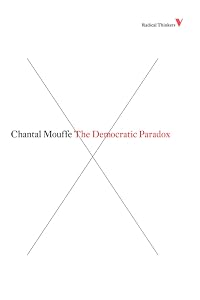
From the theory of 'deliberative democracy' to the politics of the 'third way', the present Zeitgeist is characterized by attempts to deny what Chantal Mouffe contends is the inherently conflictual nature of democratic politics. Far from being signs of progress, such ideas constitute a serious threat to democratic institutions. Taking issue with John Rawls and Jürgen Habermas on one side, and the political tenets of Blair, Clinton and Schröder on the other, Mouffe brings to the fore the show more paradoxical nature of modern liberal democracy in which the category of the 'adversary' plays a central role. She draws on the work of Wittgenstein, Derrida, and the provocative theses of Carl Schmitt, to propose a new understanding of democracy which acknowledges the ineradicability of antagonism in its workings. show lessTags
Recommendations


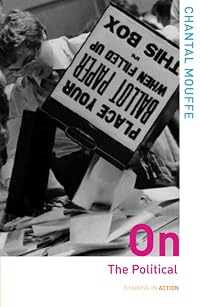



Member Reviews
Another solid contribution from Chantal Mouffe. Approaches the notion of liberal democracy by way of the concept of paradox, due to the fundamental, constitutive tension (and mutual "contamination" as she puts it) between democracy and liberalism.
Mouffe argues that, contrary to the current "third way" type of politics that claims to have eschewed right- and left-wing as political categories--that claims to have gone beyond political conflict, there is in fact a need to recognize the inherently conflictual nature of democratic politics, and that attempts to sidestep it are bad for democracies.
One particularly interesting insight from Mouffe is that, with regard to the inherent agonism of (liberal?) democracies, not just the neo-liberal, show more third wave folks but also the pomo, fuzzy thinking leftitsts of today have it wrong, because while they recognize and even valorize "confrontation with the other" or even "infinite controntation with the other", they see such interaction as possible without actual conflict, without antagonism which, Mouffe argues, is essential to politics.
The one disappointing thing about this book is that it seems basically to just build on and re-iterate themes from The Return of the Political, without really introducing anything very new. show less
Mouffe argues that, contrary to the current "third way" type of politics that claims to have eschewed right- and left-wing as political categories--that claims to have gone beyond political conflict, there is in fact a need to recognize the inherently conflictual nature of democratic politics, and that attempts to sidestep it are bad for democracies.
One particularly interesting insight from Mouffe is that, with regard to the inherent agonism of (liberal?) democracies, not just the neo-liberal, show more third wave folks but also the pomo, fuzzy thinking leftitsts of today have it wrong, because while they recognize and even valorize "confrontation with the other" or even "infinite controntation with the other", they see such interaction as possible without actual conflict, without antagonism which, Mouffe argues, is essential to politics.
The one disappointing thing about this book is that it seems basically to just build on and re-iterate themes from The Return of the Political, without really introducing anything very new. show less
From the theory of 'deliberative democracy' to the politics of the 'third way', the present Zeitgeist is characterized by attempts to deny what Chantal Mouffe contends is the inherently conflictual nature of democratic politics. Far from being signs of progress, such ideas constitute a serious threat to democratic institutions. Taking issue with John Rawls and J rgen Habermas on one side, and the political tenets of Blair, Clinton and Schr der on the other, Mouffe brings to the fore the paradoxical nature of modern liberal democracy in which the category of the 'adversary' plays a central role. She draws on the work of Wittgenstein, Derrida, and the provocative theses of Carl Schmitt, to propose a new understanding of democracy which show more acknowledges the ineradicability of antagonism in its workings. show less
Jan 31, 2019Dutch
Ratings
Members
- Recently Added By
Author Information

23+ Works 1,654 Members
Chantal Mouffe is Professor of Political Theory at the University of Westminster in London. Her previous books include The Democratic Paradox, The Return of the Political, and Hegemony and Socialist Strategy, all available from Verso.
Series
Belongs to Publisher Series
Radical Thinkers (46 - Set 4(10))
Common Knowledge
- Canonical title
- The Democratic Paradox
- Original title
- The Democratic Paradox
- Original publication date
- 2005
Classifications
- Genres
- Politics and Government, Philosophy, Nonfiction, General Nonfiction
- DDC/MDS
- 321.8 — Society, government, & culture Political science Systems of governments and states Democratic government [formerly : Republic]
- LCC
- JC423 .M7363 — Political Science Political theory Political theory. The state. Theories of the state Forms of the state
- BISAC
Statistics
- Members
- 225
- Popularity
- 145,518
- Reviews
- 2
- Rating
- (4.34)
- Languages
- 6 — Catalan, English, French, German, Polish, Spanish
- Media
- Paper, Ebook
- ISBNs
- 12