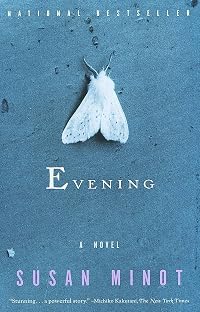
Evening
by Susan Minot
On This Page
Description
With two novels and one short story collection published to overwhelming critical acclaim ("Monkeys takes your breath away," said Anne Tyler; "heartbreaking, exhilarating," raved the New York Times Book Review), Susan Minot has emerged as one of the most gifted writers in America, praised for her ability to strike at powerful emotional truths in language that is sensual and commanding, mesmerizing in its vitality and intelligence. Now, with Evening, she gives us her most ambitious novel, a show more work of surpassing beauty. During a summer weekend on the coast of Maine, at the wedding of her best friend, Ann Grant fell in love. She was twenty-five. Forty years later--after three marriages and five children--Ann Lord finds herself in the dim claustrophobia of illness, careening between lucidity and delirium and only vaguely conscious of the friends and family parading by her bedside, when the memory of that weekend returns to her with the clarity and intensity of a fever-dream. Evening unfolds in the rushlight of that memory, as Ann relives those three vivid days on the New England coast, with motorboats buzzing and bands playing in the night, and the devastating tragedy that followed a spectacular wedding. Here, in the surge of hope and possibility that coursed through her at twenty-five--in a singular time of complete surrender--Ann discovers the highest point of her life. Superbly written and miraculously uplifting, Evening is a stirring exploration of time and memory, of love's transcendence and of its failure to transcend--a rich testament to the depths of grief and passion, and a stunning achievement. show lessTags
Recommendations









Member Reviews
Ann Lord is lying in “the last room,” dying of cancer. As she slips into and out of lucidity, she remembers her life, her three marriages, the high and low points, and in particular one weekend and one very special relationship.
Susan Minot manages to convey Ann's state of mind convincingly and lyrically:
One tiny quibble is that the style is at times almost self-consciously, ostentatiously lyrical. Nevertheless, it never interferes with and almost always enhances the story, which is heartbreaking and beautiful. show less
“She woke and thought of what was left. She had always believed in the accepted wisdom that what was important would endure and in the end survive and what mattered would last and be recognized and saved. But she saw now that was not true.”
Susan Minot manages to convey Ann's state of mind convincingly and lyrically:
“She grew sensitive to the different shades of white on the ceiling. Her sense was not always right. The position of her arm had something to do with inviting people to dinner. She needed toshow more
move the pillow so a boat could dock there. She knew it wasn't logical and wondered if the drugs were obscuring things then it seemed as if the drugs were making it easier to read the true meaning.”
One tiny quibble is that the style is at times almost self-consciously, ostentatiously lyrical. Nevertheless, it never interferes with and almost always enhances the story, which is heartbreaking and beautiful. show less
between 2 and 2.5 stars. this was really hard for me at first. the writing is something stream of consciousness, with no punctuation and incomplete sentences all together, and going back and forth in time. all of those things conspired to make this quite tough for the first while. then when it started to make more sense - both what she was saying and the time period she was saying it in - it became much more readable, interesting, and beautiful (in parts). i'm not sure how much i believe in the idea of a two day affair overshadowing a life, but i think that's because i didn't like harris, because i didn't believe a word out of his mouth and couldn't see how ann could fall for him.
i didn't like all of this but some parts were so show more beautiful and surprising, and even in the hard to understand sentences i found some real gems (of language, construction, thought). the parts i liked were really lovely, and maybe the rest, which wasn't lovely, reflects how we handle being in the room/house with someone as we twiddle our thumbs and wait for them to die. i think i'll like this more and more the further i get from it and the more i think about it. it's definitely not one to read through quickly, with only some attention. show less
i didn't like all of this but some parts were so show more beautiful and surprising, and even in the hard to understand sentences i found some real gems (of language, construction, thought). the parts i liked were really lovely, and maybe the rest, which wasn't lovely, reflects how we handle being in the room/house with someone as we twiddle our thumbs and wait for them to die. i think i'll like this more and more the further i get from it and the more i think about it. it's definitely not one to read through quickly, with only some attention. show less
In 1955 Ann Grant attends the wedding of her best friend in Maine. During that fateful weekend she falls in love with a young doctor from Chicago. Fate works her magic and they consummate their love within hours of meeting each other. Forty-eight hours later the doctor’s fiancee arrives and tells her betrothed that she is carrying his child. He is torn between his love for Ann and his duty to his intended.
Now at the end of her life Ann Grant Lord lies in her bed. She is dying from cancer and each day the pain gets worse. Her children from her three marriages gather round and keep a death vigil while Ann mentally slips back in time to that weekend in 1955 when she fell in love. Her memories of that weekend become mixed with memories of show more her three marriages and with the hallucinations brought on by the heavy pain medicines she is taking.
This is an interesting book; highly imaginative in the way that it is written. The reader is taken on a roller-coaster ride through the mind of a dying woman who mentally reviews her life and still wonders what if she had married her young Chicago doctor. Throughout the narrative she is speaking to a male entity – it is never clear if that person is at her bedside in substance or only in spirit. We are led to believe that it is her young beau from 1955. She relives that fateful weekend in great detail although the memories are mixed with memories of other men (her three husbands) and other places she has been. Her children are the buzzards circling her deathbed. Nurse Brown is the voice of reason who writes her reports on her patient in a clinical manner that is much needed after the ramblings of the elderly Ann.
For me this book gave insight into the final days and hours of a person who has accepted her fate, knows she is about to die, and embraces the end. Everything else is secondary. A thought-provoking story that I finished in under a week. show less
Now at the end of her life Ann Grant Lord lies in her bed. She is dying from cancer and each day the pain gets worse. Her children from her three marriages gather round and keep a death vigil while Ann mentally slips back in time to that weekend in 1955 when she fell in love. Her memories of that weekend become mixed with memories of show more her three marriages and with the hallucinations brought on by the heavy pain medicines she is taking.
This is an interesting book; highly imaginative in the way that it is written. The reader is taken on a roller-coaster ride through the mind of a dying woman who mentally reviews her life and still wonders what if she had married her young Chicago doctor. Throughout the narrative she is speaking to a male entity – it is never clear if that person is at her bedside in substance or only in spirit. We are led to believe that it is her young beau from 1955. She relives that fateful weekend in great detail although the memories are mixed with memories of other men (her three husbands) and other places she has been. Her children are the buzzards circling her deathbed. Nurse Brown is the voice of reason who writes her reports on her patient in a clinical manner that is much needed after the ramblings of the elderly Ann.
For me this book gave insight into the final days and hours of a person who has accepted her fate, knows she is about to die, and embraces the end. Everything else is secondary. A thought-provoking story that I finished in under a week. show less
Whatever We May Think of at the End of Life
This was truly a striking story. I didn’t like it much at first, but as I continued reading I saw there was something beautiful being realized. I had a good feeling after I finished reading it – I enjoyed the story and admire Susan Minot’s confidence to write a novel in this way – her loose, rambling style captured the subconscious mind.
It’s true that this is a sprawling story which was sometimes hard to follow but I think that often, that’s the way memories get tangled up at the end of life after an illness. It gives the reader an inside view of dying, which is very thought-provoking. I’m intrigued to see the movie and to see how their treatment affects the plot and storyline.
This was truly a striking story. I didn’t like it much at first, but as I continued reading I saw there was something beautiful being realized. I had a good feeling after I finished reading it – I enjoyed the story and admire Susan Minot’s confidence to write a novel in this way – her loose, rambling style captured the subconscious mind.
It’s true that this is a sprawling story which was sometimes hard to follow but I think that often, that’s the way memories get tangled up at the end of life after an illness. It gives the reader an inside view of dying, which is very thought-provoking. I’m intrigued to see the movie and to see how their treatment affects the plot and storyline.
I found this novel quite remarkable as it depicts the thought process of Ann Lord. She is on her deathbed and slipping in and out of memories about events of her life. The main memory is of a brief love affair she had at 25, obviously an experience that has remianed with her through multiple husbands and 5 children. There is a stream of consciousness to the writing and the detail seems right on. The New York Times description below does a nice job of summarizing :
"July 1954. An island off the coast of Maine. Ann Grant—a 25-year-old New York career girl—is a bridesmaid at her best friend's lavish wedding. Also present is a man named Harris Arden, whom Ann has never met . . .
After three marriages and five children, Ann Lord lies in an show more upstairs bedroom of a house in Cambridge, Massachusetts. What comes to her, eclipsing a stream of doctor's visits and friends stopping by and grown children overheard whispering from the next room, is a rush of memories from a weekend 40 years ago in Maine, when she fell in love with a passion that even now throws a shadow onto the rest of her life. In Evening, Susan Minot gives us a novel of spellbinding power on the nature of memory and love."
What is not mentioned in the summary is the images she creates in her writing and the unique point of view, depicting a woman's thoughts as she struggles in and out of a drug induced coma. Highly recommended.
-------------------------------------------------------------------------------- show less
"July 1954. An island off the coast of Maine. Ann Grant—a 25-year-old New York career girl—is a bridesmaid at her best friend's lavish wedding. Also present is a man named Harris Arden, whom Ann has never met . . .
After three marriages and five children, Ann Lord lies in an show more upstairs bedroom of a house in Cambridge, Massachusetts. What comes to her, eclipsing a stream of doctor's visits and friends stopping by and grown children overheard whispering from the next room, is a rush of memories from a weekend 40 years ago in Maine, when she fell in love with a passion that even now throws a shadow onto the rest of her life. In Evening, Susan Minot gives us a novel of spellbinding power on the nature of memory and love."
What is not mentioned in the summary is the images she creates in her writing and the unique point of view, depicting a woman's thoughts as she struggles in and out of a drug induced coma. Highly recommended.
-------------------------------------------------------------------------------- show less
Review: Evening by Susan Minot. 03/19/2018
I found the book a little confusing because of the time excerpts in the main characters memory. It was a sad story about an elderly women dying of cancer returning to her three marriages and events by memory while lying in bed dying. Reading about her moments in life she really never was happy after her first love; a Doctor from Chicago had a pregnant fiancé in the shadows. From that point on Ann married three times, had children in those marriages, and a home but lacked happiness.
Now, at sixty-five Ann Grant Lord laid in bed dying of cancer in her home surrounded by family members who was keeping a death vigil while she was mentally slips back to the weekend in 1955 when she fell in love. show more Ann’s memories interchange with her memories of her marriages and she was having hallucinations brought on by the heavy meds she was taking. The reader was led to believe Ann was wondering what her life would have been if she married her first love. Ann continues to ramble about her love and places she had been while the family sat around and the nurse was writing in her report in a clinical manner.
This was a story of a woman in her final hours recollecting a passionate affair that happen years ago. Ann as the character wasn’t charming, witty, she had an unlikable personality about her and I felt it made the story more confusing and densely sad. I assume I also felt the author create Ann as never learning how to be happy or didn’t give her the ability to be happy. It was just one of those stories that deeply saddens the reader as the story unfolds. show less
I found the book a little confusing because of the time excerpts in the main characters memory. It was a sad story about an elderly women dying of cancer returning to her three marriages and events by memory while lying in bed dying. Reading about her moments in life she really never was happy after her first love; a Doctor from Chicago had a pregnant fiancé in the shadows. From that point on Ann married three times, had children in those marriages, and a home but lacked happiness.
Now, at sixty-five Ann Grant Lord laid in bed dying of cancer in her home surrounded by family members who was keeping a death vigil while she was mentally slips back to the weekend in 1955 when she fell in love. show more Ann’s memories interchange with her memories of her marriages and she was having hallucinations brought on by the heavy meds she was taking. The reader was led to believe Ann was wondering what her life would have been if she married her first love. Ann continues to ramble about her love and places she had been while the family sat around and the nurse was writing in her report in a clinical manner.
This was a story of a woman in her final hours recollecting a passionate affair that happen years ago. Ann as the character wasn’t charming, witty, she had an unlikable personality about her and I felt it made the story more confusing and densely sad. I assume I also felt the author create Ann as never learning how to be happy or didn’t give her the ability to be happy. It was just one of those stories that deeply saddens the reader as the story unfolds. show less
This is the story of a woman dying of cancer. It takes place mostly in her mind and memories, as she relives the weekend where she first fell in love, as well as other, more disjointed, recollections.
The book uses several devices to make the reader feel like s/he is in the woman's mind, including page-long stream of consciousness phrasings and quick jumps between pasts and the present. I appreciated what Minot was trying to do, but I found it difficult to read, both literally and figuratively.
The book uses several devices to make the reader feel like s/he is in the woman's mind, including page-long stream of consciousness phrasings and quick jumps between pasts and the present. I appreciated what Minot was trying to do, but I found it difficult to read, both literally and figuratively.
Members
- Recently Added By
Published Reviews
ThingScore 100
In her stunning novel, "Evening," Ms. Minot has taken the same material and techniques employed in her earlier books and fashioned a powerful story, a story that cuts back and forth in time to give us both the defining moment in a woman's life and an understanding of how that moment has reverberated throughout the remainder of her days.
added by private library
Lists

Favourite Books
1,820 works; 316 members

Five star books
1,767 works; 110 members
Author Information

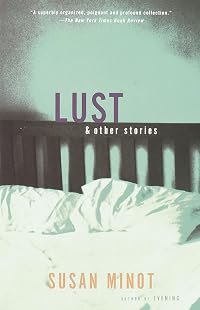
Susan Minot, Novelist Susan Minot was born in Boston, Massachusetts and grew up in Manchester-by-the-Sea. She studied writing and painting at Brown University and received an MFA in writing from Columbia University. She published short stories in Grand Street and The New Yorker, which led to an offer for a novel. Minot has also been a Greenpeace show more activist, a carpenter and a bookseller. Minot's first novel, "Monkeys," took nine stories about the Vincent family and combined them to make up the semi-autobiographical novel. It won the Prix Femina Etranger in France in 1987. The Vincent's are a New England family of seven children, a Catholic mother and a Brahmin background father. The story covers twelve years of their lives and tells of a tragic accident that alters their lives. Her second novel, "Lust & Other Stories," is a collection about artists and journalists living in New York City. It examines the relations between men and women in their twenties and thirties, and the difficulty they have coming together and breaking apart. "Folly" takes place in Boston, during the 1920's to 1930's, and tells the story of a woman with a strict Brahmin background having the choice of a husband being the determining factor of her life. "Evening" is the story of Ann Lord on her deathbed. She relives a weekend love affair with Harris Arden, the greatest love of her life, in great detail, while her children stand by her believing her mind is blank. (Bowker Author Biography) show less
Some Editions
Awards and Honors
Awards
Series
Belongs to Publisher Series
Common Knowledge
- Canonical title*
- Crépuscule
- Original title
- Evening
- Original publication date
- 1998 (1e édition originale française, Alfred A. Knopf, New York (1e édition originale française, Alfred A. Knopf, New York); 2000-03-23 (1e traduction et édition française, Du monde entier, Gallimard) (1e traduction et édition française, Du monde entier, Gallimard); 2002-02-27 (Réédition française, Folio, Gallimard) (Réédition française, Folio, Gallimard)
- People/Characters
- Ann Grant; Lila Wittenborn; Buddy Wittenborn; Harris; Constance Haverford; Nina Mars
- Important places
- USA; Maine, USA
- Related movies
- Evening (2007 | IMDb)
- Epigraph
- I give it to you not that you may remember time, but that you might forget it now and then for a moment and not spend all your breath trying to conquer it.
--William Faulkner - Dedication
- In memory of
Sam Lawrence (1929 - 1994)
Scott Sommer (1950 - 1993)
Alexis Ullmann (1958 - 1992) - First words
- A new lens passed over everything she saw, the shadows moved on the wall like skeletons handing things to each other.
- Last words
- (Click to show. Warning: May contain spoilers.)He did not come the next day, he did not come the day after. He did not come again.
- Blurbers
- Didion, Joan; Casey, John; McGuane, Tom
- Original language*
- Anglais (Etats-Unis) (Etats-Unis)
*Some information comes from Common Knowledge in other languages. Click "Edit" for more information.
Classifications
Statistics
- Members
- 1,147
- Popularity
- 22,035
- Reviews
- 17
- Rating
- (3.45)
- Languages
- 7 — Dutch, English, French, German, Hungarian, Polish, Portuguese
- Media
- Paper, Audiobook, Ebook
- ISBNs
- 20
- ASINs
- 8