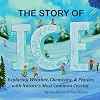
The Story of Ice: Exploring Weather, Chemistry, & Physics with Nature's Most Common Crystal
by Jon Nelson, Sam Nelson
On This Page
Description
Discover here how ice can grow into myriad beautiful forms while greatly influencing our weather and environment. This 56 page book, richly illustrated with diagrams and photographs, takes you on journeys to visit many forms of ice, telling their stories. Perhaps you have heard of glaciers and icebergs, but have you visited the inside of a thunderstorm or a snowstorm? And have you ever seen needle ice, cat ice, hoar frost, or many other distinctive forms of ice? Let this book be your tour show more guide. The authors clearly explain how these examples of ice relate to weather, chemistry, and physics. Everyone will learn something new about nature here. Each page combines accurate science with real-world observations, helping young readers understand how ice affects us and our Earth. The book includes fun facts and a parent/teacher guide that make learning about ice even more engaging. show lessTags
Recommendations












Member Reviews
This is a remarkable book for ages 8 and up, and I do mean up. I'm the grandmother of two nine year olds and I learned a lot from this book. I wish I had had it when I was homeschooling my children. I can't wait to read it with this generation, anyway.
I was absolutely amazed by the many different kinds of ice. It's one of the commonest things around us, yet we need someone like the Nelsons to draw our attention to natural phenomena that we see without understanding. Or hear without seeing! I now know that crunchy ice underfoot is likely to be amazing little columns of ice called needle ice that grow up from ground water. Sometimes they even steal water out from nearby puddles and leave them waterless under a thin layer of ice!
Every show more page has new revelations like that. Next time we see "frost" on the grass or trees, we'll be able to investigate and know what really happened. The book has illustrations, diagrams, and very clear detailed photographs that make it plain whether you're seeing hair ice, ribbon ice, needle ice, hoar frost, or rime. (I didn't even know hoar frost and rime were different!) And there's more -- ice falls from the sky too, as snow, hail, graupel (I actually knew this one), and rain -- those big drops of rain started as ice and melted.
Although the format of Story of Ice is completely different from the Science Comics series, it is similarly engaging and interesting, and has a similar wide appeal to different age groups. It has a lot to teach both children and their elders about some of the frequently overlooked and unappreciated wonders of the natural world.
The book closes with some "Fun Facts" followed by several pages of activities, basically easy to do experiments to be shared by adults and children. Actually, they look fascinating for anyone to try! The final page has a few more thoughts and suggestions on observing ice. I'm feeling really fortunate to live in a cold climate now. show less
I was absolutely amazed by the many different kinds of ice. It's one of the commonest things around us, yet we need someone like the Nelsons to draw our attention to natural phenomena that we see without understanding. Or hear without seeing! I now know that crunchy ice underfoot is likely to be amazing little columns of ice called needle ice that grow up from ground water. Sometimes they even steal water out from nearby puddles and leave them waterless under a thin layer of ice!
Every show more page has new revelations like that. Next time we see "frost" on the grass or trees, we'll be able to investigate and know what really happened. The book has illustrations, diagrams, and very clear detailed photographs that make it plain whether you're seeing hair ice, ribbon ice, needle ice, hoar frost, or rime. (I didn't even know hoar frost and rime were different!) And there's more -- ice falls from the sky too, as snow, hail, graupel (I actually knew this one), and rain -- those big drops of rain started as ice and melted.
Although the format of Story of Ice is completely different from the Science Comics series, it is similarly engaging and interesting, and has a similar wide appeal to different age groups. It has a lot to teach both children and their elders about some of the frequently overlooked and unappreciated wonders of the natural world.
The book closes with some "Fun Facts" followed by several pages of activities, basically easy to do experiments to be shared by adults and children. Actually, they look fascinating for anyone to try! The final page has a few more thoughts and suggestions on observing ice. I'm feeling really fortunate to live in a cold climate now. show less
 This review was written for LibraryThing Early Reviewers.
Just when you thought you never wanted to hear the word “ice” again, these authors have managed to restore beauty and wonder to the word, and thank heavens for that!
This 56-page book is packed with fascinating photographs, diagrams and charts, that illustrate and explain the many different formations ice can take, and how they relate to changes in both the local weather and in the overall global climate.
They begin by introducing the main “characters”: ice (solid water), water (melted ice) and vapor (an invisible gas of water molecules). In their unique story, they write, “these characters often change into each other.”
The authors both describe and illustrate the stories told by the different activities of these characters, show more particularly in ice form. They show how ice gets into clouds and why it is crucial for rain; how it makes thunderstorms electric; and how it can turn into snow. They explain why icebergs take so long to melt, why ice floats, and what would happen to the Earth if it never had ice. They include a list of “fun facts” about ice, and some experiments for parent/teacher-guided activities.
The pictures of different kinds of ice are astonishing, as is the beauty of their formations. And who knew there was such a thing as hair ice, or cat ice, frozen river foam, or a melt-grown dendrite?
Evaluation: Everyone from age 6 and up will appreciate the easy and accessible way the authors teach readers about such a fundamental component of our world. It would make a great classroom resource.
Highly recommended! show less
This 56-page book is packed with fascinating photographs, diagrams and charts, that illustrate and explain the many different formations ice can take, and how they relate to changes in both the local weather and in the overall global climate.
They begin by introducing the main “characters”: ice (solid water), water (melted ice) and vapor (an invisible gas of water molecules). In their unique story, they write, “these characters often change into each other.”
The authors both describe and illustrate the stories told by the different activities of these characters, show more particularly in ice form. They show how ice gets into clouds and why it is crucial for rain; how it makes thunderstorms electric; and how it can turn into snow. They explain why icebergs take so long to melt, why ice floats, and what would happen to the Earth if it never had ice. They include a list of “fun facts” about ice, and some experiments for parent/teacher-guided activities.
The pictures of different kinds of ice are astonishing, as is the beauty of their formations. And who knew there was such a thing as hair ice, or cat ice, frozen river foam, or a melt-grown dendrite?
Evaluation: Everyone from age 6 and up will appreciate the easy and accessible way the authors teach readers about such a fundamental component of our world. It would make a great classroom resource.
Highly recommended! show less
This review was written for LibraryThing Early Reviewers.In "The Story of Ice: Exploring Weather, Chemistry, & Physics with Nature's Most Common Crystal," Jon Nelson and Sam Nelson take a deep dive into the subject in a way that is engaging and informative. The book starts with a simple narration that allows the authors to delve into ice and its many forms, ranging from needle ice and frost to glaciers and icebergs. Charmingly simple drawings contrast with the detailed photos and diagrams that show the different types of ice and how they form.
While it is in the form of a children's picture book and would be very appropriate for younger readers, especially with adult guidance, the information would also work for older audiences as well. The information is clearly presented, which makes the show more topic approachable and interesting. Additionally, the complexity of ice is on display, thus allowing this book to have a place in middle and even high school classrooms. The frontmatter includes information on the characters (ice, water, and vapor) and a checklist of the different types of ice mentioned so that readers can note the ones they have observed. The backmatter has fun facts and guided activities, which would be extremely useful for teachers looking for ways to engage students in the topic. show less
While it is in the form of a children's picture book and would be very appropriate for younger readers, especially with adult guidance, the information would also work for older audiences as well. The information is clearly presented, which makes the show more topic approachable and interesting. Additionally, the complexity of ice is on display, thus allowing this book to have a place in middle and even high school classrooms. The frontmatter includes information on the characters (ice, water, and vapor) and a checklist of the different types of ice mentioned so that readers can note the ones they have observed. The backmatter has fun facts and guided activities, which would be extremely useful for teachers looking for ways to engage students in the topic. show less
This review was written for LibraryThing Early Reviewers.I won this at LibraryThing in exchange for an honest review.
Requested book: early January 2026
Notified that won book: 2026/01/27
Received on: 2026/02/05 and marked as received on LibraryThing
Read (and skimmed and looked through) several times 2026/02/06-2026/02/09
Reviewed at LibraryThing and at Goodreads on: 2026/02/10
The book is a nonfiction science picture book, long and dense for a picture book but, no, it did not take four days to read it. I wanted to read it more than once and skim it and look through it multiple times to absorb all its contents.
I think it’s mostly for elementary school students ages 8 or 9-11 & up too! (The description says ages 6-12 but I think it’s a bit advanced for 6 and 7 year olds. The text font is large show more and the vocabulary is not too advanced, except for the scientific words of course, but even though all ages can enjoy the photographs & pictures and even though with adults involved the concepts might be understood by younger kids, I still think this book works best for the upper elementary grades.)
I wanted to read this book because I really liked the book The Story of Snow. While I wasn’t in the mood for this book when it arrived, I still enjoyed it and I learned a lot. I’d guess that most readers would learn a lot from reading it, adults included.
I wish there had been textbooks like this when I was in elementary school!
It’s a beautiful book. It’s engaging and entertaining and informative. It provides a tremendous amount of factual material, with facts and factoids and graphics.
It’s very well done and well organized and teachers wouldn’t even have to create an additional lesson plan; the lesson plan is basically included in the book.
The science is accessible but challenging too and not at all dumbed down.
I loved all the photos and all the illustrations and the quotes too. I do love quotes and there are a few good ones placed throughout the book.
At the end of the book is there is a Parent/teacher-guided activities section with experiments to do at home and suggestions for outdoor observations.
The author’s and the illustrator’s enthusiasm for the subject shines through.
This would be an excellent book for classroom learning and family reading. It would be amazing if the book’s creators could make classroom visits when the students are studying this subject and ideally using this book. I hope that every school library and every public library will have this book as part of their collection.
There was a personal note that came with the book mentioning reviewing on Amazon being helpful. I won’t review on the Amazon site, just on Goodreads (kind of Amazon?) and LibraryThing (and I’m still looking for other book sites where I might want to actually stay and participate) but I do give my permission to the book’s author & illustrator to quote me any place they want.
I will keep this book unless I get in a particularly generous mood and then I might eventually leave it in the Little Free Library (that takes only children’s books) that’s in front of one of my favorite health food stores. It would be a treasure to anyone who found it and took it. show less
Requested book: early January 2026
Notified that won book: 2026/01/27
Received on: 2026/02/05 and marked as received on LibraryThing
Read (and skimmed and looked through) several times 2026/02/06-2026/02/09
Reviewed at LibraryThing and at Goodreads on: 2026/02/10
The book is a nonfiction science picture book, long and dense for a picture book but, no, it did not take four days to read it. I wanted to read it more than once and skim it and look through it multiple times to absorb all its contents.
I think it’s mostly for elementary school students ages 8 or 9-11 & up too! (The description says ages 6-12 but I think it’s a bit advanced for 6 and 7 year olds. The text font is large show more and the vocabulary is not too advanced, except for the scientific words of course, but even though all ages can enjoy the photographs & pictures and even though with adults involved the concepts might be understood by younger kids, I still think this book works best for the upper elementary grades.)
I wanted to read this book because I really liked the book The Story of Snow. While I wasn’t in the mood for this book when it arrived, I still enjoyed it and I learned a lot. I’d guess that most readers would learn a lot from reading it, adults included.
I wish there had been textbooks like this when I was in elementary school!
It’s a beautiful book. It’s engaging and entertaining and informative. It provides a tremendous amount of factual material, with facts and factoids and graphics.
It’s very well done and well organized and teachers wouldn’t even have to create an additional lesson plan; the lesson plan is basically included in the book.
The science is accessible but challenging too and not at all dumbed down.
I loved all the photos and all the illustrations and the quotes too. I do love quotes and there are a few good ones placed throughout the book.
At the end of the book is there is a Parent/teacher-guided activities section with experiments to do at home and suggestions for outdoor observations.
The author’s and the illustrator’s enthusiasm for the subject shines through.
This would be an excellent book for classroom learning and family reading. It would be amazing if the book’s creators could make classroom visits when the students are studying this subject and ideally using this book. I hope that every school library and every public library will have this book as part of their collection.
There was a personal note that came with the book mentioning reviewing on Amazon being helpful. I won’t review on the Amazon site, just on Goodreads (kind of Amazon?) and LibraryThing (and I’m still looking for other book sites where I might want to actually stay and participate) but I do give my permission to the book’s author & illustrator to quote me any place they want.
I will keep this book unless I get in a particularly generous mood and then I might eventually leave it in the Little Free Library (that takes only children’s books) that’s in front of one of my favorite health food stores. It would be a treasure to anyone who found it and took it. show less
This review was written for LibraryThing Early Reviewers.“The Story of Ice” by Jon Nelson & Sam Nelson is a perfect companion to our Charlotte Mason (nature learning based) homeschool curriculum. My kids and I loved reading about the different types of ice and had fun drawing them in our nature notebooks. We especially loved the experiments in the back and found the book as informative as it is fun! Also, my kids thought it was neat to find out that ice is a hexagonal shape and not a circular one. I would definitely recommend this book to any parent who wants a fun explanation of ice and enjoys reading “living books” filled with fun facts.
This review was written for LibraryThing Early Reviewers.The Story of Ice is a comprehensive book about ice - the good kind that can be water or vapor in its other forms - written by a retired ice physicist who taught meteorology and cloud physics. Chock-full of fascinating and fun facts, intriguing illustrations and photographs, and helpful diagrams, one could build an entire science unit with this book.
The book begins by explaining the differences between ice, water, and vapor, and is followed by topics checklist that doubles as a table of contents. The book ends with experiments and observations children can do with some guidance from adults. In between, the reader learns about different types of ice - I had no idea there were so many! (Ribbon ice is especially pretty.)
Like another show more reviewer, my only complaint about this book is really a suggestion: a larger format with larger photographs would be nice, as well as a hardcover edition, as this book would get a lot of use in the teacher-training library collection I used to manage. I'm looking forward to giving this paperback to my two great-grandsons (and their teacher mother). show less
The book begins by explaining the differences between ice, water, and vapor, and is followed by topics checklist that doubles as a table of contents. The book ends with experiments and observations children can do with some guidance from adults. In between, the reader learns about different types of ice - I had no idea there were so many! (Ribbon ice is especially pretty.)
Like another show more reviewer, my only complaint about this book is really a suggestion: a larger format with larger photographs would be nice, as well as a hardcover edition, as this book would get a lot of use in the teacher-training library collection I used to manage. I'm looking forward to giving this paperback to my two great-grandsons (and their teacher mother). show less
This review was written for LibraryThing Early Reviewers.The Story of Ice is an engaging and beautifully designed book for kids and adults alike to learn about glaciers and the science of ice. The full-color illustrations, clear diagrams, and full color photographs make complex concepts easy to understand and enjoyable to explore. The guided activities at the end are especially valuable for homeschoolers and teachers. They make it simple to turn the book into a hands-on science lesson. A wonderful addition to any home library studying earth sciences or interested in the natural world around them.
This review was written for LibraryThing Early Reviewers.Members
- Recently Added By
Author Information

2 Works 943 Members
Common Knowledge
- Canonical title
- The Story of Ice: Exploring Weather, Chemistry, & Physics with Nature's Most Common Crystal
Classifications
- Genres
- Nonfiction, Picture Books, Children's Books
Statistics
- Members
- 25
- Popularity
- 1,069,929
- Reviews
- 19
- Rating
- (4.67)
- Languages
- English
- Media
- Paper
- ISBNs
- 1
- ASINs
- 1