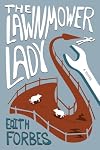
The Lawnmower Lady
by Edith Forbes
On This Page
Description
A voice-driven comedy about death, New England culture, small-town entanglements, and a green burial decades before its time.Tags
Member Reviews
When I saw this novel on the LT ER list, I was intrigued...by both its quirky title and its imaginative cover design. (There was none of that cookie-cutter art we see so often now. How many covers have a woman with her back turned, looking off....out there...somewhere?) The description sounded fine too, so I requested it. I was lucky to win it, because I haven't participated a lot in the Early Reviewers program in the last few years. Thank you, LibraryThing Algorithm!
When Fay Kirkwood drops dead while doing her farm chores, she discovers that she has not been transported to heaven or hell, but has become a voyeur in the lives of her family and friends, with no control over whose thoughts and actions she will be sharing from one moment show more to the next. She cannot feel her body, cannot communicate with anyone, but does retain interest and concern for what is happening as a result of her unexpected departure. She finds herself in the heads of one person after another, and reacts for the benefit of the reader, if not for the participants...encouraging romance, discouraging rash actions, regretting off-hand comments made during her life that now have consequences playing out. On occasion, the reader sees that possibly her intensity is conveyed in some fashion to those she's observing, with pleasing results. The characters are various and richly drawn. We love some of 'em, hate some of 'em, but really become invested in Fay's niece Dryden, who may have put herself in some legal jeopardy by following what she understood to be her aunt's wishes for disposal of her remains. Fay was a non-conformist, with a heritage of Bostonian sniffiness she has soundly rejected. The people she's left behind run the gamut from hide-bound what-will-people-thinkers to live-and-let-livers. Fay's sister-in-law is aghast at the lack of propriety, refuses to let any offense go unchallenged, and considers pretty much everything an offense. Her husband just wants to keep the peace. Dryden, their adopted daughter, long ago became Fay's protege, and marches to her own beat. Despite their lack of biological connection, Fay and Dryden are each the most significant, most loved person in the other's life--a bond death has not diminished for either of them. I loved every bit of this book, particularly the irreverence toward "church people" with their keeping-up-appearances attitudes, and the unconventional love stories that may or may not work out. It's entertainment with substance. Highly recommended. show less
When Fay Kirkwood drops dead while doing her farm chores, she discovers that she has not been transported to heaven or hell, but has become a voyeur in the lives of her family and friends, with no control over whose thoughts and actions she will be sharing from one moment show more to the next. She cannot feel her body, cannot communicate with anyone, but does retain interest and concern for what is happening as a result of her unexpected departure. She finds herself in the heads of one person after another, and reacts for the benefit of the reader, if not for the participants...encouraging romance, discouraging rash actions, regretting off-hand comments made during her life that now have consequences playing out. On occasion, the reader sees that possibly her intensity is conveyed in some fashion to those she's observing, with pleasing results. The characters are various and richly drawn. We love some of 'em, hate some of 'em, but really become invested in Fay's niece Dryden, who may have put herself in some legal jeopardy by following what she understood to be her aunt's wishes for disposal of her remains. Fay was a non-conformist, with a heritage of Bostonian sniffiness she has soundly rejected. The people she's left behind run the gamut from hide-bound what-will-people-thinkers to live-and-let-livers. Fay's sister-in-law is aghast at the lack of propriety, refuses to let any offense go unchallenged, and considers pretty much everything an offense. Her husband just wants to keep the peace. Dryden, their adopted daughter, long ago became Fay's protege, and marches to her own beat. Despite their lack of biological connection, Fay and Dryden are each the most significant, most loved person in the other's life--a bond death has not diminished for either of them. I loved every bit of this book, particularly the irreverence toward "church people" with their keeping-up-appearances attitudes, and the unconventional love stories that may or may not work out. It's entertainment with substance. Highly recommended. show less
 This review was written for LibraryThing Early Reviewers.
Fay Kirkwood is dead. She has lived her life on a country farm with her granddaughter Dryden, raising pigs and fixing lawnmowers. But her “spirit” seems to be going on, and narrating this book. Fay doesn’t know why she’s still around, or why she keeps flitting from place to place when her name is mentioned. Meanwhile, Dryden and Fay’s good friend Noah assume they know her disposal wishes, and they carry them out. As word gets out about Fay’s death and lack of proper protocol, rumors fly, mostly imagined, and before long the situation has pulled in two churches, a newspaper reporter, and the law.
At first, the floating around of the dead Fay was confusing, but it was done very well, and I enjoyed this book from start to show more finish. All of the subplots fit in perfectly, and although there are a lot of characters, it was easy to keep them apart. The story kept moving, and it ended perfectly. show less
At first, the floating around of the dead Fay was confusing, but it was done very well, and I enjoyed this book from start to show more finish. All of the subplots fit in perfectly, and although there are a lot of characters, it was easy to keep them apart. The story kept moving, and it ended perfectly. show less
This review was written for LibraryThing Early Reviewers.Fay Kirkwood, 79, is the narrator of this drolly humorous book, and she is dead. She died of a stroke while working on her farm, where she raised pigs and also fixed lawnmowers for people in her small New England town of Gilham. Her niece Dryden, who had lived with Fay since she was 14, found her body.
Fay had often said to Dryden that she didn’t want to be pumped full of poisonous chemicals and locked up in a casket. She preferred to be food for nature “and eventually be shat back onto the soil to bloom as a trout lily somewhere deep in the woods.” “Humus sapiens,” Dryden acknowledged.
Dryden vowed to carry out Fay’s wishes, and took her body off to the woods. And that is when the uproar in the town began. A search party show more formed to find Fay’s body, united by “their shared horror at the idea of a body not receiving proper burial.”
Fay, inexplicably still a conscious presence, witnessed it all, from the outrage of religious zealots (who considered the lack of a burial blasphemous) and her sister-in-law (worried about her image and possible damage to her son’s political career) to the tolerant people who thought people’s choices about death should be respected.
(She had theories about what would happen after death, but “it never occurred to me that my heart would stop, my brainwaves go flat, but here I’d still be, right where I’d always been, not a memory or opinion the less, only the power of action gone.”)
In the process of observing the reactions to her death, Fay had a unique vantage point from which to learn the innermost thoughts of the people in her life who had mattered to her, along with new people who came into play upon her death. One of them was a reporter, Lionel Turnbull Jones, known as Terp, whose editor told him to go to Gilham and check out a story about a dead old lady whose body was missing. He was advised to seek out the niece, Dryden Kirkwood. But when he finally talked to Dryden, he almost forgot about the story. He had never met anyone like her, and wanted to talk to her about anything and everything; he wanted to be a better person for her, make her smile, and share her bed at the end of the day. And this is before he even knew her!
Fay was pleased with this development. Her essence took to hanging out with Terp, who loved Dryden, the person she herself had loved most in her life. If he made Dryden happy, and Fay could see that happening, what more could she ask for? As she thought in response to one preacher’s pontifications about burial and eternal life:
“You can believe whatever sweet promises you want… This question of eternity isn’t any clearer now than it was when I was alive . . . If you want my advice, which you don’t, you won’t spend your time bowing to altars or chanting prayers to the unseen; you’ll plant daffodils and help your kids with their reading and kiss your wife at every opportunity.”
Evaluation: This delightful story, with its powerful and trenchant observations about life and death, religion and sex, and what is ultimately the most important about all of them, will have you cheering for both the living and the dead. show less
Fay had often said to Dryden that she didn’t want to be pumped full of poisonous chemicals and locked up in a casket. She preferred to be food for nature “and eventually be shat back onto the soil to bloom as a trout lily somewhere deep in the woods.” “Humus sapiens,” Dryden acknowledged.
Dryden vowed to carry out Fay’s wishes, and took her body off to the woods. And that is when the uproar in the town began. A search party show more formed to find Fay’s body, united by “their shared horror at the idea of a body not receiving proper burial.”
Fay, inexplicably still a conscious presence, witnessed it all, from the outrage of religious zealots (who considered the lack of a burial blasphemous) and her sister-in-law (worried about her image and possible damage to her son’s political career) to the tolerant people who thought people’s choices about death should be respected.
(She had theories about what would happen after death, but “it never occurred to me that my heart would stop, my brainwaves go flat, but here I’d still be, right where I’d always been, not a memory or opinion the less, only the power of action gone.”)
In the process of observing the reactions to her death, Fay had a unique vantage point from which to learn the innermost thoughts of the people in her life who had mattered to her, along with new people who came into play upon her death. One of them was a reporter, Lionel Turnbull Jones, known as Terp, whose editor told him to go to Gilham and check out a story about a dead old lady whose body was missing. He was advised to seek out the niece, Dryden Kirkwood. But when he finally talked to Dryden, he almost forgot about the story. He had never met anyone like her, and wanted to talk to her about anything and everything; he wanted to be a better person for her, make her smile, and share her bed at the end of the day. And this is before he even knew her!
Fay was pleased with this development. Her essence took to hanging out with Terp, who loved Dryden, the person she herself had loved most in her life. If he made Dryden happy, and Fay could see that happening, what more could she ask for? As she thought in response to one preacher’s pontifications about burial and eternal life:
“You can believe whatever sweet promises you want… This question of eternity isn’t any clearer now than it was when I was alive . . . If you want my advice, which you don’t, you won’t spend your time bowing to altars or chanting prayers to the unseen; you’ll plant daffodils and help your kids with their reading and kiss your wife at every opportunity.”
Evaluation: This delightful story, with its powerful and trenchant observations about life and death, religion and sex, and what is ultimately the most important about all of them, will have you cheering for both the living and the dead. show less
This review was written for LibraryThing Early Reviewers.Fay dies on the first page of the novel and she becomes our all-knowing narrator (of a sort). Her niece, Dylan, believing she is carrying out Fay's wishes, leaves her body in the woods - which sets off a chain of events that drags all sorts of characters into the death. I enjoyed watching various relationships shift and resolve in the wake of Fay's death, but mostly I was relieved to see that the people Fay cared most about found comfort and life in the aftermath.
This review was written for LibraryThing Early Reviewers.When grumpy Fay Kirkwood dies while feeding her pigs, her outcast niece Dryden disposes of her body in an unorthodox way and the town tongues start wagging. Meanwhile, instead of going to the spirit world, Fay floats around the town listening and reacting to all the conversations going on around her.
This quirky book was fun to read and had a very different look at the other side of death.
This quirky book was fun to read and had a very different look at the other side of death.
This review was written for LibraryThing Early Reviewers.Thank you to LibraryThing and the author for this ARC.
Full disclosure. I usually don't copy and paste plots or descriptions but this book was hard for me to describe and there was no plot included on Goodreads for people to read and only one review so far.
"After her sudden death, Fay's spirit remains, observing the reactions of her community as her niece, Dryden, carries out Fay's wish for a natural burial, leading to a series of interconnected events."
"The Lawnmower Lady by Edith Forbes is a darkly comedic novel about a grumpy, independent woman named Fay Kirkwood, who dies and finds her consciousness lingering to watch the chaotic aftermath of her death, particularly her niece's unorthodox decision to have her body fed to coyotes show more instead of a traditional burial. The book, set in a small New England town, explores themes of life, death, religion, and small-town dynamics through Fay's witty, posthumous perspective as she witnesses the consequences of her life and death unfold."
Sort of an unusual book to say the least. What made me enter this giveaway? I guess because it was unusual.
Was it worth reading? No. I couldn't get past the weirdness and I wasn't sure if I was in the past or present half the time. I really had to concentrate on this book far too much for my liking. show less
Full disclosure. I usually don't copy and paste plots or descriptions but this book was hard for me to describe and there was no plot included on Goodreads for people to read and only one review so far.
"After her sudden death, Fay's spirit remains, observing the reactions of her community as her niece, Dryden, carries out Fay's wish for a natural burial, leading to a series of interconnected events."
"The Lawnmower Lady by Edith Forbes is a darkly comedic novel about a grumpy, independent woman named Fay Kirkwood, who dies and finds her consciousness lingering to watch the chaotic aftermath of her death, particularly her niece's unorthodox decision to have her body fed to coyotes show more instead of a traditional burial. The book, set in a small New England town, explores themes of life, death, religion, and small-town dynamics through Fay's witty, posthumous perspective as she witnesses the consequences of her life and death unfold."
Sort of an unusual book to say the least. What made me enter this giveaway? I guess because it was unusual.
Was it worth reading? No. I couldn't get past the weirdness and I wasn't sure if I was in the past or present half the time. I really had to concentrate on this book far too much for my liking. show less
This review was written for LibraryThing Early Reviewers.Many different views on The Lawnmower Lady by Edith Forbes, a story narrated by the recently deceased, Fay Kirkwood. The story details Fay life and her sudden death. Dryden, an adopted niece, finds Fay dead near the pigs pen. Fay had told everyone that she wished to be taken to the woods and left for the animals to devour her body. Dryden succeeds in taking Fay to the woods and havoc jumps into this seemingly loving event. Dryden needs a death certificate, and Fay’s sister-in-law must rule the events. Fay, in her death, reveals the citizens of the community. These stories remind the reader of Spoon River Anthology by Edgar Lee Masters and Winesburg, Ohio by Sherwood Anderson. The detail of the various characters shows uncanny detail show more of personality. This part of the novel shows excellent writing, but the other chapters slowly drag. The end comes swiftly as Anita, the sister-in-law, handles all the arrangements for the disposal of Fay. Again, great delivery of characters. show less
This review was written for LibraryThing Early Reviewers.Members
- Recently Added By
Lists

Books With Interesting Titles
173 works; 14 members
Author Information
6 Works 260 Members
Common Knowledge
- People/Characters
- Fay Kirkwood; Dryden Kirkwood
- Important places
- New England, USA
Classifications
Statistics
- Members
- 18
- Popularity
- 1,384,474
- Reviews
- 9
- Rating
- (3.38)
- Languages
- English
- Media
- Paper
- ISBNs
- 1