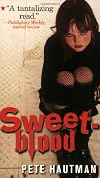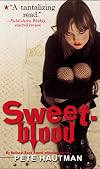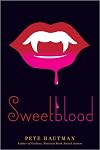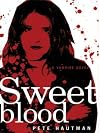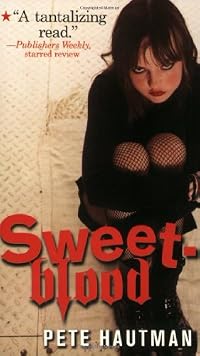
Sweetblood
by Pete Hautman
On This Page
Description
After a lifetime of being a model student, sixteen-year-old Lucy Szabo is suddenly in trouble at school, at home, with the "proto-vampires" she has met online and in person, and most of all with her uncontrolled diabetes.Tags
Recommendations










Member Reviews
This book would have been so much more interesting had the protagonist actually been a blood-drinking vampire who was a type-one, insulin-dependent diabetic. Instead, she is a miserable, long-suffering brat who gripes and mopes. A huge plot point in the book is her computer being taken away. She used to be a model student and cheery, but is suddenly, as a friend of mine puts it, bitten by the teenage virus. There's a pun in there, somehow, and it's unintentional because this book is so boring and annoying. Goth kids are regularly ripped on. I read reviews on here and someone remarked it was the "I'm so goth I'm not goth" phenomenon. Oh, that. I was a teenager when this book takes place. Early 2000s; go ahead and do whatever with that show more information. The "so goth I am not" was a stupid remark that maybe one goth kid in my school made. Maybe it's a regional thing. As an adult, I describe myself as "I've been painting my nails black since I was twelve, know all the lyrics to Evanescence's 'Fallen' album, and all the stereotypes that come with that." I feel like the word "goth" is unspoken in there. Show don't tell.
So, this griping teenager is an insulin-dependent diabetic. She talks about it a lot, and in realistic ways. The author is excellent at writing a griping, chronically ill teenager to the point that I was weirded out. I have a disease that is similar to type one diabetes, so reading about what this teenager goes through was really uncomfortable. Nearly everything she's experienced, I have too. Her parents are in a lot of ways, just normal parents and she hates them anyway. Normal, caring nicknames are capitalized because It's Clearly Weird to Call Someone Sweetie Honey Sugar. She makes commentary linking it to her diabetes, and wow, she reminds me of me as a teenager. That's not a compliment. I'm so glad I grew up into a different person. But her parents are also breathtakingly ableist. I legit gasped. She uses a slur for a physically disabled person ("diseased cripple") at some point and wow, shut it. You disgusting brat, if you're gonna insult yourself for being disabled, understand that "cripple" means broadly "the way this person moves is apparently worthy of insult." Nothing to do with an auto-immune disease, or as it's known in the disability community, an invisible disability. At the end, her doctor arranges for her to get someone to educate her on her diabetes and I fully admit, I was a little jealous of this fictional character I dislike immensely.
There's a weird wannabe love triangle in here. It wasn't examined at all. The author might not have known how to write it effectively, or was more likely too afraid to take risks with it. The sparkly vampire series wasn't out yet, so it has nothing to do with that. There's a subplot with a creepy middle-aged dude who...breeds monarch butterflies and he gives Lucy a hatchling without her knowledge. That was creepy. Tell her it's an animal so she can take care of it. There's quite a bit of stuff that goes on with this guy, and it--makes me wonder if the author was trying to warn disaffected teen girls or something. Whatever he was trying to do, he did it poorly because it was so vague.
Teens, please don't hang out with middle-aged dudes. You will realize the following once you are actually an adult: You're not mature for your age or an old soul; you are a normal teenager and these grown men are trying to get you. Ask yourself why they can't find grown women their own age. I was a creepy, highly intelligent and very ill child. I got called an old soul a lot and it made me mad. Twenty-five years later, someone explained adults will just say that about creepy kids when they can't bring themselves to say "this child makes me uncomfortable." I grew into my intelligence and my illnesses, and learned how to "balance" my creepiness I guess. I calmed down a lot once I grew up, around twenty-two years old. Definitely by twenty-five. I was thinking about this while I was reading: I'm so glad I grew up and am not a kid anymore.
So, there was an interesting concept that the author did nothing with. There's no vampire with a blood sugar disorder, just a griping teenager who is preyed upon by an adult man, and she tries to navigate her chronic illness and her ableist parents. I might try to write a short story about someone who actually does have the disorder but drinks blood; write this to make myself feel better. Skim this book except for the parts about type one diabetes. show less
So, this griping teenager is an insulin-dependent diabetic. She talks about it a lot, and in realistic ways. The author is excellent at writing a griping, chronically ill teenager to the point that I was weirded out. I have a disease that is similar to type one diabetes, so reading about what this teenager goes through was really uncomfortable. Nearly everything she's experienced, I have too. Her parents are in a lot of ways, just normal parents and she hates them anyway. Normal, caring nicknames are capitalized because It's Clearly Weird to Call Someone Sweetie Honey Sugar. She makes commentary linking it to her diabetes, and wow, she reminds me of me as a teenager. That's not a compliment. I'm so glad I grew up into a different person. But her parents are also breathtakingly ableist. I legit gasped. She uses a slur for a physically disabled person ("diseased cripple") at some point and wow, shut it. You disgusting brat, if you're gonna insult yourself for being disabled, understand that "cripple" means broadly "the way this person moves is apparently worthy of insult." Nothing to do with an auto-immune disease, or as it's known in the disability community, an invisible disability. At the end, her doctor arranges for her to get someone to educate her on her diabetes and I fully admit, I was a little jealous of this fictional character I dislike immensely.
There's a weird wannabe love triangle in here. It wasn't examined at all. The author might not have known how to write it effectively, or was more likely too afraid to take risks with it. The sparkly vampire series wasn't out yet, so it has nothing to do with that. There's a subplot with a creepy middle-aged dude who...breeds monarch butterflies and he gives Lucy a hatchling without her knowledge. That was creepy. Tell her it's an animal so she can take care of it. There's quite a bit of stuff that goes on with this guy, and it--makes me wonder if the author was trying to warn disaffected teen girls or something. Whatever he was trying to do, he did it poorly because it was so vague.
Teens, please don't hang out with middle-aged dudes. You will realize the following once you are actually an adult: You're not mature for your age or an old soul; you are a normal teenager and these grown men are trying to get you. Ask yourself why they can't find grown women their own age. I was a creepy, highly intelligent and very ill child. I got called an old soul a lot and it made me mad. Twenty-five years later, someone explained adults will just say that about creepy kids when they can't bring themselves to say "this child makes me uncomfortable." I grew into my intelligence and my illnesses, and learned how to "balance" my creepiness I guess. I calmed down a lot once I grew up, around twenty-two years old. Definitely by twenty-five. I was thinking about this while I was reading: I'm so glad I grew up and am not a kid anymore.
So, there was an interesting concept that the author did nothing with. There's no vampire with a blood sugar disorder, just a griping teenager who is preyed upon by an adult man, and she tries to navigate her chronic illness and her ableist parents. I might try to write a short story about someone who actually does have the disorder but drinks blood; write this to make myself feel better. Skim this book except for the parts about type one diabetes. show less
- Lucy is undead. Well, she’s not really a vampire, but as a diabetic, modern medicine has saved her life, so centuries ago, she would have been long dead by now. This year, high school is boring her to tears, and she’s close to failing, which is freaking her parents and teachers out, since she did so well last year, but the only thing that interests Lucy is black clothing, the vampire chat rooms she frequents, and one fellow chatter, whose chat name is ‘Draco’. Draco is unlike the others who occupy the online chat rooms in that he actually seems to know what he’s talking about—he might actually be a vampire. And when Lucy meets Draco in person, she must decide how much her health, and life, are worth to her…
Summary
Lucy Szabo, a diabetic, is into the goth/vampire scene. She frequently haunts a vampire chatroom, and is engrossed in one Draco, a member who claims to be an actual vampire. She begins to let her life crumble as she goes deeper into the vampiric rabbithole, with her grades falling and her relationship with her parents failing—to say nothing of her (in)ability to regulate her blood sugar. Things don’t look good for the young miss—can she climb back up before it’s too late?
Personal Opine
This book is more apropos for teens, and in that regard it is spectacular. It deals with the strain one’s relationship with their parents can go through, the alluring call of sketchier sides of life (not a metaphor for drugs, honest!), and show more despite the subtitle and one Draco, it all stays within the real world and doesn’t get crazy. And plus, it informs and teaches about life with Diabetes. I highly recommend this book for the fresh teens, or those wanting to get into fresh teen’s heads. And hey, with the twilight craze, it’d be easy to get them to read about vampires!
Class extension ideas
1. For fun, discuss Lucy’s “Diabetics were the original Vampires” essay and see what they think.
2. Have the students write a paper about times their parental relationships have been strained and how they dealt with it. show less
Lucy Szabo, a diabetic, is into the goth/vampire scene. She frequently haunts a vampire chatroom, and is engrossed in one Draco, a member who claims to be an actual vampire. She begins to let her life crumble as she goes deeper into the vampiric rabbithole, with her grades falling and her relationship with her parents failing—to say nothing of her (in)ability to regulate her blood sugar. Things don’t look good for the young miss—can she climb back up before it’s too late?
Personal Opine
This book is more apropos for teens, and in that regard it is spectacular. It deals with the strain one’s relationship with their parents can go through, the alluring call of sketchier sides of life (not a metaphor for drugs, honest!), and show more despite the subtitle and one Draco, it all stays within the real world and doesn’t get crazy. And plus, it informs and teaches about life with Diabetes. I highly recommend this book for the fresh teens, or those wanting to get into fresh teen’s heads. And hey, with the twilight craze, it’d be easy to get them to read about vampires!
Class extension ideas
1. For fun, discuss Lucy’s “Diabetics were the original Vampires” essay and see what they think.
2. Have the students write a paper about times their parental relationships have been strained and how they dealt with it. show less
This is probably one of the most interesting vampire books I've ever read. It's the first one that gives a reasonable, logical - and even historical - explanation for the existence of vampires, and that gave it a whole new level of realism that I really enjoyed. For those who like the traditional, mysterious, supernatural vampire, this is not a book for you. If you like the idea of unmedicated diabetics as vampires, you'll love this.
Sixteen-year-old Lucy Szabo used to get A’s in school. But lately, she wears black, chats online with “vampires,” and considers herself one of the “undead.” She’s even begun to avoid her best friend, because he now seems “too normal.”
When Lucy turns in a class assignment describing her theory about how vampires were probably just people with Diabetes, she proclaims herself to be one of them (or, at least, a “Proto-vampire”) since she is also diabetic. Alarmed by their daughter’s changed behavior and attitude, Lucy’s parents take away her computer and insist she see a Psychiatrist.
Lucy responds to her punishment by beginning a relationship with a boy who is new to the school, who further involves her in the Goth show more subculture. Sneaking out for late- night parties at the houses of self-proclaimed vampires with her new boyfriend, Lucy becomes vulnerable to several attempts at seduction by a “Vampire” whom she has chatted with online.
She also decides she is tired of being controlled by her diabetes and neglects managing it, which almost results in tragedy.
The book accurately conveys how some intelligent teens, angry at their parents, life, the world, etc., may gravitate toward the Goth culture as a means of expressing their dissatisfaction with their situation. The sarcasm and lack of respect Lucy displays toward her parents and other adults appears to be typical of many teens. True to the Young Adult fiction format, the adults in the story are fairly weak and unimportant, so that Lucy’s struggle for self- enlightenment and empowerment is emphasized.
While the premise of the story is nothing new, the description of the Goth culture, along with Lucy’s obsessive interest in vampires makes it attractive to many teens, who are intensely curious about such things. Readers will, no doubt, also become much more aware of the impact such a disease as diabetes can have upon a teen. Those readers who
happen to have the disorder themselves will certainly be able to identify with Lucy’s struggle.
The book’s message is subtle, but important: making poor choices with one’s health can have drastic consequences; while some people might appear to be cool, they may also be untrustworthy and downright dangerous; the least cool people, namely, one’s parents and childhood friends, could also be one’s best allies.
This book is definitely worth adding to any high school library collection. It would also be appropriate for middle school collections, as it contains no inappropriate sexuality, violence, or language. show less
When Lucy turns in a class assignment describing her theory about how vampires were probably just people with Diabetes, she proclaims herself to be one of them (or, at least, a “Proto-vampire”) since she is also diabetic. Alarmed by their daughter’s changed behavior and attitude, Lucy’s parents take away her computer and insist she see a Psychiatrist.
Lucy responds to her punishment by beginning a relationship with a boy who is new to the school, who further involves her in the Goth show more subculture. Sneaking out for late- night parties at the houses of self-proclaimed vampires with her new boyfriend, Lucy becomes vulnerable to several attempts at seduction by a “Vampire” whom she has chatted with online.
She also decides she is tired of being controlled by her diabetes and neglects managing it, which almost results in tragedy.
The book accurately conveys how some intelligent teens, angry at their parents, life, the world, etc., may gravitate toward the Goth culture as a means of expressing their dissatisfaction with their situation. The sarcasm and lack of respect Lucy displays toward her parents and other adults appears to be typical of many teens. True to the Young Adult fiction format, the adults in the story are fairly weak and unimportant, so that Lucy’s struggle for self- enlightenment and empowerment is emphasized.
While the premise of the story is nothing new, the description of the Goth culture, along with Lucy’s obsessive interest in vampires makes it attractive to many teens, who are intensely curious about such things. Readers will, no doubt, also become much more aware of the impact such a disease as diabetes can have upon a teen. Those readers who
happen to have the disorder themselves will certainly be able to identify with Lucy’s struggle.
The book’s message is subtle, but important: making poor choices with one’s health can have drastic consequences; while some people might appear to be cool, they may also be untrustworthy and downright dangerous; the least cool people, namely, one’s parents and childhood friends, could also be one’s best allies.
This book is definitely worth adding to any high school library collection. It would also be appropriate for middle school collections, as it contains no inappropriate sexuality, violence, or language. show less
Sweetblood is the story of 16 year old diabetic Lucy Szabo. Lucy has a theory that vampirism was actually the effects of untreated diabetic conditions. In addition to dealing with her diabetic condition Lucy is feeling discontented with her life, school, parents and everything. The only things Lucy can relate to are her online vampire group and Dylan, a new student at school. But not even her infatuation with Dylan can bypass the fallout from an essay Lucy does for class about her vampire theory. The essay freaks out her teacher and parents and they decide to take away her computer and send her to a counselor. Cut off from her online community Lucy begins sneaking out with Dylan. Soon she is out of control and risking her life.
I am show more really unfamiliar with the diabetic condition. Sweetblood gives a glimpse of how very difficult it must be to live in such a regimented way just to keep yourself healthy. This story was not so much a vampire tale, for it really wasn't one, but it was a very realistic portrayal of a teenage girl trying to deal with her serious health condition and the stresses of just being a teenager. Although I'm not a teenager anymore I remember having many of the same feelings of alienation and separation from my parents and peers that Lucy deals with in this story. And how strong the lure of someone who pretends to understand and appreciate who YOU are is, whether it is healthy for you or not.
This book was an extremely well written engrossing story which I would highly recommend. show less
I am show more really unfamiliar with the diabetic condition. Sweetblood gives a glimpse of how very difficult it must be to live in such a regimented way just to keep yourself healthy. This story was not so much a vampire tale, for it really wasn't one, but it was a very realistic portrayal of a teenage girl trying to deal with her serious health condition and the stresses of just being a teenager. Although I'm not a teenager anymore I remember having many of the same feelings of alienation and separation from my parents and peers that Lucy deals with in this story. And how strong the lure of someone who pretends to understand and appreciate who YOU are is, whether it is healthy for you or not.
This book was an extremely well written engrossing story which I would highly recommend. show less
This is a really interesting take on the vampire theme. Lucinda has a theory that vampires were really diabetic people in medieval times when the medical knowledge couldn't explain what was happening to them. This theory draws a strange middle-aged man to her and sends her teacher into a frenzy to try and "fix" Lucinda. Her parents, doctor, teachers, friends, psychiatrist and she herself doesn't know what to do about it all. The most interesting aspect was her reaction as a teenager to the restrictions coming from being a diabetic - denial, anger, grief and so on. A really interesting read.
Members
- Recently Added By
Lists

Diabetes -- children's/young adult fiction
16 works; 2 members

Our digital age
79 works; 5 members
Author Information

112+ Works 6,076 Members
Pete Hautman has written many novels for adults, including Doohickey, as well as the teen novels Hole in the Sky, Stone Cold, and Mr. Was, which was nominated for an Edgar Award by the Mystery Writers of America. He divides his time between the Twin Cities of Minnesota and the shores of Lake Pepin in southwestern Wisconsin
Awards and Honors
Awards
Distinctions
Notable Lists
Common Knowledge
Classifications
Statistics
- Members
- 438
- Popularity
- 69,842
- Reviews
- 19
- Rating
- (3.63)
- Languages
- English
- Media
- Paper, Ebook
- ISBNs
- 11
- ASINs
- 3