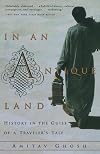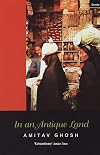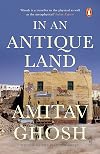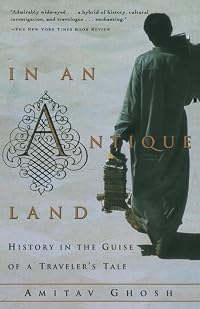
In an Antique Land
by Amitav Ghosh
On This Page
Description
Biography & Autobiography. History. Travel. Nonfiction. HTML:Once upon a time an Indian writer named Amitav Ghosh set out an Indian slave, name unknown, who some seven hundred years before had traveled to the Middle East. The journey took him to a small village in Egypt, where medieval customs coexist with twentieth-century desires and discontents. But even as Ghosh sought to re-create the life of his Indian predecessor, he found himself immersed in those of his modern Egyptian neighbors.show more Combining shrewd observations with painstaking historical research, Ghosh serves up skeptics and holy men, merchants and sorcerers. Some of these figures are real, some only imagined, but all emerge as vividly as the characters in a great novel. In an Antique Land is an inspired work that transcends genres as deftly as it does eras, weaving an entrancing and intoxicating spell. show less
Tags
Recommendations
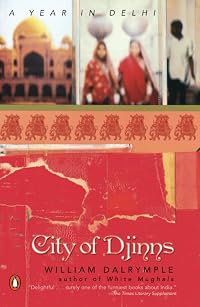
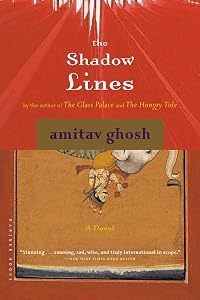
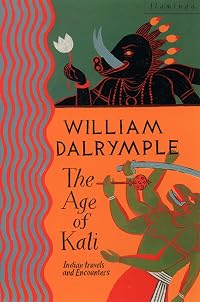
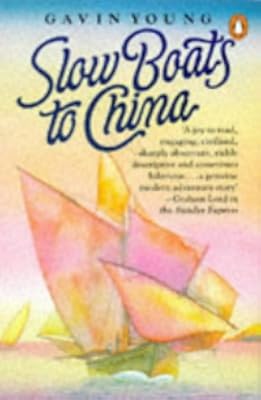
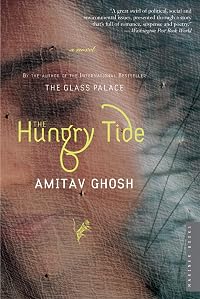

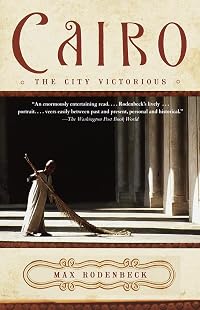
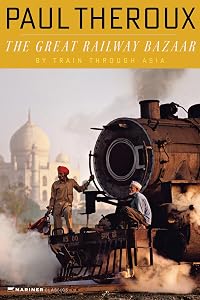

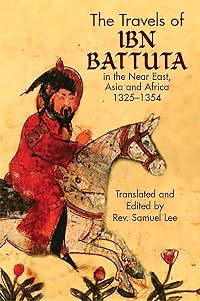
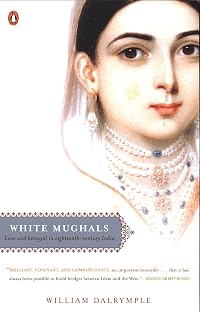


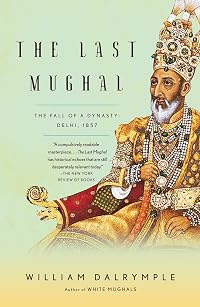
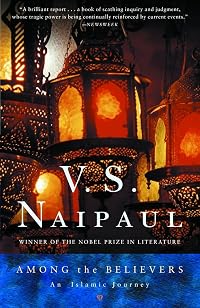

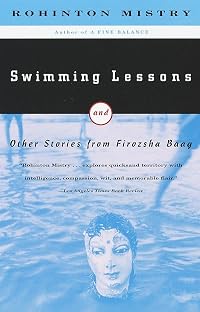

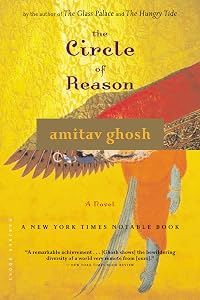
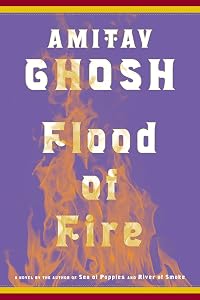
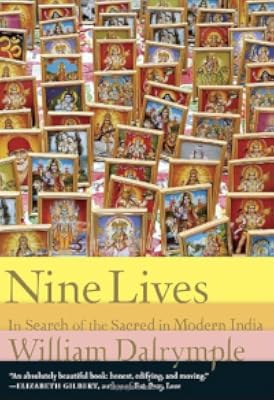
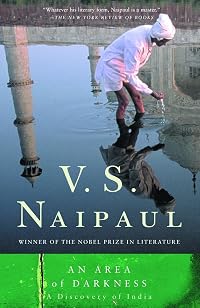
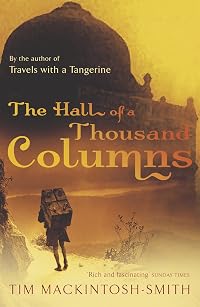
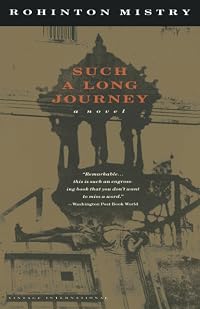
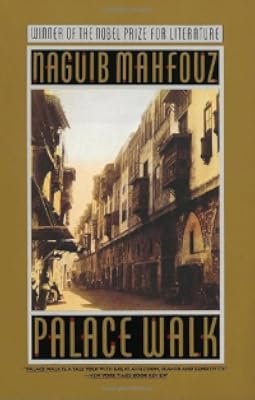
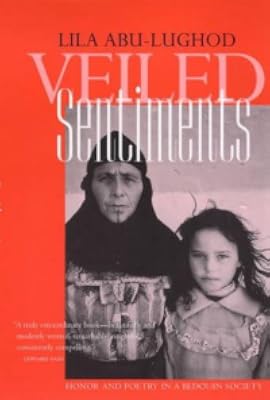





Member Recommendations

bintarab Like Ghosh's book, Abelman's work involves Jewish culture in diaspora not as a treatise on the subject, but with the understanding that the characters' lives are profoundly affected by life experiences that transcend borders.
wandering_star Both these books deal, in part, with the view of daily life which was revealed to historians by the unexpected survival of waste paper (old shopping lists, letters, and other detritus of daily life) in the dry Egyptian air.
Member Reviews
A lovely parallel account of the author's time as an anthropology student in a small village in Egypt, and his research into the life of a Jewish slave mentioned in some medieval documents found in a cache in Cairo. The story of how the research came into being is fascinating in itself -- his description of the cache of documents in the Cairo Ganizeh would have been enough to keep my interest, but his account of living in the farming village was equally charming -- especially his inability to explain the religious traditions of Hindus to the Muslims he was living among. He is not Hindu himself, but everyone assumes that he is, and thus that he worships cows, and burns the dead -- two things that are blasphemous to a Muslim. Ghosh show more comments at one point that he didn't know an Arabic word for "cremated" and thus, when describing Hindu religious traditions, was forced to use the word "burned" -- the same word Muslims used to describe the fate of sinners destined for hell.
There is little to no sense of Western superiority in the story, but there are a fair number of eye-opening observations on the politics of the Middle East as it is experienced by your average village farmer looking for a better life.This is in the early eighties, so a generation or so after the Egyptian revolution of Nasser in 1952, when serfs were freed and allotted their own land. Now the economy is in upheaval, the promise of the revolution has either been realized, if you were lucky, or dissipated if you weren't. There is an exodus to find work "outside" -- in Iran, mostly, which was at war and needed labor -- and a need for hard currency.
All in all a wise and touching account of a small village in the midst of economic upheaval and modernization, and at the same time a rather brilliant historical investigation into the life of a man known only via a few mentions in letters between 12th century merchants trying to do business across uncertain trade routes. show less
There is little to no sense of Western superiority in the story, but there are a fair number of eye-opening observations on the politics of the Middle East as it is experienced by your average village farmer looking for a better life.This is in the early eighties, so a generation or so after the Egyptian revolution of Nasser in 1952, when serfs were freed and allotted their own land. Now the economy is in upheaval, the promise of the revolution has either been realized, if you were lucky, or dissipated if you weren't. There is an exodus to find work "outside" -- in Iran, mostly, which was at war and needed labor -- and a need for hard currency.
All in all a wise and touching account of a small village in the midst of economic upheaval and modernization, and at the same time a rather brilliant historical investigation into the life of a man known only via a few mentions in letters between 12th century merchants trying to do business across uncertain trade routes. show less
Ghosh, a then-young Indian living in Egypt while conducting research on the Indian slave of a Jewish master, interweaves the story of his own experiences with those of the slave that can be known or inferred, placing both in historical and cultural context. Because some of his experiences parallel his subject's, particularly cultural isolation, Ghosh is able to convey the poignancy, and sometimes disgust, of being a stranger in a strange land. Though the blending of the two stories doesn't quite jell, it's still a very interesting and moving memoir.
In an Antique Land is a hybrid book, that weaves together a travel memoir and a biography of a Jewish trader in Cairo sometime around 1100 AD.
Not sure what to make of this book. It took me months to go through it. At times it was really, really interesting, but a big load of it is an info dump that wasn't very engaging.
What I liked were the parts where Ghosh tells a story about Egypt in the 1980s through the eyes of a non-Westerner, a Hindu Indian in a rural Muslim village, which was refreshing to me. I liked the author's subtle, but often snarky comments on colonialism and cultural relativism.
Not sure what to make of this book. It took me months to go through it. At times it was really, really interesting, but a big load of it is an info dump that wasn't very engaging.
What I liked were the parts where Ghosh tells a story about Egypt in the 1980s through the eyes of a non-Westerner, a Hindu Indian in a rural Muslim village, which was refreshing to me. I liked the author's subtle, but often snarky comments on colonialism and cultural relativism.
mitav Ghosh's In An Antique Land is a hidden history of India and Egypt during the 12th century in the disguise of a traveler's tale. Amitav accidentally stumbled upon some letters of correspondence between Abraham Ben Yiju, a Jewish merchant living in India, and Khalaf ibn Ishaq from Egypt in 1132. In the margins of these letters Ben Yiju's slave Bomma was often mentioned in passing with a special note of affection. No sooner had Amitav discovered about Bomma than he, out of volition, ventured out to Egypt, sifted through fact and conjecture, through a large number of letters and manuscripts referring to the trade between the Indian Ocean and Mediterranean, piecing together Bomma's journey from India to Egypt.
In 1980, Amitav arrived in show more Egypt and over a span of five years he stayed in the villages of Lataifa and Nashawy. While Amitav diligently tried to fill in the details of the slave's life, whose record in medieval history was completely out of the ordinary, he befriended with enthusiastic Muslims who found him fascinating but incomprehensible. Amitav's landlord, Abu-Ali, was an obese, inimical, petulant man who was diligent in exploiting all moneymaking possibilities of his strategically located house. Shaikh Musa, who referred Abu-Ali obliquely to his avarice and acrimony, always watched out for Amitav and cautioned him to evade certain people in the village. Ustaz Sabry, a well-read history scholar who taught in Nashawy, and his students Nabeel, who aspired to work in the government but left stranded in Baghdad, Iraq at the outset of the Gulf War, cultivated with Amitav a friendship that later proven to be indomitable.
Amitav did not always meet the usual hospitality. To the eyes of Muslims for whom the world outside was still replete with wonders, a Hindu was uncivilized for the practice of "burning the dead". Villagers often stigmatized Hindus and admonished Amitav to civilize his country and people. Others attempted to convert him into the study of Quran. Even the children jeered at his lack of perspicacity in politics, religion, and sex. In one occasion, at the house of Imam Ibrahim, the healer and prayer leader of Nashawy, Amitav unwarily trespassed on some deeply personal grief that haunted the Imam and his family for years. The unfortunate and unintentional solecism incurred in the Imam an enmity toward Amitav.
In An Antique Land unveiled the mystery of Bomma whom Ben Yiju adopted into his service as business agent and later incorporated into his household. In unraveling the life of this Indian slave across some 800 years, Amitav deftly sheds light on the life of his master Ben Yiju and nature of patron-client, master-apprentice relationship in disguise of a master-slave one during the 12th century. The relics about Bomma was limited but the unexpected outcome of the search manifested a compendious picture of his master, Ben Yiju, who as a junior associate, partnered with a merchant Madmum. The letters between these two were full of instructions and certain peremptoriness prevailed beneath the usual courteous language. Madmum's warm and occasionally irascible tone suggested that Madmum regarded Ben Yiju with an almost paternal affection.
In An Antique Land delivers a tale of a quest that moves between the present and the past, between Amitav Ghosh's own life and the slave's. The narrative is rich in layers, cultural overtones, historical relics, and anecdotes. Readers will find arresting images of India and Egypt hidden under a deceptively plain surface of prose. show less
In 1980, Amitav arrived in show more Egypt and over a span of five years he stayed in the villages of Lataifa and Nashawy. While Amitav diligently tried to fill in the details of the slave's life, whose record in medieval history was completely out of the ordinary, he befriended with enthusiastic Muslims who found him fascinating but incomprehensible. Amitav's landlord, Abu-Ali, was an obese, inimical, petulant man who was diligent in exploiting all moneymaking possibilities of his strategically located house. Shaikh Musa, who referred Abu-Ali obliquely to his avarice and acrimony, always watched out for Amitav and cautioned him to evade certain people in the village. Ustaz Sabry, a well-read history scholar who taught in Nashawy, and his students Nabeel, who aspired to work in the government but left stranded in Baghdad, Iraq at the outset of the Gulf War, cultivated with Amitav a friendship that later proven to be indomitable.
Amitav did not always meet the usual hospitality. To the eyes of Muslims for whom the world outside was still replete with wonders, a Hindu was uncivilized for the practice of "burning the dead". Villagers often stigmatized Hindus and admonished Amitav to civilize his country and people. Others attempted to convert him into the study of Quran. Even the children jeered at his lack of perspicacity in politics, religion, and sex. In one occasion, at the house of Imam Ibrahim, the healer and prayer leader of Nashawy, Amitav unwarily trespassed on some deeply personal grief that haunted the Imam and his family for years. The unfortunate and unintentional solecism incurred in the Imam an enmity toward Amitav.
In An Antique Land unveiled the mystery of Bomma whom Ben Yiju adopted into his service as business agent and later incorporated into his household. In unraveling the life of this Indian slave across some 800 years, Amitav deftly sheds light on the life of his master Ben Yiju and nature of patron-client, master-apprentice relationship in disguise of a master-slave one during the 12th century. The relics about Bomma was limited but the unexpected outcome of the search manifested a compendious picture of his master, Ben Yiju, who as a junior associate, partnered with a merchant Madmum. The letters between these two were full of instructions and certain peremptoriness prevailed beneath the usual courteous language. Madmum's warm and occasionally irascible tone suggested that Madmum regarded Ben Yiju with an almost paternal affection.
In An Antique Land delivers a tale of a quest that moves between the present and the past, between Amitav Ghosh's own life and the slave's. The narrative is rich in layers, cultural overtones, historical relics, and anecdotes. Readers will find arresting images of India and Egypt hidden under a deceptively plain surface of prose. show less
An Indian writer, navigating between anthropological studies in Egypt and modern life in India, reflects on the changes in modern Egypt and its rich history as part of a wider eastern culture. He takes us navigating across Europe, the middle East and India with a mediaeval jewish trading elite, showing us the alternative civilisations that existed before Western Europe's colonising endeavours. His Egyptians live in a world that's deeply and passionately embedded in its history, and striding cautiously into a different future. And at the same time we navigate through the world of academia, deciphering randomly preserved mysteries and walking through forgotten lives set out in nefariously harvested manuscripts. Fascinating, informative, show more thought provoking show less
Interesting memoir of the author's time spent in Egypt and the people he met there, interspersed with the story of a 12th century Indian trader, the subject of the research that took Ghosh there originally as a student. A bit awkward at times, as the two stories didn't mesh for me as well as the blurbs and reviews suggest. Some of the transitions were pretty blunt. Overall, an informative and relatively engaging read. I gave it 3 1/2 stars.
Review written in August, 2011
Review written in August, 2011
An Antique Land is a subversive history in the guise of a traveller's tale. Bursting with anecdote and exuberant detail, it offers a magical. intimate biography of the private life a country, Egypt. from the Crusades to Operation Desert Storm. Ghosh's book is extraordinary: a travel book that reaches back into the twelfth century as it touches on the dilemmas of our
own time.' Times
own time.' Times
Members
- Recently Added By
Lists

Best Travel Writing - Non-Fiction
110 works; 6 members

Books Read in 2016
4,666 works; 197 members

A Good Read (Radio 4)
221 works; 1 member
Author Information

44+ Works 15,854 Members
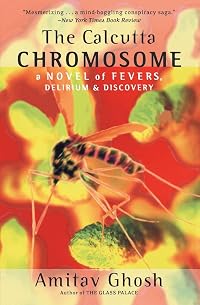
Born in Calcutta, and spent his childhood in Bangladesh, Sri Lanka, and Northern India. He studied in Delhi, Oxford, and Egypt and taught at various Indian and American universities. Author of a travel book and three acclaimed novels. Ghosh has also written for GRANTA, THE NEW YORKER, THE NEW YORK TIMES, and THE OBSERVER. He lives in New York City show more with his wife and two children. (Publisher Provided) Amitav Ghosh was born in Calcutta, India on July 11, 1956. He studied in Delhi, Oxford and Alexandria. His first book, The Circle of Reason, won France's Prix Médicis. He has won several other awards including the Sahitya Akademi Award and the Ananda Puraskar for The Shadow Lines, the Arthur C. Clarke award for The Calcutta Chromosome, and the Crossword Book Prize for The Hungry Tide and Sea of Poppies. His other works include In an Antique Land, Dancing in Cambodia, The Glass Palace, and River of Smoke. In 2007, he was awarded the Padma Shri, one of India's highest honors, by the President of India. He made the New Zealand Best Seller List in 2015 with his title Flood of Fire. (Bowker Author Biography) show less
Some Editions
Awards and Honors
Series
Belongs to Publisher Series
Work Relationships
Is abridged in
Common Knowledge
- Canonical title
- In an Antique Land
- Original title
- In an antique land
- Alternate titles
- In an Antique Land: History in the Guise of a Traveler's Tale
- Original publication date
- 1992
- Important places
- Aden, Yemen; Cairo, Egypt; Mangalore, India; Lataifa, Egypt; Nashawy, Egypt
- Dedication
- For Debby
- Original language
- Inglese
Classifications
Statistics
- Members
- 978
- Popularity
- 26,901
- Reviews
- 15
- Rating
- (3.78)
- Languages
- 6 — English, French, German, Italian, Polish, Spanish
- Media
- Paper, Audiobook, Ebook
- ISBNs
- 28
- ASINs
- 5