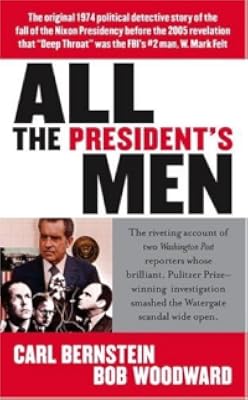
All the President's Men
by Carl Bernstein
On This Page
Description
50th Anniversary Edition—With a new foreword on what Watergate means today."The work that brought down a presidency...perhaps the most influential piece of journalism in history" (Time)—from the #1 New York Times bestselling authors of The Final Days.
The most devastating political detective story of the century: two Washington Post reporters, whose brilliant, Pulitzer Prize-winning investigation smashed the Watergate scandal wide open, tell the behind-the-scenes drama the way it show more really happened.
One of Time magazine's All-Time 100 Best Nonfiction Books, this is the book that changed America. Published just months before President Nixon's resignation, All the President's Men revealed the full scope of the scandal and introduced for the first time the mysterious "Deep Throat." Beginning with the story of a simple burglary at Democratic headquarters and then continuing through headline after headline, Bernstein and Woodward deliver a riveting firsthand account of their reporting. Their explosive reports won a Pulitzer Prize for The Washington Post, toppled the president, and have since inspired generations of reporters.
All the President's Men is a riveting detective story, capturing the exhilarating rush of the biggest presidential scandal in US history as it unfolded in real time. show less
Tags
Recommendations



















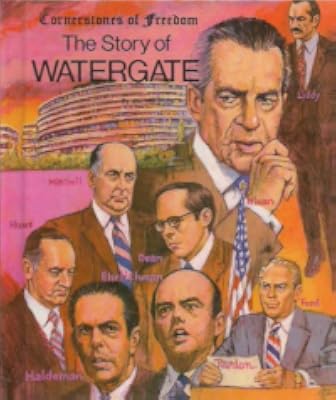



Member Recommendations




SomeGuyInVirginia Investigative journalism.

Member Reviews
All the President's Men by Carl Berstein and Bob Woodward is the story of how two reporters, working for the Washington Post newspaper in the 1970's, began the investigations known has Watergate which brought down the Nixon administration.
I followed the Woodward/Berstein coverage when it was actually happened, as well as the coverage by other newspaper writers at the time. I read the book when it came out. At that time I was in my early 20's and it was fascinating and shocking. I remember reading the book and thinking how amazing it was that these reporters were able to "follow the breadcrumbs" of information given them by sources. Back in the day, it was expected that stories came out. over days, not hours like they do. now in 2024. I show more was impressed by the careful consideration that was given to each line written. In the '70's we still believed in the government. This story blew the lid.
Fast forward to today, 2024. Journalism seems so different! Opinion, opinion, opinion.... where are the facts. Where is the tedious discussion between writers and bosses before information is put on the air?
For me this book holds up really well. Today it is a lesson in how journalism should be done. Carefully, multiple sources. Don't just repeat what another journalist says. When first published, this book showed us what happened behind the scenes during this period of time in our country. So it is a different book for a different time.
Everyone should read it, not just for the historic value, but also for the comparative value of how journalism has changed over time. show less
I followed the Woodward/Berstein coverage when it was actually happened, as well as the coverage by other newspaper writers at the time. I read the book when it came out. At that time I was in my early 20's and it was fascinating and shocking. I remember reading the book and thinking how amazing it was that these reporters were able to "follow the breadcrumbs" of information given them by sources. Back in the day, it was expected that stories came out. over days, not hours like they do. now in 2024. I show more was impressed by the careful consideration that was given to each line written. In the '70's we still believed in the government. This story blew the lid.
Fast forward to today, 2024. Journalism seems so different! Opinion, opinion, opinion.... where are the facts. Where is the tedious discussion between writers and bosses before information is put on the air?
For me this book holds up really well. Today it is a lesson in how journalism should be done. Carefully, multiple sources. Don't just repeat what another journalist says. When first published, this book showed us what happened behind the scenes during this period of time in our country. So it is a different book for a different time.
Everyone should read it, not just for the historic value, but also for the comparative value of how journalism has changed over time. show less
You know the drill: a break-in at the Democratic National Committee office in the Watergate complex led to the collapse of Richard Nixon's presidential administration, largely thanks to the efforts of intrepid reporters Bob Woodward and Carl Bernstein.
What I liked about All the President's Men was how Bernstein and Woodward peel back the tight factual skin of newspaper reporting to reveal their own screw-ups and the humanity of their opponents. They repeatedly record that queasy moment when a journalist has to choose between a scoop and compassion. The greater good doesn't always win, but compassion can't compete with good copy:
"As the cry of JEEEEEESUS was repeated, Bernstein had perceived the excruciating depth of Mitchell's hurt. show more For a moment, he had been afraid that Mitchell might die on the telephone, and for the first time Mitchell was flesh and blood, not Nixon's campaign manager, the shadow of Kent State, Carswell's keeper, the high sheriff of Law and Order, the jowled heavy of Watergate. Bernstein's skin felt prickly." [110] show less
What I liked about All the President's Men was how Bernstein and Woodward peel back the tight factual skin of newspaper reporting to reveal their own screw-ups and the humanity of their opponents. They repeatedly record that queasy moment when a journalist has to choose between a scoop and compassion. The greater good doesn't always win, but compassion can't compete with good copy:
"As the cry of JEEEEEESUS was repeated, Bernstein had perceived the excruciating depth of Mitchell's hurt. show more For a moment, he had been afraid that Mitchell might die on the telephone, and for the first time Mitchell was flesh and blood, not Nixon's campaign manager, the shadow of Kent State, Carswell's keeper, the high sheriff of Law and Order, the jowled heavy of Watergate. Bernstein's skin felt prickly." [110] show less
Of an engaging nonfiction narrative, it’s often said—as a form of praise—that it “reads like a novel.” Presumably because the characters are well developed, the plot is interesting, the themes are relevant or perceptive, and the prose style is compelling or original or captivating in some way. While this book certainly tells the tale of what is perhaps still the most consequential feat of 20th-century journalism, it is not a nonfiction book that reads like a novel. It is, however, worth the read, if only to provide hope given the current chaotic mess that is the US Executive branch of government.
The factors that prevent All the President’s Men from achieving the lauded “reads like a novel” status are perhaps beyond the show more control of Bernstein and Woodward, who prove themselves to be intrepid, reflective reporters who are not above admitting their own shortcomings or lapses in judgment. The story they uncover is such a byzantine quagmire of conflicting loyalties, stealthy connections, cloak-and-dagger schemes, and downright preposterous (yet true) accusations against the most esteemed government office in the US that one forgives them for failing to weave an intelligible plot out of the Gordian knot of intrigue that they discover. Furthermore, Bernstein and Woodward are not necessarily storytellers—they are journalists telling the story of their story.
Over 40 years after the Watergate scandal, the paranoia, hypocrisy, and dishonesty that emanated from the office of the President of the United States feel all too palpable in the current era, when we are forced to endure what will undoubtedly be regarded as the most ignorant, embarrassing, arrogant, appalling, and absolutely batsh*t crazy administration of all time. I simply hope that somewhere, working for a newspaper or website like the Washington Post, there are journalists in the mold of Bernstein and Woodward who will someday tell the story of 45’s corruption and reveal him for the criminal that he is. show less
The factors that prevent All the President’s Men from achieving the lauded “reads like a novel” status are perhaps beyond the show more control of Bernstein and Woodward, who prove themselves to be intrepid, reflective reporters who are not above admitting their own shortcomings or lapses in judgment. The story they uncover is such a byzantine quagmire of conflicting loyalties, stealthy connections, cloak-and-dagger schemes, and downright preposterous (yet true) accusations against the most esteemed government office in the US that one forgives them for failing to weave an intelligible plot out of the Gordian knot of intrigue that they discover. Furthermore, Bernstein and Woodward are not necessarily storytellers—they are journalists telling the story of their story.
Over 40 years after the Watergate scandal, the paranoia, hypocrisy, and dishonesty that emanated from the office of the President of the United States feel all too palpable in the current era, when we are forced to endure what will undoubtedly be regarded as the most ignorant, embarrassing, arrogant, appalling, and absolutely batsh*t crazy administration of all time. I simply hope that somewhere, working for a newspaper or website like the Washington Post, there are journalists in the mold of Bernstein and Woodward who will someday tell the story of 45’s corruption and reveal him for the criminal that he is. show less
I think it's pretty clear by this point that I love books like this, ones that focus on very in-depth journalism into one issue and this is probably the most well known of those stories. I really enjoyed reading this. Yes, it can be a little dry at parts but the magnitude of the story really made me want to keep reading.
I saw the movie version of this a few years ago. I think that's a really good movie but it just can't completely demonstrate just how much was going on in this story. I think sometimes this story gets turned into just a story about journalists meeting with secret sources in parking garages and while it is that, it also is a story that started with just a couple of guys and some suspicious checks and it could have show more easily ended right there. The amount of work and persistence that went into this is truly astounding. The cover of my edition describes this as the greatest reporting story of all time and I wouldn't argue with that. The legwork that Woodward and Bernstein did is commendable and something I bet so many journalists today admire and try to model. I wasn't alive when this story was breaking but I would think that this tale of excellent journalism inspired many people to pursue this profession.
I'm sure there aren't that many people who haven't read this book or at least seen the movie. If you were like me, I absolutely do recommend reading this book. It really is remarkable how large a story this was and how much was uncovered after starting with so little information. Definitely worth a read. show less
This is story of how two relatively young Washington Post reporters uncovered the botched Watergate burglary and the subsequent coverup, which ultimately led to the resignation of President Richard Nixon during his second term in office. It reads well because there's real conflict in the story. Bernstein and Woodward don't initially get along, their editors hold their feet to fire to get confirmation of the facts they are uncovering, and they have clandestine meetings with their secret, high level source that's like something out of a detective story.
It's hard to imagine the kind of impact these investigative news stories had in 1972 happening today in 2025. For one thing, Jeff Bezos, the current owner of the Washington Post, probably show more wouldn't allow the investigation to continue. For another, the current Trump administration would simply declare the reporting to be false news, a witch hunt, and so on, and threaten to sue. Not to mention that Congress would take any interest in opening their own hearings. Trump and his staff would say that every campaign engages in these kinds of dirty tricks, and the public would just swipe their mobile to a TikTok video of a dog dancing while skateboarding.
However, in 1972, Nixon was expanding presidential power (although not even remotely close to Trump's overreach), people trusted that their news sources were unbiased, and The Washington Post was dedicated to a mission of being the people's watchdog over the government, no matter who was in office. How much our country, society and media has changed in fifty years! show less
It's hard to imagine the kind of impact these investigative news stories had in 1972 happening today in 2025. For one thing, Jeff Bezos, the current owner of the Washington Post, probably show more wouldn't allow the investigation to continue. For another, the current Trump administration would simply declare the reporting to be false news, a witch hunt, and so on, and threaten to sue. Not to mention that Congress would take any interest in opening their own hearings. Trump and his staff would say that every campaign engages in these kinds of dirty tricks, and the public would just swipe their mobile to a TikTok video of a dog dancing while skateboarding.
However, in 1972, Nixon was expanding presidential power (although not even remotely close to Trump's overreach), people trusted that their news sources were unbiased, and The Washington Post was dedicated to a mission of being the people's watchdog over the government, no matter who was in office. How much our country, society and media has changed in fifty years! show less
Maybe you've read the book. Maybe you've seen the movie. Maybe you're old enough to remember the events as they happened. Regardless, it's difficult not to be aware of the Watergate scandal. In light of the current spate of troubles that plague the current occupier of the White House, it seemed like this was a good time to revisit this book.
The narrative is a bit dry. It takes a "just the facts" approach with very little attempt to provide any sort of color. No effort was made to heighten the tension surrounding the events they reported on. I suppose an argument can be made that Bernstein and Woodward didn't want to sensationalize the account of what was, at the time, developing into one of the biggest political scandals in American show more history. Need more drama? Watch the movie.
But what the book lacks in narrative, it makes up in thoroughness of details. We're with each reporter as they follow up on leads, real or false. Woodward's late night meetings with Deep Throat in the parking garage. The back and forth between the editors and the reporters as they decide whether or not they have enough evidence to run a story. The interviews with named and unnamed sources and the reporters efforts to protect them. Denials and backpedaling from people in the administration. The threats, real and implicit, made to the reporters, the editors, the Washington Post. While no one called the free press the enemy of the people, they were certainly considered enemies of the state.
Reading this book is a reminder that there was more going on than the break-in at the Watergate. This was a nationwide campaign of political espionage and sabotage. And the attempt to cover it up with denials, counterattacks on the press, and outright lies in the wake of an investigation yielding indictments and convictions sounds all too familiar with what we're hearing today. show less
The narrative is a bit dry. It takes a "just the facts" approach with very little attempt to provide any sort of color. No effort was made to heighten the tension surrounding the events they reported on. I suppose an argument can be made that Bernstein and Woodward didn't want to sensationalize the account of what was, at the time, developing into one of the biggest political scandals in American show more history. Need more drama? Watch the movie.
But what the book lacks in narrative, it makes up in thoroughness of details. We're with each reporter as they follow up on leads, real or false. Woodward's late night meetings with Deep Throat in the parking garage. The back and forth between the editors and the reporters as they decide whether or not they have enough evidence to run a story. The interviews with named and unnamed sources and the reporters efforts to protect them. Denials and backpedaling from people in the administration. The threats, real and implicit, made to the reporters, the editors, the Washington Post. While no one called the free press the enemy of the people, they were certainly considered enemies of the state.
Reading this book is a reminder that there was more going on than the break-in at the Watergate. This was a nationwide campaign of political espionage and sabotage. And the attempt to cover it up with denials, counterattacks on the press, and outright lies in the wake of an investigation yielding indictments and convictions sounds all too familiar with what we're hearing today. show less
Change the names from 1972 to today's names and nothing has changed. The talking points and the words are the same. Denials and coming down on the press from the White House. I am astounded how much things stay the same in 50 years. While the book at first is a little disconcerting because of all the names as well as feeling I was dropped into the middle of a conversation, I soon got comfortable as Bernstein and Woodward tell of putting the Watergate story and the subsequent fallout stories together to get a full story of what happened during the Nixon reelection campaign. This is much more interesting now than it was 50 years ago when all I cared about was my soap operas being exempted for the Watergate coverage. There are so many show more parallels to 2020 and beyond. show less
Members
- Recently Added By
Published Reviews
ThingScore 100
The best insight into how they [the USA] are governed.
added by Cynfelyn
It is a work barren of ideas, of imagination, and of a sense of either the tragic or the comic aspects of the subject, and one that would be essentially boring if it were not for the historical importance of the events dealt with. The reportorial techniques employed by Bernstein and Woodward differ hardly at all from those that might be used by a pair of reporters examining the misdeeds of show more small-town grafters, and while this is not in itself a failing—small fish and large ones are caught by the same means—the lack of a sense of history diminishes the magnitude of the story. But this account will be indispensable to those who for one reason or another have not kept up with the running accounts of events and to those who will someday place it in its proper historical setting. show less
added by Lemeritus
The suspense in “All the President's Men” is more pervasive and finally more terrifying than a suspense story which holds its readers shivering in the darkness of graveyards and gothic castles because the setting is sunny Washington, D.C., a familiar place suddenly made unfamiliar by the presence of overwhelming fear. Disaffected C.R.P.. employes trembling in their doorways, wanting to be show more helpful but afraid of the consequences, plead with the sleuths never to call again. “Nobody knows what they'll do,” one employe said. “They are desperate.” Who are they?... show less
added by Lemeritus
Lists

100 books to read in a lifetime
102 works; 37 members

The Well-Educated Mind Reading Challenge
75 works; 7 members

Política - Clásicos
164 works; 2 members

Well-Educated Mind
150 works; 3 members

The Complete Rory Gilmore Reading List
506 works; 5 members

The Well-Educated Mind, Susan Wise Bauer, 2016
179 works; 3 members
Rory Gilmore Reading Challenge
34 works; 2 members

Publisher's Weekly NON-Fiction list - 1912 - 1975
486 works; 4 members

Mustich's 1000 Books to Read Before You Die: A Life Changing List
1,001 works; 19 members
Rory Gilmore Challenge 1-100
27 works; 1 member

1960s
281 works; 16 members

Books Read in 2003
258 works; 7 members

Swinging Seventies
255 works; 18 members

Books Read in 2017
4,249 works; 130 members

Alphabetical Books
211 works; 3 members

Page Turners
185 works; 11 members

Blue Pyramid 1,276 Best Books of All Time
1,248 works; 32 members

1970s
657 works; 23 members

Books Read in 2020
4,379 works; 124 members
Author Information

8+ Works 9,052 Members
Some Editions
Awards and Honors
Awards
Distinctions
Series
Belongs to Publisher Series
Work Relationships
Has the adaptation
Common Knowledge
- Canonical title
- All the President's Men
- Original title
- All the President's Men
- Original publication date
- 1974
- People/Characters
- Robert A. Abplanalp; Spiro T. Agnew; J. D. Alexander; Robert H. Allen; Jack Anderson; John Ashbrook (show all 228); Eugene Bachinski; Ben Bagdikian; Howard H. Baker, Jr. (as Howard Baker); Alfred C. Baldwin III; Bernard L. Barker; Karlyn Barker; Paul E. Barrick; Dita Beard; Robert Beard; James A. Belsen; Robert Bennett (Hughes' representative); Robert F. Bennett; Marilyn Berger; Carl Bernstein; Judah Best; Paul Bible; James J. Bierbower; William O. Bittman; Judy Hoback (the Bookkeeper, name not given in text); Ben Bradlee (Benjamin C. Bradlee); Bill Brady; Arthur Bremer; Theodore F. Brill; Dave Broder; Patrick J. Buchanan; Alexander Butterfield; Tim Butz; Robert Byrd; Matthew Byrne; Douglas Caddy; Donald E. Campbell; John Campbell; Lou Cannon; John Cassidento; John J. Caulfield; Dwight L. Chapin; Checkers (dog); Anna Chennault; Kathleen Chenow; Murray Chotiner; Ken W. Clawson; James Collins; Charles W. Colson; Archibald Cox; Walter Cronkite; Kenneth H. Dahlberg; Martin Dardis; Sam Dash (as Samuel Dash); John Dean (as John W. Dean III); William Mark Felt, Sr. (as Deep Throat, name not given in text); Clifton DeMotte; Ngo Dinh Diem; Peter Dixon; Bob Dole (as Robert Dole); James Dooley; Elizabeth Drew; Thomas F. Eagleman; John Ehrlichman (as John D. Ehrlichman); Tim Elbourne; Daniel Ellsberg; Samuel James Ervin, Jr.; Rowland Evans; Fred Fielding; Richard E. Gerstein; Seymour Glanzer; Barry Goldwater; Virgilio R. Gonzalez; Albert Gore, Sr. (as Albert Gore); George K. Gorton; Katherine Graham; L. Patrick Gray III; Kenneth Griffiths; James Grimm; Mike Guhin; Alexander Haig; H. R. Haldeman; Joanne Horton Haldeman (as Mrs. H. R. Haldeman); Morton H. Halperin (as Morton Halperin); Sally Harmony; Jack Harrington; Tom Hart; Richard Harwood; Richard Haynes; Richard M. Helms; Herblock; Seymour M. Hersh; Lawrence Higby; Craig Hillegass; James Hoffa; J. Edgar Hoover; Morrison L. Hosley; Howard Hughes; Philip S. Hughes; Brit Hume; Hubert Humphrey (as Hubert H. Humphrey); Dorothy Hunt; E. Howard Hunt; Morton B. Jackson; Robert Jackson; Lyndon Baines Johnson (in relation to J. Edgar Hoover); Kirby Jones; Philip Jones; Robert G. Kaiser; Herbert Kalmbach; Edward M. Kennedy; John F. Kennedy; Laura Kiernan; Carroll Kilpatrick; Henry Kissinger; Herbert Klein; Richard G. Kleindienst; Margaret Dunbar Kleindienst; Egil Krough Jr.; Frederick LaRue; John F. Lawrence; Alfred E. Lewis; G. Gordon Liddy; John V. Lindsay; William Loeb; Dorothy McCardle; James McCartney; Paul McCloskey; James W. McCord, Jr.; George McGovern; Clark MacGregor; Jeb Stuart Magruder; Frank Mankiewicz; Jim Mann; Mike Mansfield; Murrey Marder; Robert C. Mardian; Peter Maroulis; Eugenio R. Martinez; George Meany; Lawrence Meyer; Robert Meyers; John N. Mitchell; Martha Beall Mitchell; Clark Mollenhoff; Emmett Moore; Powell Moore; Bill D. Moyers; Edmund Muskie; Jack Nelson; Pat Nixon (in relation to John N. Mitchell); Richard M. Nixon; Roger Lee Nixt; Lawrence F. O'Brien; Robert C. Odle, Jr.; Manuel Ogarrio Daguerre; Jack Olsen (in relation to The Bridge at Chappaquiddick); John Osbourne; Peter Osnos; Ronald Ostrow; Kenneth W. Parkinson (as Kenneth Wells Parkinson); Henry E. Petersen; Virginia Piper; Herbert L. Porter; Joseph Rafferty, Jr.; Bebe Rebozo; Elliot L. Richardson; Charles R. Richey; Kenneth Rietz; Ken Ringle; Harry M. Rosenfeld; Henry B. Rothblatt; William D. Ruckelshaus; Walter Rugaber; Stephen Sachs; Manolo Sanchez; John Scali; Jane F. Schleicher; Daniel Schorr; Mike Schwering; Hugh Scott; J. Glenn Sedam; Mrs. A. H. Segretti; Donald H. Segretti; Robert B. Semple, Jr.; Dave Shapiro; Neil Sheehan; Alex Shipley; Devan L. Shumway; Earl Silbert; Howard Simons; John Sirica; Hugh W. Sloan, Jr.; Deborah Sloan (as Mrs. Hugh W. Sloan); Melissa Madison Sloan; Hedrick Smith; Richard Schneider; Neal Sonnet; Maurice H. Stans; George W. Stockton; James Stoner; Gordon Strachan; Frank A. Sturgis; Barry Sussman; Tad Szulc; Helen Thomas; William E. Timmons; John Tower; Enrique Valedor; Robert L. Vesco; Nicholas von Hoffman; George Wallace; Vernon A. Walters (General); Gerald Warren; Lang Washburn; Eric Wentworth; Harlan A. Westrell; Julian L. White; Theodore H. White; Roger Wilkins; Edward Bennett Williams; Naomi R. Williams; Priscilla L. Woodruff; Rose Mary Woods; Bob Woodward; David R. Young; Larry Young; Ronald L. Ziegler
- Important places
- The Washington Post, Washington, D.C., USA; Arlington, Massachusetts, USA; Arlington, Virginia, USA; Boca Raton, Florida, USA; Chappaquiddick Island, Massachusetts, USA; Cuba (show all 14); Haiphong, Vietnam; Maryland, USA; Mexico City, Mexico; Miami, Florida, USA; My Lai, Song My, Sơn Tịnh, South Vietnam; Newhall, California, USA; Phoenix, Arizona, USA; Rockville, Maryland, USA
- Important events
- United States presidential election (1972); Watergate Burglaries (1972); Watergate Scandal (1974); Resignation of Richard M. Nixon (1974)
- Related movies
- All the President's Men (1976 | IMDb)
- Dedication
- To the President's other men and women-
in the White House and elsewhere-
who took risks to provide us with confidential information. Without them there would have been no Watergate story told by the Washington Post. - First words
- June 17, 1972. Nine o'clock Saturday morning. Early for the telephone. Woodward fumbled for the receiver and snapped awake.
- Last words
- (Click to show. Warning: May contain spoilers.)The President said, 'I want you to know that I have no intention whatever of ever walking away from the job that the American people elected me to do for the people of the United States.'
- Original language
- English
- Canonical DDC/MDS
- 364.1320973
- Canonical LCC
- E860
- Disambiguation notice
- This is the book. Please don't combine with the film
Classifications
- Genres
- General Nonfiction, History, Nonfiction
- DDC/MDS
- 364.1320973 — Society, government, & culture Social problems and social services Crime Criminal offenses Political and related offenses Offenses against proper government Standard subdivisions History, geographic treatment, biography North America United States
- LCC
- E860 — History of the United States United States Later twentieth century, 1961-2000 Nixon's administrations, 1969-August 9, 1974 Watergate Affair. Resignation
- BISAC
Statistics
- Members
- 5,277
- Popularity
- 2,577
- Reviews
- 80
- Rating
- (4.13)
- Languages
- 15 — Czech, Danish, Dutch, English, Finnish, French, German, Indonesian, Italian, Norwegian (Bokmål), Norwegian, Portuguese, Romanian, Spanish, Swedish
- Media
- Paper, Audiobook, Ebook
- ISBNs
- 66
- UPCs
- 1
- ASINs
- 42