
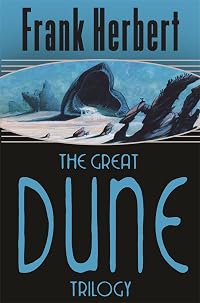
Dune / Dune Messiah / Children of Dune
by Frank Herbert
Dune (Collections and Selections — omnibus 1-3)
On This Page
Description
Herbert's evocative, epic tales are set on the desert planet Arrakis, the focus for a complex political and military struggle with galaxy-wide repercussions. Arrakis is the source of spice, a mind-enhancing drug which makes interstellar travel possible; it is the most valuable substance in the galaxy. When Duke Atreides and his family take up court there, they fall into a trap set by the Duke's bitter rival, Baron Harkonnen. The Duke is poisoned, but his wife and her son Paul escape to the show more vast and arid deserts of Arrakis, which have given the planet its nickname of Dune. Paul and his mother join the Fremen, the Arrakis natives, who have learnt to live in this harsh and complex ecosystem. But learning to survive is not enough - Paul's destiny was mapped out long ago and his mother is committed to seeing it fulfilled. show lessTags
Recommendations









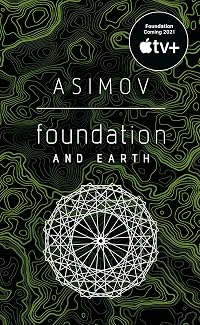

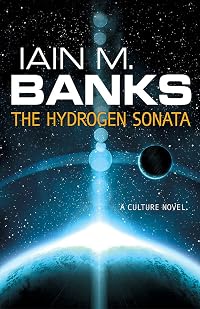
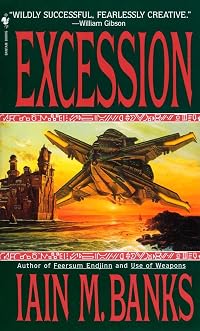
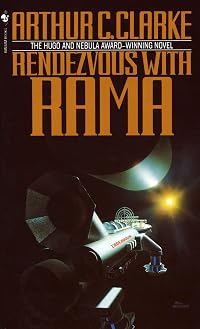




Member Reviews
So far I have read Dune, the first book in the trilogy.
I had seen the movies/mini-series some years ago, so I was apprehensive (usually I end up hating the movie or the book).
But the book matched most of my expectations, and I really enjoyed it.
It has lots os political and religious connotations, and most time I hate that kind of text, but in this book it made sense for the story, it even set the mood for some events.
And I loved the little twist that allows a prescient character to be surprised, creating an odd balance between fate (with it's self fulfilled prophecies) and free will (with consequences for its actions).
On the bad side I think no author should be allowed to describe bad smells in such a vivid way (I think I actually show more skipped part of the sentence just so I didn't have to imagine that smell) show less
I had seen the movies/mini-series some years ago, so I was apprehensive (usually I end up hating the movie or the book).
But the book matched most of my expectations, and I really enjoyed it.
It has lots os political and religious connotations, and most time I hate that kind of text, but in this book it made sense for the story, it even set the mood for some events.
And I loved the little twist that allows a prescient character to be surprised, creating an odd balance between fate (with it's self fulfilled prophecies) and free will (with consequences for its actions).
On the bad side I think no author should be allowed to describe bad smells in such a vivid way (I think I actually show more skipped part of the sentence just so I didn't have to imagine that smell) show less
To the uninitiated the Dune universe and its characters, plots and intrigues might seem inaccessible. And perhaps that is fair comment. The continuously shifting allegiances, uncovering of secrets and see-sawing fulcrum of power can be intimidating. Accompanied by Herbert's rather staid prose, Dune is not recommended as a primer for the novice or the curious, however, those willing to persist will be rewarded many-fold. That is not to say that Dune is difficult to read - it isn't. Dune is the reason why Sci-fi exists. It is the most magnificent theatre of the fantastic, the grandiose and the epic, whilst still retaining it's integrity.
Sci-fi is also a potent vehicle for social commentary. Not bound by the constraints of other forms of show more fiction, Sci-fi has a virtual blank canvas upon which to paint its social allegory, allowing it unprecedented scope and accuracy. Frank Herbert makes full use of these faculties and delivers a typically honest interrogation of both temporal and existential issues such as imperialism, globalisation (universalisation?), organised religion, free will vs predestination, and fundamentalism, amongst others. Not only that but Herbert pioneered planetary ecology in creating an ecosystem for Arrakis, an ecosystem that undergoes some drastic transformations during the course of the book, with remarkable accuracy have reported many ecologists.
But most incredibly of all, Herbert somehow created an allegory that pre-dated its subject by almost three decades, an allegory that is still as pertinent now as it was 20 years ago. Without giving too much away, the world of Dune (trilogy) and everything that takes place in it can be viewed as a direct analogy for Western, specifically US, involvement in the Middle East from Gulf War I hence, with particular reference to the conquest for oil (melange/spice). The Fremen culture is closely modelled on Arab culture, even speaking practically pure Arabic.
But what freaks me out, and many Arab readers, is that some of the Arabic words and concepts employed by Herbert in Dune did not become part of mainstream Arabic culture until the 21st century (the first book was published in 1965)!
Obviously I am a big fan - Dune was the book that eventually tilted me towards the Sci-fi windmill - but I believe this book deserves recognition as a great work of fiction, not just Science Fiction. show less
Sci-fi is also a potent vehicle for social commentary. Not bound by the constraints of other forms of show more fiction, Sci-fi has a virtual blank canvas upon which to paint its social allegory, allowing it unprecedented scope and accuracy. Frank Herbert makes full use of these faculties and delivers a typically honest interrogation of both temporal and existential issues such as imperialism, globalisation (universalisation?), organised religion, free will vs predestination, and fundamentalism, amongst others. Not only that but Herbert pioneered planetary ecology in creating an ecosystem for Arrakis, an ecosystem that undergoes some drastic transformations during the course of the book, with remarkable accuracy have reported many ecologists.
But most incredibly of all, Herbert somehow created an allegory that pre-dated its subject by almost three decades, an allegory that is still as pertinent now as it was 20 years ago. Without giving too much away, the world of Dune (trilogy) and everything that takes place in it can be viewed as a direct analogy for Western, specifically US, involvement in the Middle East from Gulf War I hence, with particular reference to the conquest for oil (melange/spice). The Fremen culture is closely modelled on Arab culture, even speaking practically pure Arabic.
But what freaks me out, and many Arab readers, is that some of the Arabic words and concepts employed by Herbert in Dune did not become part of mainstream Arabic culture until the 21st century (the first book was published in 1965)!
Obviously I am a big fan - Dune was the book that eventually tilted me towards the Sci-fi windmill - but I believe this book deserves recognition as a great work of fiction, not just Science Fiction. show less
The 'Lord Of The Rings' of science fiction, I started reading my aunt's battered old copies while stuck in America in the spring and found it absolutely wonderful. Intensely gripping, I enjoyed it so much I went out and bought my own copy of the trilogy. Incredibly dense and rich with detail, these books are totally unputdownable, and the intrigue will keep you turning pages for hours. Loved them so much I named one of my cuddly toys Gurney Halleck :)
I read Dune about 25 years ago, and the other two books at various points after that, but I've never read the three together in one go. I still find the Bene Gesserit and their long-range breeding programme fascinating. At first this time round I had my doubts about the long-term feuds between the Great Houses and the general byzantine political background to the story, but after a while they grew on me. Another thing that I have a hard time with is the teleological view of evolution, that the jihad is an evolutionary force launched to improve the species.
Nevertheless, Dune itself still holds up well. Dune Messiah doesn't. The whole basis of Hayt as the ghola/revenant of Duncan Idaho produced by the Tleilaxu is so unshadowed by anything show more in the first book that I couldn't accept it. Also I just couldn't find anything very interesting this time round in the problems of the Atreides.
The third novel in the series, Children of Dune, was much better with the adventures of Paul's children and the further information about the Fremen cohering much better with what went before. I still feel ambivalent about all the mystical claptrap, though. show less
Nevertheless, Dune itself still holds up well. Dune Messiah doesn't. The whole basis of Hayt as the ghola/revenant of Duncan Idaho produced by the Tleilaxu is so unshadowed by anything show more in the first book that I couldn't accept it. Also I just couldn't find anything very interesting this time round in the problems of the Atreides.
The third novel in the series, Children of Dune, was much better with the adventures of Paul's children and the further information about the Fremen cohering much better with what went before. I still feel ambivalent about all the mystical claptrap, though. show less
The thing about Dune is that the story revolves around a desert planet that's filled with big deserts with big and nasty worms, so it's naturally to this day still badly accepted by the society that prefers Star Wars and Star Trek kind of movies. But that doesn't mean it's bad, in fact, in my humble opinion, Dune Trilogy is one of the best science fiction Trilogies ever written besides Alien and Isaac Asimov's Foundation. It pretty much brings everything every science fiction buff wants to read about inside of a science fiction novel, and it offers a truly great storyline and a well-crafted fictional Hero, one that shall most definitely keep your interest into the novel, and keep you wanting and searching for a whole lot more. Luckily show more for you, there is more of the Dune world on the bookshelves inside of a book store, but I suggest you read this Trilogy first, because it's amazing, characters inside it are amazing, and the storyline isn't just truly great but also truly spectacular. show less
Science fiction classic with substance but not fully enjoyable to read.
I have been wanting to read Dune for a while, as I enjoyed the films very much. Obviously, the books are different but they are also strinkingly different to each other.
The story and the universe within which they exist are amazingly creative and complex. This is an important mark of good science fiction.
I did not enjoy the amount of mysticism found. The amount of aphoristic talk of little continuity was maddening, even though the intertextual references and long arcs of suspense are impressive. The second book in particular was thus a drag to read. Much like the heroes, I walked through this desert now as I would have never had a second chance to finish.
So, the show more first book is great to read, but the continuation feels much less enjoyable.
A surprising element, in the third book in particular, was the discussions of ecology and the necessity for humans to grow aware of the climate. Given the persistence of climate change perils today, it is remarkable how old systemic ecological modeling is. show less
I have been wanting to read Dune for a while, as I enjoyed the films very much. Obviously, the books are different but they are also strinkingly different to each other.
The story and the universe within which they exist are amazingly creative and complex. This is an important mark of good science fiction.
I did not enjoy the amount of mysticism found. The amount of aphoristic talk of little continuity was maddening, even though the intertextual references and long arcs of suspense are impressive. The second book in particular was thus a drag to read. Much like the heroes, I walked through this desert now as I would have never had a second chance to finish.
So, the show more first book is great to read, but the continuation feels much less enjoyable.
A surprising element, in the third book in particular, was the discussions of ecology and the necessity for humans to grow aware of the climate. Given the persistence of climate change perils today, it is remarkable how old systemic ecological modeling is. show less
Continuation (and includes) the original Dune novel. For my two-cents Dune Messiah & Children of Dune show their age a bit more than Dune and Herbert starts to get a little more spiritual/philosophical with mixed success. I think worth a read if you really loved the original, I suspect will be harder for younger people to access.
Members
- Recently Added By
Lists

Books We'd Want on a Desert Island
203 works; 131 members

Books We Resisted Reading
177 works; 110 members
Author Information

255+ Works 148,043 Members
Frank Herbert was born Franklin Patrick Herbert, Jr. in Tacoma, Washington on October 8, 1920. He worked originally as a journalist, but then turned to science fiction. His Dune series has had a major impact on that genre. Some critics assert that Herbert is responsible for bringing in a new branch of ecological science fiction. He had a personal show more interest in world ecology, and consulted with the governments of Vietnam and Pakistan about ecological issues. The length of some of Herbert's novels also helped make it acceptable for science fiction authors to write longer books. It is clear that, if the reader is engaged by the story---and Herbert certainly has the ability to engage his readers---length is not important. As is usually the case with popular fiction, it comes down to whether or not the reader is entertained, and Herbert is, above all, an entertaining and often compelling writer. His greatest talent is his ability to create new worlds that are plausible to readers, in spite of their alien nature, such as the planet Arrakis in the Dune series. Frank Herbert died of complications from pancreatic cancer on February, 11, 1986, in Madison, Wisconsin. He was 65. (Bowker Author Biography) show less
Some Editions
Series

Work Relationships
Contains
Common Knowledge
- Canonical title
- Dune / Dune Messiah / Children of Dune
- People/Characters
- Paul Atreides; Leto Atreides I; Jessica Atreides; Gurney Halleck; Duncan Idaho; Wellington Yueh (show all 18); Stilgar; Shaddam Corrino IV; Irulan Corrino; Leto Atreides II; Ghanima Atreides; Gaius Helen Mohiam; Mapes; Liet-Kynes; Vladimir Harkonnen; Piter De Vries; Glossu Rabban; Feyd-Rautha Harkonnen
- Important places
- Arrakis; Caladan; Sietch Tabr, Arrakis; Giedi Prime; Salusa Secundus; Kaitain
- Original language
- English
- Canonical DDC/MDS
- 813.087625
Classifications
- Genres
- Science Fiction, Fiction and Literature
- DDC/MDS
- 813.087625 — Literature & rhetoric American literature in English American fiction in English By type Genre fiction Adventure fiction Speculative fiction Science fiction Space opera
- LCC
- PS3558 .E63 — Language and Literature American literature American literature Individual authors 1961-
- BISAC
Statistics
- Members
- 1,582
- Popularity
- 14,336
- Reviews
- 18
- Rating
- (4.33)
- Languages
- 6 — English, French, Italian, Russian, Spanish, Portuguese (Portugal)
- Media
- Paper, Ebook
- ISBNs
- 21
- UPCs
- 3
- ASINs
- 14