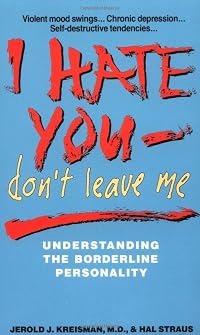
I Hate You—Don't Leave Me: Understanding the Borderline Personality
by Jerold J. Kreisman, Hal Straus
On This Page
Description
The revised and expanded third edition of the bestselling guide to understanding borderline personality disorder—with advice for communicating with and helping the borderline individuals in your life.After more than three decades as the essential guide to borderline personality disorder (BPD), the third edition of I Hate You—Don’t Leave Me now reflects the most up-to-date research that has opened doors to the neurobiological, genetic, and developmental roots of the disorder, as well show more as connections between BPD and substance abuse, sexual abuse, post-traumatic stress syndrome, ADHD, and eating disorders.
Both pharmacological and psychotherapeutic advancements point to real hope for success in the treatment and understanding of BPD.
This expanded and revised edition is an invaluable resource for those diagnosed with BPD and their family, friends, and colleagues, as well as professionals and students in the field, and the practical tools and advice are easy to understand and use in your day-to-day interactions with the borderline individuals in your life.
* This audiobook includes a downloadable PDF with a resource guide from the book.. Self-Improvement. Psychology. Nonfiction. show less
Tags
Recommendations


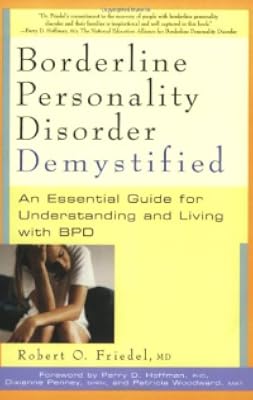
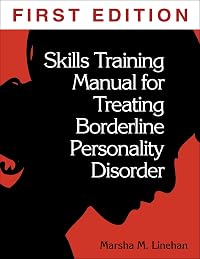

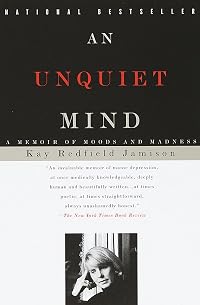
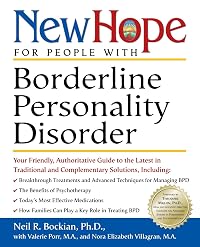




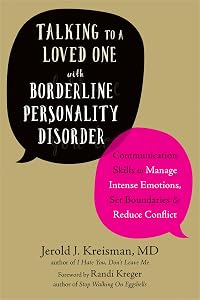



Member Recommendations
Member Reviews
For a newly-revised book, this volume sure feels old.
Some of that is inevitable. Borderline Personality Disorder is a curious thing -- the name arose because it was thought to be on the borderline between being neurotic (quirky but not really "crazy") and psychotic (flat-out delusional). But recent examination doesn't back that up, so it ended up among the Personality Disorders. And the Personality Disorders themselves are difficult concepts. In 2013, when the American Psychiatric Association was preparing the fifth edition of its Diagnostic and Statistical Manual, the section on Personality Disorders was voted down. This meant that the old definitions from the fourth edition were left standing. And the fourth edition hadn't show more substantially modified the definitions from the third edition! So this book was describing a condition that is still defined in a manner that is almost forty years old.
But that isn't the real problem. The real problem is that this volume shows almost no sign of the advances in neurology that have come in the decades since its first edition was published. Surely, by now, we must have some clue as to what causes Borderline Personality Disorder, as we do with schizophrenia and depression and even autism. Surely we do, but you won't know it from this book.
The treatment methods involved are also rather out-of-date. The whole book sounds as if it's based on psychodynamics -- the treatment model that goes back to Freud, and that is now almost completely ignored in clinical practice. But this book not only gives us a psychodynamic examination of individuals, it even gives us a psychodynamic view of our whole society -- a society, it argues, that encourages "borderline-ism." I suspect that, to some extent, the authors are right. But it all felt very irrelevant to me.
That doesn't make it entirely useless. That title, I Hate You -- Don't Leave Me, in itself tells you a lot about the nature of Borderline Personality Disorder. BPD is marked by an extremely maladaptive way of relating to others mixed with a desperate need for acceptance. So a person with BPD can be yelling and screaming and apparently hating a person while being desperate for comfort and companionship. It's a very difficult affliction to understand for those who come at it from outside.
This book has been a bestseller, so I assume its insights have been helpful for many. But I couldn't help but wish for more. show less
Some of that is inevitable. Borderline Personality Disorder is a curious thing -- the name arose because it was thought to be on the borderline between being neurotic (quirky but not really "crazy") and psychotic (flat-out delusional). But recent examination doesn't back that up, so it ended up among the Personality Disorders. And the Personality Disorders themselves are difficult concepts. In 2013, when the American Psychiatric Association was preparing the fifth edition of its Diagnostic and Statistical Manual, the section on Personality Disorders was voted down. This meant that the old definitions from the fourth edition were left standing. And the fourth edition hadn't show more substantially modified the definitions from the third edition! So this book was describing a condition that is still defined in a manner that is almost forty years old.
But that isn't the real problem. The real problem is that this volume shows almost no sign of the advances in neurology that have come in the decades since its first edition was published. Surely, by now, we must have some clue as to what causes Borderline Personality Disorder, as we do with schizophrenia and depression and even autism. Surely we do, but you won't know it from this book.
The treatment methods involved are also rather out-of-date. The whole book sounds as if it's based on psychodynamics -- the treatment model that goes back to Freud, and that is now almost completely ignored in clinical practice. But this book not only gives us a psychodynamic examination of individuals, it even gives us a psychodynamic view of our whole society -- a society, it argues, that encourages "borderline-ism." I suspect that, to some extent, the authors are right. But it all felt very irrelevant to me.
That doesn't make it entirely useless. That title, I Hate You -- Don't Leave Me, in itself tells you a lot about the nature of Borderline Personality Disorder. BPD is marked by an extremely maladaptive way of relating to others mixed with a desperate need for acceptance. So a person with BPD can be yelling and screaming and apparently hating a person while being desperate for comfort and companionship. It's a very difficult affliction to understand for those who come at it from outside.
This book has been a bestseller, so I assume its insights have been helpful for many. But I couldn't help but wish for more. show less
I Hate You—Don't Leave Me first jumped out at me in the bookstore. I have said that exact phrase to my wife more times than I'd like to admit. Whilst I bought it that day, it was over 10 years later before I actually read it.
I felt the book was written at a very understandable level, unlike many works related to medical issues, without making me feel like the author was speaking down to me, unlike many other medical works. The first half resonated with me very much, whilst they kind of lost me a bit in the second half. Granted its audience appears to primarily be the friends and family of a BPD rather than for the BPD himself. When communicating they recommend using SET (Support, Empathy, Truth) communication. From a high level it show more makes sense, but my brain couldn't really wrap around most of the examples they used.
It is eerie how much Dr. Kreisman describes me in his writing of Border Line Personality (BPD) disorder. Much of what has been diagnosed by my doctors as Bipolar and Depresion, may actually have been deeper BPD. But I'm pretty sure my ADHD i still ADHD. What really got me was their listing of the medical definition indicating a patient needed to have 5 of 8 given criteria, and I'm pretty sure I got all 8.
This book was written in 1989 so I'm not sure how much of its contents is now out-of-date. One example was linking BPD to homosexuality and sexual deviations. No modern doctor would speak like that, while I wasn't offended, some others may be.
I want to get a copy of the 3rd edition released in 2021 to see what has been updated, though from the reviews I've seen on LibraryThing there still may be gaps for the 21st century.
I'm not sure how much I will be able to adjust my life having this more information; my wife read it too, I don't ever recall reading a book with two bookmarks in it before. 🙂 At the very least if I ever seek professional mental health again I'll bring this copy with me. show less
I felt the book was written at a very understandable level, unlike many works related to medical issues, without making me feel like the author was speaking down to me, unlike many other medical works. The first half resonated with me very much, whilst they kind of lost me a bit in the second half. Granted its audience appears to primarily be the friends and family of a BPD rather than for the BPD himself. When communicating they recommend using SET (Support, Empathy, Truth) communication. From a high level it show more makes sense, but my brain couldn't really wrap around most of the examples they used.
It is eerie how much Dr. Kreisman describes me in his writing of Border Line Personality (BPD) disorder. Much of what has been diagnosed by my doctors as Bipolar and Depresion, may actually have been deeper BPD. But I'm pretty sure my ADHD i still ADHD. What really got me was their listing of the medical definition indicating a patient needed to have 5 of 8 given criteria, and I'm pretty sure I got all 8.
This book was written in 1989 so I'm not sure how much of its contents is now out-of-date. One example was linking BPD to homosexuality and sexual deviations. No modern doctor would speak like that, while I wasn't offended, some others may be.
I want to get a copy of the 3rd edition released in 2021 to see what has been updated, though from the reviews I've seen on LibraryThing there still may be gaps for the 21st century.
I'm not sure how much I will be able to adjust my life having this more information; my wife read it too, I don't ever recall reading a book with two bookmarks in it before. 🙂 At the very least if I ever seek professional mental health again I'll bring this copy with me. show less
I Hate You – Don’t Leave Me: Understanding the Borderline Personality by Jerold J. Kreisman and Hal Strauss is the new third edition of a book that was first published in 1989. It’s probably one of the more widely recognized books about borderline personality disorder (BPD).
There was a note to readers at the beginning about the language the authors use. The authors had chosen to continue using “the borderline” to refer to an individual with BPD. They acknowledged that it could be viewed as reducing a person to a stigmatizing label, but they couldn’t come up with anything better that was brief but didn’t suggest that the borderline personality was something that possessed the individual.
It wouldn’t have been my choice, show more but their explanation sounded like they’d put some thought into it. However, there may have been less thought than I was prepared to give the authors credit for, as the first chapter talked about a woman being “afflicted with” BPD, which pokes a big hole in the explanation. There were also repeated references to “the borderline syndrome,” which, if Google is any indication, is a term that was used in the 1970s and ’80s.
Some concepts were framed in ways that seemed unlikely to be helpful. The authors introduced the “borderline empathy paradox” by stating that people with BPD sometimes lack true empathy. They went on to explain that the empathy paradox involves heightened sensitivity to emotional cues from others, but decreased capacity to process that information and figure out what to do with it. Framing that as a lack of true empathy of the authors’ explanations miss the mark. In trying to explain the “borderline empathy paradox,” the authors stated that people with BPD sometimes lack true empathy. That’s really not a good way of putting it. The empathy paradox is basically that BPD involves heightened intake of the emotional stuff other people are putting out, but decreased capacity to process that information to know what to do with it. Framing that as a lack of true empathy seems unhelpful and likely to alienate readers with BPD, even though the concept itself is very relevant information.
The choice of descriptors often left a lot to be desired. For example, the authors used the term manipulativeness, which is unfortunate, as that type of framing of maladaptive attempts to get needs met is a key element of the stigma around BPD. The real-world examples of people with BPD that were presented tended to involve more subjective evaluation than necessary, including overuse of “attractive.”
The book offered the SET-UP system for effectively communicating with someone with BPD, and this was incorporated in example scenarios used throughout the book. SET-UP involves:
Support (“I” statements of concern)
Empathy (“You” statements that validate)
Truth (the reality of the situation, emphasizing accountability for oneself, and starting to look for solutions)
Understanding borderline symptoms and how they affect behaviour
Perseverance (staying consistent in providing support)
SET-UP was also included in the tips for family members on how to communicate more effectively with the individual with BPD. The authors urged family members to always take suicidal threats seriously and seek professional intervention, which I thought was a very helpful recommendation.
While the first half of the book focused on the nature of the BPD, the later part of the book addressed treatment, including therapy and medication. This seems to be where much of the updating for this third edition, and the chapter on psychotherapeutic approaches covers the various specialized psychotherapeutic approaches that have been developed for BPD, including DBT (dialectical behaviour therapy), STEPPS (Systems Training for Emotional Predictability and Problem Solving), transference-focused psychotherapy, and mentalization-based therapy. It sounds like this part was brand new to this edition.
I thought these chapters on treatment were well done, and they represented a more modern, balanced view of BPD compared to the way it was represented in earlier chapters. I particularly liked the authors’ emphasis on the importance of helping people with BPD to learn to accept both themselves and their uncomfortable emotions, and the explanation of how this can start to short-circuit the feeling bad about feeling bad loop.
The book contains a somewhat odd mix of both cringeworthy and insightful. As an example of the latter, “Borderline personality disorder is a complex tapestry, richly embroidered with innumerable intersecting threads.” The sense of reading two different books in one made me wonder if the insightful bits are new in the third edition, while the cringier bits towards the beginning, are a holder from the earlier editions. Without having a copy of the 1st edition, there’s no way for me to know for sure. However, there did seem to be a pretty clear divide.
Looking at the 1- and 2-star reviews of the earlier editions on Goodreads, some of the criticisms still hold true with the new edition, but I get the sense that this edition has made substantial improvements. In a number of these negative reviews, the reviewers had given up reading partway through; with this edition, at least, I found the second half of the book substantially better than the first half, and the bits that people are most likely to find offensive are stacked heavily into the first two chapters. If you have BPD and read this book, I would suggest skipping those two chapters altogether, as they probably don’t have enough that will be of value to you to be worth the annoyance they will likely cause.
If, as I suspect, the earlier chapters were mostly left alone in the updating process, I think the book would have been better overall if the authors had brought some of the insights that could be found in the later chapters into the earlier part as well. If the first half of the book contains dodgy bits, there’s the risk of turning readers off, and perhaps losing them altogether. I think it also speaks to a need for further editing work that I came away from this book feeling like I’d read two different books combined into one: one part from 1989, and the other from 2021.
There are definitely strengths to this book, but the weaknesses detract from the overall usefulness, so on the whole, I can’t say that I recommend it.
I received a reviewer copy from the publisher through Netgalley.
This review was originally published on https://mentalhealthathome.org/2021/09/08/book-review-i-hate-you-dont-leave-me/ show less
There was a note to readers at the beginning about the language the authors use. The authors had chosen to continue using “the borderline” to refer to an individual with BPD. They acknowledged that it could be viewed as reducing a person to a stigmatizing label, but they couldn’t come up with anything better that was brief but didn’t suggest that the borderline personality was something that possessed the individual.
It wouldn’t have been my choice, show more but their explanation sounded like they’d put some thought into it. However, there may have been less thought than I was prepared to give the authors credit for, as the first chapter talked about a woman being “afflicted with” BPD, which pokes a big hole in the explanation. There were also repeated references to “the borderline syndrome,” which, if Google is any indication, is a term that was used in the 1970s and ’80s.
Some concepts were framed in ways that seemed unlikely to be helpful. The authors introduced the “borderline empathy paradox” by stating that people with BPD sometimes lack true empathy. They went on to explain that the empathy paradox involves heightened sensitivity to emotional cues from others, but decreased capacity to process that information and figure out what to do with it. Framing that as a lack of true empathy of the authors’ explanations miss the mark. In trying to explain the “borderline empathy paradox,” the authors stated that people with BPD sometimes lack true empathy. That’s really not a good way of putting it. The empathy paradox is basically that BPD involves heightened intake of the emotional stuff other people are putting out, but decreased capacity to process that information to know what to do with it. Framing that as a lack of true empathy seems unhelpful and likely to alienate readers with BPD, even though the concept itself is very relevant information.
The choice of descriptors often left a lot to be desired. For example, the authors used the term manipulativeness, which is unfortunate, as that type of framing of maladaptive attempts to get needs met is a key element of the stigma around BPD. The real-world examples of people with BPD that were presented tended to involve more subjective evaluation than necessary, including overuse of “attractive.”
The book offered the SET-UP system for effectively communicating with someone with BPD, and this was incorporated in example scenarios used throughout the book. SET-UP involves:
Support (“I” statements of concern)
Empathy (“You” statements that validate)
Truth (the reality of the situation, emphasizing accountability for oneself, and starting to look for solutions)
Understanding borderline symptoms and how they affect behaviour
Perseverance (staying consistent in providing support)
SET-UP was also included in the tips for family members on how to communicate more effectively with the individual with BPD. The authors urged family members to always take suicidal threats seriously and seek professional intervention, which I thought was a very helpful recommendation.
While the first half of the book focused on the nature of the BPD, the later part of the book addressed treatment, including therapy and medication. This seems to be where much of the updating for this third edition, and the chapter on psychotherapeutic approaches covers the various specialized psychotherapeutic approaches that have been developed for BPD, including DBT (dialectical behaviour therapy), STEPPS (Systems Training for Emotional Predictability and Problem Solving), transference-focused psychotherapy, and mentalization-based therapy. It sounds like this part was brand new to this edition.
I thought these chapters on treatment were well done, and they represented a more modern, balanced view of BPD compared to the way it was represented in earlier chapters. I particularly liked the authors’ emphasis on the importance of helping people with BPD to learn to accept both themselves and their uncomfortable emotions, and the explanation of how this can start to short-circuit the feeling bad about feeling bad loop.
The book contains a somewhat odd mix of both cringeworthy and insightful. As an example of the latter, “Borderline personality disorder is a complex tapestry, richly embroidered with innumerable intersecting threads.” The sense of reading two different books in one made me wonder if the insightful bits are new in the third edition, while the cringier bits towards the beginning, are a holder from the earlier editions. Without having a copy of the 1st edition, there’s no way for me to know for sure. However, there did seem to be a pretty clear divide.
Looking at the 1- and 2-star reviews of the earlier editions on Goodreads, some of the criticisms still hold true with the new edition, but I get the sense that this edition has made substantial improvements. In a number of these negative reviews, the reviewers had given up reading partway through; with this edition, at least, I found the second half of the book substantially better than the first half, and the bits that people are most likely to find offensive are stacked heavily into the first two chapters. If you have BPD and read this book, I would suggest skipping those two chapters altogether, as they probably don’t have enough that will be of value to you to be worth the annoyance they will likely cause.
If, as I suspect, the earlier chapters were mostly left alone in the updating process, I think the book would have been better overall if the authors had brought some of the insights that could be found in the later chapters into the earlier part as well. If the first half of the book contains dodgy bits, there’s the risk of turning readers off, and perhaps losing them altogether. I think it also speaks to a need for further editing work that I came away from this book feeling like I’d read two different books combined into one: one part from 1989, and the other from 2021.
There are definitely strengths to this book, but the weaknesses detract from the overall usefulness, so on the whole, I can’t say that I recommend it.
I received a reviewer copy from the publisher through Netgalley.
This review was originally published on https://mentalhealthathome.org/2021/09/08/book-review-i-hate-you-dont-leave-me/ show less
After coming to terms with my diagnosis of Borderline Personality Disorder, I decided to pick up I Hate You, Don't Leave Me, by Jerold. J. Kreisman.
This book is highly recommended for sufferers of BPD and for those who care about them.
Now that I've read it, I can see why. The book goes into great detail about how our past experiences can have an enormous effect on our developing mind and social interactions.
The majority of BPD individuals have suffered trauma or abuse of some kind as children and I am no exception here. There is a lot of stigma surrounding a diagnosis of BPD and I urge anyone that doesn't fully understand the mental illness to give this a read and to try not to judge us too harshly. We're doing our best to simply get on show more with life. show less
This book is highly recommended for sufferers of BPD and for those who care about them.
Now that I've read it, I can see why. The book goes into great detail about how our past experiences can have an enormous effect on our developing mind and social interactions.
The majority of BPD individuals have suffered trauma or abuse of some kind as children and I am no exception here. There is a lot of stigma surrounding a diagnosis of BPD and I urge anyone that doesn't fully understand the mental illness to give this a read and to try not to judge us too harshly. We're doing our best to simply get on show more with life. show less
Informative, well-written, and seems to be thoroughly researched. Though I knew most of what the book had to say already from years of researching Borderline Personality Disorder, it did bring into perspective a lot of things that I couldn't quite grasp before. It also mentioned the SET-UP method of speaking to people with BPD, which I had never heard of before, and I agree that it is a useful tool when speaking to people with BPD.
Even though this is an updated edition, the views of culture are extremely outdated, particularly in regard to the LGBT community. Conflating being gay with "sexual perversions" and implying that the LGBT rights movement has only been happening for the past ten years? Enough to get me to stop reading.
Solid book on a sad topic. I read it as a person wanting to help someone with bpd. I feel more equipped to understand what they are going through and what I can do/not do to be supportive.
Members
- Recently Added By
Lists

Books Read in 2023
5,547 works; 145 members
Author Information
9 Works 1,220 Members
Jerold J. Kreisman, MD, is a psychiatrist, leading expert on borderline personality disorder, and coauthor of I Hate You, Don't Leave Me and Sometimes I Act Crazy. He is in private practice in St. Louis, MO.
4 Works 1,014 Members
Common Knowledge
- Canonical title
- I Hate You—Don't Leave Me: Understanding the Borderline Personality
- Original title
- I hate you, Don't leave me
- Alternate titles
- I hate you, don't leave me : understanding the boderline personality
- Original publication date
- 1989 (first edition) (first edition)
- Dedication
- As all things,
still,
for Doody - First words
- PREFACE [2010 revised edition]
When the first edition of I Hate You—Don't Leave Me was published in 1989, very little information was available to the general public on the subject of Borderline Personality... (show all) Disorder.
Chapter One
The World of the Borderline
Dr. White thought it would all be relatively straightforward. - Quotations
- other part a pain of loneliness can only be relieved by the rescue of fantasized lover, as expressed in the lyrics of countless love songs.
Unable to tolerate paradox, borderlines are waking paradoxes, human Catch-22s
DSM-III-R lists eight criteria for BPD, five of which must be present for diagnosis. At first glance, these criteria may seem unconnected or only peripherally related. When explored in-depth, however, the eight symptoms are s... (show all)een to be intricately connected, interacting with each other so that one symptom sparks the rise of another like the pistons of a combustion engine.
The eight criteria may be summarized as follows:
(1) Unstable and intense interpersonal relationships.
(2) Impulsiveness in potentially self-damaging behaviors, such as substance abuse, sex, shoplifting, reckless
driving, bìnge eating.
(3) Severe mood shifts.
(4) Frequent and inappropriate displays of anger.
(5) Recurrent suicidal threats or gestures, or self-mutilating behaviors.
(6) Lack of clear sense of identity.
(7) Chronic feelings of emptiness or boredom.
(8) Frantic efforts to avoid real or imagined abandonment.
"SET"–Support Empathy Truth—is a three-part system of communication. During confrontations of destructive behaviour, important decision-making sessions, or other crises, interactions with the borderline should invoke all ... (show all)three of these elements.
... "Support," invokes a personal statement of concern. " I am sincerely worried about how you are feeling. . . ."
"Empathy" attempt to acknowledge the borderline's chaotic feelings: "How awful you must be feeling"
... "Truth"...should be expressed in matter-of-fact, neutral fashion ("Here's what happened. . . . These are the consequences. . . . This is what I can do. . . . What are you going to do?") - Last words
- (Click to show. Warning: May contain spoilers.)Elizabeth called this "going home."
- Blurbers
- Porr, Valerie; Kreger, Randi
Classifications
- Genres
- Nonfiction, General Nonfiction
- DDC/MDS
- 362 — Society, government, & culture Social problems and social services Social Welfare
- LCC
- RC569.5 .B67 .K74 — Medicine Internal medicine Internal medicine Neurosciences. Biological psychiatry. Neuropsychiatry Psychiatry Psychopathology Personality disorders. Behavior problems
- BISAC
Statistics
- Members
- 1,012
- Popularity
- 25,647
- Reviews
- 11
- Rating
- (3.58)
- Languages
- English, German, Serbian
- Media
- Paper, Audiobook, Ebook
- ISBNs
- 16
- ASINs
- 12
