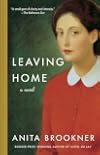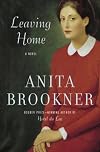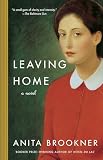
Leaving Home
by Anita Brookner
On This Page
Description
At twenty-six, Emma Roberts comes to the painful realization that if she is ever to become truly independent, she must leave her comfortable London flat and venture into the wider world. This entails not only breaking free from a claustrophobic relationship with her mother, but also shedding her inherited tendency toward melancholy. Once settled in a small Paris hotel, Emma befriends Françoise Desnoyers, a vibrant young woman who offers Emma a glimpse into a turbulent life so different from show more her own.In this exquisite new novel of self-discovery, Booker Prize-winner Anita Brookner addresses one of the great dramas of our lives: growing up and leaving home.
. show less
Tags
Recommendations
























Member Reviews
Brookner, Anita
Leaving Home
Fiction
On the surface, Leaving Home is about a woman trying to reach a decision about her future and is typical of Anita Brookner’s writing. Brookner specializes in real people, unheroic and almost insanely normal. Their outer lives may appear dull, possibly pathetic, but their inner lives are rich with observation, imagination, and projection. They turn the minor events in their lives into adventures and the major events into only temporary excursions away from their practically unassailable equilibrium. The life of the mind makes these people rich and shows up the pursuits of their more active and adventurous counterparts as being shallow and futile. Read Brookner for her character development and a break show more from writers that try too hard to stimulate only to exhaust or at best provide only a temporary escape. You will think about her characters long after you've finished her books as if you'd actually met them. Her people think and analyze; perhaps a habit we could all benefit from developing.
Recommended April 2008 show less
Leaving Home
Fiction
On the surface, Leaving Home is about a woman trying to reach a decision about her future and is typical of Anita Brookner’s writing. Brookner specializes in real people, unheroic and almost insanely normal. Their outer lives may appear dull, possibly pathetic, but their inner lives are rich with observation, imagination, and projection. They turn the minor events in their lives into adventures and the major events into only temporary excursions away from their practically unassailable equilibrium. The life of the mind makes these people rich and shows up the pursuits of their more active and adventurous counterparts as being shallow and futile. Read Brookner for her character development and a break show more from writers that try too hard to stimulate only to exhaust or at best provide only a temporary escape. You will think about her characters long after you've finished her books as if you'd actually met them. Her people think and analyze; perhaps a habit we could all benefit from developing.
Recommended April 2008 show less
"We all have one book, and we write it over and over."
This is another of Brookner's variations on the theme of the human inability to make or have a complete and satisfactory relationship, in love, and in life, with another. Emma Roberts is another of those lonely, cerebral characters whose hesitations and irresolutions so often are at the heart of Brookner's fictions.
I must admit that, while enjoying a clever perception or keen insight here and there, this work did not grip me deeply. It seems to me that I read Brookner's work these days waiting for some miraculous transformation or some movement into a whole other mode of being - but it never happens.
I really enjoyed 'Hotel du Lac' - the first of her works I read. But each subsequent show more one has left me frustrated and depressed. I could just slap the gaggle of indolent, self-pitying, pathetic protagonists that Brookner presents. They have so much - but they sit around bemoaning their loveless lives. I mean, really - they need to get off their spoilt bottoms and help themselves a little. show less
This is another of Brookner's variations on the theme of the human inability to make or have a complete and satisfactory relationship, in love, and in life, with another. Emma Roberts is another of those lonely, cerebral characters whose hesitations and irresolutions so often are at the heart of Brookner's fictions.
I must admit that, while enjoying a clever perception or keen insight here and there, this work did not grip me deeply. It seems to me that I read Brookner's work these days waiting for some miraculous transformation or some movement into a whole other mode of being - but it never happens.
I really enjoyed 'Hotel du Lac' - the first of her works I read. But each subsequent show more one has left me frustrated and depressed. I could just slap the gaggle of indolent, self-pitying, pathetic protagonists that Brookner presents. They have so much - but they sit around bemoaning their loveless lives. I mean, really - they need to get off their spoilt bottoms and help themselves a little. show less
The great thing about writing book reviews is it makes you think. The great thing about reading Anita Brookner is she really makes you think...and then want to talk to someone about what you've read.
Thomas at My Porch and Simon of Savidge Reads are co-hosting International Anita Brookner Day (http://brooknerday.blogspot.com)this Saturday 16 July. They remind us that "thirty years ago ...Anita Brookner had her first novel, the aptly titled A Start in Life (or The Debut in the U.S.) published at the tender age of 53." They're encouraging everyone to read and review her work.
Well, thirty years ago I was twenty and probably about to read Anita Brookner for the first time...I had in fact just left home. I haven't read Anita Brookner for show more yonks and welcomed the return. Leaving Home is one of Brookner's more recent titles and how curious and spooky that I should choose it from the library shelf after all these years.
Thomas is quite correct. There really is no excuse not to read an Anita Brookner - they are mostly under 200 pages and a relatively easy read. I polished off Leaving Home in less than a week but was left with a slightly maudlin feeling - or one of deep melancholy. Don't get me wrong - I tend to lean towards the melancholy in terms of taste, but this time I was feeling a bit impatient and disaffected with it. "Where's the drama?" I wanted to scream - reminiscent of my colleagues' John and Billy - who won't mind being called old (in the nicest sense of the word) friends/screenwriting lecturers from AFTRS days.
Peta Mayer says there are ten things you should expect from an Anita Brookner novel - my review is probably a reflection of Point Number 5 - Expect to see a reflection of yourself, not necessarily in the best light!
I was forced to reflect on my feelings...something which I think we should do more of....really critically analyse our responses to things. Why was I so disaffected? What is great writing after all? Had perhaps Anita Brookner drawn a very accurate depiction of a character that was perhaps just a little too close to the bone for me? What were my thoughts and feelings when I made the momentous decision to leave home? What was I hoping to achieve? What had I made of my life? Had I really rebelled or had I conformed in the end? And was that a character fault or the way of all things?
My memory of Anita Brookner's work is that she really hones in on one character's experience. It becomes at times somewhat claustrophobic - particularly if the characters don't do much or are great thinkers...which is the case in this instance. Our main character in Leaving Home is Emma. Emma is a writer reflecting on her journey to this point. The novel opens with her remembering a dream from her youth (there's another one of Peta's points no doubt - Point Number 9 - Freud). The dream points to the necessity of Emma leaving home in order to carve out, she hopes, a less sad and lonely existence than that of her widowed mother.
Emma is the epitome of Englishness. What do I mean by that? Well she is unfailingly polite, restrained, tactful, discrete. Emma writes thank you letters. Need I say more? I do not think Brookner chose her name lightly - Jane Austen's Emma must be one of the most famous character's in English literature - and yet Brookner's Emma is, I think, very different. Emma is anxious to leave home gracefully - "It would have to be managed, and managed, if possible, without disloyalty, more or less invisibly, above all in good faith."
Emma is an only child and a daughter - which can bring the double handicap of being expected to be very good - and whilst she cares genuinely for her mother's feelings, she wrestles with the expectation of her uncle to be her mother's supporter and provider. Emma in short needs to rebel. But, dear reader, Emma is English. People who queue find it hard to rebel. She settles on studying classical garden design, is offered a scholarship in France and away she goes, in search of "another source of authority, another agent of influence." Where better to learn to rebel than to ensconce herself in Paris - the very home of revolution?
We then witness Emma's various attempts to seek out real and/or satisfying relationships both with members of the opposite sex and her own sex. Of all the relationships, her friendship with the aptly named Francoise is the most complex and challenging. Complex because Francoise is almost a reflection of herself but not quite. Francoise is also an only child and a daughter. But Francoise could almost be the French version of Jane Austen's Emma. Whilst not beautiful, she is certainly striking and "electric with an energy that made her presence in the library dangerously welcome." Francoise is not a match-maker as such, but is certainly keen to see Emma "break out" and find an "amoreuse". Francoise only handicap is her controlling mother, who is keen to marry her off to the local prize beau - "Jean-Charles - a pale, slightly corpulent man of indeterminate age." The relationship is challenging because, whilst Francoise is an agent of influence and change, her authority becomes a threat to Emma's own self-determination.
It would spoil the book if I told you too much more. There is drama - eventually - in Leaving Home. Brookner saves it til the very end. It wasn't til this passage that my heart fluttered in recognition of the Brookner of yore..."It takes a kind of genius to save one's own life, the sort of genius that I so signally lacked." Now things were getting interesting! What would happen next?
For me Brookner's strength is her great depiction of character. Emma is by no stretch of the imagination a conventional hero. She says as much about herself and I don't think it would take too much away to quote some of the novel's last few lines....
"Not everyone is born to fulfil an heroic role. The only realistic ambition is to live in the present. And sometimes, quite often in fact, this is more than enough to keep one busy."
What do you think? Should we all be legends in our own lunchtime? Is Emma a victim of her Englishness which she can never escape? Or her cloistered upbringing? Or her sex? Is she a victim or a hero? Is she Anita Brookner's alter ego wishing she had been Simone de Beauvoir but rather glad she wasn't? And yes I know that is very naughty of me to say - I am being deliberately provocative, boys and girls! Who else has read She came to Stay - funny how the heroine is called Francoise - non? C'mon - what's your take on this slim but tardis-like novel? show less
Thomas at My Porch and Simon of Savidge Reads are co-hosting International Anita Brookner Day (http://brooknerday.blogspot.com)this Saturday 16 July. They remind us that "thirty years ago ...Anita Brookner had her first novel, the aptly titled A Start in Life (or The Debut in the U.S.) published at the tender age of 53." They're encouraging everyone to read and review her work.
Well, thirty years ago I was twenty and probably about to read Anita Brookner for the first time...I had in fact just left home. I haven't read Anita Brookner for show more yonks and welcomed the return. Leaving Home is one of Brookner's more recent titles and how curious and spooky that I should choose it from the library shelf after all these years.
Thomas is quite correct. There really is no excuse not to read an Anita Brookner - they are mostly under 200 pages and a relatively easy read. I polished off Leaving Home in less than a week but was left with a slightly maudlin feeling - or one of deep melancholy. Don't get me wrong - I tend to lean towards the melancholy in terms of taste, but this time I was feeling a bit impatient and disaffected with it. "Where's the drama?" I wanted to scream - reminiscent of my colleagues' John and Billy - who won't mind being called old (in the nicest sense of the word) friends/screenwriting lecturers from AFTRS days.
Peta Mayer says there are ten things you should expect from an Anita Brookner novel - my review is probably a reflection of Point Number 5 - Expect to see a reflection of yourself, not necessarily in the best light!
I was forced to reflect on my feelings...something which I think we should do more of....really critically analyse our responses to things. Why was I so disaffected? What is great writing after all? Had perhaps Anita Brookner drawn a very accurate depiction of a character that was perhaps just a little too close to the bone for me? What were my thoughts and feelings when I made the momentous decision to leave home? What was I hoping to achieve? What had I made of my life? Had I really rebelled or had I conformed in the end? And was that a character fault or the way of all things?
My memory of Anita Brookner's work is that she really hones in on one character's experience. It becomes at times somewhat claustrophobic - particularly if the characters don't do much or are great thinkers...which is the case in this instance. Our main character in Leaving Home is Emma. Emma is a writer reflecting on her journey to this point. The novel opens with her remembering a dream from her youth (there's another one of Peta's points no doubt - Point Number 9 - Freud). The dream points to the necessity of Emma leaving home in order to carve out, she hopes, a less sad and lonely existence than that of her widowed mother.
Emma is the epitome of Englishness. What do I mean by that? Well she is unfailingly polite, restrained, tactful, discrete. Emma writes thank you letters. Need I say more? I do not think Brookner chose her name lightly - Jane Austen's Emma must be one of the most famous character's in English literature - and yet Brookner's Emma is, I think, very different. Emma is anxious to leave home gracefully - "It would have to be managed, and managed, if possible, without disloyalty, more or less invisibly, above all in good faith."
Emma is an only child and a daughter - which can bring the double handicap of being expected to be very good - and whilst she cares genuinely for her mother's feelings, she wrestles with the expectation of her uncle to be her mother's supporter and provider. Emma in short needs to rebel. But, dear reader, Emma is English. People who queue find it hard to rebel. She settles on studying classical garden design, is offered a scholarship in France and away she goes, in search of "another source of authority, another agent of influence." Where better to learn to rebel than to ensconce herself in Paris - the very home of revolution?
We then witness Emma's various attempts to seek out real and/or satisfying relationships both with members of the opposite sex and her own sex. Of all the relationships, her friendship with the aptly named Francoise is the most complex and challenging. Complex because Francoise is almost a reflection of herself but not quite. Francoise is also an only child and a daughter. But Francoise could almost be the French version of Jane Austen's Emma. Whilst not beautiful, she is certainly striking and "electric with an energy that made her presence in the library dangerously welcome." Francoise is not a match-maker as such, but is certainly keen to see Emma "break out" and find an "amoreuse". Francoise only handicap is her controlling mother, who is keen to marry her off to the local prize beau - "Jean-Charles - a pale, slightly corpulent man of indeterminate age." The relationship is challenging because, whilst Francoise is an agent of influence and change, her authority becomes a threat to Emma's own self-determination.
It would spoil the book if I told you too much more. There is drama - eventually - in Leaving Home. Brookner saves it til the very end. It wasn't til this passage that my heart fluttered in recognition of the Brookner of yore..."It takes a kind of genius to save one's own life, the sort of genius that I so signally lacked." Now things were getting interesting! What would happen next?
For me Brookner's strength is her great depiction of character. Emma is by no stretch of the imagination a conventional hero. She says as much about herself and I don't think it would take too much away to quote some of the novel's last few lines....
"Not everyone is born to fulfil an heroic role. The only realistic ambition is to live in the present. And sometimes, quite often in fact, this is more than enough to keep one busy."
What do you think? Should we all be legends in our own lunchtime? Is Emma a victim of her Englishness which she can never escape? Or her cloistered upbringing? Or her sex? Is she a victim or a hero? Is she Anita Brookner's alter ego wishing she had been Simone de Beauvoir but rather glad she wasn't? And yes I know that is very naughty of me to say - I am being deliberately provocative, boys and girls! Who else has read She came to Stay - funny how the heroine is called Francoise - non? C'mon - what's your take on this slim but tardis-like novel? show less
I always enjoy reading Anita Brookner. Her books are generally smart, concise, and a little sad. [Leaving Home] was all of those. Emma is in her early 20s on the brink of adulthood. She leaves her mother in England to live in Paris and work on a book about gardens. Emma is a quiet, solitary person. She makes only a few friends throughout the book and tries to strike out on her own. Nothing much happens, but Brookner writes beautiful sentences and I love to dwell in her writing.
This is not an exciting or particularly memorable book, but it's the kind of book that reminds me how much I love the act of reading.
This is not an exciting or particularly memorable book, but it's the kind of book that reminds me how much I love the act of reading.
Brookner's narrators often combine a Jamesian inner life with a deceptively blank external one, and Emma Roberts is a paragon of that type. An English doctoral student in the late 1970s whose restraint matches her choice of studies--classical garden design--Emma grew up isolated with a widowed, reclusive mother. "We loved each other greatly," she says, "yet so exclusive was that love that it was experienced more like anguish." Emma is studying in Paris and living as hermetically as her mother; her only acquaintances are a sexually adventurous librarian, Françoise, and a reserved young novelist, Michael. When Emma gets word that her mother has died, she rushes home to London and within weeks finds herself in a muted, epistolary power show more struggle with Françoise. Meanwhile, Emma meets Philip Hudson, a surgeon whose taciturn nature rivals her own (and recalls a less exalted Mr. Darcy). But things happen in Emma's life only to be swallowed by the deep, silent river of her shyness and her willingness to go along with what others want. This isn't an Austen novel, and even an instant of unalloyed pleasure would seem glib after several pages of Emma's sere circumspection. That circumspection makes the novel very powerful, even as Emma's passivity is sometimes so extreme it feels concocted only to justify a few more elegant sentences. But Emma is among the most delicately rendered heroines in recent fiction.
Brookner has published a novel almost every year since 1981, but the range of her audience seems as restricted as her themes. With Henry David Thoreau, she might wryly observe, "I have traveled much in Concord," having explored the whole universe in the narrow confines of a reserved, lonely heart. show less
Brookner has published a novel almost every year since 1981, but the range of her audience seems as restricted as her themes. With Henry David Thoreau, she might wryly observe, "I have traveled much in Concord," having explored the whole universe in the narrow confines of a reserved, lonely heart. show less
Brookner's narrators often combine a Jamesian inner life with a deceptively blank external one, and Emma Roberts is a paragon of that type. An English doctoral student in the late 1970s whose restraint matches her choice of studies--classical garden design--Emma grew up isolated with a widowed, reclusive mother. "We loved each other greatly," she says, "yet so exclusive was that love that it was experienced more like anguish." Emma is studying in Paris and living as hermetically as her mother; her only acquaintances are a sexually adventurous librarian, Françoise, and a reserved young novelist, Michael. When Emma gets word that her mother has died, she rushes home to London and within weeks finds herself in a muted, epistolary power show more struggle with Françoise. Meanwhile, Emma meets Philip Hudson, a surgeon whose taciturn nature rivals her own (and recalls a less exalted Mr. Darcy). But things happen in Emma's life only to be swallowed by the deep, silent river of her shyness and her willingness to go along with what others want. This isn't an Austen novel, and even an instant of unalloyed pleasure would seem glib after several pages of Emma's sere circumspection. That circumspection makes the novel very powerful, even as Emma's passivity is sometimes so extreme it feels concocted only to justify a few more elegant sentences. But Emma is among the most delicately rendered heroines in recent fiction.
Brookner has published a novel almost every year since 1981, but the range of her audience seems as restricted as her themes. With Henry David Thoreau, she might wryly observe, "I have traveled much in Concord," having explored the whole universe in the narrow confines of a reserved, lonely heart.
Leaving Home, her new novel, does nothing to expand that realm. This time around, her depressed but carefully behaved heroine is Emma Roberts, a graduate student listlessly working on a dissertation about 17th-century European gardens. Like so many despondent graduate students, she spends her days tinkering "with footnotes in an attempt to convince myself that this was a useful activity." At 26, Emma still lives at home with her mother, doesn't know what she's going to do with her life and has no promising romantic prospects.
These novels possess a strange, timeless quality: They're full of sad people who have remained somehow oblivious to the age of therapy or psychotropics. show less
Brookner has published a novel almost every year since 1981, but the range of her audience seems as restricted as her themes. With Henry David Thoreau, she might wryly observe, "I have traveled much in Concord," having explored the whole universe in the narrow confines of a reserved, lonely heart.
Leaving Home, her new novel, does nothing to expand that realm. This time around, her depressed but carefully behaved heroine is Emma Roberts, a graduate student listlessly working on a dissertation about 17th-century European gardens. Like so many despondent graduate students, she spends her days tinkering "with footnotes in an attempt to convince myself that this was a useful activity." At 26, Emma still lives at home with her mother, doesn't know what she's going to do with her life and has no promising romantic prospects.
These novels possess a strange, timeless quality: They're full of sad people who have remained somehow oblivious to the age of therapy or psychotropics. show less
My third read for this month’s Brookner in July – and possibly my favourite of the three. I was captivated by Brookner’s beautiful prose from the first sentence.
Emma Roberts is twenty six and living a fairly claustrophobic existence with her widowed mother in a London flat. Emma realises that it is time she break free from this world which includes frequent visits from her mother’s disapproving and domineering brother. Emma is a reserved young woman, who longs to be like other young women, attending parties and having lovers, and yet she seems incapable of living such a life. Offered a scholarship to study seventeenth century garden design in Paris Emma grabs her chance. Once in Paris, Emma takes a room in a small Hotel. At the show more library where she goes to work, Emma meets Francoise Desnoyers, a confident worldly young woman with whom Emma soon strikes up a friendship despite their obvious differences.
“Obedient to Francoise’s instructions I moved into a small hotel, and at last began to think of myself as a citizen, though any observer could have told from my excessive compliance, my anxiety not to infringe the rules, that I was nothing of the kind. “
Francoise herself is struggling to free herself from her own mother, a traditional woman who Francoise is obliged to visit regularly at the beautiful chateau in the countryside. Francoise enlists Emma’s help in her desire to stay in Paris as long as possible, not ready quite to bury herself in the country and live the conventional life she is supposed to. Mme Desnoyers insists that Francoise should marry the wealthy son of a family friend, whose mother will then secure their future. On a weekend visit to the Desnoyers’ country home Emma sees Francoise life with her overbearing mother in a new light, giving her a more positive view of her own. Enjoying her new found freedom in Paris Emma meets Michael with whom she begins a fairly chaste relationship, although she sometimes yearns for the comforting familiarity of her home with her mother. In Francoise’s world and especially that of her mother, women are ultimately judged by the men in their lives, their father’s or their husbands. Francoise is a modern French woman, she has a love life and an easy confidence that Emma lacks, but she is her mother’s daughter and takes a pragmatic view of her future, leaving emotion out of the question. Emma is perhaps a little surprised by the similarity in their lives
So when a family tragedy requires Emma to rush back to London, it turns her life upside down. Flitting between Paris and London, and failing to find herself really at home in either place, her relationships with others all seem quite one sided. Emma wants a man in her life, likes the idea of being married, but her relationships turn more towards friendship and companionship, while Francoise ultimately rejects love, by opting for financial security. Emma struggles to find her way – not certain where home is now.
“I knew two things simultaneously: that I was unwilling to disturb my present routine, and that I was almost used to my quiet days and to the evenings when I could look forward to Philip’s company, if he were free. I knew almost superstitiously, that one should never go back, never retrace one’s steps in the hope that all would be as before, for it never is.”
Emma is not an entirely unsympathetic Brookner characters, but she is typical in her whiney introspectiveness, Emma is slightly cold, and her reserve puts her at a distance from the reader. However Brookner’s elegiac final line in this novel gives raise to some hope for her.
This really is a really lovely Brookner novel. Anita Brookner’s wonderful sense of place is again in evidence, I fairly gulped it down. show less
Emma Roberts is twenty six and living a fairly claustrophobic existence with her widowed mother in a London flat. Emma realises that it is time she break free from this world which includes frequent visits from her mother’s disapproving and domineering brother. Emma is a reserved young woman, who longs to be like other young women, attending parties and having lovers, and yet she seems incapable of living such a life. Offered a scholarship to study seventeenth century garden design in Paris Emma grabs her chance. Once in Paris, Emma takes a room in a small Hotel. At the show more library where she goes to work, Emma meets Francoise Desnoyers, a confident worldly young woman with whom Emma soon strikes up a friendship despite their obvious differences.
“Obedient to Francoise’s instructions I moved into a small hotel, and at last began to think of myself as a citizen, though any observer could have told from my excessive compliance, my anxiety not to infringe the rules, that I was nothing of the kind. “
Francoise herself is struggling to free herself from her own mother, a traditional woman who Francoise is obliged to visit regularly at the beautiful chateau in the countryside. Francoise enlists Emma’s help in her desire to stay in Paris as long as possible, not ready quite to bury herself in the country and live the conventional life she is supposed to. Mme Desnoyers insists that Francoise should marry the wealthy son of a family friend, whose mother will then secure their future. On a weekend visit to the Desnoyers’ country home Emma sees Francoise life with her overbearing mother in a new light, giving her a more positive view of her own. Enjoying her new found freedom in Paris Emma meets Michael with whom she begins a fairly chaste relationship, although she sometimes yearns for the comforting familiarity of her home with her mother. In Francoise’s world and especially that of her mother, women are ultimately judged by the men in their lives, their father’s or their husbands. Francoise is a modern French woman, she has a love life and an easy confidence that Emma lacks, but she is her mother’s daughter and takes a pragmatic view of her future, leaving emotion out of the question. Emma is perhaps a little surprised by the similarity in their lives
So when a family tragedy requires Emma to rush back to London, it turns her life upside down. Flitting between Paris and London, and failing to find herself really at home in either place, her relationships with others all seem quite one sided. Emma wants a man in her life, likes the idea of being married, but her relationships turn more towards friendship and companionship, while Francoise ultimately rejects love, by opting for financial security. Emma struggles to find her way – not certain where home is now.
“I knew two things simultaneously: that I was unwilling to disturb my present routine, and that I was almost used to my quiet days and to the evenings when I could look forward to Philip’s company, if he were free. I knew almost superstitiously, that one should never go back, never retrace one’s steps in the hope that all would be as before, for it never is.”
Emma is not an entirely unsympathetic Brookner characters, but she is typical in her whiney introspectiveness, Emma is slightly cold, and her reserve puts her at a distance from the reader. However Brookner’s elegiac final line in this novel gives raise to some hope for her.
This really is a really lovely Brookner novel. Anita Brookner’s wonderful sense of place is again in evidence, I fairly gulped it down. show less
Members
- Recently Added By
Lists

Books Read in 2025
4,090 works; 97 members
Author Information

35+ Works 12,754 Members
Anita Brookner was born in London, England on July 16, 1928. She received a BA in history from King's College London in 1949 and a doctorate in art history from the Courtauld Institute of Art in 1953. She went on to lecture in art at Reading University and the Courtauld Institute, where she specialized in eighteenth- and nineteenth-century French show more art. She became the first woman to be named as Slade Professor of Art at Cambridge University in 1967. Her first novel, A Start in Life, was published in 1981. Some of her other works include The Bay of Angels, The Next Big Thing, The Rules of Engagement, Latecomers, Leaving Home, Incidents in the Rue Laugier, Look at Me, and Strangers. Hotel du Lac won the Booker Prize for Fiction in 1984 and was adapted for television in 1986. She has also written scholarly works about Jacques Louis David, Jean Baptiste Greuze, and Jean-Antoine Watteau. She died on March 10, 2016 at the age of 87. (Bowker Author Biography) show less
Awards and Honors
Distinctions
Common Knowledge
- People/Characters
- Emma Roberts; Françoise
- Important places
- Paris, France
- First words
- Suddenly, from the depths of an otherwise peaceful night, a name erupted from the past: Dolly Edwards, my mother's friend, a smiling woman with very red lips and a fur coat.
- Blurbers
- Roberts, Michele
Classifications
Statistics
- Members
- 322
- Popularity
- 98,379
- Reviews
- 15
- Rating
- (3.49)
- Languages
- English, French, Italian
- Media
- Paper, Audiobook, Ebook
- ISBNs
- 19
- ASINs
- 5