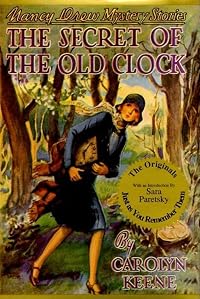
The Secret of the Old Clock (Original Text)
by Carolyn Keene
Nancy Drew Original Text (1), Nancy Drew (Original Text — 1)
On This Page
Description
Nancy Drew's keen mind is tested when she searches for a missing will.Tags
Recommendations





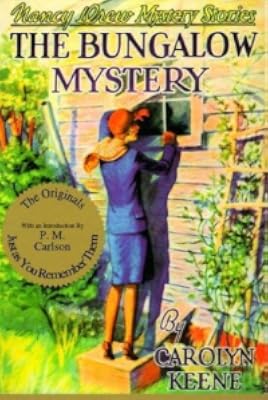
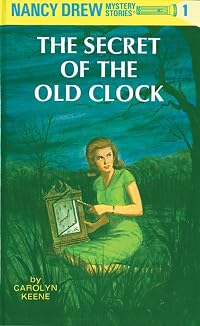

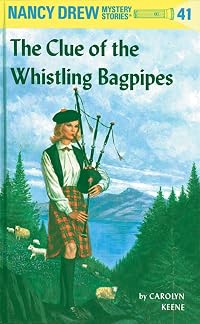
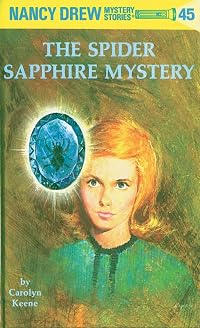
Member Reviews
I read this as part of a reading challenge that I issued to the chapter book readers at my library, and I had forgotten how much I love Nancy Drew. Yes, she's too good to be true, and kind of a control freak, but she's also pretty catty and gutsy. It's hard to believe this book is over 80 years old, because, other than some old-fashioned vocabulary, the story still works today. Will I read the rest of the series again? I don't know, but I will hold Nancy Drew in my heart with renewed fondness.
Since the publication of The Secret of the Old Clock in 1930, the adventures of Nancy Drew have become an almost ubiquitous fixture in the landscape of American girlhood: continually in print, frequently revised and updated, and always immensely influential. I vividly recall the long row of yellow spines that was to be found on the shelf under "Keene, Carolyn" at my public library, and my sense that these books were somehow important. But despite my earnest desire to be a part of the Nancy Drew phenomenon, to share in the pleasure that all my friends seemed to experience with her, I was never able to take the "girl detective" entirely to heart. The narratives always seemed so bland, the language so dry, and each installment felt like a show more cardboard cut-out of the same basic story. I read Nancy Drew, of course, but I eventually concluded that I just wasn't a Nancy Drew girl...
Imagine my surprise, many years later, when Applewood Books began to reprint the original Nancy Drew Mystery Stories, as they appeared in the 1930s, and I discovered that the yellow-covered volumes of my childhood were in fact rewritten and condensed versions. The original edition of The Secret of the Old Clock had 25 chapters (unlike the 20-chapter version that has been in print since 1959), and featured richer language, charming period details - Nancy has a golden bob, drives a blue roadster, and has many "chums" - and an exciting narrative that somehow felt more convincing than the rewrite.
Sixteen-year-old Nancy (eighteen in the rewrite) tackles her first mystery with aplomb, locating the missing second will of Josiah Crowley, thereby defeating the social-climbing Topham family, who benefited from the first will, and aiding the charming (and very deserving) Horner sisters, Allie and Grace. An entertaining, if somewhat predictable story, this original edition of The Secret of the Old Clock appeals to me in ways that the 1959 version of my childhood did not. The narrative is more engaging, the language has character, and the vocabulary has a distinctly period appeal.
Sadly, the original also contains a number of very unfortunate social anachronisms, from Nancy's rather classist assessment of the "quality" of those around her, to the overtly racist depiction of Jeff Tucker, the "Negro" caretaker Nancy encounters in the course of her adventures. This last is particularly troublesome, involving as it does the stereotypical speech patterns assigned to African-Americans in vintage children's books, and a scene in which Nancy (all of sixteen years old) lectures a man old enough to be her grandfather. The inclusion of these ugly elements - however realistically they mirror the times - presents me with something of a dilemma: I cannot recommend the rewrites from a narrative perspective, nor can I recommend the originals from a social one. Ironically, given the interest in vintage series that these Applewood reprints have engendered in me, and the enjoyment I have experienced while reading them, it would appear that I am still not a true Nancy Drew girl...
One final note, for those interested in the details of publication: the Applewood facsimile edition includes the plates by Russell H. Tandy, the original cover art, and the advertisements for other series that would have appeared on the reverse side of the wrapper. It also features an introduction by Sara Paretsky, the author of the V.I. Warshawski mystery novels.
Addendum: Having now reread this Applewood Books edition, in order to continue on with the series - I have been stockpiling the original editions for some time now, intending to indulge in a vintage Nancy Drew extravaganza - I was struck yet again by the charm of some of the period details, and the ugliness of others. The scenes involving African-American caretaker Jeff Tucker, mentioned above, stood out in this regard, but so too did the characterization of the nouveau-riche Tophams. There is a definite enforcement of social hierarchy here - something I have not noticed in similar series for boys, such as The Hardy Boys. show less
Imagine my surprise, many years later, when Applewood Books began to reprint the original Nancy Drew Mystery Stories, as they appeared in the 1930s, and I discovered that the yellow-covered volumes of my childhood were in fact rewritten and condensed versions. The original edition of The Secret of the Old Clock had 25 chapters (unlike the 20-chapter version that has been in print since 1959), and featured richer language, charming period details - Nancy has a golden bob, drives a blue roadster, and has many "chums" - and an exciting narrative that somehow felt more convincing than the rewrite.
Sixteen-year-old Nancy (eighteen in the rewrite) tackles her first mystery with aplomb, locating the missing second will of Josiah Crowley, thereby defeating the social-climbing Topham family, who benefited from the first will, and aiding the charming (and very deserving) Horner sisters, Allie and Grace. An entertaining, if somewhat predictable story, this original edition of The Secret of the Old Clock appeals to me in ways that the 1959 version of my childhood did not. The narrative is more engaging, the language has character, and the vocabulary has a distinctly period appeal.
Sadly, the original also contains a number of very unfortunate social anachronisms, from Nancy's rather classist assessment of the "quality" of those around her, to the overtly racist depiction of Jeff Tucker, the "Negro" caretaker Nancy encounters in the course of her adventures. This last is particularly troublesome, involving as it does the stereotypical speech patterns assigned to African-Americans in vintage children's books, and a scene in which Nancy (all of sixteen years old) lectures a man old enough to be her grandfather. The inclusion of these ugly elements - however realistically they mirror the times - presents me with something of a dilemma: I cannot recommend the rewrites from a narrative perspective, nor can I recommend the originals from a social one. Ironically, given the interest in vintage series that these Applewood reprints have engendered in me, and the enjoyment I have experienced while reading them, it would appear that I am still not a true Nancy Drew girl...
One final note, for those interested in the details of publication: the Applewood facsimile edition includes the plates by Russell H. Tandy, the original cover art, and the advertisements for other series that would have appeared on the reverse side of the wrapper. It also features an introduction by Sara Paretsky, the author of the V.I. Warshawski mystery novels.
Addendum: Having now reread this Applewood Books edition, in order to continue on with the series - I have been stockpiling the original editions for some time now, intending to indulge in a vintage Nancy Drew extravaganza - I was struck yet again by the charm of some of the period details, and the ugliness of others. The scenes involving African-American caretaker Jeff Tucker, mentioned above, stood out in this regard, but so too did the characterization of the nouveau-riche Tophams. There is a definite enforcement of social hierarchy here - something I have not noticed in similar series for boys, such as The Hardy Boys. show less
The whole thing is worth reading for lulz. It's so rose-tinted to the point of feeling artificial. Nancy Drew is basically Crime-Solving Barbie. Happy endings all around.
Aren't the Topmans going to contest though that the notebook was obtained through illegal means? Or in this era, Nancy's "gee officer, I was just looking at it and couldn't put it back before getting caught" story hold up?
Aren't the Topmans going to contest though that the notebook was obtained through illegal means? Or in this era, Nancy's "gee officer, I was just looking at it and couldn't put it back before getting caught" story hold up?
This is exactly what I was looking for to continue my fluff mystery audiobooks for the car. It was cheesy and fun just like I expected it to be. I loved that the mystery wasn't a who done it but just that, a mystery. There was not a lot of twists and turns but since this is the first Nancy Drew book, I'm guessing Keene just wanted readers to get an idea of Nancy and the settings for her mysteries. By the end of the first disc, I had a feeling what the solution was going to be but this time I really didn't mind. I wanted mindless fluff and I got it. I really want to continue listening to these in the car.
I found these reprints of the 1930 versions of the Nancy Drew series, and read them side-by-side with the 1950s versions. What a fascinating exercise!
The standout difference, aside from the really appalling portrayal of the one black person in the early edition, was the addition in the 50s of a number of incidents that seem to be intended to heighten the tension, including an orphan child and her elderly caretakers who desperately need a chunk of the inheritance and a dog attack that consists of angry barking and not much more, and a drastically reduced emphasis on the young, independent although poor sisters who support themselves. Plus the oddly apropos-of-nothing insertion of household chores into Nancy's adventures - they'd probably show more not really stand out on their own, but when read against the original scenes, they seem like bits of Leave it to Beaver spliced into the frame.
I liked Nancy Drew as a kid and I like her now, but I think I'd recommend the 30s editions to any young girl, as long as someone was there to have a serious conversation about the portrayal of minorities in media. The treatment of black people is appalling but obvious as an anvil to the skull - the inserted 1950s values about the place of women are much more subtle and disturbing. show less
The standout difference, aside from the really appalling portrayal of the one black person in the early edition, was the addition in the 50s of a number of incidents that seem to be intended to heighten the tension, including an orphan child and her elderly caretakers who desperately need a chunk of the inheritance and a dog attack that consists of angry barking and not much more, and a drastically reduced emphasis on the young, independent although poor sisters who support themselves. Plus the oddly apropos-of-nothing insertion of household chores into Nancy's adventures - they'd probably show more not really stand out on their own, but when read against the original scenes, they seem like bits of Leave it to Beaver spliced into the frame.
I liked Nancy Drew as a kid and I like her now, but I think I'd recommend the 30s editions to any young girl, as long as someone was there to have a serious conversation about the portrayal of minorities in media. The treatment of black people is appalling but obvious as an anvil to the skull - the inserted 1950s values about the place of women are much more subtle and disturbing. show less
Nancy Drew is the girl detective of Riverside. When she almost hits a young girl, she meets the family members of Josiah Crowley, a wealthy older man who has recently passed away. She learns that he had promised multiple friends and family that he would leave them money in his will but instead it is discovered that he has left all of his money to the Tophams - a community family who looks down on other members of society. There are rumors that Josiah wrote a new will that excludes the Tophams and takes care of those he promised care to. Nancy takes on the mystery of finding the new will and helping her new friends.
I read these Nancy Drew novels when I was younger and they helped develop my love of reading. The narrator does a wonderful show more job of bringing Nancy's adventures to life. Another big plus was the great mysterious cheesy music that plays at the height of mystery and danger. All in all, I loved going back and re-reading these mysteries and the sense of nostalgia was perfect. show less
I read these Nancy Drew novels when I was younger and they helped develop my love of reading. The narrator does a wonderful show more job of bringing Nancy's adventures to life. Another big plus was the great mysterious cheesy music that plays at the height of mystery and danger. All in all, I loved going back and re-reading these mysteries and the sense of nostalgia was perfect. show less
Reread the first Nancy Drew mystery last night and oh, what a fun couple of hours that was!
I am seriously thinking of revisiting all the way up to #54 before reading the the last two volumes published by Grosset & Dunlap after I stopped reading them...and before those freaks at Simon & Schuster got hold of her and started putting out new stories with a new Nancy...in paperback! (It is probably unfair of me to say "freaks" since I never read any of the New Nancy Drew series, and since many of the the books I read in the seventies were 1960s sanitized re-writes of the edgier books originally published anyway. But still...they put Nancy in paperback! That is just so wrong!)
Re-write or original, I had forgotten how nosy and meddlesome show more Nancy was before people starting actually requesting her help later in the series!
Come to think of it, those meddlesome kids, Daphne and Velma were basically just each one-half of the fabulously attractive and brilliantly smart Nancy Drew. (Which means Fred is Ned Nickerson, and Scooby and Shaggy are....Bess and George???)
Five Stars because that is what my 10-year old self would have rated it, if GoodReads had been around back then. show less
I am seriously thinking of revisiting all the way up to #54 before reading the the last two volumes published by Grosset & Dunlap after I stopped reading them...and before those freaks at Simon & Schuster got hold of her and started putting out new stories with a new Nancy...in paperback! (It is probably unfair of me to say "freaks" since I never read any of the New Nancy Drew series, and since many of the the books I read in the seventies were 1960s sanitized re-writes of the edgier books originally published anyway. But still...they put Nancy in paperback! That is just so wrong!)
Re-write or original, I had forgotten how nosy and meddlesome show more Nancy was before people starting actually requesting her help later in the series!
Come to think of it, those meddlesome kids, Daphne and Velma were basically just each one-half of the fabulously attractive and brilliantly smart Nancy Drew. (Which means Fred is Ned Nickerson, and Scooby and Shaggy are....Bess and George???)
Five Stars because that is what my 10-year old self would have rated it, if GoodReads had been around back then. show less
Members
- Recently Added By
Author Information

928+ Works 202,108 Members
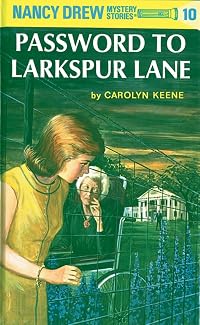
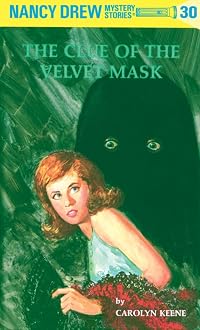
Carolyn Keene was the pseudonym that Mildred Wirt Benson and Walter Karig used to write Nancy Drew books. The idea of Nancy Drew came from Edward Stratemeyer in 1929. He also had other series, that included the Hardy Boys, but he died in 1930 before the Nancy Drew series became famous. His daughters, Harriet and Edna, inherited his company and show more maintained Nancy Drew having Mildred Wirt Benson, the original Carolyn Keene, as the principal ghostwriter. During the Depression, they asked Benson to take a pay cut and she refused, which is when Karig wrote the books. Karig's Nancy Drew books were Nancy's Mysterious Letter, The Sign of the Twisted Candles, and Password to Larkspur Lane. He was fired from writing more books because of his refusal to honor the request that he keep his work as Carolyn Keene a secret. He allowed the Library of Congress to learn of his authorship and his name appeared on their catalog cards. Afterwards, they rehired Benson and she wrote until her last Nancy Drew book (#30) was written in 1953, Clue of the Velvet Mask. Harriet and Edna Stratemeyer also contributed to the Nancy Drew series. Edna wrote plot outlines for several of the early books and Harriet, who claimed to be the sole author, had actually outlined and edited nearly all the volumes written by Benson. The Stratemeyer Syndicate had begun to make its writers sign contracts that prohibited them from claiming any credit for their works, but Benson never denied her writing books for the series. After Harriet's death in 1982, Simon and Schuster became the owners of the Stratemeyer Syndicate properties and in 1994, publicly recognized Benson for her work at a Nancy Drew conference at her alma mater, the University of Iowa. Now, Nancy Drew has several ghostwriters and artists that have contributed to her more recent incarnations. (Bowker Author Biography) show less
Some Editions
Series


Work Relationships
Is retold in
Common Knowledge
- Canonical title
- The Secret of the Old Clock (Original Text) (Original Text)
- Original publication date
- 1930
- People/Characters
- Nancy Drew; Helen Corning; Abigail Rowen; Allie Horner; Grace Horner; Carson Drew
- Important places
- River Heights, USA; Moon Lake
- Disambiguation notice
- The texts of the Nancy Drew books were heavily revised beginning in 1959, usually reducing the length as well as modernising the story.
This work is the original, 1930 version, illustrated by Russell Tandy.
<... (show all)br>• The Applewood Facsimile edition is the same 1930 text and illustrations under ISBN 1557091552.
• Public domain editions of the book are also the 1930 version.
Classifications
Statistics
- Members
- 1,187
- Popularity
- 21,052
- Reviews
- 46
- Rating
- (3.76)
- Languages
- English
- Media
- Paper
- ISBNs
- 1
- ASINs
- 4