On This Page
Tags
Member Reviews
If you've ever heard the name John Henry and thought, “That’s the guy who raced a steam drill, right?” then Tom Bonham’s John Henry is a solid, no-frills retelling that brings that legendary moment to life in a fresh but familiar way. It’s a story steeped in American folklore—about human grit, dignity in labor, and the moment machines started creeping into spaces once ruled by muscle, sweat, and rhythm. And Bonham captures that spirit with sincerity.
The book follows John Henry, a steel-driving man known not just for his brute strength but for his steady hand and quiet resolve. Set during the expansion of the railroads—when progress meant progress, even if it came at the expense of working men—the story kicks into high show more gear when a steam-powered drill rolls onto the job site. The machine isn’t just a tool; it’s a threat. And John Henry, being John Henry, steps up to challenge it in an epic contest of man versus machine.
Bonham’s writing is straightforward and accessible, which works well for a story that’s meant to feel like it’s being passed down around a campfire. There’s a musicality to the rhythm of the prose—fitting, since John Henry’s hammer swings like a metronome, a beat that’s almost audible as you read. That’s one of the book’s stronger points: it makes labor feel noble, even poetic. You can almost hear the clang-clang of steel on rock, and for that, the atmosphere earns praise.
Where the book stumbles a bit is in character depth. John Henry himself is compelling, but he’s painted in broad, almost mythical strokes—strong, proud, unshakable. That’s part of the legend, sure, but a few more personal glimpses—his doubts, dreams, or relationships with the other men—could have made him feel more human and less like a symbol. The supporting characters are mostly background noise, which is a missed opportunity. These were real workers, facing real fears about obsolescence and survival; giving them voices could have added emotional weight.
The pacing is mostly solid, though the build-up to the race feels a little rushed. You’re eager to get to that showdown, but once it starts, it ends almost too quickly. It would’ve been great to sit in that moment a little longer—to feel the tension build, the crowd’s energy, the unbearable weight of what’s at stake.
That said, Bonham clearly respects the source material. This isn’t an edgy modern reimagining; it’s a heartfelt tribute to a figure who represents resilience in the face of industrial change. For younger readers or those new to the legend, it’s a great introduction. For folklore fans, it won’t replace the raw power of the original ballads or more layered retellings, but it holds its own as a clean, reverent take.
Final Thoughts:
John Henry by Tom Bonham is a sturdy, well-intentioned retelling that honours the spirit of the legend. It’s not ground breaking, but it’s earnest and rhythmic in a way that pays tribute to the heartbeat of the original tale. If it had dug a little deeper into the man behind the myth, it could’ve been a true classic. As it stands, it’s a satisfying read—especially if you’re in the mood for a story about pride, perseverance, and the sound of steel meeting rock. show less
The book follows John Henry, a steel-driving man known not just for his brute strength but for his steady hand and quiet resolve. Set during the expansion of the railroads—when progress meant progress, even if it came at the expense of working men—the story kicks into high show more gear when a steam-powered drill rolls onto the job site. The machine isn’t just a tool; it’s a threat. And John Henry, being John Henry, steps up to challenge it in an epic contest of man versus machine.
Bonham’s writing is straightforward and accessible, which works well for a story that’s meant to feel like it’s being passed down around a campfire. There’s a musicality to the rhythm of the prose—fitting, since John Henry’s hammer swings like a metronome, a beat that’s almost audible as you read. That’s one of the book’s stronger points: it makes labor feel noble, even poetic. You can almost hear the clang-clang of steel on rock, and for that, the atmosphere earns praise.
Where the book stumbles a bit is in character depth. John Henry himself is compelling, but he’s painted in broad, almost mythical strokes—strong, proud, unshakable. That’s part of the legend, sure, but a few more personal glimpses—his doubts, dreams, or relationships with the other men—could have made him feel more human and less like a symbol. The supporting characters are mostly background noise, which is a missed opportunity. These were real workers, facing real fears about obsolescence and survival; giving them voices could have added emotional weight.
The pacing is mostly solid, though the build-up to the race feels a little rushed. You’re eager to get to that showdown, but once it starts, it ends almost too quickly. It would’ve been great to sit in that moment a little longer—to feel the tension build, the crowd’s energy, the unbearable weight of what’s at stake.
That said, Bonham clearly respects the source material. This isn’t an edgy modern reimagining; it’s a heartfelt tribute to a figure who represents resilience in the face of industrial change. For younger readers or those new to the legend, it’s a great introduction. For folklore fans, it won’t replace the raw power of the original ballads or more layered retellings, but it holds its own as a clean, reverent take.
Final Thoughts:
John Henry by Tom Bonham is a sturdy, well-intentioned retelling that honours the spirit of the legend. It’s not ground breaking, but it’s earnest and rhythmic in a way that pays tribute to the heartbeat of the original tale. If it had dug a little deeper into the man behind the myth, it could’ve been a true classic. As it stands, it’s a satisfying read—especially if you’re in the mood for a story about pride, perseverance, and the sound of steel meeting rock. show less
 This review was written for LibraryThing Early Reviewers.
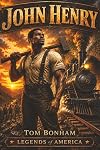
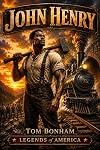
A retelling of the American Folktale. Includes information about different variations and origin. I really enjoyed the drawings too. Overall a great book. Except John Henry was supposed to be tunneling through the mountain. The drawings show him hitting the ground. Oops.
I received this book from LibraryThing as an Early Reviewer. I work in an elementary school library and regularly read children's books.
I received this book from LibraryThing as an Early Reviewer. I work in an elementary school library and regularly read children's books.
This review was written for LibraryThing Early Reviewers.Members
- Recently Added By
Author Information
2 Works 10 Members
Series

Classifications
Statistics
- Members
- 6
- Popularity
- 3,044,972
- Reviews
- 2
- Rating
- (4.00)
- Languages
- English
- Media
- Paper, Ebook
- ISBNs
- 1
- ASINs
- 2