
On This Page
Description
Fiction. Horror. HTML:In The Shawshank Redemption, a man convicted of a bloody murder lives in a prison brutally ruled by a sadistic warden and secretly run by a con who knows all the ropes and pulls all the strings. He has more brains than anyone else in the sinister slammer, and has a diabolically cunning plan of revenge that no one can guess until it's far too late.Tags
Recommendations



Member Reviews
Primavera de esperanza aterna:Rita Hayworth y la redención de Shawshank (igual conocido como Sueños de fuga/Sueños de libertad) 4/5
"Escribir sobre uno mismo se parece muchíisimo a hundir una vara en el agua clara de un río y remover el légamo del fondo."
En esta historia tenemos como narrador y protagonista a Red, el hombre que se encarga de conseguir las cosas en la prisión de Shawshank, quien nos cuenta el vuelco que da su vida con la llegada Andy, un banquero acusado de asesinato.
"No es una hoja de papel lo que hace al hombre, ni la carcel lo que los deshace."
Lo poco que conocemos de la relación entre Andy y Red es de los mejor y más interesante de este cuento, se crea una complicidad y un conocimiento del otro como pocas show more veces puede suceder, además de una influencia entre ellos que, de no existir, tal vez el final sería muy distinto.
"Si quitas a un hombre la libertad yle enseñas a vivir en una celda parace perder la capacidad de pensar en otras dimensiones."
De los cuatro cuentos en este es donde mejor se desarrollan los personajes, llegamos a conocerlos y a tomarles cariño (no me importa lo adorable y bueno que a todos les parezca Andy, Red es la onda de esta historia), y el hilo de toda la trama es la esperanza: tenerla, mantenerla, perderla, recuperarla y vivirla...
Verano de corrupción:El alumno aventajado (igual conocido como El aprendiz) 3/5
A veces el pasado no se queda tranquilo ¿Por qué, si no, la gente estudia historia?
Aquí conocemos a Todd un chico de 13 años, un inquietante e inteligente chico, y a Kurt Dussander/Arthur Denker,un criminal de guerra nazi refugiado en los Estados Unidos. Por momentos nos encontramos con pasajes que sonfuertes y estan muy bien narrados, enganchan con la historia, pero al menos más de la mitad de la historia son sólo transiciones para llegar al gran final(que por cierto, es excelente).
A partir de los últimos 10 capitulos fue cuando comenó realmente a interesarme, los 19 capítulos anteriores se sintieron como un largo preludio, lo mejor inicia cuando Todd y Dussander comienzan a intercambiar y mezclar sus roles en la relación, perdiendo el control de sí mismos y desdibujando en gran parte las diferencias que los separan y acrecentando los secretos y el poder que los unen aunque lo verdaderamente atrapante es a partir de que Todd y Dussander comienzan a asesinar .
Los padres y consejero de Tod fue lo más desesperante de la historia, como que siempre que aparecían estaban fuera de lugar. El otro aspecto que realmente fue molesto es la abrupta aparición de Heisel, demasiado forzada y de repente decir ¿Quién demonios son estas personas?Claro que cuando llega al hospital y conoces un poco su historia puedes adivinar que pasará y su razón de existir, pero antes de eso son 20 páginas (aprox.) en que no entiendes que demonios hace aquí .
Otoño de inocencia:El cuerpo (igual conocido como Cuenta conmigo) 3/5
"Tus amigos te hunden Gordie ¿Es que no lo sabes? Tus amigos son como naufragos ahogándose que se agarran a tus piernas. No puedes salvarles. Sólo puedes hundirte con ellos."
Aquí tenemos a cuatro niños (Gordie Lachance, Chris Chambers, Teddy Duchamp y Vern Tessio) que se aventuran al bosque para encontrar el cuerpo de Ray Bower, un niño desparecido.
"Todo estaba allí y en torno nuestro, Sabíamos exactamente quienes éramos y a donde íbamos. Era grandioso"
Aquí mis expectativas eran muy altas y toda la historia la sentí realmente lenta, como que nada pasaba el 90% del tiempoaun cuando encontraron el cuerpo fue poco impactante, lo verdaderamente interesante fue la pelea que se dio por llevarselo
"La verdad siempre la identificas poruqe cuando te hieres a ti mismo o a algún otro con ella, siempre brota la sangre"
La relación entre Gordie y Chris es muy similar a la de Andy y Red, uno es el experimentado el otro el inteligente, uno es el que sabe mantener siempre la cama y el otro trata de entender y razonar, uno es invisible y el otro (le guste o no) siempre está en la mira...pero se complementan y apoyan.
"Las cosas más importantes son siempre las más díficles de contar. Son cosas de las que uno se avergüenza,porque las palabras las degradan. Al formular de manera verbal algo que mentalmente parecía ilimitado, lo reducimos a tamaño natural."
Lo mejor del cuento fue como cambiaron los cuatro niños en su travesíay cuando casi los arrollá el tren , lo peor el final de los cuatro que asesinaran a Chris cuando al fin estaba trabajando para poder salir de Castle Rock y quitarse el estigma de su familia fue muy triste (y realista, la vida no es rosa) y el hecho de que un Gordie ya crecido, y que es el narrador, nos incluya fragmentos cuentos que él ha escrito (se me hicieron innecesarios y que no aportaban nada a la trama).
Un cuento de invierno:El método de respiración. 4/5
"Lo importante es el cuento, no quien lo cuenta"
Esta es la única historia que me era desconocida de las cuatro, es el más corto y el que más me gusto y claro que no porque sea el único en el que encontramos realmente elementos de terror, sino porque no se sintio innecesariamente alargado.
Aqui tenemos dos historias, la primera (que es la que da nacimiento a la segunda) es la de un club de caballeros rodeado de misterios, donde nada es lo que parece (aunque nunca sabemos que carajos es lo que realmente pasa) y los cuentos que los miebros se relatan cada noche, pero especialmente en la noche de Navidad. un cuento de misterio. En esta pare de la historia le dería un 4/5, nos muestra amor por los libros, misterio, duda y obsesión.
"La nostalgia no siempre es una emoción vaga, melancólica y casi bella, aunque así sea como la imaginamos en general. Puede ser una espada extraordinariamente aguda, y no sólo una dolencia metafórica, sino absolutamente real. Y puede hacernos cambiar la idea que tenemos del mundo.[...] La añoranza es una enfermedad real: el dolor de la planta desarraigada"
En una noche el club se reune para el cuento de navidad, que nos habla de una joven mujer soltera, embarazada y decidida a tener a su hijo. Sí bien esa descripción te dice casi nada del cuento creo que es uno que yo te diria tienes que leer la historia avanza muy rápido, es muy interesante, sí lo lees en la noche (como yo9 posiblemnte te llenara de inquietud y deberas prender la luz antes de que tu mente te juegue una mala pasada. El más interesante de todo el libro, y este cuento merece un 5/5.
Más allá de que todos los cuentos son interresantes King hace un monton de guiños a sus obras (yo note "Cujo", una referencia a "Rita Hayworth y la redención de Shawshank", y al universo de la "Torre oscura"). Es un libro no imprescindible pero interesante que incluye una de las mejores historias de King que me ha tocado leer.
***Por cierto los rumores dicen que el siguiente año tendremos película de "El método de respiración"
Me largo. Hasta la próxima. Ten calma y no pierdas la cabeza. Lee algunos libros buenos. Que seas útil. Que seas feliz. show less
"Escribir sobre uno mismo se parece muchíisimo a hundir una vara en el agua clara de un río y remover el légamo del fondo."
En esta historia tenemos como narrador y protagonista a Red, el hombre que se encarga de conseguir las cosas en la prisión de Shawshank, quien nos cuenta el vuelco que da su vida con la llegada Andy, un banquero acusado de asesinato.
"No es una hoja de papel lo que hace al hombre, ni la carcel lo que los deshace."
Lo poco que conocemos de la relación entre Andy y Red es de los mejor y más interesante de este cuento, se crea una complicidad y un conocimiento del otro como pocas show more veces puede suceder, además de una influencia entre ellos que, de no existir, tal vez el final sería muy distinto.
"Si quitas a un hombre la libertad yle enseñas a vivir en una celda parace perder la capacidad de pensar en otras dimensiones."
De los cuatro cuentos en este es donde mejor se desarrollan los personajes, llegamos a conocerlos y a tomarles cariño (no me importa lo adorable y bueno que a todos les parezca Andy, Red es la onda de esta historia), y el hilo de toda la trama es la esperanza: tenerla, mantenerla, perderla, recuperarla y vivirla...
Verano de corrupción:El alumno aventajado (igual conocido como El aprendiz) 3/5
A veces el pasado no se queda tranquilo ¿Por qué, si no, la gente estudia historia?
Aquí conocemos a Todd un chico de 13 años, un inquietante e inteligente chico, y a Kurt Dussander/Arthur Denker,un criminal de guerra nazi refugiado en los Estados Unidos. Por momentos nos encontramos con pasajes que sonfuertes y estan muy bien narrados, enganchan con la historia, pero al menos más de la mitad de la historia son sólo transiciones para llegar al gran final(que por cierto, es excelente).
A partir de los últimos 10 capitulos fue cuando comenó realmente a interesarme, los 19 capítulos anteriores se sintieron como un largo preludio, lo mejor inicia cuando Todd y Dussander comienzan a intercambiar y mezclar sus roles en la relación, perdiendo el control de sí mismos y desdibujando en gran parte las diferencias que los separan y acrecentando los secretos y el poder que los unen
Los padres y consejero de Tod fue lo más desesperante de la historia, como que siempre que aparecían estaban fuera de lugar. El otro aspecto que realmente fue molesto es la abrupta aparición de Heisel, demasiado forzada y de repente decir ¿Quién demonios son estas personas?
Otoño de inocencia:El cuerpo (igual conocido como Cuenta conmigo) 3/5
"Tus amigos te hunden Gordie ¿Es que no lo sabes? Tus amigos son como naufragos ahogándose que se agarran a tus piernas. No puedes salvarles. Sólo puedes hundirte con ellos."
Aquí tenemos a cuatro niños (Gordie Lachance, Chris Chambers, Teddy Duchamp y Vern Tessio) que se aventuran al bosque para encontrar el cuerpo de Ray Bower, un niño desparecido.
"Todo estaba allí y en torno nuestro, Sabíamos exactamente quienes éramos y a donde íbamos. Era grandioso"
Aquí mis expectativas eran muy altas y toda la historia la sentí realmente lenta, como que nada pasaba el 90% del tiempo
"La verdad siempre la identificas poruqe cuando te hieres a ti mismo o a algún otro con ella, siempre brota la sangre"
La relación entre Gordie y Chris es muy similar a la de Andy y Red, uno es el experimentado el otro el inteligente, uno es el que sabe mantener siempre la cama y el otro trata de entender y razonar, uno es invisible y el otro (le guste o no) siempre está en la mira...pero se complementan y apoyan.
"Las cosas más importantes son siempre las más díficles de contar. Son cosas de las que uno se avergüenza,porque las palabras las degradan. Al formular de manera verbal algo que mentalmente parecía ilimitado, lo reducimos a tamaño natural."
Lo mejor del cuento fue como cambiaron los cuatro niños en su travesía
Un cuento de invierno:El método de respiración. 4/5
"Lo importante es el cuento, no quien lo cuenta"
Esta es la única historia que me era desconocida de las cuatro, es el más corto y el que más me gusto y claro que no porque sea el único en el que encontramos realmente elementos de terror, sino porque no se sintio innecesariamente alargado.
Aqui tenemos dos historias, la primera (que es la que da nacimiento a la segunda) es la de un club de caballeros rodeado de misterios, donde nada es lo que parece (aunque nunca sabemos que carajos es lo que realmente pasa) y los cuentos que los miebros se relatan cada noche, pero especialmente en la noche de Navidad. un cuento de misterio. En esta pare de la historia le dería un 4/5, nos muestra amor por los libros, misterio, duda y obsesión.
"La nostalgia no siempre es una emoción vaga, melancólica y casi bella, aunque así sea como la imaginamos en general. Puede ser una espada extraordinariamente aguda, y no sólo una dolencia metafórica, sino absolutamente real. Y puede hacernos cambiar la idea que tenemos del mundo.[...] La añoranza es una enfermedad real: el dolor de la planta desarraigada"
En una noche el club se reune para el cuento de navidad, que nos habla de una joven mujer soltera, embarazada y decidida a tener a su hijo. Sí bien esa descripción te dice casi nada del cuento creo que es uno que yo te diria tienes que leer la historia avanza muy rápido, es muy interesante, sí lo lees en la noche (como yo9 posiblemnte te llenara de inquietud y deberas prender la luz antes de que tu mente te juegue una mala pasada. El más interesante de todo el libro, y este cuento merece un 5/5.
Más allá de que todos los cuentos son interresantes King hace un monton de guiños a sus obras (yo note "Cujo", una referencia a "Rita Hayworth y la redención de Shawshank", y al universo de la "Torre oscura"). Es un libro no imprescindible pero interesante que incluye una de las mejores historias de King que me ha tocado leer.
***Por cierto los rumores dicen que el siguiente año tendremos película de "El método de respiración"
Me largo. Hasta la próxima. Ten calma y no pierdas la cabeza. Lee algunos libros buenos. Que seas útil. Que seas feliz. show less
"Well you weren't writing about yourself, I hear someone in the peanut-gallery saying. You were writing about Andy Dufresne. You're nothing but a minor character in your own story. But you know, that's just not so. It's all about me, every damned word of it. Andy was the part of me they could never lock up, the part of me that will rejoice when the gates finally open for me and I walk out in my cheap suit with my twenty dollars of mad-money in my pocket. That part of me will rejoice no matter how old and broken and scared the rest of me is."
God, I love this story. It really is timeless, and just wonderful. It's a story in the old fashion, with an incredible plot and characters that interact meaningfully and a great setting that binds it show more all up... There's nothing abstract or unreachable about it, and I think it's one of the most accessible and easy-to-relate-to tales I've ever read. There's just something about Rita Hayworth and Shawshank Redemption that plays into our human desires: the desire for justice, the burning need we have for wrongs to be put right, the way we respect and root for people who deserve better than what they got. It's so appealing on so many levels, and since it's well-written and touching to boot, this story really is perfect.
I've mentioned elsewhere how I love moral greyness and the vast area between black and white, but every now and then I need some good old-fashioned good vs. bad, wrong vs. right. I've loved books with almost no plot to speak of— The Road and Wolf in White Van—but now and again I need a simple yet compelling plot, one that makes sense and has all the trapping of a story. Not a character study, not an exploration of morality, a STORY. Sometimes as a reader I feel like a child who just wants to curl up and listen to their parents read them a bedtime story, and while Red makes it clear that prison is no place for fairytales, this one has that same calming, spellbinding effect.
The film adaptation of this is my favourite movie of all time, as I suspect is the case for many people, and I know you're wondering: Which is better, the movie or the book? Well, I'll have to chalk this one up to one of those rare occasions like The Princess Bride where they're both equally great. I have to give credit to the filmmakers here, because they kept all the good parts intact and left everything more or less unchanged, and what they added enhances the story rather than obscures it. I'm also kind of in awe as to how they captured Red's voice so well; even apart from the voice-over parts (most of which is exact quotes from the novella), the way the plot unfolds is so spot-on when compared to the narrator's straightforward, earnest, yet thoughtful way of storytelling in the novella.
Other than that, there's not too much more I can say, other than I recommend this novella to... well, pretty much everyone. If you have a heart and a pair of eyes and the ability to read, you'll find something to love about this story.
_______________________________
PRE-REVIEW, 25 AUGUST 2017:
Here I am sitting in a hair salon among the sounds of ladies chattering and blowdryers and pop music, blinking away tears, feeling like the oldest ex-con walking away from Shawshank Prison, getting his first taste of that cold bracing air that whispers freedom.
Hope springs eternal, indeed.
Review to come shortly. show less
God, I love this story. It really is timeless, and just wonderful. It's a story in the old fashion, with an incredible plot and characters that interact meaningfully and a great setting that binds it show more all up... There's nothing abstract or unreachable about it, and I think it's one of the most accessible and easy-to-relate-to tales I've ever read. There's just something about Rita Hayworth and Shawshank Redemption that plays into our human desires: the desire for justice, the burning need we have for wrongs to be put right, the way we respect and root for people who deserve better than what they got. It's so appealing on so many levels, and since it's well-written and touching to boot, this story really is perfect.
I've mentioned elsewhere how I love moral greyness and the vast area between black and white, but every now and then I need some good old-fashioned good vs. bad, wrong vs. right. I've loved books with almost no plot to speak of— The Road and Wolf in White Van—but now and again I need a simple yet compelling plot, one that makes sense and has all the trapping of a story. Not a character study, not an exploration of morality, a STORY. Sometimes as a reader I feel like a child who just wants to curl up and listen to their parents read them a bedtime story, and while Red makes it clear that prison is no place for fairytales, this one has that same calming, spellbinding effect.
The film adaptation of this is my favourite movie of all time, as I suspect is the case for many people, and I know you're wondering: Which is better, the movie or the book? Well, I'll have to chalk this one up to one of those rare occasions like The Princess Bride where they're both equally great. I have to give credit to the filmmakers here, because they kept all the good parts intact and left everything more or less unchanged, and what they added enhances the story rather than obscures it. I'm also kind of in awe as to how they captured Red's voice so well; even apart from the voice-over parts (most of which is exact quotes from the novella), the way the plot unfolds is so spot-on when compared to the narrator's straightforward, earnest, yet thoughtful way of storytelling in the novella.
Other than that, there's not too much more I can say, other than I recommend this novella to... well, pretty much everyone. If you have a heart and a pair of eyes and the ability to read, you'll find something to love about this story.
_______________________________
PRE-REVIEW, 25 AUGUST 2017:
Here I am sitting in a hair salon among the sounds of ladies chattering and blowdryers and pop music, blinking away tears, feeling like the oldest ex-con walking away from Shawshank Prison, getting his first taste of that cold bracing air that whispers freedom.
Hope springs eternal, indeed.
Review to come shortly. show less
Supongo que, a estas alturas, esta novela corta casi se puede considerar un clásico gracias al éxito de la película de 1994. Aunque King se hizo famoso por su narrativa de terror, poco hay de fantástico aquí, si no más bien una historia de amistad en circunstancias muy difíciles y de personajes que no se dejan vencer por la adversidad. En conjunto está muy bien escrita con descripciones brillantes y personajes que dan la sensación de ser reales, pero decae un poco hacia el final por la acumulación de información y por que me da la sensación de que el autor pegó un "refinal" para terminar de cuadrarla. En cualquier caso, es un texto muy bien escrito y una lectura recomendable.
I've always shied away from King--not because of the horror, but because of how long the books can be. So this one--a novella at best, really hits home for me.
In an odd way, reading it made me think of it as kind of a secular gospel. One man telling of the inspiring and life-changing accounts of a man who has an almost supernatural belief in hope.
Comparisons to the epic film are inevitable. The film does a much better job at showing the passage of time (I'm not sure King should've skipped around in the narrative). Like great adaptations it takes out silly things (the Native American cellmate of Andy), combines some characters (the multiple Wardens), and expands on a theme (the belief in hope in a bleak setting). The Brooks story, a show more mere page here, is given much better treatment in the film. And I'm not sure if some of the technical descriptions (like construction of the prison) were needed.
Still, it's short, very inspiring, and packs a great emotional punch. Highly recommended. show less
In an odd way, reading it made me think of it as kind of a secular gospel. One man telling of the inspiring and life-changing accounts of a man who has an almost supernatural belief in hope.
Comparisons to the epic film are inevitable. The film does a much better job at showing the passage of time (I'm not sure King should've skipped around in the narrative). Like great adaptations it takes out silly things (the Native American cellmate of Andy), combines some characters (the multiple Wardens), and expands on a theme (the belief in hope in a bleak setting). The Brooks story, a show more mere page here, is given much better treatment in the film. And I'm not sure if some of the technical descriptions (like construction of the prison) were needed.
Still, it's short, very inspiring, and packs a great emotional punch. Highly recommended. show less
from Laura--
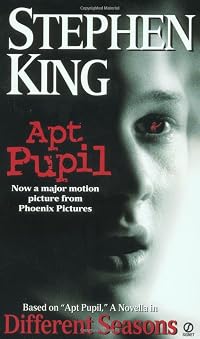
Different Seasons was recommended to me by a friend when I asked him what I should read next. The book contains four novellas: Rita Hayworth and Shawshank Redemption, Apt Pupil, The Body, and The Breathing Method.
I was so prepared to be underwhelmed by this book -- if only because I'd never read anything by Stephen King (I know, I know!) -- that I'm surprised by how much I enjoyed it. "Enjoy" isn't really the right word for it, either, because I could have lived my life quite happily without having read Apt Pupil, the darkest, most twisted, most disturbing piece of literature that I've ever read (and I even skipped the most gruesome parts). What I like about this small collection as a whole is how different the stories are show more from each other, even as they reference each other. Shawshank State Prison popped up in a couple other stories, Andy Dufresne got mentioned in Apt Pupil, Cujo got a nod in The Body, and I'm sure there were others that I missed since I am not so familiar with Stephen King. It brought home the fact that the people who play inconsequential roles in our lives have very full lives of their own.
I liked The Body best of the four, I think, because it felt the most autobiographical. Also the story of the film Stand By Me, it's about four preteen boys who take a transformative journey together to see a dead body in the woods. At times it was laugh-out-loud funny (the scene with the leeches got me going, because I know the terror firsthand. It was the laughter of understanding and sympathy, I swear!) but also tragic and marvelously reflective.
Apt Pupil was messed up. That is all.
The Breathing Method was unsatisfying because it left me with too many questions, though did give me just the right amount of heebie-jeebies. And I read it ON THE THURSDAY BEFORE CHRISTMAS. So meta.
Rita Hayworth and Shawshank Redemption was quietly beautiful. Even thought I knew how the story was going to end, having seen the movie, I can't think of another fictional character for whom I've rooted so hard.
My favorite quotes all came from The Body:
The most important things are the hardest things to say. They are the things you get ashamed of, because words diminish them--words shrink things that seem limitless when they were in your head to no more than living size when they're brought out...And you may make revelations that cost you dearly only to have people look at you in a funny way, not understanding what you've said at all, or why you thought it was so important that you almost cried while you were saying it. That's the worst, I think. When the secret stays locked within not for want of a teller but for want of an understanding ear.
This slew all of them, even Vern, and we laughed long and hard. Then we just lay back, not goofing anymore, just drinking our Cokes and being quiet. My body felt warm, exercised, at peace with itself. Nothing in it was working crossgrain to anything else. I was alive and glad to be. Everything seemed to stand out with a special dearness, and although I never could have said that out loud I didn't think it mattered -- maybe that sense of dearness was something I wanted just for myself.
There's something horrible and fascinating about the way dark comes to the woods, its coming unsoftened by headlights or streetlights or houselights or neon. It comes with no mothers' voices, calling for their kids to leave off and come on in now, to herald it. If you're used to the town, the coming of the dark in the woods seems more like a natural disaster than a natural phenomenon...
There's a high ritual to all fundamental events, the rites of passage, the magic corridor where the change happens. Buying the condoms. Standing before the minister. Raising your hand and taking the oath. Or, if you please, walking down the railroad tracks to meet a fellow your own age halfway...It seemed right to do it this way, because the rite of passage is a magic corridor and so we always provide an aisle--it's what you walk down when you get married, what they carry you down when you get buried. Our corridor was those twin rails, and we walked between them, just hopping along toward whatever this was supposed to mean...And maybe we thought it was also right that it should have turned out to be harder than we had expected. show less
Different Seasons was recommended to me by a friend when I asked him what I should read next. The book contains four novellas: Rita Hayworth and Shawshank Redemption, Apt Pupil, The Body, and The Breathing Method.
I was so prepared to be underwhelmed by this book -- if only because I'd never read anything by Stephen King (I know, I know!) -- that I'm surprised by how much I enjoyed it. "Enjoy" isn't really the right word for it, either, because I could have lived my life quite happily without having read Apt Pupil, the darkest, most twisted, most disturbing piece of literature that I've ever read (and I even skipped the most gruesome parts). What I like about this small collection as a whole is how different the stories are show more from each other, even as they reference each other. Shawshank State Prison popped up in a couple other stories, Andy Dufresne got mentioned in Apt Pupil, Cujo got a nod in The Body, and I'm sure there were others that I missed since I am not so familiar with Stephen King. It brought home the fact that the people who play inconsequential roles in our lives have very full lives of their own.
I liked The Body best of the four, I think, because it felt the most autobiographical. Also the story of the film Stand By Me, it's about four preteen boys who take a transformative journey together to see a dead body in the woods. At times it was laugh-out-loud funny (the scene with the leeches got me going, because I know the terror firsthand. It was the laughter of understanding and sympathy, I swear!) but also tragic and marvelously reflective.
Apt Pupil was messed up. That is all.
The Breathing Method was unsatisfying because it left me with too many questions, though did give me just the right amount of heebie-jeebies. And I read it ON THE THURSDAY BEFORE CHRISTMAS. So meta.
Rita Hayworth and Shawshank Redemption was quietly beautiful. Even thought I knew how the story was going to end, having seen the movie, I can't think of another fictional character for whom I've rooted so hard.
My favorite quotes all came from The Body:
The most important things are the hardest things to say. They are the things you get ashamed of, because words diminish them--words shrink things that seem limitless when they were in your head to no more than living size when they're brought out...And you may make revelations that cost you dearly only to have people look at you in a funny way, not understanding what you've said at all, or why you thought it was so important that you almost cried while you were saying it. That's the worst, I think. When the secret stays locked within not for want of a teller but for want of an understanding ear.
This slew all of them, even Vern, and we laughed long and hard. Then we just lay back, not goofing anymore, just drinking our Cokes and being quiet. My body felt warm, exercised, at peace with itself. Nothing in it was working crossgrain to anything else. I was alive and glad to be. Everything seemed to stand out with a special dearness, and although I never could have said that out loud I didn't think it mattered -- maybe that sense of dearness was something I wanted just for myself.
There's something horrible and fascinating about the way dark comes to the woods, its coming unsoftened by headlights or streetlights or houselights or neon. It comes with no mothers' voices, calling for their kids to leave off and come on in now, to herald it. If you're used to the town, the coming of the dark in the woods seems more like a natural disaster than a natural phenomenon...
There's a high ritual to all fundamental events, the rites of passage, the magic corridor where the change happens. Buying the condoms. Standing before the minister. Raising your hand and taking the oath. Or, if you please, walking down the railroad tracks to meet a fellow your own age halfway...It seemed right to do it this way, because the rite of passage is a magic corridor and so we always provide an aisle--it's what you walk down when you get married, what they carry you down when you get buried. Our corridor was those twin rails, and we walked between them, just hopping along toward whatever this was supposed to mean...And maybe we thought it was also right that it should have turned out to be harder than we had expected. show less
Who said Stephen King only wrote horror? "Different Seasons" is a mix of all the genres - Young Adult, Mystery, coming-of-age ... but no horror. If you want to read King at his finest, then read this.
"Different Seasons" is a collection of four novellas, each of which he has written after the conclusion of his four earliest novels. While initially not intending to publish any of them, King finally decided to release those novellas in an anthology, and many of his readers couldn't be more thankful for it. It is not without reason that this book has the second-highest rating average on Goodreads of all the sixty novels King has written so far.
1. Rita Hayworth and Shawshank Redemption (5/5 stars)
Perhaps most famous for the movie adaption show more starring Morgan Freeman and Tim Robbins, this is a story about hope and devastation, about freedom and imprisonment, about humanity and friendship. I have written a more extensive review of the novel right here. Nearly everyone has watched the movie ('everyone' excludes me, as so often), but even without knowing about how good the movie really is, this novella can be recommended whole-heartedly.
2. Apt Pupil (4,5/5 stars)
What happens when you put two of the most unlikeable characters ever together and force them into interacting with each other? One of the most breathtaking stories ever. The subject is already interesting enough: A boy of the 1970's, Todd Bowden, gets into contact with Kurt Dussander, a wanted Nazi war criminal. Out of his interest in the Second World War, upon discovering a secret of Dussander's, Todd threatens Dussander and forces him to tell highly detailed stories about his crimes during the War. Time passes, and as Todd becomes older and turns into a teenager, the stories narrated by Dussander begin to cast long shadows on Todd's behaviour.
The only aspect to be critized of this novella might be the very rushed ending, but apart from that, King enthrallingly managed to make his reader sympathize with two vile characters with motifs and thoughts as dark as night. While sometimes a little bit slow in comparison to his other fast-moving novellas in this anthology, some breathtaking scenes have been included and certainly allow this to be one of the more moving and memorable stories.
3. The Body (6/5 stars)
My favorite story of the entire anthology, and perhaps one of my favorite stories of all time. After reading it during the course of two hours, I was left flabbergasted, enthusiastic and perturbed alike. King masterfully delved into the psyches of four young boys who are entering an adventure and have to overcome several obstacles. The movie adaption "Stand By Me" is critically acclaimed wherever you are looking, with all of the four child actors delivering amazing performances. (Yay, there's a movie I've actually seen!) The short story remains my favorite in comparison to the movie though, maybe because I've read it first and was so stunned by the characters. I can only recommend you not wasting your time with reading this review anymore and instead running to read this.
4. The Breathing Method: (3/5 stars)
Many claim this story to be their least favorite one out of the entire collection, and I can only agree with what they say. Sometimes 'great potential' does not equal 'great story', and although this story included a disturbing scene which might actually be classified as horror, on the whole it was too short and unexplored. It is a shame that Mr. King established such an interesting mystery here and did not bother to dissolve it in the ending. However, it was an interesting story about a middle-aged lawyer attending a mysterious club where people tell differing stories ... with one of them proving to be very different from the usual kind of stories. It feels like this was not meant to be included in this collection and should rather have been in one of his other anthologies. Maybe its length shortness was the reason for not being as profound as the other three novellas.
In conclusion, "Different Seasons" earns full five stars. Apart from some minor weaknesses, this collection was as enthralling as it was thought-provoking. The stories are not about horror. They (read: 'the first three stories') are about what could happen to people in real life. They are about fates. They are about humans. They are about growing-up. They are about life. Life in its darkest and least desirable shapes ... but they are about life.
And even thinking about the eventuality that those stories might have happened exactly the way they have been told by King makes me shiver more than any of his horror novels. show less
"Different Seasons" is a collection of four novellas, each of which he has written after the conclusion of his four earliest novels. While initially not intending to publish any of them, King finally decided to release those novellas in an anthology, and many of his readers couldn't be more thankful for it. It is not without reason that this book has the second-highest rating average on Goodreads of all the sixty novels King has written so far.
1. Rita Hayworth and Shawshank Redemption (5/5 stars)
Perhaps most famous for the movie adaption show more starring Morgan Freeman and Tim Robbins, this is a story about hope and devastation, about freedom and imprisonment, about humanity and friendship. I have written a more extensive review of the novel right here. Nearly everyone has watched the movie ('everyone' excludes me, as so often), but even without knowing about how good the movie really is, this novella can be recommended whole-heartedly.
2. Apt Pupil (4,5/5 stars)
What happens when you put two of the most unlikeable characters ever together and force them into interacting with each other? One of the most breathtaking stories ever. The subject is already interesting enough: A boy of the 1970's, Todd Bowden, gets into contact with Kurt Dussander, a wanted Nazi war criminal. Out of his interest in the Second World War, upon discovering a secret of Dussander's, Todd threatens Dussander and forces him to tell highly detailed stories about his crimes during the War. Time passes, and as Todd becomes older and turns into a teenager, the stories narrated by Dussander begin to cast long shadows on Todd's behaviour.
The only aspect to be critized of this novella might be the very rushed ending, but apart from that, King enthrallingly managed to make his reader sympathize with two vile characters with motifs and thoughts as dark as night. While sometimes a little bit slow in comparison to his other fast-moving novellas in this anthology, some breathtaking scenes have been included and certainly allow this to be one of the more moving and memorable stories.
3. The Body (6/5 stars)
My favorite story of the entire anthology, and perhaps one of my favorite stories of all time. After reading it during the course of two hours, I was left flabbergasted, enthusiastic and perturbed alike. King masterfully delved into the psyches of four young boys who are entering an adventure and have to overcome several obstacles. The movie adaption "Stand By Me" is critically acclaimed wherever you are looking, with all of the four child actors delivering amazing performances. (Yay, there's a movie I've actually seen!) The short story remains my favorite in comparison to the movie though, maybe because I've read it first and was so stunned by the characters. I can only recommend you not wasting your time with reading this review anymore and instead running to read this.
4. The Breathing Method: (3/5 stars)
Many claim this story to be their least favorite one out of the entire collection, and I can only agree with what they say. Sometimes 'great potential' does not equal 'great story', and although this story included a disturbing scene which might actually be classified as horror, on the whole it was too short and unexplored. It is a shame that Mr. King established such an interesting mystery here and did not bother to dissolve it in the ending. However, it was an interesting story about a middle-aged lawyer attending a mysterious club where people tell differing stories ... with one of them proving to be very different from the usual kind of stories. It feels like this was not meant to be included in this collection and should rather have been in one of his other anthologies. Maybe its length shortness was the reason for not being as profound as the other three novellas.
In conclusion, "Different Seasons" earns full five stars. Apart from some minor weaknesses, this collection was as enthralling as it was thought-provoking. The stories are not about horror. They (read: 'the first three stories') are about what could happen to people in real life. They are about fates. They are about humans. They are about growing-up. They are about life. Life in its darkest and least desirable shapes ... but they are about life.
And even thinking about the eventuality that those stories might have happened exactly the way they have been told by King makes me shiver more than any of his horror novels. show less
When the publisher sent me a Stephen King book I was quite surprised. I have never read horror, and the only King I had read was The Green Mile after seeing the movie–but I did see the movie Shawshank Redemption.
So, I set the book aside until one night, intellectually tired of the nonfiction tome I was reading, I picked up Rita Hayworth and Shawshank Redemption–then read it in two sittings.
I had forgotten the movie plot, so I was able to enjoy afresh. I won’t talk about the plot; likely you know it, or can read about it anywhere.
I do adore a first person story, so cozied right into Red’s narration. The dark side of our penitentiary system is hard to read about, not just its inmate violence but the way convicts are treated by the show more system. I have read books about how hard it is for convicted but innocent men to get justice.
But the novel about an innocent man convicted for life learning to survive in prison ends up being an uplifting story. Andy uses what he has to control his life. The conclusion leaves us joyful. It is a wish fulfillment fantasy, improbable and satisfying.
Well, once again, a publisher seems to know me better than I do myself. My second King book is read, and I wholly recommend it.
Thanks to the publisher for a free book show less
So, I set the book aside until one night, intellectually tired of the nonfiction tome I was reading, I picked up Rita Hayworth and Shawshank Redemption–then read it in two sittings.
I had forgotten the movie plot, so I was able to enjoy afresh. I won’t talk about the plot; likely you know it, or can read about it anywhere.
I do adore a first person story, so cozied right into Red’s narration. The dark side of our penitentiary system is hard to read about, not just its inmate violence but the way convicts are treated by the show more system. I have read books about how hard it is for convicted but innocent men to get justice.
But the novel about an innocent man convicted for life learning to survive in prison ends up being an uplifting story. Andy uses what he has to control his life. The conclusion leaves us joyful. It is a wish fulfillment fantasy, improbable and satisfying.
Well, once again, a publisher seems to know me better than I do myself. My second King book is read, and I wholly recommend it.
Thanks to the publisher for a free book show less
Members
- Recently Added By
Lists

Read the book and saw the movie
1,170 works; 195 members

Books Featured on Gilmore Girls
307 works; 21 members

DELETE
48 works; 2 members

Watched the Movie, Probably Won't Read the Book
185 works; 34 members

Books Read in 2014
2,343 works; 89 members
KayStJ's to-read list
1,616 works; 11 members

Blue Pyramid 1,276 Best Books of All Time
1,248 works; 32 members

Books Read in 2015
3,299 works; 129 members
Books Read in 2016
4,666 works; 197 members

Books Read in 2019
4,052 works; 110 members

Books Read
30 works; 1 member

Great Short Books: A Year of Reading-Briefly
59 works; 4 members
Books in Riverdale
123 works; 3 members

The Complete Rory Gilmore Reading List
506 works; 5 members

fictional librarians
53 works; 19 members
1001 Books You Must Read Before You Die
1,448 works; 1,134 members
Author Information

966+ Works 867,771 Members
Stephen King was born in Portland, Maine, on September 21, 1947. After graduating with a Bachelor's degree in English from the University of Maine at Orono in 1970, he became a teacher. His spare time was spent writing short stories and novels. King's first novel would never have been published if not for his wife. She removed the first few show more chapters from the garbage after King had thrown them away in frustration. Three months later, he received a $2,500 advance from Doubleday Publishing for the book that went on to sell a modest 13,000 hardcover copies. That book, Carrie, was about a girl with telekinetic powers who is tormented by bullies at school. She uses her power, in turn, to torment and eventually destroy her mean-spirited classmates. When United Artists released the film version in 1976, it was a critical and commercial success. The paperback version of the book, released after the movie, went on to sell more than two-and-a-half million copies. Many of King's other horror novels have been adapted into movies, including The Shining, Firestarter, Pet Semetary, Cujo, Misery, The Stand, and The Tommyknockers. Under the pseudonym Richard Bachman, King has written the books The Running Man, The Regulators, Thinner, The Long Walk, Roadwork, Rage, and It. He is number 2 on the Hollywood Reporter's '25 Most Powerful Authors' 2016 list. King is one of the world's most successful writers, with more than 100 million copies of his works in print. Many of his books have been translated into foreign languages, and he writes new books at a rate of about one per year. In 2003, he received the National Book Foundation Medal for Distinguished Contribution to American Letters. In 2012 his title, The Wind Through the Keyhole made The New York Times Best Seller List. King's title's Mr. Mercedes and Revival made The New York Times Best Seller List in 2014. He won the Edgar Allan Poe Award in 2015 for Best Novel with Mr. Mercedes. King's title Finders Keepers made the New York Times bestseller list in 2015. Sleeping Beauties is his latest 2017 New York Times bestseller. (Bowker Author Biography) Stephen King is the author of more than thirty books, all of them worldwide bestsellers. Among his most recent are "Hearts in Atlantis", "The Girl Who Loved Tom Gordon", "Bag of Bones", & "The Green Mile". "On Writing" is his first book of nonfiction since "Danse Macabre", published in 1981. He served as a judge for Prize Stories: The Best of 1999, The O. Henry Awards. He lives in Bangor, Maine with his wife, novelist Tabitha King. King's book, The Bazaar of Bad Dreams: Stories, made the 2015 New York Times bestseller list. (Publisher Provided) show less
Some Editions
Awards and Honors
Distinctions
Series

Work Relationships
Is contained in
Stephen King: Acclaimed Stories from the World's Bestselling Author, Stephen King : Different Seasons/Skeleton Crew/Nightmares & Dreamscapes by Stephen King (indirect)
Common Knowledge
- Canonical title
- Rita Hayworth and Shawshank Redemption {novella}
- Original title
- Rita Hayworth and Shawshank redemption
- Original publication date
- 1982
- People/Characters
- Andy Dufresne; Red; Robert Allen Coate (Bobby, coin collector); Bogs Diamond; George Dunahy (warden); Byron Hadley (guard) (show all 15); Brooks Hatlen (librarian); Rooster MacBride; Beaver Morrison; Sid Nadou; Normaden; Samuel Norton (Warden); Greg Stammis (chief of guards, later Warden); Tommy Williams; Tim Youngblood (Trout, guard)
- Important places
- Shawshank Prison, Maine, USA (fictional); Maine, USA; Buxton, Maine, USA
- Related movies
- The Shawshank Redemption (1994 | IMDb); Shawshank: The Redeeming Feature (2001 | IMDb); Hope Springs Eternal: A Look Back at 'The Shawshank Redemption' (2004 | IMDb)
- First words
- There's a guy like me in every state and federal prison in America, I guess - I'm the guy who can get it for you.
- Last words
- (Click to show. Warning: May contain spoilers.)I hope.
- Disambiguation notice
- This is the single novella "Rita Hayworth and Shawshank Redemption : hope springs eternal". It should not be combined with the book DIFFERENT SEASONS, which contains three other stories for the other seasons of the year in ad... (show all)dition to this story, nor should it be combined with film adaptations or their shooting scripts.
Classifications
Statistics
- Members
- 3,036
- Popularity
- 5,833
- Reviews
- 62
- Rating
- (4.31)
- Languages
- 9 — Chinese, Danish, Dutch, English, Finnish, French, Japanese, Portuguese, Russian
- Media
- Paper, Audiobook, Ebook
- ISBNs
- 40
- ASINs
- 6