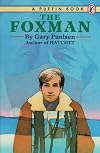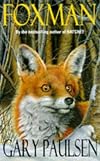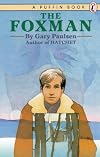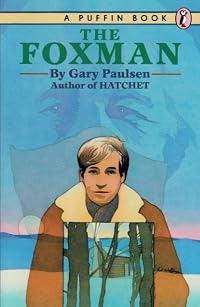
The Foxman
by Gary Paulsen
On This Page
Description
A town boy sent to live on a remote wilderness farm forms a friendship with an elderly, disfigured man who teaches him many things.Tags
Recommendations







Member Reviews
audience: high school boys.This book would be a good wake-up call for teen boys who have glorified ideas about war, especially those who live in the country and are often exposed to fervent patriotism. I'm not sure it would be of much interest to teens who live in the city, and the amount of introspection is not the most entertaining (outdoor action might make up for it).
The unnamed protagonist is court-ordered to his Uncle's northern farm after being stabbed by his drunken mother; there is no mention of persistent trauma from the abuse--he still misses his parents. Brief chapters of him learning to fit in, adapt to the hard work and country setting, taciturn uncle & garrulous elderly relatives, bonding with his cousin Carl. The two show more boys get caught in a storm while out hunting a fox but fortunately come across a remote cabin. Startled by the damaged face of the man who lets them in, they need to accept his hospitality to survive the night. The main character ruminates on this, when they return home, and decides to go back to learn more about the old man, whom he names "The Foxman", but to keep his visits a secret. He tries to make sense of the damage caused by war to The Foxman's appearance with the joking stories the elderly relatives tell in winter evenings about their experiences in WWI.
How the visits ended surprised me, and I'm not sure I think the teen's choice was something that should be put out there as an option one can get away with. show less
The unnamed protagonist is court-ordered to his Uncle's northern farm after being stabbed by his drunken mother; there is no mention of persistent trauma from the abuse--he still misses his parents. Brief chapters of him learning to fit in, adapt to the hard work and country setting, taciturn uncle & garrulous elderly relatives, bonding with his cousin Carl. The two show more boys get caught in a storm while out hunting a fox but fortunately come across a remote cabin. Startled by the damaged face of the man who lets them in, they need to accept his hospitality to survive the night. The main character ruminates on this, when they return home, and decides to go back to learn more about the old man, whom he names "The Foxman", but to keep his visits a secret. He tries to make sense of the damage caused by war to The Foxman's appearance with the joking stories the elderly relatives tell in winter evenings about their experiences in WWI.
How the visits ended surprised me, and I'm not sure I think the teen's choice was something that should be put out there as an option one can get away with. show less
Carl is sent to live with his uncle's family in Minnesota by social services. He soon learns the ways of the rural life, the woods, and the harsh winter.
One day when he and his cousin are caught in the woods far from home when a blizzard strikes, they take shelter in the shack of an old man with a severely damaged face, who lives in the deep woods alone. The man takes them in, cares for them through the night, and sends them on their way. But soon, Carl starts returning on weekends to visit the old man, whose name is never mentioned. Carl calls him the Foxman, because he traps foxes.
The Foxman's face was hurt in World War I, although we are never told how. And when Carl is home with his uncle's family, old men who were veterans of World show more Wars I and II, sit around telling and laughing at war stories that Carl doesn't find funny at all.
This short book is a war novel. Even though no war is happening, there are no battles or soldiers, apart from elderly veterans, it is a war novel, and one of philosophy. A short, easy reading book, for a deep thinking reader. show less
One day when he and his cousin are caught in the woods far from home when a blizzard strikes, they take shelter in the shack of an old man with a severely damaged face, who lives in the deep woods alone. The man takes them in, cares for them through the night, and sends them on their way. But soon, Carl starts returning on weekends to visit the old man, whose name is never mentioned. Carl calls him the Foxman, because he traps foxes.
The Foxman's face was hurt in World War I, although we are never told how. And when Carl is home with his uncle's family, old men who were veterans of World show more Wars I and II, sit around telling and laughing at war stories that Carl doesn't find funny at all.
This short book is a war novel. Even though no war is happening, there are no battles or soldiers, apart from elderly veterans, it is a war novel, and one of philosophy. A short, easy reading book, for a deep thinking reader. show less
A young teen, transplanted from the city to the northern woods of Minnesota, discovers an old man living by himself, and a friendship between the two develops.
This one is special, recommended.
This one is special, recommended.
Quick read. Sorry it ended so quickly. I wanted to learn more about how the relationship would grow. Really caught my attention and carried me along. I'm just sorry there wasn't more to it.
This book is interesting. It talks about the narrator's llife in Harold's farm and the difficulties the narrator faced. Gary Paulsen, you're a good writer but I think you can improve on this book a little more.
Ratings
Members
- Recently Added By
Author Information

235+ Works 100,053 Members
Gary Paulsen was born on May 17, 1939 in Minnesota. He was working as a satellite technician for an aerospace firm in California when he realized he wanted to be a writer. He left his job and spent the next year in Hollywood as a magazine proofreader. His first book, Special War, was published in 1966. He has written more than 175 books for young show more adults including Brian's Winter, Winterkill, Harris and Me, Woodsong, Winterdance, The Transall Saga, Soldier's Heart, This Side of Wild, and Guts: The True Stories Behind Hatchet and the Brian Books. Hatchet, Dogsong, and The Winter Room are Newbery Honor Books. He was the recipient of the 1997 Margaret A. Edwards Award for his lifetime achievement in writing for young adults. (Bowker Author Biography) show less
Common Knowledge
- Original publication date
- 1977
- Important places
- Minnesota, USA
- First words
- That first summer I was fifteen...the summer when the judge sent me to my Uncle Harold's farm up in northern Minnesota on the edge of the woods that went north forever.
- Last words
- (Click to show. Warning: May contain spoilers.)It's beautiful fur, red and rich and deep, almost as beautiful as the Foxman.
Classifications
Statistics
- Members
- 562
- Popularity
- 52,476
- Reviews
- 6
- Rating
- (3.75)
- Languages
- English, German, Italian
- Media
- Paper, Audiobook
- ISBNs
- 21