
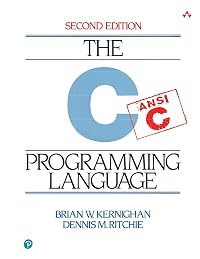
The C Programming Language (2nd Edition)
by Brian W. Kernighan (Author), Dennis M. Ritchie (Author)
On This Page
Description
Introduces the features of the C programming language, discusses data types, variables, operators, control flow, functions, pointers, arrays, and structures, and looks at the UNIX system interface.Tags
Recommendations
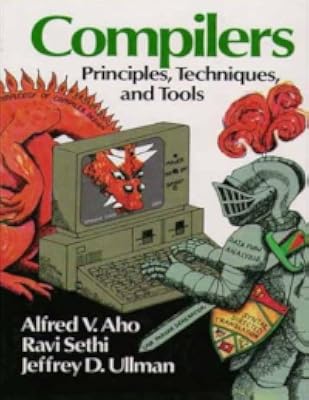
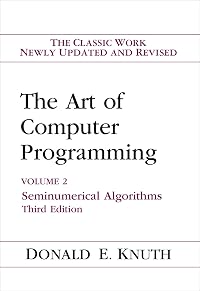
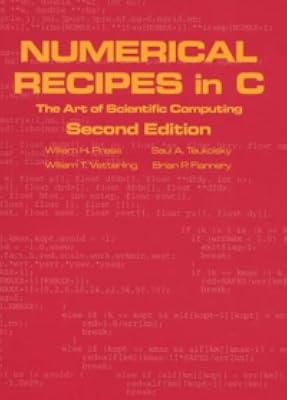
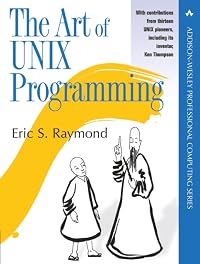
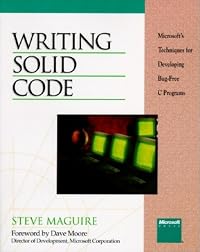
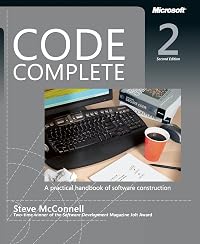
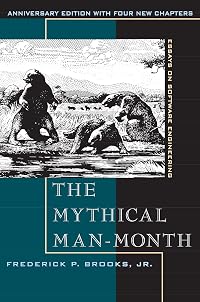
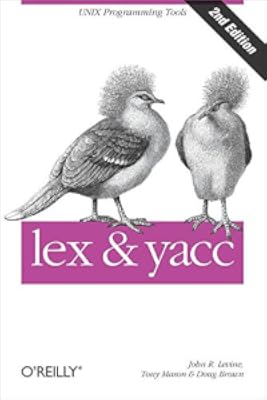
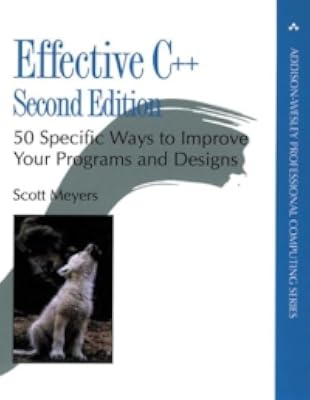
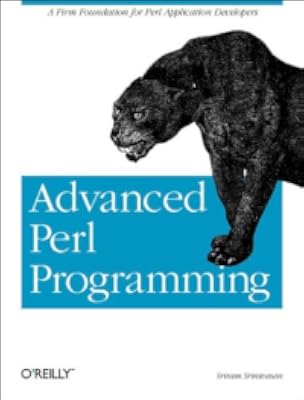
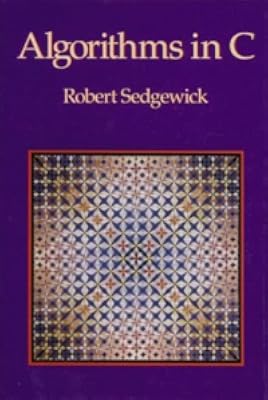
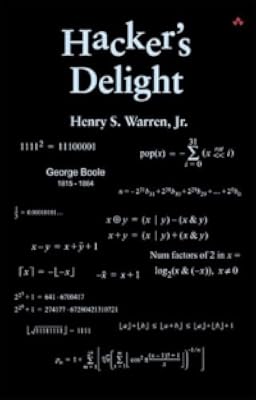
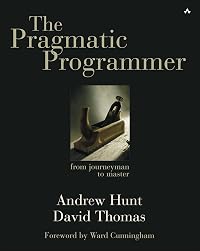
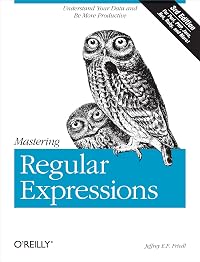
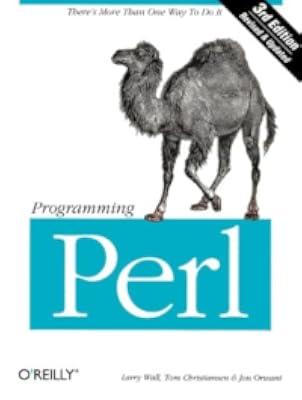
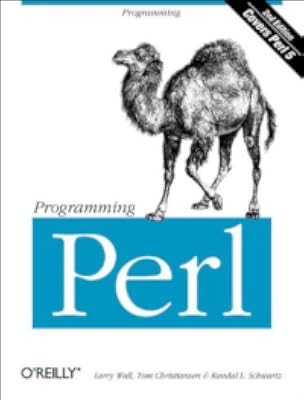
Member Recommendations
Member Reviews
I literally stood in line outside a bookstore, waiting for them to open, so that I could buy this book. I love the blurb on the back, referring to the first edition (aka K&R C):
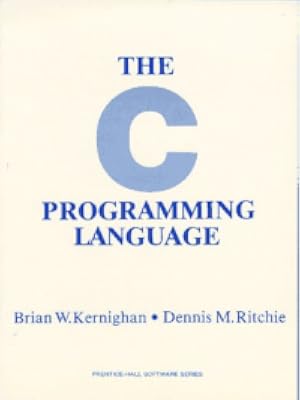
The first edition of this classic book will remain in print as the original definition of the C programming language. It will remain in print until compilers based on the final ANSI Standard for C become universally available to the C programming community.
Wonder what year that finally happened?
Before I forget, in addition to writing one of the most important computer language books out there, Brian Kernighan and Dennis Ritchie are fine and decent human beings (RIP, Dennis M. Ritchie).
The first edition of this classic book will remain in print as the original definition of the C programming language. It will remain in print until compilers based on the final ANSI Standard for C become universally available to the C programming community.
Wonder what year that finally happened?
Before I forget, in addition to writing one of the most important computer language books out there, Brian Kernighan and Dennis Ritchie are fine and decent human beings (RIP, Dennis M. Ritchie).
While I understand and appreciate the historical significance of this book, I really don't think it has aged well for the modern programmer. I found it to be a not bad refresher for the C language, but anything beyond that I would try to find another source to learn C. It felt to me that you already needed to know a fairly low level programming language to understand how to do something in C, compared to a modern learner who probably is using C to start learning more lower level ideas. It also compares C to languages which aren't in wide use anymore (at least for beginner languages), as well as referencing the C language prior to the ANSI standard (which feels pointless at this point in time.)
Again, I understand its a significant show more historical book for C, but if someone asked me for recommendations on a beginner textbook for programming or the C language, I wouldn't recommend this one. show less
Again, I understand its a significant show more historical book for C, but if someone asked me for recommendations on a beginner textbook for programming or the C language, I wouldn't recommend this one. show less
This is a good entry point for learning the C language, provided that you already have some programming experience. It's terse without sacrificing detail. Supplementary reading is required if you wish to learn more about e.g. C compilers, debugging under Linux, socket programming, including external libraries and how to properly modularise C programs, but it is evident that those subjects simply lie outside of the scope of this work, and that's fine.
Basically, it covers just enough to learn C, and no more. I like that approach best. Too verbose and I feel like I’m being patronized. Too spare, and I’m having to look things up elsewhere. There are now better languages for much of the software that people want, but C works well for a lot of basic programs and for some more complex ones. If you need or want to work on those, this book is the place from which to lean the language.
I read this years ago when I was first taking C. I don't have this edition, but an earlier one. After wading through several other books, I kept coming back to this one as a reference while programming. It is deceptively short & sweet. Re-reads constantly found me more avenues to explore using their basics.
I gave a copy to my son & he came to the same conclusion. While other, larger, & more specific books come & go as C evolves, this basic work is a must for any serious programmer.
I gave a copy to my son & he came to the same conclusion. While other, larger, & more specific books come & go as C evolves, this basic work is a must for any serious programmer.
With scripting languages replacing C as the easiest entry into the programming world, that big blue-on-white sans-serif C may not be as iconic as it once was, but as a place to get started with the C language there are still no better books than this one. K&R is admirably terse and clear—it's the Strunk and White of computer programming.
Considered the bible of modern C-programming, or at the very least, a major epistle, The C Programming Language, commonly called “K&R” for the guys who wrote it, is one of the most indispensable books for anybody looking to learn just about any modern programming language.
The C Programming Language, here in its second edition, feature a new look at C, including the previously updated ANSI standards that were as yet undefined in the first edition’s printing.
While this book doesn’t offer much outside the scope of programming, it is a simple, straightforward introduction to C, including all of C’s strengths as a programming language.
If you are interested in getting your feet wet with programming, or dabbling in one of the most show more widespread languages, I suggest you check out this book if you don’t already have it on your shelf. show less
The C Programming Language, here in its second edition, feature a new look at C, including the previously updated ANSI standards that were as yet undefined in the first edition’s printing.
While this book doesn’t offer much outside the scope of programming, it is a simple, straightforward introduction to C, including all of C’s strengths as a programming language.
If you are interested in getting your feet wet with programming, or dabbling in one of the most show more widespread languages, I suggest you check out this book if you don’t already have it on your shelf. show less
Members
- Recently Added By
Lists

Top-Rated Books on LibraryThing
272 works; 117 members

Books Referenced by Martin's The Clean Coder
8 works; 1 member
Author Information

Brian W. Kernighan is a professor in the Department of Computer Science at Princeton University. His many books include Millions, Billions, Zillions (Princeton) and the computing classic The C Programming Language (Prentice Hall).

Some Editions
Series
Belongs to Publisher Series
Work Relationships
Is an adaptation of
Has as a supplement
Common Knowledge
- Canonical title
- The C Programming Language (2nd Edition) (2nd Edition)
- Original publication date
- 1988
- First words
- The computing world has undergone a revolution since the publication of The C Programming Language in 1978.
- Last words
- (Click to show. Warning: May contain spoilers.)The controlling expression, and the case labels, of a switch may have any integral type.
- Original language
- English
- Disambiguation notice
- This is the second edition of "The C Programming Language", which describes "ANSI C", rather than the outdated language "K&R C" described in the first edition.
Please do not combine into or separate from this work ... (show all)unless you are very confident that it is the right thing to do: especially in the case of translations.
If in doubt, post a message to Combiners! K&R C, ANSI C: one work or two?.
Classifications
- Genres
- Technology, Nonfiction, General Nonfiction
- DDC/MDS
- 005.133 — Computer science, information & general works Computer science, knowledge & systems Artificial Intelligence/Virtual Reality Software development Computer programming Specific programming languages
- LCC
- QA76.73 .C15 .K47 — Science Mathematics Mathematics Instruments and machines Calculating machines Electronic computers. Computer science
- BISAC
Statistics
- Members
- 3,410
- Popularity
- 4,903
- Reviews
- 31
- Rating
- (4.42)
- Languages
- 16 — Chinese, Czech, Dutch, English, Finnish, French, German, Greek, Hungarian, Italian, Japanese, Polish, Portuguese, Russian, Spanish, Swedish
- Media
- Paper, Ebook
- ISBNs
- 49
- UPCs
- 1
- ASINs
- 7