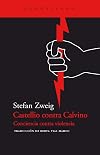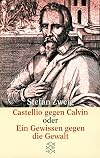
The Right to Heresy: Castellio against Calvin
by Stefan Zweig
On This Page
Description
This book delves into the historical conflict between Sebastian Castellio and John Calvin, exploring themes of conscience versus authority and individual freedom against religious tyranny. Castellio, a humanist and advocate for freedom of thought, challenges Calvin's authoritarian control in Geneva, highlighting the broader struggle for human rights against oppressive power structures. The book examines the philosophical and ethical tensions between humanism and fanaticism, depicting show more Castellio's solitary and courageous stand for conscience in a time of widespread persecution. Intended for readers interested in history, philosophy, and religious studies, the narrative portrays Castellio as a hero in the fight for intellectual and spiritual liberation. show lessTags
Recommendations







































Member Reviews
Castellio? Who? Mostly forgotten in the history of sixteenth century theology and the rise of religious toleration, Sebastain Castellio can be summed up in one short phrase: "To burn a man alive does not defend a doctrine, but slays a man."
Castellio's story needs to be told, unfortunately, the only book-length biography is this strange English translation of a 1936 book by an Austrian named Stefan Zweig. Firstly, Zweig was primarily a writer of fiction and plays, and to modern readers of biography, this reads more like a screed, an unfootnoted, unsourced one. Secondly, Zweig fled Austria with the rise of Hitler in Germany, the rise of the Austrian Nazis made his life unbearable as a Jew among the literati. Thus Calvin is compared, if show more you read between the lines, to Hitler left and right. Not necessarily a wholly unhelpful analogy, but a bit jarring, and not one that will sway anyone predisposed to be a Calvin apologist. The syrupy, complicated prose is, in fact, offputting as he describes Calvin's dictatorial bent and his stranglehold on Geneva. Only when he discusses Castellio, Servetus, then Castellio again does the book get interesting, and the narrative gifts of Zweig shine through.
The gist? Zweig paints a good picture that Calvin was of a tyrannical mood, unwilling to brook any dissent in his Geneva. Enter Castellio. A kindhearted and Christian Frenchman, he raised the ire of Calvin in Geneva because the populace liked him, e.g. Calvin was excused from tending to the sick during a plague because he was deemd "too important"; Castellio ministered to the sick. When Castellio asked Calvin for permission to translate some of the Bible into French and Latin, which would conflict with another translation Calvin had given his imprimatur to, he was hounded from Geneva. Calvin's minions ensured that Castellio lived in poverty for years until he secured a job as professor in Basel. To quote Voltaire: "We can measure the virulence of this tyranny by the persecution to which Castellio was exposed at Calvin's instance—although Castellio was a far greater scholar than Calvin, whose jealousy drove him out of Geneva."
Enter Servetus. Yes, Servetus was an unorthodox, heretical, strange man. Anti-trinitarian and blusterous, he hounded Calvin. Calvin, in ways Zweig makes all too clear, attempted to have Servetus burned by the Catholic Inquisition in France. Inexplicably, Servetus appeared in Geneva, where he was arrested. Zweig makes it clear, though Calvin apologists will try to assuage their hero of any guilt, that Calvin bullied the authorities in Geneva and the Swiss Confederation into executing Servetus because his beliefs were heretical. Calvin apologists ignore, forget, or downgrade Calvin's own words: "Servetus has just sent me a long volume of his ravings. If I consent he will come here, but I will not give my word for if he comes here, if my authority is worth anything, I will never permit him to depart alive." Thus, the sorry burning at the stake of a man in Geneva just because he did not agree with Calvin.
Enter again Castellio. Castellio writes a series of books, though he his hounded by Calvin's minions, stating that men ought to be free to decide religion on their own. Heretics should be met with intellect, not with the sword. These books ripped Calvin's weak arguments to shreds. Some gems: "To burn a man alive does not defend a doctrine, but slays a man." "When Servetus fought with reasons and writings, he should have been repulsed by reasons and writings." Castellio stated that the blood of Servetus was on Calvin's hands. The best argument he comes up with to indict Calvin and prove his point? Castellio quoted Calvin himself, back when Calvin was chased by the Roman Church: "It is unchristian to use arms against those who have been expelled from the Church, and to deny them rights common to all mankind." Good stuff indeed.
It is then that Calvin sets his system to work again, attempting to persecute Castellio (who now also disagrees with Calvin on predestination). He is almost successful. Beza attacks Castellio in the preface to the Geneva Bible. He is called the minion of Satan then Satan himself in letters and prologues. Charges of sheltering Anabaptists and even adultery appear. Calvin even goes so far as to accuse Castellio of stealing firewood! No joke. See page 200. Castellio is only saved by his premature death.
Zweig does a decent job of showing Calvin and Beza to be petty dictators; Castellio the forerunner of religious toleration and freedom of conscience. His works were found and reprinted by the tolerant Dutch of the seventeenth century, and served as a precursor to works by Locke and Voltaire. As a Baptist, and the Baptists were great advocates of separation of church and state and freedom of conscience, I praise this work for at least getting the story out there. A modern, researched and cited biography is desperately needed to replace this odd work. show less
Castellio's story needs to be told, unfortunately, the only book-length biography is this strange English translation of a 1936 book by an Austrian named Stefan Zweig. Firstly, Zweig was primarily a writer of fiction and plays, and to modern readers of biography, this reads more like a screed, an unfootnoted, unsourced one. Secondly, Zweig fled Austria with the rise of Hitler in Germany, the rise of the Austrian Nazis made his life unbearable as a Jew among the literati. Thus Calvin is compared, if show more you read between the lines, to Hitler left and right. Not necessarily a wholly unhelpful analogy, but a bit jarring, and not one that will sway anyone predisposed to be a Calvin apologist. The syrupy, complicated prose is, in fact, offputting as he describes Calvin's dictatorial bent and his stranglehold on Geneva. Only when he discusses Castellio, Servetus, then Castellio again does the book get interesting, and the narrative gifts of Zweig shine through.
The gist? Zweig paints a good picture that Calvin was of a tyrannical mood, unwilling to brook any dissent in his Geneva. Enter Castellio. A kindhearted and Christian Frenchman, he raised the ire of Calvin in Geneva because the populace liked him, e.g. Calvin was excused from tending to the sick during a plague because he was deemd "too important"; Castellio ministered to the sick. When Castellio asked Calvin for permission to translate some of the Bible into French and Latin, which would conflict with another translation Calvin had given his imprimatur to, he was hounded from Geneva. Calvin's minions ensured that Castellio lived in poverty for years until he secured a job as professor in Basel. To quote Voltaire: "We can measure the virulence of this tyranny by the persecution to which Castellio was exposed at Calvin's instance—although Castellio was a far greater scholar than Calvin, whose jealousy drove him out of Geneva."
Enter Servetus. Yes, Servetus was an unorthodox, heretical, strange man. Anti-trinitarian and blusterous, he hounded Calvin. Calvin, in ways Zweig makes all too clear, attempted to have Servetus burned by the Catholic Inquisition in France. Inexplicably, Servetus appeared in Geneva, where he was arrested. Zweig makes it clear, though Calvin apologists will try to assuage their hero of any guilt, that Calvin bullied the authorities in Geneva and the Swiss Confederation into executing Servetus because his beliefs were heretical. Calvin apologists ignore, forget, or downgrade Calvin's own words: "Servetus has just sent me a long volume of his ravings. If I consent he will come here, but I will not give my word for if he comes here, if my authority is worth anything, I will never permit him to depart alive." Thus, the sorry burning at the stake of a man in Geneva just because he did not agree with Calvin.
Enter again Castellio. Castellio writes a series of books, though he his hounded by Calvin's minions, stating that men ought to be free to decide religion on their own. Heretics should be met with intellect, not with the sword. These books ripped Calvin's weak arguments to shreds. Some gems: "To burn a man alive does not defend a doctrine, but slays a man." "When Servetus fought with reasons and writings, he should have been repulsed by reasons and writings." Castellio stated that the blood of Servetus was on Calvin's hands. The best argument he comes up with to indict Calvin and prove his point? Castellio quoted Calvin himself, back when Calvin was chased by the Roman Church: "It is unchristian to use arms against those who have been expelled from the Church, and to deny them rights common to all mankind." Good stuff indeed.
It is then that Calvin sets his system to work again, attempting to persecute Castellio (who now also disagrees with Calvin on predestination). He is almost successful. Beza attacks Castellio in the preface to the Geneva Bible. He is called the minion of Satan then Satan himself in letters and prologues. Charges of sheltering Anabaptists and even adultery appear. Calvin even goes so far as to accuse Castellio of stealing firewood! No joke. See page 200. Castellio is only saved by his premature death.
Zweig does a decent job of showing Calvin and Beza to be petty dictators; Castellio the forerunner of religious toleration and freedom of conscience. His works were found and reprinted by the tolerant Dutch of the seventeenth century, and served as a precursor to works by Locke and Voltaire. As a Baptist, and the Baptists were great advocates of separation of church and state and freedom of conscience, I praise this work for at least getting the story out there. A modern, researched and cited biography is desperately needed to replace this odd work. show less
Шикарная книга. Просто must have.!
Подобные книги должны быть в программе школы на каждый год. В этой книге больше доброты и гуманности, чем в любой из речей далай ламы. Идеи, изложенные в книге проникают в каждую клеточку твоего организма, мозга, души. От понимания всей необузданной жестокости того времени пронимает дрожь. Очень рад, что наткнулся на книгу случайно и прочел ее. Всем читать обязательно!
П. С. Язык show more изложения шикарен) читается легко и приятно. При том что я никогда не интересовался религией и описанные времена очень мрачные. show less
Подобные книги должны быть в программе школы на каждый год. В этой книге больше доброты и гуманности, чем в любой из речей далай ламы. Идеи, изложенные в книге проникают в каждую клеточку твоего организма, мозга, души. От понимания всей необузданной жестокости того времени пронимает дрожь. Очень рад, что наткнулся на книгу случайно и прочел ее. Всем читать обязательно!
П. С. Язык show more изложения шикарен) читается легко и приятно. При том что я никогда не интересовался религией и описанные времена очень мрачные. show less
"tuer un homme ce n’est pas défendre une doctrine, c’est tuer un homme"
«Tolerancia frente a intolerancia, libertad frente a tutela, humanismo frente a fanatismo, individualismo frente a mecanización, conciencia frente a violencia… Todos estos nombres expresan una opción que en última instancia es la más personal y la más íntima, la que para todo individuo resulta de mayor importancia: lo humano o lo político, la ética o la razón, el individuo o la comunidad.» Con estas palabras sella Stefan Zweig uno de sus libros más sugestivos e inquietantes, Castellio contra Calvino, revisión histórica de una controversia que trasciende las circunstancias de una época—las de un siglo XVI dominado por tensiones teológicas y abusos de poder que cristalizan en el asesinato de Servet—para convertirse show more en el planteamiento de una cuestión genérica y constitutivamente humana: la defensa de la libertad espiritual frente a la violencia ejercida desde el poder. show less
Jul 23, 2025Spanish
«Tolerancia frente a intolerancia, libertad frente a tutela, humanismo frente a fanatismo, individualismo frente a mecanización, conciencia frente a violencia… Todos estos nombres expresan una opción que en última instancia es la más personal y la más íntima, la que para todo individuo resulta de mayor importancia: lo humano o lo político, la ética o la razón, el individuo o la comunidad.» Con estas palabras sella Stefan Zweig uno de sus libros más sugestivos e inquietantes, Castellio contra Calvino, revisión histórica de una controversia que trasciende las circunstancias de una época—las de un siglo XVI dominado por tensiones teológicas y abusos de poder que cristalizan en el asesinato de Servet—para convertirse show more en el planteamiento de una cuestión genérica y constitutivamente humana: la defensa de la libertad espiritual frente a la violencia ejercida desde el poder. show less
Apr 14, 2021Spanish
CASTELLIO CONTRA CALVINO
«Tolerancia frente a intolerancia, libertad frente
a tutela, humanismo frente a fanatismo,
individualismo frente a mecanización, conciencia
frente a violencia... Todos estos nombres expresan
una opción que en última instancia es la más
personal y la más íntima, la que para todo individuo
resulta de mayor importancia: lo humano o lo
político, la ética o la razón, el individuo o la comunidad.»
Con estas palabras sella Stefan Zweig uno de sus
libros más sugestivos e inquietantes, Castellio contra
Calvino, revisión histórica de una controversia que
trasciende las circunstancias de una época-las de
un siglo XVI dominado por tensiones teológicas y
abusos de poder que cristalizan en el asesinato
de show more Servet-para convertirse en el planteamiento de
una cuestión genérica y constitutivamente humana:
la defensa de la libertad espiritual frente a la v
iolencia ejercida desde el poder. show less
«Tolerancia frente a intolerancia, libertad frente
a tutela, humanismo frente a fanatismo,
individualismo frente a mecanización, conciencia
frente a violencia... Todos estos nombres expresan
una opción que en última instancia es la más
personal y la más íntima, la que para todo individuo
resulta de mayor importancia: lo humano o lo
político, la ética o la razón, el individuo o la comunidad.»
Con estas palabras sella Stefan Zweig uno de sus
libros más sugestivos e inquietantes, Castellio contra
Calvino, revisión histórica de una controversia que
trasciende las circunstancias de una época-las de
un siglo XVI dominado por tensiones teológicas y
abusos de poder que cristalizan en el asesinato
de show more Servet-para convertirse en el planteamiento de
una cuestión genérica y constitutivamente humana:
la defensa de la libertad espiritual frente a la v
iolencia ejercida desde el poder. show less
Aug 19, 2018Spanish
Zweig, narra con su habitual maestría, en una prosa limpia y emocionante la increíble aventura vital de Castiello, humanista hasta la médula enfrentado a tenebrosa y poderosa figura de Calvino, principe de la intolerancia, renovador, con más pasión si cabe, de la opresión y del abuso que reiterdamante denunciaba en la Iglesia Católica.
En los tiempos que corren se trata de una lectura imprescindible.
En los tiempos que corren se trata de una lectura imprescindible.
Aug 19, 2010Spanish
Members
- Recently Added By
Author Information

903+ Works 32,826 Members
Born in Vienna, the prolific Zweig was a poet in his early years. In the 1920s, he achieved fame with the many biographies he wrote of famous people including Balzac, Dostoevsky, Dickens and Freud. Erasmus with whom he closely identified, was the subject of a longer biography. He also wrote the novellas Amok (1922) and The Royal Game (1944). As show more Nazism spread, Zweig, a Jew, fled to the United States and then to Brazil. He hoped to start a new life there, but the haunting memory of Nazism, still undefeated, proved too much for him. He died with his wife in a suicide pact. (Bowker Author Biography) show less
Series
Belongs to Publisher Series
Work Relationships
Common Knowledge
- Canonical title
- The Right to Heresy: Castellio against Calvin
- Epigraph
- Future generations will wonder why, after so splendid a dawn, we are forced back into Cimmerian darkness. - Castellio, in De arte dubitandi, 1562
- First words
- On Sunday, May 21, 1536, the burghers of Geneva, formally summoned by a trumpet blast, assembled in the principal square and, raising their right hands, unanimously declared that thenceforward they would live exclusively "sel... (show all)on l'evangile et la parole de Dieu."
- Last words
- (Click to show. Warning: May contain spoilers.)By the time that the next century, the nineteenth, was well under way, the notion of liberty--the liberty of nations, of individuals, of thoughts--had been accepted as an inalienable maxim by the civilized world.
Classifications
- Genres
- Nonfiction, Religion & Spirituality, Biography & Memoir, History
- DDC/MDS
- 922.444 — History & geography Biographies, Genealogy, Healdry Religious Leaders / Philosophers Continental protestant: Lutheran, Huguenot
- LCC
- BX9459 .C4 .Z9 — Philosophy, Psychology and Religion Christian Denominations Christian Denominations Protestantism Other Protestant denominations Reformed or Calvinistic Churches
- BISAC
Statistics
- Members
- 247
- Popularity
- 132,953
- Reviews
- 14
- Rating
- (4.26)
- Languages
- 14 — Catalan, Czech, Danish, Dutch, English, French, German, Italian, Portuguese, Romanian, Russian, Spanish, Swedish, Turkish
- Media
- Paper, Audiobook, Ebook
- ISBNs
- 22
- ASINs
- 9