On This Page
Description
A study of Europe's first great maritime empire, which embraced three continents and lasted through four centuries.Tags
Recommendations


















Member Reviews
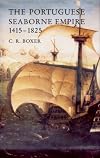
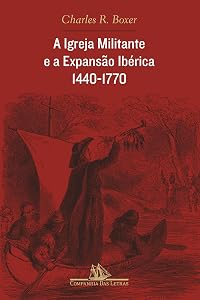
Charles Ralph Boxer is one of the foremost historians of early Portuguese history. I will admit from the start that I only read the Asia-related chapters of this work (although it also covers Portuguese colonies in Africa and the Americas), so my comments are limited to those chapters.
For anyone seeking information on the role of the church in the Portuguese colonies of Asia, this is the first place to turn, especially Chapters III and X ("Converts and Clergy in Monsoon Asia 1500-1600" and "The Crown Patronage and the Catholic Missions"), which discusses "the indissoluble union of the Cross and the Crown". As Boxer details it, Portuguese rulers were granted Padroado real (royal patronage of the Church overseas) privileges, which gave show more them the right to be the patron of the Roman Catholic church overseas in part because the Papacy was preoccupied with the "rising tide of Protestantism" on the one hand, and the "Turkish threat in the Mediterranean" on the other. In short, "God was omnipresent as well as Mammon". No one covers this topic better than Boxer, who details the arrival of the first Portuguese missionaries, the arrival of the Jesuits in Goa in 1542 and their subsequent settlements in Malacca, Macao and Nagasaki, and the Church's activities that reached its peak of insensitivity in 1567 when the most heinous bans and prohibitions were thrust upon local communities to turn them towards conversion to Christianity.
To my mind, one of the more interesting aspects of Portugal's expansion into Asia was (as Boxer so perfectly points out, "despite the cultural myopia"), the role Portuguese men of the cloth played as cultural links between Asia and Europe. The letters and notes of its early missionaries brought news of Asia to Europeans, and influenced Asian art and its culture as can be seen in the ivory carvings of Christian images made in Sri Lanka and Philippines that found their way to Europe, as well as the Chinese porcelains portraying such scenes as the Christian Crucifixion now seen in European museums. The European art Jesuit priests introduced to Akbar's Mughal court can still be seen today in Indian miniatures. Matteo Ricci introduced western science to China.
This excellent work is now out of print but can be found in major university and metropolitan libraries. It is worth seeking out if one is interested in Asian or Portuguese history, art history, or the history of the Catholic Church as a missionary religions. show less
For anyone seeking information on the role of the church in the Portuguese colonies of Asia, this is the first place to turn, especially Chapters III and X ("Converts and Clergy in Monsoon Asia 1500-1600" and "The Crown Patronage and the Catholic Missions"), which discusses "the indissoluble union of the Cross and the Crown". As Boxer details it, Portuguese rulers were granted Padroado real (royal patronage of the Church overseas) privileges, which gave show more them the right to be the patron of the Roman Catholic church overseas in part because the Papacy was preoccupied with the "rising tide of Protestantism" on the one hand, and the "Turkish threat in the Mediterranean" on the other. In short, "God was omnipresent as well as Mammon". No one covers this topic better than Boxer, who details the arrival of the first Portuguese missionaries, the arrival of the Jesuits in Goa in 1542 and their subsequent settlements in Malacca, Macao and Nagasaki, and the Church's activities that reached its peak of insensitivity in 1567 when the most heinous bans and prohibitions were thrust upon local communities to turn them towards conversion to Christianity.
To my mind, one of the more interesting aspects of Portugal's expansion into Asia was (as Boxer so perfectly points out, "despite the cultural myopia"), the role Portuguese men of the cloth played as cultural links between Asia and Europe. The letters and notes of its early missionaries brought news of Asia to Europeans, and influenced Asian art and its culture as can be seen in the ivory carvings of Christian images made in Sri Lanka and Philippines that found their way to Europe, as well as the Chinese porcelains portraying such scenes as the Christian Crucifixion now seen in European museums. The European art Jesuit priests introduced to Akbar's Mughal court can still be seen today in Indian miniatures. Matteo Ricci introduced western science to China.
This excellent work is now out of print but can be found in major university and metropolitan libraries. It is worth seeking out if one is interested in Asian or Portuguese history, art history, or the history of the Catholic Church as a missionary religions. show less
Hmph...very creative...
香港大學歷史系 With Best wishes-X'mas 1970, K Wong.
Jun 30, 2025Chinese, traditional
Ratings
Members
- Recently Added By
Author Information

146+ Works 916 Members
Some Editions
Series

Common Knowledge
- Canonical title
- The Portuguese Seaborne Empire, 1415-1825
- Original publication date
- 1965
- People/Characters
- Prince Henry the Navigator
- Important places
- Portugal
Classifications
Statistics
- Members
- 148
- Popularity
- 221,743
- Reviews
- 3
- Rating
- (4.11)
- Languages
- English, Portuguese
- Media
- Paper
- ISBNs
- 8
- ASINs
- 4