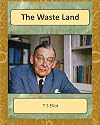
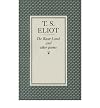
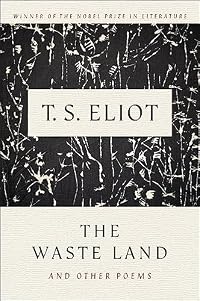
The Waste Land and Other Poems
by T. S. Eliot
On This Page
Description
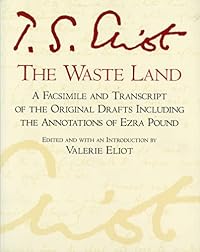
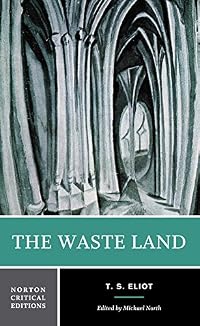
The Waste Land by T. S. Eliot - The Waste Land is a 434-line modernist poem by T. S. Eliot published in 1922. It has been called "one of the most important poems of the 20th century". Despite the poem's obscurity-its shifts between satire and prophecy, its abrupt and unannounced changes of speaker, location and time, its elegiac but intimidating summoning up of a vast and dissonant range of cultures and literatures-the poem has become a familiar touchstone of modern literature. Among its show more famous phrases are "April is the cruellest month", "I will show you fear in a handful of dust", and the mantra in the Sanskrit language "Shantih shantih shantih". Eliot probably worked on what was to become The Waste Land for several years preceding its first publication in 1922. In a letter to New York lawyer and patron of modernism John Quinn dated 9 May 1921, Eliot wrote that he had "a long poem in mind and partly on paper which I am wishful to finish". Richard Aldington, in his memoirs, relates that "a year or so" before Eliot read him the manuscript draft of The Waste Land in London, Eliot visited him in the country. While walking through a graveyard, they started discussing Thomas Gray's Elegy Written in a Country Churchyard. Aldington writes: "I was surprised to find that Eliot admired something so popular, and then went on to say that if a contemporary poet, conscious of his limitations as Gray evidently was, would concentrate all his gifts on one such poem he might achieve a similar success." show lessTags
Recommendations








Member Reviews
"April is the cruellest month, breeding / Lilacs out of the dead land, mixing / Memory and desire ..." So begins The Waste Land, T.S. Eliot's most famous, if not notorious, poem--a work which still surprises and excites with its technical ambition, its range and complexity, its startling images. One of the iconic works of Modernism and one of the great 20th-century poems in English, The Waste Land places the spiritual emptiness of modern urban existence within an intricate, allusive montage which draws on history, literature, myth, and world religions: "These fragments I have shored against my ruins". Difficult, yes, but also powerful: you don't need to get the references to get the poetry.
Eliot was born in St. Louis, Missouri, and show more studied at Harvard and the Sorbonne in Paris before settling in London (the city that provided much of the urban detail of his post-1920 writing): a shift evidenced by his repeated allusions to the European literary inheritance (from Dante to Baudelaire and beyond) and by his refusal of the American poetic sensibility of writers like William Carlos Williams. The result was a body of writing both curiously nostalgic for a sense of "tradition" and highly inventive, suffused with an acute and perceptive sense of contemporary life and the anxieties of turn-of-the-century modernity.
This selection of his verse is a useful introduction to the range of his poetics, from the early pieces which bear the influence of French symbolist poets--most notably Jules Laforgue--to the later works which are marked by his turn towards Christianity. The nervous, amourous hesitancy delineated in "The Love Song of J. Alfred Prufrock"; the memory fragments of "Gerontion"; the impressionistic canvas of "Landscapes: II. Virginia" ("Red river, red river / Slow flow heat is silence ...")--all give ample evidence that Eliot's poetry is always worth revisiting. --Burhan Tufail
The poems that "established T.S. Eliot decisively as the voice of a disillusioned generation". show less
Eliot was born in St. Louis, Missouri, and show more studied at Harvard and the Sorbonne in Paris before settling in London (the city that provided much of the urban detail of his post-1920 writing): a shift evidenced by his repeated allusions to the European literary inheritance (from Dante to Baudelaire and beyond) and by his refusal of the American poetic sensibility of writers like William Carlos Williams. The result was a body of writing both curiously nostalgic for a sense of "tradition" and highly inventive, suffused with an acute and perceptive sense of contemporary life and the anxieties of turn-of-the-century modernity.
This selection of his verse is a useful introduction to the range of his poetics, from the early pieces which bear the influence of French symbolist poets--most notably Jules Laforgue--to the later works which are marked by his turn towards Christianity. The nervous, amourous hesitancy delineated in "The Love Song of J. Alfred Prufrock"; the memory fragments of "Gerontion"; the impressionistic canvas of "Landscapes: II. Virginia" ("Red river, red river / Slow flow heat is silence ...")--all give ample evidence that Eliot's poetry is always worth revisiting. --Burhan Tufail
The poems that "established T.S. Eliot decisively as the voice of a disillusioned generation". show less
Ratings
Members
- Recently Added By
Author Information

500+ Works 47,713 Members
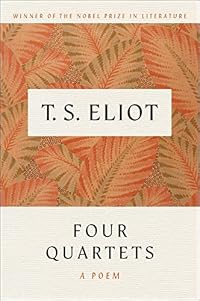
T. S. Eliot is considered by many to be a literary genius and one of the most influential men of letters during the half-century after World War I. He was born on September 26, 1888, in St. Louis, Missouri. Eliot attended Harvard University, with time abroad pursuing graduate studies at the Sorbonne, Marburg, and Oxford. The outbreak of World War show more I prevented his return to the United States, and, persuaded by Ezra Pound to remain in England, he decided to settle there permanently. He published his influential early criticism, much of it written as occasional pieces for literary periodicals. He developed such doctrines as the "dissociation of sensibility" and the "objective correlative" and elaborated his views on wit and on the relation of tradition to the individual talent. Eliot by this time had left his early, derivative verse far behind and had begun to publish avant-garde poetry (including "The Love Song of J. Alfred Prufrock" (1915), which exploited fresh rhythms, abrupt juxtapositions, contemporary subject matter, and witty allusion. This period of creativity also resulted in another collection of verse (including "Gerontian") and culminated in The Waste Land, a masterpiece published in 1922 and produced partly during a period of psychological breakdown while married to his wife, Vivienne Haigh-Wood Eliot. In 1922, Eliot became a director of the Faber & Faber publishing house, and in 1927 he became a British citizen and joined the Church of England. Thereafter, his career underwent a change. With the publication of Ash Wednesday in 1930, his poetry became more overtly Christian. As editor of the influential literary magazine The Criterion, he turned his hand to social as well as literary criticism, with an increasingly conservative orientation. His religious poetry culminated in Four Quartets, published individually from 1936 onward and collectively in 1943. This work is often considered to be his greatest poetic achievement. Eliot also wrote poetry in a much lighter vein, such as Old Possum's Book of Practical Cats (1939), a collection that was used during the early 1980s as the basis for the musical, Cats. In addition to his contributions in poetry and criticism, Eliot is the pivotal verse dramatist of this century. He followed the lead of William Butler Yeats in attempting to revive metrical language in the theater. But, unlike Yeats, Eliot wanted a dramatic verse that would be self-effacing, capable of expressing the most prosaic passages in a play, and an insistent, undetected presence capable of elevating itself at a moment's notice. His progression from the pageant The Rock (1934) and Murder in the Cathedral (1935), written for the Canterbury Festival, through The Family Reunion (1939) and The Cocktail Party (1949), a West End hit, was thus a matter of neutralizing obvious poetic effects and bringing prose passages into the flow of verse. Recent critics have seen Eliot as a divided figure, covertly attracted to the very elements (romanticism, personality, heresy) he overtly condemned. His early attacks on romantic poets, for example, often reveal him as a romantic against the grain. The same divisions carry over into his verse, where violence struggles against restraint, emotion against order, and imagination against ironic detachment. This Eliot is more human and more attractive to contemporary taste. During his lifetime, Eliot received many honors and awards, including the Nobel Prize for literature in 1948. (Bowker Author Biography) show less
Common Knowledge
- Canonical title
- The Waste Land and Other Poems
Classifications
Statistics
- Members
- 131
- Popularity
- 248,231
- Reviews
- 1
- Rating
- (3.58)
- Languages
- English
- Media
- Paper, Ebook
- ISBNs
- 4
- ASINs
- 1