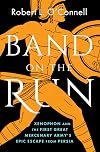
Band on the Run: Xenophon and the First Great Mercenary Army's Epic Escape from Persia
by Robert L. O'Connell
On This Page
Recommendations

































Member Reviews
From the subtitle, one would expect this book would be about “Xenophon and the First Great Mercenary Army’s Epic Escape from Persia.”
Perhaps because O’Connell didn’t have any new primary materials on offer, he pads his story by taking us through the entire history of warfare, beginning with ants [!] When he finally makes his way to relevant material involving the Persians and Greeks between 600 and 300 BCE, he relies mainly on Greek sources, offering their assessments of Persians as definitive:
“They were subtle and treacherous…. with .. monumental sexual excess… and “addiction to luxury and especially bling..”
O’Connell seems to accept all that at face value, as if the Greeks were, by contrast, paragons of virtue show more (except, he allows, for their apparent willingness to be bribed. One would think that might indicate they too were addicted to what money could buy, but O’Connell draws no such conclusions). In any event, he repeatedly gives too much credence to scant written records made by persons with axes to grind, so to speak.
(It should be noted one of the sources he consults is “the Septuagint, translated into Greek by seventy-two Hebrew scholars a the command of Ptolemy II of Egypt, sometime in the first half o the third century BCE.” As even Wikipedia knows, “this story [of the creation of the Septuagint] is considered to be pseudepigraphical [i.e., false]. . . . Biblical scholars agree that the first five books of the Hebrew Bible were translated from Biblical Hebrew into Koine Greek by Jews living in the Ptolemaic Kingdom. . . probably in the early or middle part of the 3rd century BC. The remaining books were presumably translated in the 2nd century BC.”)
Moreover, the “Ten Thousand” was a force of mercenary units made up mostly of Greeks. “When times were good” for this army, we learn, they had serial bouts of feasting, drunkenness, and “basically free access to sex completely on male terms,” which included sharing of women and adolescent boys and girls, as well as “a number of love affairs between soldiers and members of both sexes.” Hmmm, sounds like the Greeks were not so different from the descriptions they gave - that O’Connell accepted - of the Persians. Were the Greeks engaging in damnation by projection, one wonders? And when O’Connell wrote about the Persians, was he forgetting what he also told us about the Greeks?
When it comes to the saga of the Ten Thousand, O’Connell doesn’t do much more than quote Xenophon’s own history, Anabasis. Okay, rendering it in contemporary English is helpful, but otherwise, I was not impressed by this retelling. show less
Perhaps because O’Connell didn’t have any new primary materials on offer, he pads his story by taking us through the entire history of warfare, beginning with ants [!] When he finally makes his way to relevant material involving the Persians and Greeks between 600 and 300 BCE, he relies mainly on Greek sources, offering their assessments of Persians as definitive:
“They were subtle and treacherous…. with .. monumental sexual excess… and “addiction to luxury and especially bling..”
O’Connell seems to accept all that at face value, as if the Greeks were, by contrast, paragons of virtue show more (except, he allows, for their apparent willingness to be bribed. One would think that might indicate they too were addicted to what money could buy, but O’Connell draws no such conclusions). In any event, he repeatedly gives too much credence to scant written records made by persons with axes to grind, so to speak.
(It should be noted one of the sources he consults is “the Septuagint, translated into Greek by seventy-two Hebrew scholars a the command of Ptolemy II of Egypt, sometime in the first half o the third century BCE.” As even Wikipedia knows, “this story [of the creation of the Septuagint] is considered to be pseudepigraphical [i.e., false]. . . . Biblical scholars agree that the first five books of the Hebrew Bible were translated from Biblical Hebrew into Koine Greek by Jews living in the Ptolemaic Kingdom. . . probably in the early or middle part of the 3rd century BC. The remaining books were presumably translated in the 2nd century BC.”)
Moreover, the “Ten Thousand” was a force of mercenary units made up mostly of Greeks. “When times were good” for this army, we learn, they had serial bouts of feasting, drunkenness, and “basically free access to sex completely on male terms,” which included sharing of women and adolescent boys and girls, as well as “a number of love affairs between soldiers and members of both sexes.” Hmmm, sounds like the Greeks were not so different from the descriptions they gave - that O’Connell accepted - of the Persians. Were the Greeks engaging in damnation by projection, one wonders? And when O’Connell wrote about the Persians, was he forgetting what he also told us about the Greeks?
When it comes to the saga of the Ten Thousand, O’Connell doesn’t do much more than quote Xenophon’s own history, Anabasis. Okay, rendering it in contemporary English is helpful, but otherwise, I was not impressed by this retelling. show less
 This review was written for LibraryThing Early Reviewers.
A good story told poorly. O'Connell's theory regarding mercenary armies gets in the way of simply recounting the tale of the Anabasis for a modern audience. I also found his constant need to belittle the practice of ancient Greek religion to be annoying. Good works of history help you understand the mindset of the subject of the work, rather than allow you to port in all your previously conceived ideas. It doesn't matter if I find their religion credible, they did! Ultimately, he would have been better served to let the story breathe and spend his time painting a picture of that.
See my full review on my YouTube channel "I'll Read It...Eventually"
https://youtu.be/gYH-E-2GuWk
See my full review on my YouTube channel "I'll Read It...Eventually"
https://youtu.be/gYH-E-2GuWk
This review was written for LibraryThing Early Reviewers.You know you're in trouble when the second sentence of a non-fiction work is factually wrong. But that's what we find in this book: "the Old Testament... the Septuagint, translated into Greek by seventy-two Hebrew scholars at the command of Ptolemy II of Egypt." That's the folklore of the origin of part of the Septuagint, but only part (specifically, the Pentatuech, or the Five Books of Moses), but every reputable scholar agrees that that is false, and it only applies to five books out of 39 anyway!
A few more examples, in multiple fields: On page 17, we read that "copper, when mixed with a little arsenic, produced bronze." No, bronze is copper plus tin; arsenic was often found in copper ores, but the goal was to get rid of it show more safely!
Page 49 refers to the Persians being unlettered. Flatly false -- as author O'Connell would have known had he read the Septuagint with care, because the Book of Ezra would have told him of a search of written records in the Persian archives (Ezra 6:2ff.). The same book describes a written correspondence between the emperor Darius and some of his officials, and the Book of Esther (6:1) refers to the Book of Records being read to the Emperor. Or google "Behistun Inscription" for a monumental (literally) writing partly in Old Persian. The Persians seem to have been un-literary -- they don't have a written literature, unlike the Greeks or Romans or Chinese -- but they were not collectively illiterate.
O'Connell also has his obsessions, e.g. with the Greek use of sacrificial oracles; if I never have to read about "liver lobes" again, I'll be happy. And there are a lot of misused words in here. Admittedly I'm reading an advance reader copy, but an ARC is supposed to be near-final. This thing really needs both an editor and a fact-checker to give it a thorough going-over. Maybe two goings-over.
So: If you're interested in high levels of accuracy, this book may drive you bonkers. And the opinions in the first chapter, about the history of warfare in general, are certainly subject to debate.
On the other hand, if you don't read Greek, most translations of Xenophon (the source of most of what you read here) are a bit of a chore. Xenophon is much longer than this book, and the rhetoric can be a bit much. You will probably find yourself rather desperate for an overview.
Enter this volume. My gut feeling is that it boils down Xenophon by about 50%. Given that summary, the real thing should be much easier to handle.
Of course, that raises the question of whether you really need Xenophon. If you want to read Greek history, Herodotus and Thucydides and the historians of Alexander the Great are surely more important. And Greek drama is from this general period and is much better as reading material. And the level of violence is depressingly high; the Ten Thousand really were a dangerous and unprincipled bunch (though I feel like this book puts too much weight on that). But Xenophon is important for completeness. Read it -- or read this summary -- in that light. show less
A few more examples, in multiple fields: On page 17, we read that "copper, when mixed with a little arsenic, produced bronze." No, bronze is copper plus tin; arsenic was often found in copper ores, but the goal was to get rid of it show more safely!
Page 49 refers to the Persians being unlettered. Flatly false -- as author O'Connell would have known had he read the Septuagint with care, because the Book of Ezra would have told him of a search of written records in the Persian archives (Ezra 6:2ff.). The same book describes a written correspondence between the emperor Darius and some of his officials, and the Book of Esther (6:1) refers to the Book of Records being read to the Emperor. Or google "Behistun Inscription" for a monumental (literally) writing partly in Old Persian. The Persians seem to have been un-literary -- they don't have a written literature, unlike the Greeks or Romans or Chinese -- but they were not collectively illiterate.
O'Connell also has his obsessions, e.g. with the Greek use of sacrificial oracles; if I never have to read about "liver lobes" again, I'll be happy. And there are a lot of misused words in here. Admittedly I'm reading an advance reader copy, but an ARC is supposed to be near-final. This thing really needs both an editor and a fact-checker to give it a thorough going-over. Maybe two goings-over.
So: If you're interested in high levels of accuracy, this book may drive you bonkers. And the opinions in the first chapter, about the history of warfare in general, are certainly subject to debate.
On the other hand, if you don't read Greek, most translations of Xenophon (the source of most of what you read here) are a bit of a chore. Xenophon is much longer than this book, and the rhetoric can be a bit much. You will probably find yourself rather desperate for an overview.
Enter this volume. My gut feeling is that it boils down Xenophon by about 50%. Given that summary, the real thing should be much easier to handle.
Of course, that raises the question of whether you really need Xenophon. If you want to read Greek history, Herodotus and Thucydides and the historians of Alexander the Great are surely more important. And Greek drama is from this general period and is much better as reading material. And the level of violence is depressingly high; the Ten Thousand really were a dangerous and unprincipled bunch (though I feel like this book puts too much weight on that). But Xenophon is important for completeness. Read it -- or read this summary -- in that light. show less
This review was written for LibraryThing Early Reviewers.In Band on the Run: Xenophon and the First Great Mercenary Army’s Epic Escape from Persia, intelligence analysist Robert L. O’Connell examines Xenophon’s Anabasis and the description of the Ten Thousand, a group of Greek mercenaries who fought Artaxerxes at the behest of Cyrus in 401 BCE and eventually made their own odyssey back to Greece from Persia. O’Connell draws out threads from this account that illustrate the nature of warfare in our own times while also calling into question many popular assumptions about ancient Greece.
Critical to O’Connell’s account is an understanding of the human cost of war, specifically the taking of slaves as plunder. He writes, “With the exception of Sparta’s helots, who could not be show more bought and sold, slaves were a sought after commodity throughout the Greek world and always had been. Urbanization and growing productivity only compounded their usefulness, their numbers, and, quite probably, their misery” (p. 40). O’Connell continues, “Those captured in battle were customarily enslaved, as were, on occasion, entire populations, who were then fed to the larger economy by the slave traders who customarily accompanied armies. This meant that many, probably most, slaves of Greeks were also Greeks. Yet they treated them like sophisticated livestock – andrapori, ‘creature with two feet’” (p. 40). In this way, slavery and human plunder defined ancient warfare according to O’Connell.
O’Connell further examines the financial incentives for war. He writes, “Achaemenid Persians were exceptionally good at employing the full array of skills available to the ancient power politician, including: threats backed up by exemplary punishment, the breaking of solemn oaths, and, of course, bribery. Especially bribery when it came to Greeks; strategically and over the long term it remained the sharpest arrow in the Persian quiver. For as much as Greeks derided Persians for their sybaritic ways, it was repeatedly Hellenes who succumbed to bribes at key moments in the long conflict” (p. 49). A force subject to bribery was similarly subject to deception. O’Connell writes, “…To Xenophon and the other Greeks, their predicament upon revelation must have been utterly terrifying. Yet again, the Persians appeared to have employed guile in the face of superior arms to twist military reality in their favor. The Hellenes were reduced to what Tissaphernes wanted: a herd without shepherds, lost in an alien land hundreds of miles from anything they could call Greek… an orphan army” (p. 101).
The Ten Thousand became a privateer army plundering the landscape amid shifting political tensions. O’Connell argues, “…Cyrus having lost his head at Cunaxa, plus the kidnapping of the generals, really did seem to have a fundamental effect on the army they left behind by amalgamating them through sheer dread into a coherent entity – not just an army, but a rapidly evolving social mechanism set loose in a highly exploitable environment, although still with the overall objective of getting home. Because this marks a profound transition, the real birth of this army, it’s worth a christening. Nothing original here; the traditional Ten Thousand, if never really an accurate number, exactly describes their effect on the landscape… For, like army ants, the Ten Thousand were now left to traverse a landscape where lethality trumped everything, free to take anything nutritious, useful, pleasurable, or valuable. At the heart of the Ten Thousand’s metabolism would be slaves, particularly young and attractive ones” (p. 112). Once the Ten Thousand turned a blind eye to those who took lucre for their own gain even when doing so placed a burden on their movement, they became “true members of a new social organism, the pirate army” (p. 120). Following the army and Xenophon’s willingness to hear Seuthes’ offer of a bribe, the Ten Thousand ceased to be “an independent, self-serving entity” and “would follow the orders of others,” thereby becoming an army that “lived for itself, developing an economic mechanism based on human enslavement, which allowed it to become self-sustaining” (p. 170).
Summarizing their legacy, O’Connell writes, “Absent Xenophon, they would have been remembered, but simply as another chapter in the episodic tale of Greeks versus Persians. Add Xenophon, and they became not just protagonists, but prototypes of something still larger, the conquest of Persia not along the periphery, but by marching to its center and delivering a death blow to its heart” (p. 187-188). O’Connell continues, “There are also broader, possibly more profound lessons revealed by the wanderings of the Ten Thousand. Classicists cherish ancient Greece for its astonishing intellectual achievements, locating them at the foundation of our own version of civilization’s edifice; but from a military historian’s perspective, the soldiers among the Ten Thousand seemed representative of what were the most compulsively warlike people on the planet – otherwise they couldn’t have survived. Moreover, despite all their cultural achievements, this is how the Greeks thought of themselves” (p. 189). O’Connell concludes of Xenophon’s Anabasis, “It is one of the best and most authentic military histories ever written” (p. 197).
O’Connell’s account is a riveting retelling of classical history complete with new analysis, though his focused, critical reading of Xenophon will primarily appeal to classicists and military historians. In particular, his conclusion leaps from the bronze age through the Roman Empire, the medieval and early modern periods, and into the twenty-first century. While a critical reading of Xenophon complicate popular understandings of Greek identity, O’Connell’s conclusion seems overly broad. That being said, those interested in classical Greece will find plenty of insights in this volume. show less
Critical to O’Connell’s account is an understanding of the human cost of war, specifically the taking of slaves as plunder. He writes, “With the exception of Sparta’s helots, who could not be show more bought and sold, slaves were a sought after commodity throughout the Greek world and always had been. Urbanization and growing productivity only compounded their usefulness, their numbers, and, quite probably, their misery” (p. 40). O’Connell continues, “Those captured in battle were customarily enslaved, as were, on occasion, entire populations, who were then fed to the larger economy by the slave traders who customarily accompanied armies. This meant that many, probably most, slaves of Greeks were also Greeks. Yet they treated them like sophisticated livestock – andrapori, ‘creature with two feet’” (p. 40). In this way, slavery and human plunder defined ancient warfare according to O’Connell.
O’Connell further examines the financial incentives for war. He writes, “Achaemenid Persians were exceptionally good at employing the full array of skills available to the ancient power politician, including: threats backed up by exemplary punishment, the breaking of solemn oaths, and, of course, bribery. Especially bribery when it came to Greeks; strategically and over the long term it remained the sharpest arrow in the Persian quiver. For as much as Greeks derided Persians for their sybaritic ways, it was repeatedly Hellenes who succumbed to bribes at key moments in the long conflict” (p. 49). A force subject to bribery was similarly subject to deception. O’Connell writes, “…To Xenophon and the other Greeks, their predicament upon revelation must have been utterly terrifying. Yet again, the Persians appeared to have employed guile in the face of superior arms to twist military reality in their favor. The Hellenes were reduced to what Tissaphernes wanted: a herd without shepherds, lost in an alien land hundreds of miles from anything they could call Greek… an orphan army” (p. 101).
The Ten Thousand became a privateer army plundering the landscape amid shifting political tensions. O’Connell argues, “…Cyrus having lost his head at Cunaxa, plus the kidnapping of the generals, really did seem to have a fundamental effect on the army they left behind by amalgamating them through sheer dread into a coherent entity – not just an army, but a rapidly evolving social mechanism set loose in a highly exploitable environment, although still with the overall objective of getting home. Because this marks a profound transition, the real birth of this army, it’s worth a christening. Nothing original here; the traditional Ten Thousand, if never really an accurate number, exactly describes their effect on the landscape… For, like army ants, the Ten Thousand were now left to traverse a landscape where lethality trumped everything, free to take anything nutritious, useful, pleasurable, or valuable. At the heart of the Ten Thousand’s metabolism would be slaves, particularly young and attractive ones” (p. 112). Once the Ten Thousand turned a blind eye to those who took lucre for their own gain even when doing so placed a burden on their movement, they became “true members of a new social organism, the pirate army” (p. 120). Following the army and Xenophon’s willingness to hear Seuthes’ offer of a bribe, the Ten Thousand ceased to be “an independent, self-serving entity” and “would follow the orders of others,” thereby becoming an army that “lived for itself, developing an economic mechanism based on human enslavement, which allowed it to become self-sustaining” (p. 170).
Summarizing their legacy, O’Connell writes, “Absent Xenophon, they would have been remembered, but simply as another chapter in the episodic tale of Greeks versus Persians. Add Xenophon, and they became not just protagonists, but prototypes of something still larger, the conquest of Persia not along the periphery, but by marching to its center and delivering a death blow to its heart” (p. 187-188). O’Connell continues, “There are also broader, possibly more profound lessons revealed by the wanderings of the Ten Thousand. Classicists cherish ancient Greece for its astonishing intellectual achievements, locating them at the foundation of our own version of civilization’s edifice; but from a military historian’s perspective, the soldiers among the Ten Thousand seemed representative of what were the most compulsively warlike people on the planet – otherwise they couldn’t have survived. Moreover, despite all their cultural achievements, this is how the Greeks thought of themselves” (p. 189). O’Connell concludes of Xenophon’s Anabasis, “It is one of the best and most authentic military histories ever written” (p. 197).
O’Connell’s account is a riveting retelling of classical history complete with new analysis, though his focused, critical reading of Xenophon will primarily appeal to classicists and military historians. In particular, his conclusion leaps from the bronze age through the Roman Empire, the medieval and early modern periods, and into the twenty-first century. While a critical reading of Xenophon complicate popular understandings of Greek identity, O’Connell’s conclusion seems overly broad. That being said, those interested in classical Greece will find plenty of insights in this volume. show less
This review was written for LibraryThing Early Reviewers.O’Connell gives the short, but engaging, story of Greek mercenaries left stranded in Persia after hiring onto the wrong contender for the Persian throne, and how they got back home. And how this mercenary army became a significant power in the region as the first “pirate army”. While Xenophon isn’t completely trustworthy, he’s the best we’ve got, and O’Connell’s great at telling his story.
This review was written for LibraryThing Early Reviewers.I received this free from Library Thing and the publisher in exchange for a honest review. My opinions are my own.
I knew nothing about Xenophon before reading this book. I have read some Greek and Persian history, but not this period. So I appreciated this account of the Ten Thousand and their march through Persia. They were certainly a ruthless bunch. However, I found it hard to keep all the unfamiliar names straight. Maybe a list of characters would have helped. The book was fast paced and easy enough to read, but I didn't appreciate the frequent editorial comments on religion. It was jarring.
I knew nothing about Xenophon before reading this book. I have read some Greek and Persian history, but not this period. So I appreciated this account of the Ten Thousand and their march through Persia. They were certainly a ruthless bunch. However, I found it hard to keep all the unfamiliar names straight. Maybe a list of characters would have helped. The book was fast paced and easy enough to read, but I didn't appreciate the frequent editorial comments on religion. It was jarring.
This review was written for LibraryThing Early Reviewers.Almost a third of the book is taken up with the evolution of warfare from Neanderthals eventually up to the Greeks. The book picks up speed when he actually gets to Xenophon and the Ten Thousand. Well written, provides a lot of details and explanations, and good maps. Found only one typo in this preprint.
This review was written for LibraryThing Early Reviewers.Members
- Recently Added By
Lists

al.vick-wishlist-history
70 works; 2 members
Author Information

9+ Works 1,422 Members
Robert L. O'Connell has worked as a senior analyst at the National Ground Intelligence Center and as a contributing editor to MHQ: The Quarterly Journal of Military History. He is the author of several nonfiction books including Of Arms and Men: A History of War, Weapons, and Aggression; Sacred Vessels: The Cult of the Battleship and the Rise of show more the U.S. Navy; Ride of the Second Horseman: The Birth and Death of War; Soul of the Sword: An Illustrated History of Weaponry and Warfare from Prehistory to the Present; and Fierce Patriot: The Tangled Lives of William Tecumseh Sherman. He also wrote the novel Fast Eddie. (Bowker Author Biography) show less
Common Knowledge
- Canonical title
- Band on the Run: Xenophon and the First Great Mercenary Army's Epic Escape from Persia
- Original publication date
- 2026-07
- People/Characters
- Xenophon; Cyrus the Younger; Darius the Great; Xerxes I; Alcibiades; Tissaphernes (show all 7); Artaxerxes I
- Important places
- Athens, Greece; Sparta, Greece; Persepolis
- Important events
- Retreat of the Ten Thousand
- Dedication
- To Todd J. Clark,
a Hero and a Patriot - First words
- INTRODUCTION
After thirty years working for the government, another decade as an academic, and over a million words in print, I had settled in for some retirement reading—so many books to revisit, so many books that I me... (show all)ant to read but never got around to.
Classifications
Statistics
- Members
- 22
- Popularity
- 1,191,975
- Reviews
- 8
- Rating
- (3.14)
- Languages
- English
- Media
- Paper
- ISBNs
- 1