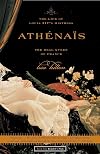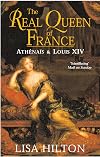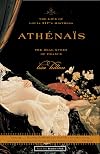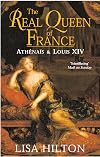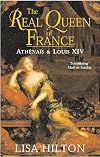
Athenais: The Real Queen of France
by Lisa Hilton
On This Page
Description
As lovely and charming as she was shrewd and calculating, Athenais de Montespan became the most powerful noblewoman of her day by brilliantly manipulating her forbidden role as mistress of King Louis XIV. With a lively narrative style that reads like fiction, Hilton reveals the woman behind the most dazzling days of the Sun King's reign. photos.Tags
Recommendations
































Member Reviews
Stephen Vincent Benét was right; some French names are like silver spoons. The three principal mistresses of Louis XIV were Louise de la Vallière, Duchesse de Vaujours; Athénaïs de Rochechouart de Mortemarte, Marquise de Montespan; and Françoise Scarron, Marquise de Maintenon. Louis also had brief flings with others: Mademoiselle de Beuvais, who seduced him when he was sixteen despite being 24 years older and missing an eye; two of the three Mancini sisters, Marie and Olympe; Henriette d’Angleterre, his sister-in-law; Marie-Angélique de Fontages, who contemporaries described as “as beautiful as an angel and as intelligent as a basket”; and assorted ladies-in-waiting, serving girls, and who knows what else. Except for the show more first few encounters, this all happened while he was married to Marie-Thérèse of Spain; although Louis was dutiful and produced children by her, since she was not particularly bright, was ultra-religious, and had the unfortunate Hapsburg features, which make the males of the line look like cartoon characters and the females look like someone had set their face on fire and beat it out with a shovel.
Of these, I’d heard of Louise de la Vallière, who figures in the Dumas novel of the same name and got a style of necklace named after her. (My introduction to the lady was by way of the jewelry; during my adolescence it was briefly in vogue to give a necklace of this type as a “going steady” token. A coed of my acquaintance volunteered that “she had been lavelliered”, and being totally clueless of the meaning I responded with “Omigod! Did they catch the guy?” This was not the right thing to say.)
The heroine of Athenais, however, is the middle lady. The life of the royal mistress, while lucrative, was fraught with tension; there were plenty of ladies in the wings eager to replace you. Athénaïs was brilliant at this sort of court intrigue. The previous mistress, Louise de la Vallière, based her approach on playing hard to get; Athénaïs correctly decided that the king was tired of coyness and took the “extremely easy to get” tack. She managed to maintain Louis’ interest for twelve or thirteen years, apparently by a combination of witty conversation, slandering other mistress applicants, talent at arranging court festivities, and bedroom skills. The court festivities part included some spectacular ballets, with music by Lully and libretti by Molière. Typically the King danced in the leading role, with Athénaïs and other ladies of the court as the corps de ballet. We owe Athénaïs some thanks here; she developed an early form of recording choreography and these are the first ballets where there’s some clue to how they were danced. (It occurred to me that having the government present ballets might be an interesting tradition to revive. I can picture the current administration doing The Nutcracker, with Dick Cheney as Herr Drosselmeyer, Condilezza Rice as Clara, President Bush as the Prince, Saddam Hussein as The Mouse King, and Larry Craig as the Sugarplum Fairy.)
Athénaïs’ downfall came in a Baroque scandal generally called “The Affair of the Poisons”. Athénaïs, like many other women of the time, frequented an assortment of witches, wizards and other such for love potions, charms, cosmetics, spell casting, fortune telling and so forth. While technically quite illegal under both state and religious law, this sort of thing was fashionable for court ladies (probably just because it was illegal) and the authorities usually looked the other way. Unfortunately, one of the witches was overheard bragging to a tavern audience that she had provided poisons to certain “high people”. This was something the police could not ignore, and the whole coven of Paris was brought in for “questioning”. Questioning at the time involved breaking the informant’s arms and legs with a sledgehammer, and the wizards and witches were quick to volunteer torrents of information on their activities, including stories that just about everybody at court had tried to poison just about everybody else, and that Athénaïs and other ladies had participated in Black Masses, with their own naked bodies as altars to receive the blood of sacrificed babies – also claimed to be their own. This was getting out of hand, and the King ordered the prosecution stopped – after having all the witches burned so they couldn’t talk any more. However, he was apparently suspicious enough that Athénaïs was guilty of at least some of the accusations that he switched his affections to Françoise de Maintenon, a highly religious lady who justified the situation by claiming she was sacrificing her virtue to save the King’s soul. (The King had met Françoise while she was, ironically, the governess of his illegitimate children by Athénaïs).
Athénaïs retired to her country estate (this was considered presumptuous by her critics; discarded mistresses were supposed to enter a convent) and busied herself with various charities. She did not write the entire shelves full of erotic memoirs attributed to her; she wouldn’t have had time and wasn’t the kiss and tell type.
I found it interesting that two recent reads have both involved supposed poisonings – this one and Unnatural Murder. Accounts of the Renaissance and Baroque are full of poisonings, with poisoned gloves and poisoned books and poisoned rings and so on, but the actual poisons known were probably just heavy metal compounds – arsenic and mercury – plus maybe mushroom poisons. Certainly there were plenty of people died suddenly and uncomfortably back then, but I suspect a lot of supposed poisonings were just bad luck with sanitation.
Good background for The Three Musketeers and the sequels, Cyrano de Bergerac or Neal Stephenson’s Baroque Trilogy. show less
Of these, I’d heard of Louise de la Vallière, who figures in the Dumas novel of the same name and got a style of necklace named after her. (My introduction to the lady was by way of the jewelry; during my adolescence it was briefly in vogue to give a necklace of this type as a “going steady” token. A coed of my acquaintance volunteered that “she had been lavelliered”, and being totally clueless of the meaning I responded with “Omigod! Did they catch the guy?” This was not the right thing to say.)
The heroine of Athenais, however, is the middle lady. The life of the royal mistress, while lucrative, was fraught with tension; there were plenty of ladies in the wings eager to replace you. Athénaïs was brilliant at this sort of court intrigue. The previous mistress, Louise de la Vallière, based her approach on playing hard to get; Athénaïs correctly decided that the king was tired of coyness and took the “extremely easy to get” tack. She managed to maintain Louis’ interest for twelve or thirteen years, apparently by a combination of witty conversation, slandering other mistress applicants, talent at arranging court festivities, and bedroom skills. The court festivities part included some spectacular ballets, with music by Lully and libretti by Molière. Typically the King danced in the leading role, with Athénaïs and other ladies of the court as the corps de ballet. We owe Athénaïs some thanks here; she developed an early form of recording choreography and these are the first ballets where there’s some clue to how they were danced. (It occurred to me that having the government present ballets might be an interesting tradition to revive. I can picture the current administration doing The Nutcracker, with Dick Cheney as Herr Drosselmeyer, Condilezza Rice as Clara, President Bush as the Prince, Saddam Hussein as The Mouse King, and Larry Craig as the Sugarplum Fairy.)
Athénaïs’ downfall came in a Baroque scandal generally called “The Affair of the Poisons”. Athénaïs, like many other women of the time, frequented an assortment of witches, wizards and other such for love potions, charms, cosmetics, spell casting, fortune telling and so forth. While technically quite illegal under both state and religious law, this sort of thing was fashionable for court ladies (probably just because it was illegal) and the authorities usually looked the other way. Unfortunately, one of the witches was overheard bragging to a tavern audience that she had provided poisons to certain “high people”. This was something the police could not ignore, and the whole coven of Paris was brought in for “questioning”. Questioning at the time involved breaking the informant’s arms and legs with a sledgehammer, and the wizards and witches were quick to volunteer torrents of information on their activities, including stories that just about everybody at court had tried to poison just about everybody else, and that Athénaïs and other ladies had participated in Black Masses, with their own naked bodies as altars to receive the blood of sacrificed babies – also claimed to be their own. This was getting out of hand, and the King ordered the prosecution stopped – after having all the witches burned so they couldn’t talk any more. However, he was apparently suspicious enough that Athénaïs was guilty of at least some of the accusations that he switched his affections to Françoise de Maintenon, a highly religious lady who justified the situation by claiming she was sacrificing her virtue to save the King’s soul. (The King had met Françoise while she was, ironically, the governess of his illegitimate children by Athénaïs).
Athénaïs retired to her country estate (this was considered presumptuous by her critics; discarded mistresses were supposed to enter a convent) and busied herself with various charities. She did not write the entire shelves full of erotic memoirs attributed to her; she wouldn’t have had time and wasn’t the kiss and tell type.
I found it interesting that two recent reads have both involved supposed poisonings – this one and Unnatural Murder. Accounts of the Renaissance and Baroque are full of poisonings, with poisoned gloves and poisoned books and poisoned rings and so on, but the actual poisons known were probably just heavy metal compounds – arsenic and mercury – plus maybe mushroom poisons. Certainly there were plenty of people died suddenly and uncomfortably back then, but I suspect a lot of supposed poisonings were just bad luck with sanitation.
Good background for The Three Musketeers and the sequels, Cyrano de Bergerac or Neal Stephenson’s Baroque Trilogy. show less
Started out interesting enough, but when I got to the end I thought, "FINALLY!"... which is not a reaction one wants to have to a book.
I wish to make two accusations against the author of this book:
1) that she had not enough information to write a book of this length, and instead of writing a shorter, snappier book, she... still wrote a book of this length, and it dragged.
2) that she is so whoa clearly Team Athenais. I mean, I get that if you're writing a whole book about someone, you're probably on their side, but some of the assertions/defenses made me laugh; they sounded like they were being said about a friend, not a biographical subject.
Unless you are already invested in the subject (in which case there is probably not anything show more especially new in this book), I wouldn't recommend picking this up. show less
I wish to make two accusations against the author of this book:
1) that she had not enough information to write a book of this length, and instead of writing a shorter, snappier book, she... still wrote a book of this length, and it dragged.
2) that she is so whoa clearly Team Athenais. I mean, I get that if you're writing a whole book about someone, you're probably on their side, but some of the assertions/defenses made me laugh; they sounded like they were being said about a friend, not a biographical subject.
Unless you are already invested in the subject (in which case there is probably not anything show more especially new in this book), I wouldn't recommend picking this up. show less
This book explores the life of this lady who was the mistress of King Louis XIV of France for many years, eclipsing in her beauty, wit and intelligence the non-descript real real Queen Marie Therese. Her rivalries with her predecessor as mistress, Louise de Vallieres and with her successors La Fontanges (briefly) and Madame de Maintenon are well described and often quite amusing. The bizarre and horrible Affair of the Poisons is well described and while I don't believe Athenais was involved in the alleged poisonings and supposed Satanism, my main sympathy was with the innocent victims kept imprisoned for the rest of their lives under the horrible lettres de cachet process. The stultifying etiquette-bound atmosphere of the court at show more Versailles is also well described, as is the phenomenon of gloire which The Sun King and his whole court and indeed the whole country promoted around the person of Louis. There are some very colourful characters here during Louis's long reign - 72 years, the longest in West European history - plotting, betraying, loving, marrying, having affairs with each other, it's like a giant baroque soap opera. 5/5 show less
Engagingly written, but shallow popular biography, which doesn't even attempt neutrality or scholarly distance—Hilton makes no bones about the fact that she's firmly on the side of Madame de Montespan. This makes for an unbalanced book, and while the reader might be able to enjoy the book, one can never shake the scepticism which such partisanship creates in the reader.
The reviewer who claims "Athenais's true love is NOT Louis XIV, it's Lisa Hilton!!!" has hit the nail on the head. I've read this book three times now (for some inexplicable reason I keep hoping it'll improve with age) and each time I get the overwhelming feeling that the author believes that she was Athenais in a previous life. She bends over backwards in an effort to paint Athenais' every action in the most flattering light possible, while at the same time maligning every other female character. If Athenais does it, it's noble and gracious; if (fill-in-blank) does it, it's grasping and self-centered. *sigh*
I give the author credit for taking on a subject that has been (for the most part) ignored as a major character in English print. show more I just wish that she could have avoided blatant bias and shown a well-rounded character. I can easily picture the Lisa Hilton Athenais saying, "Don't hate me because I'm beautiful"... this Athenais has every action justified, and every other woman is The Evil Enemy. (One comes to expect the obligatory words smug, malicious, envious, jealous, grasping, etc., whenever another femme appears.)
Maybe if we're lucky Ms. Hilton will try again in 20+ years... she's earnest, but her extreme bias overshoots the mark and creates a character better titled, "The Real Witch of France." (Feel free to substitute another word for "witch".) Athenais has received a great deal of negative treatment, but the solution would be an unbiased bio, not one that tries to raise the subject by damning her contemporaries. show less
I give the author credit for taking on a subject that has been (for the most part) ignored as a major character in English print. show more I just wish that she could have avoided blatant bias and shown a well-rounded character. I can easily picture the Lisa Hilton Athenais saying, "Don't hate me because I'm beautiful"... this Athenais has every action justified, and every other woman is The Evil Enemy. (One comes to expect the obligatory words smug, malicious, envious, jealous, grasping, etc., whenever another femme appears.)
Maybe if we're lucky Ms. Hilton will try again in 20+ years... she's earnest, but her extreme bias overshoots the mark and creates a character better titled, "The Real Witch of France." (Feel free to substitute another word for "witch".) Athenais has received a great deal of negative treatment, but the solution would be an unbiased bio, not one that tries to raise the subject by damning her contemporaries. show less
Started out interesting enough, but when I got to the end I thought, "FINALLY!"... which is not a reaction one wants to have to a book.
I wish to make two accusations against the author of this book:
1) that she had not enough information to write a book of this length, and instead of writing a shorter, snappier book, she... still wrote a book of this length, and it dragged.
2) that she is so whoa clearly Team Athenais. I mean, I get that if you're writing a whole book about someone, you're probably on their side, but some of the assertions/defenses made me laugh; they sounded like they were being said about a friend, not a biographical subject.
Unless you are already invested in the subject (in which case there is probably not anything show more especially new in this book), I wouldn't recommend picking this up. show less
I wish to make two accusations against the author of this book:
1) that she had not enough information to write a book of this length, and instead of writing a shorter, snappier book, she... still wrote a book of this length, and it dragged.
2) that she is so whoa clearly Team Athenais. I mean, I get that if you're writing a whole book about someone, you're probably on their side, but some of the assertions/defenses made me laugh; they sounded like they were being said about a friend, not a biographical subject.
Unless you are already invested in the subject (in which case there is probably not anything show more especially new in this book), I wouldn't recommend picking this up. show less
I admit that I bought this book because I was mildly interested in Louis XIV and it had a beautiful cover. It is one certain example where it is perfectly acceptable to judge a book in this manner, however, as I was pleased to discover.
This is the artfully woven story of one of the Sun King's mistresses; it tracks her relationship with the King, her influence in the realm, and the long-standing effects of what amounts to her "reign" as Louis's favorite. Glittering and gorgeous throughout, it's a captivating story. The writing is slightly inclined toward a female audience, but any male interested in the period would obtain equal enjoyment from it. Educational in an unpretentious, gentle way, "Athenais" is written with all the passion show more Lisa Hilton has for the subject. And that is a considerable amount. show less
This is the artfully woven story of one of the Sun King's mistresses; it tracks her relationship with the King, her influence in the realm, and the long-standing effects of what amounts to her "reign" as Louis's favorite. Glittering and gorgeous throughout, it's a captivating story. The writing is slightly inclined toward a female audience, but any male interested in the period would obtain equal enjoyment from it. Educational in an unpretentious, gentle way, "Athenais" is written with all the passion show more Lisa Hilton has for the subject. And that is a considerable amount. show less
Members
- Recently Added By
Lists

Top Five Books of 2016
795 works; 228 members
Author Information

9 Works 946 Members
Common Knowledge
- Canonical title
- Athenais: The Real Queen of France
- People/Characters
- Louis XIV, 1638-1715; Athenais, Marquise de Montespan; Catherine Monvoisin; Madame de Maintenon; Louise de la Valliere
- Important places
- France; Versailles, Yvelines, Île-de-France, France
Classifications
- Genres
- History, Nonfiction, Biography & Memoir, General Nonfiction
- DDC/MDS
- 920 — History & geography Biographies, Genealogy, Heraldry Biographies
- LCC
- DC130 .M78 .H57 — History of Europe, Asia, Africa and Oceania France – Andorra – Monaco History of France Modern, 1515- 1589-1715. Henri IV, Louis XIII, Louis XIV
- BISAC
Statistics
- Members
- 347
- Popularity
- 91,452
- Reviews
- 14
- Rating
- (3.53)
- Languages
- English, French
- Media
- Paper, Ebook
- ISBNs
- 8
- ASINs
- 4