On This Page
Description
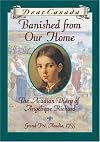
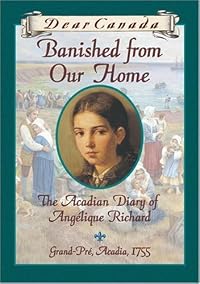
The story of the expulsion of the Acadians by the British from Nova Scotia in 1755 is told through a series of diary entries by young Angelique Richard, whose father and brothers are imprisoned and remaining family members are sent away from their colony.Tags
Recommendations





















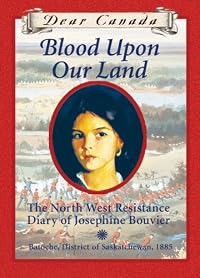
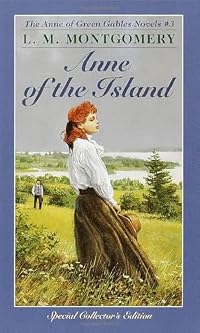
Member Recommendations
Member Reviews
My gut reaction is a visceral "Gaaah! I pity the poor child who was given this to read."
*But I must be more tempered, more fair, says my inside voice.*
So -- here it is, my tempered, trying-to-be-fair-without-choking-on-it voice.
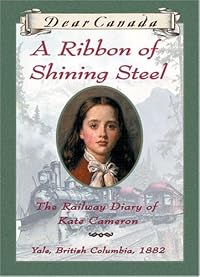
This book is from the Dear Canada series, aimed at middle school children, a series designed to teach adolescents aspects of Canadian history, in smaller bites.
Through the eyes of Angélique Richard, the children learn of the Acadian diaspora, or The Great Upheaval, Le Grand Dérangement, as it was to be known later: the expulsion, by the British, of the Acadian people, from what is today our maritime provinces. Out of 14,000 Acadians living in the area, over 11,00 were deported to what-was-then the Thirteen show more Colonies, essentially the states encompassing the eastern seaboard of North America.
I find the language stilted and ... grandiloquent ... really, when it comes down to it, quite out of keeping with how a little Acadian girl would have thought, it seems to me. I don't see how children, of any age, and from any age, can really connect with Angélique. While she is portrayed as a child who does every day chores of an 18th century peasant, and has every day concerns of 18th century border town/frontier life, she sounds more like she was employed in the Court of Marie-Antoinette as a privileged Lady-in-Waiting. Wrong language, wrong tone, even if the history is more-or-less correct.
Perhaps -- only perhaps -- children may connect with this book, but if they do, it does them no great service for it skews the Canadian consciousness: it makes it feel so much more polished than it was, and so much less frightful overall. In my experience children are quite comfortable with the "blood and guts" of history; in fact, they seem to revel in it; and they like to hear of history through the blood-and-sweat of their ancestors, not the white-washed versions of mealy-mouthed little maidens.
But ... BUT ... OK, I concede it does offer at least an introductory view into the diaspora, and may do it on non-threatening terms so that the children will not be terrorized into adulthood when reading this. That's the best I can offer for fairness.
It holds none of the ring of a Little House series, for instance, which introduced millions of young Americans (and millions around the world) to the hardships of pioneering days. This is more of a boudoir book for privileged pre-teens, if such a term can exist. show less
*But I must be more tempered, more fair, says my inside voice.*
So -- here it is, my tempered, trying-to-be-fair-without-choking-on-it voice.
This book is from the Dear Canada series, aimed at middle school children, a series designed to teach adolescents aspects of Canadian history, in smaller bites.
Through the eyes of Angélique Richard, the children learn of the Acadian diaspora, or The Great Upheaval, Le Grand Dérangement, as it was to be known later: the expulsion, by the British, of the Acadian people, from what is today our maritime provinces. Out of 14,000 Acadians living in the area, over 11,00 were deported to what-was-then the Thirteen show more Colonies, essentially the states encompassing the eastern seaboard of North America.
I find the language stilted and ... grandiloquent ... really, when it comes down to it, quite out of keeping with how a little Acadian girl would have thought, it seems to me. I don't see how children, of any age, and from any age, can really connect with Angélique. While she is portrayed as a child who does every day chores of an 18th century peasant, and has every day concerns of 18th century border town/frontier life, she sounds more like she was employed in the Court of Marie-Antoinette as a privileged Lady-in-Waiting. Wrong language, wrong tone, even if the history is more-or-less correct.
Perhaps -- only perhaps -- children may connect with this book, but if they do, it does them no great service for it skews the Canadian consciousness: it makes it feel so much more polished than it was, and so much less frightful overall. In my experience children are quite comfortable with the "blood and guts" of history; in fact, they seem to revel in it; and they like to hear of history through the blood-and-sweat of their ancestors, not the white-washed versions of mealy-mouthed little maidens.
But ... BUT ... OK, I concede it does offer at least an introductory view into the diaspora, and may do it on non-threatening terms so that the children will not be terrorized into adulthood when reading this. That's the best I can offer for fairness.
It holds none of the ring of a Little House series, for instance, which introduced millions of young Americans (and millions around the world) to the hardships of pioneering days. This is more of a boudoir book for privileged pre-teens, if such a term can exist. show less
Twelve-year-old Angelique Richard has lived her whole life on her family's farm in Grand-Pre, Acadia, as part of a large, loving family. But the year is 1755, and life for everyone in Acadia is about to change forever. The British government has been imposing more and more restrictions on the Acadian people, due to the war with the French. Although the Acadians wish to remain neutral, the British refuse to trust them. Angelique's father and many of the other men are thrown in jail for signing a petition in protest of this unfair treatment, and even worse is to come for the people of Grand-Pre. Angelique describes this all in her diary, first telling of everyday life -- doing chores, going to church, fun times with her brothers, sisters, show more and cousins -- and then the difficulties she faces as the British impose more restrictions on her people, culminating in the unjustified deportation of her people, and Angelique's struggle to retain hope in the heartbreak that follows.
This book is one of my favorite books from the Dear Canada series. Angelique is a wonderfully real character who brings to life the heartbreaking story of the Acadians and the tragedies they faced during their forced exile from their homelands. I highly recommend this book to readers who enjoy historical fiction or who enjoyed previous Dear Canada books. show less
This book is one of my favorite books from the Dear Canada series. Angelique is a wonderfully real character who brings to life the heartbreaking story of the Acadians and the tragedies they faced during their forced exile from their homelands. I highly recommend this book to readers who enjoy historical fiction or who enjoyed previous Dear Canada books. show less
I loved it!(Banished from our home) it was about a girl who had
to go aboard a ship and face terrible problems.It was a very good story.
to go aboard a ship and face terrible problems.It was a very good story.
Ratings
Members
- Recently Added By
Author Information
19+ Works 587 Members

Sharon Stewart is a LibraryThing Author, an author who lists their personal library on LibraryThing.
Series

Common Knowledge
- Canonical title
- Banished From Our Home: The Acadian Diary of Angelique Richard
- Original publication date
- 2004
- People/Characters
- Angelique Richard
- Important places
- Grande-Pre, Acadia, Canada; Acadia
- Important events
- Expulsion of the Acadians
Classifications
Statistics
- Members
- 184
- Popularity
- 177,294
- Reviews
- 3
- Rating
- (4.00)
- Languages
- English, French
- Media
- Paper, Ebook
- ISBNs
- 5
- ASINs
- 2