On This Page
Description
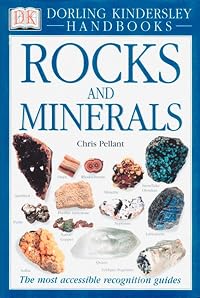
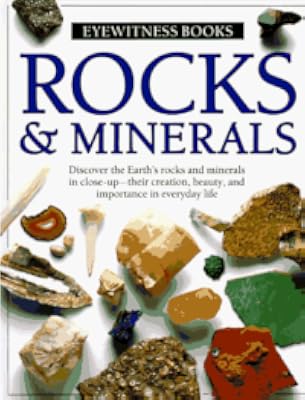
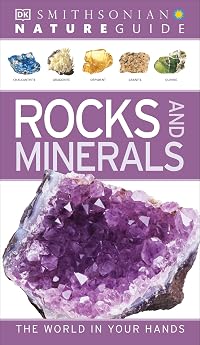
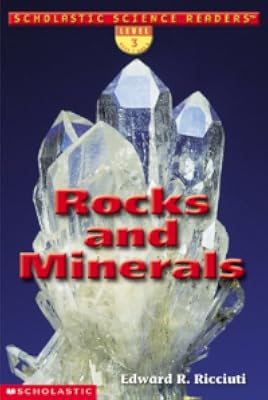
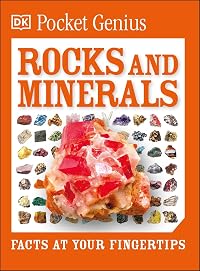
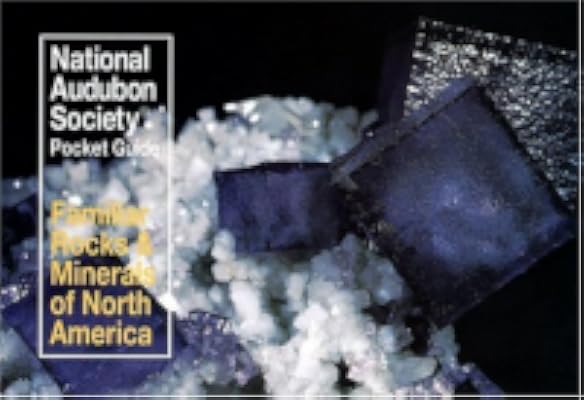
"Unearth a treasure trove of knowledge about the rocks and minerals beneath our feet--from their formation to collecting them. Make identification easy and accurate with this compact visual guide, packed with photographs and details on formation, distinguishing features, and much more. Over 600 high-quality photographs capture the unique characteristics, colors, and attributes of more than 500 rocks and minerals. Each specimen's entry includes annotated photographs to highlight the rock or show more mineral's distinguishing features, and concise details about its texture, origin, formation, and chemical composition to help identify it. Designed for beginners and experienced collectors alike, the introduction explains what rocks and minerals are, how they are classified, what equipment is needed for specimen collection, and how to start and organize a collection"-- show lessTags
Recommendations















Member Reviews
Well, I wanted a resource for gemstones and I got a you-dummy, learn the basics book. As I delve into the mire of gemstones, it is apparent that there are several limbs from which all stones grow and I need to memorize the various names of those limbs and their, what?, limblets? sticks? You get the idea. Good book for background info.
Seriously useful reference book for identifying and learning about rocks and minerals. Excellent color photos with detailed information and descriptions. A useful book and educational.
Interesting in its own right, and useful as a /Dwarf Fortress/ strategy guide.
Members
- Recently Added By
Author Information
44 Works 2,454 Members
Chris Pellant lectures in Earth Sciences in Cleveland, England
Series

Belongs to Publisher Series
Common Knowledge
- Alternate titles
- DK Handbooks: Rocks & Minerals; The Eyewitness Handbook of Rocks and Minerals
- Original publication date
- 1992
- First words
- [Introduction] Rocks and minerals are a fundamental part of the earth's crust.
Native elements are free, uncombined elements which are classified into three groups: Metals such as gold, silver, and copper; semimetals such as arsenic and anitmony; and non-metals, including carbon and sulfur. - Last words
- (Click to show. Warning: May contain spoilers.)These rocks also could have originated on planet-forming bodies, called planetesimals.
- Publisher's editor
- Wills, Charles A.
- Original language
- English
- Canonical DDC/MDS
- 549
Classifications
- Genres
- Nonfiction, Reference, Science & Nature
- DDC/MDS
- 549 — Natural sciences & mathematics Chemistry Mineralogy
- LCC
- QE431.2 .P45 — Science Geology Geology Petrology
- BISAC
Statistics
- Members
- 1,110
- Popularity
- 22,953
- Reviews
- 3
- Rating
- (3.50)
- Languages
- 5 — Czech, Dutch, English, French, German
- Media
- Paper, Ebook
- ISBNs
- 32
- UPCs
- 4
- ASINs
- 8
