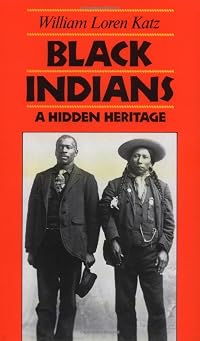
Black Indians: A Hidden Heritage
by William Loren Katz
On This Page
Description
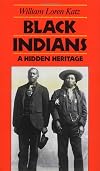
History. Multi-Cultural. Geography. Young Adult Nonfiction. The compelling account of how two heritages united in their struggle to gain freedom and equality in America. The first paths to freedom taken by runaway slaves led to Native American villages. There, black men and women found acceptance and friendship among our country's original inhabitants. Though they seldom appear in textbooks and movies, the children of Native- and African-American marriages helped shape the early days of the show more fur trade, added a new dimension to frontier diplomacy, and made a daring contribution to the fight for American liberty. Since its original publication, William Loren Katz's Black Indians has remained the definitive work on a long, arduous quest for freedom and equality. This new edition includes updated information about a neglected chapter in American history. show lessTags
Recommendations










Member Reviews
Though Canadian students are not taught American History in any detail, most can likely name Plymouth Rock as the first foreign colony in the United States.
Some might even dredge up Jamestown, or the Lost Colony of Roanoke.
But they will not name the colony on the mainland of South Carolina, established in the wake of Lucas Vásquez de Ayllón.
Even though that was six decades before Roanoke Island, eight decades before Jamestown, and almost 100 years before the Mayflower landed.
In fact, even American readers, even those who have recognized the complicated heritage which surrounds the celebration of holidays and anniversaries like Columbus Day, may not have heard of this colony. (Have you?)
"In the distant South Carolina forests, two and show more half centuries before the Declaration of Independence, two people of color first lit the fires of freedom and exalted its principles."
The legends of the white, Christian, European settlers are much more pervasive. They're the folks that schoolchildren draw and colour in social studies classrooms. Except that, ironically, most of the colours are left in the crayon box.
"Though neither white, Christian, nor European, they became the first settlement of any permanence on these shores to include people from overseas. As such, they qualify as our earliest inheritance."
Forget the frontier mythology, Katz suggests:
"In the real wilderness two dark people met and often united. They were not driven together by any special affinity based on a similar skin color. Their meetings were unwittingly arranged by their enemies, the Europeans, who exploited both."
The history that Katz discusses requires all of the crayons in the crayon box. He is not only discussing the races that are traditionally left out of the colonial versions of history, but also the intersections between them.
And he's not just talking about it. Every couple of pages, there is an image -- a photograph or a painting -- which along with quotes from original source documents and liberal use of sub-headings makes for a good reading pace.
These images do not show the string of pale faces that one most often sees in the plates of conventional history texts, and they often reveal a spectrum of pigmentation that demonstrates that there is nothing black-and-white about this history lesson.
My longer response to this work is available here. show less
Some might even dredge up Jamestown, or the Lost Colony of Roanoke.
But they will not name the colony on the mainland of South Carolina, established in the wake of Lucas Vásquez de Ayllón.
Even though that was six decades before Roanoke Island, eight decades before Jamestown, and almost 100 years before the Mayflower landed.
In fact, even American readers, even those who have recognized the complicated heritage which surrounds the celebration of holidays and anniversaries like Columbus Day, may not have heard of this colony. (Have you?)
"In the distant South Carolina forests, two and show more half centuries before the Declaration of Independence, two people of color first lit the fires of freedom and exalted its principles."
The legends of the white, Christian, European settlers are much more pervasive. They're the folks that schoolchildren draw and colour in social studies classrooms. Except that, ironically, most of the colours are left in the crayon box.
"Though neither white, Christian, nor European, they became the first settlement of any permanence on these shores to include people from overseas. As such, they qualify as our earliest inheritance."
Forget the frontier mythology, Katz suggests:
"In the real wilderness two dark people met and often united. They were not driven together by any special affinity based on a similar skin color. Their meetings were unwittingly arranged by their enemies, the Europeans, who exploited both."
The history that Katz discusses requires all of the crayons in the crayon box. He is not only discussing the races that are traditionally left out of the colonial versions of history, but also the intersections between them.
And he's not just talking about it. Every couple of pages, there is an image -- a photograph or a painting -- which along with quotes from original source documents and liberal use of sub-headings makes for a good reading pace.
These images do not show the string of pale faces that one most often sees in the plates of conventional history texts, and they often reveal a spectrum of pigmentation that demonstrates that there is nothing black-and-white about this history lesson.
My longer response to this work is available here. show less
Though Canadian students are not taught American History in any detail, most can likely name Plymouth Rock as the first foreign colony in the United States.
Some might even dredge up Jamestown, or the Lost Colony of Roanoke.
But they will not name the colony on the mainland of South Carolina, established in the wake of Lucas Vásquez de Ayllón.
Even though that was six decades before Roanoke Island, eight decades before Jamestown, and almost 100 years before the Mayflower landed.
In fact, even American readers, even those who have recognized the complicated heritage which surrounds the celebration of holidays and anniversaries like Columbus Day, may not have heard of this colony. (Have you?)
"In the distant South Carolina forests, two and show more half centuries before the Declaration of Independence, two people of color first lit the fires of freedom and exalted its principles."
The legends of the white, Christian, European settlers are much more pervasive. They're the folks that schoolchildren draw and colour in social studies classrooms. Except that, ironically, most of the colours are left in the crayon box.
"Though neither white, Christian, nor European, they became the first settlement of any permanence on these shores to include people from overseas. As such, they qualify as our earliest inheritance."
Forget the frontier mythology, Katz suggests:
"In the real wilderness two dark people met and often united. They were not driven together by any special affinity based on a similar skin color. Their meetings were unwittingly arranged by their enemies, the Europeans, who exploited both."
The history that Katz discusses requires all of the crayons in the crayon box. He is not only discussing the races that are traditionally left out of the colonial versions of history, but also the intersections between them.
And he's not just talking about it. Every couple of pages, there is an image -- a photograph or a painting -- which along with quotes from original source documents and liberal use of sub-headings makes for a good reading pace.
These images do not show the string of pale faces that one most often sees in the plates of conventional history texts, and they often reveal a spectrum of pigmentation that demonstrates that there is nothing black-and-white about this history lesson.
My longer response to this work is available here. show less
Some might even dredge up Jamestown, or the Lost Colony of Roanoke.
But they will not name the colony on the mainland of South Carolina, established in the wake of Lucas Vásquez de Ayllón.
Even though that was six decades before Roanoke Island, eight decades before Jamestown, and almost 100 years before the Mayflower landed.
In fact, even American readers, even those who have recognized the complicated heritage which surrounds the celebration of holidays and anniversaries like Columbus Day, may not have heard of this colony. (Have you?)
"In the distant South Carolina forests, two and show more half centuries before the Declaration of Independence, two people of color first lit the fires of freedom and exalted its principles."
The legends of the white, Christian, European settlers are much more pervasive. They're the folks that schoolchildren draw and colour in social studies classrooms. Except that, ironically, most of the colours are left in the crayon box.
"Though neither white, Christian, nor European, they became the first settlement of any permanence on these shores to include people from overseas. As such, they qualify as our earliest inheritance."
Forget the frontier mythology, Katz suggests:
"In the real wilderness two dark people met and often united. They were not driven together by any special affinity based on a similar skin color. Their meetings were unwittingly arranged by their enemies, the Europeans, who exploited both."
The history that Katz discusses requires all of the crayons in the crayon box. He is not only discussing the races that are traditionally left out of the colonial versions of history, but also the intersections between them.
And he's not just talking about it. Every couple of pages, there is an image -- a photograph or a painting -- which along with quotes from original source documents and liberal use of sub-headings makes for a good reading pace.
These images do not show the string of pale faces that one most often sees in the plates of conventional history texts, and they often reveal a spectrum of pigmentation that demonstrates that there is nothing black-and-white about this history lesson.
My longer response to this work is available here. show less
My guess is that this was originally intended to about blacks and Seminoles, but that there wasn’t enough material for a full book so author William Loren Katz expanded it to include black Indians in general (“Indians” is his term). The result is uneven; the information about blacks and their relations with the Seminoles is interesting and scholarly, but the rest of the book is a farrago of anecdotes about anything Katz can find that’s even peripherally related to blacks and Indians. Europeans are always capitalist exploiters and blacks and Indians are always mutually supportive peaceful protosocialists except when they’re not, of course, and Katz gets around that by calling Indians that fight other Indians “mercenaries” show more and claiming that whites forced tribes to keep black slaves.
There’s very little – a few pages – about the Civil War era; it’s claimed that the Five Nations (Cherokee, Creek, Choctaw, Chickasaw, Seminole) treated their black slaves kindlier than whites did. There’s no mention of Stand Waties’ Confederate Cherokee massacre of black Union soldiers at the Second Battle of Cabin Creek and no mention of the ongoing Cherokee and Chickasaw Freedmen controversy.
Although there’s a short bibliography, there are no footnotes, which makes it difficult to check out things that Katz claims. There are numerous photographs that Katz claims depict “black Indians”, but none of them have source attributions, again making it difficult to check; an Amazon reviewer claims that one of the photographs actually depicts Filipinos.
Interesting for the accounts of black Seminoles – but I’m taking those suspiciously until I can do more research. show less
There’s very little – a few pages – about the Civil War era; it’s claimed that the Five Nations (Cherokee, Creek, Choctaw, Chickasaw, Seminole) treated their black slaves kindlier than whites did. There’s no mention of Stand Waties’ Confederate Cherokee massacre of black Union soldiers at the Second Battle of Cabin Creek and no mention of the ongoing Cherokee and Chickasaw Freedmen controversy.
Although there’s a short bibliography, there are no footnotes, which makes it difficult to check out things that Katz claims. There are numerous photographs that Katz claims depict “black Indians”, but none of them have source attributions, again making it difficult to check; an Amazon reviewer claims that one of the photographs actually depicts Filipinos.
Interesting for the accounts of black Seminoles – but I’m taking those suspiciously until I can do more research. show less
The author makes clear that this is not an academic study. Nonetheless, he imparts a solid-if somewhat mitigated-glance into an hitherto unstudied aspect of history. A good introduction but nothing else besides if you, like me, are seeking more profound information.
This book is listed as grade 6 and up, but seems to be most appropriate for high school. It is organized by topics relating to the history of black Indians over a range of time, and does not stick to a chronological order. Sometimes these topics are very specific and examine a particular group or individual, while other times they are a broad discussion of a historical issue, with specific examples included.
The writing of this book is sometimes strong, but too often weak. I found the sensationalized tone in the introduction and first few chapters very distracting. Katz finds numerous ways to make the same claim that blacks and Indians were actively seeking freedom, while Europeans were professing it yet squelching it. As the book goes show more on this tone weakens and the author allows the history to speak for itself instead of always defending a point.
I learned a lot from this book and will use this knowledge to support future lessons that I teach. However, I don't think I would teach this entire book. For one, I think it is too dense. Further, I think the author's writing is often sensational and the language is unjustified. The author does not make efforts to explain the words that he chooses when referring to race, and fluctuates often. Katz is very heavy on the term "dark people" to refer to people who were black, Native American or mixed. If he is to use this term in order to explain that it is how the colonizers viewed both races than he needs to explain that as part of his intentions for the use of the term.
There is one chapter in this book that I found exceptional. Chapter 8 is titled "Their Mixing is to be Prevented" and goes into concise but well supported explanation of the history of slavery and the use of racism within that system. While this chapter does not sum up the material of the whole book, it is so well written and informative that I would use it as a main source for students to read, while providing supplemental details as part of a lesson. show less
The writing of this book is sometimes strong, but too often weak. I found the sensationalized tone in the introduction and first few chapters very distracting. Katz finds numerous ways to make the same claim that blacks and Indians were actively seeking freedom, while Europeans were professing it yet squelching it. As the book goes show more on this tone weakens and the author allows the history to speak for itself instead of always defending a point.
I learned a lot from this book and will use this knowledge to support future lessons that I teach. However, I don't think I would teach this entire book. For one, I think it is too dense. Further, I think the author's writing is often sensational and the language is unjustified. The author does not make efforts to explain the words that he chooses when referring to race, and fluctuates often. Katz is very heavy on the term "dark people" to refer to people who were black, Native American or mixed. If he is to use this term in order to explain that it is how the colonizers viewed both races than he needs to explain that as part of his intentions for the use of the term.
There is one chapter in this book that I found exceptional. Chapter 8 is titled "Their Mixing is to be Prevented" and goes into concise but well supported explanation of the history of slavery and the use of racism within that system. While this chapter does not sum up the material of the whole book, it is so well written and informative that I would use it as a main source for students to read, while providing supplemental details as part of a lesson. show less
Traces the history of relations between blacks and American Indians, and the existence of black Indians, from the earliest foreign landings through pioneer days.
Many photos.
Members
- Recently Added By
Author Information

47 Works 1,460 Members
Awards and Honors
Common Knowledge
- Original publication date
- 1986
- People/Characters
- James P. Beckwourth; Pompey Factor; Bill Pickett
- Epigraph
- The European is to the other races of mankind what man himself is to the lower animals: he makes them subservient to his use and when he cannot he destroys them.
Alexis de Tocqueville, Democracy in America, 1835
One of the longest unwritten chapters in the history of the United States is that treating of the relations of the Negroes and the Indians. The Indians were already here when the white men came and the Negros brought in soon ... (show all)after to serve as a subject race found among the Indians one of their means of escape.
Carter G Woodson, , 1920
In the course of time the American people got into Florida and began to live. This caused trouble. The colored people and the Indians, being natives of the land, naturally went on the warpath. They fought until the American p... (show all)eople called for peace. The Indians and the Negros gave them peace.
Joe Phillips, Black Seminole, 1930 - Dedication
- To friends Jean Bond, Alice Walker, Chief Osceola Townsend, George Tooks, and the late Woody Stode.
And to Kenneth Wiggins Porter, forerunner, scholar, mentor, who embraced the creed lived the Wild Cat and John Horse - lov... (show all)e of people and resistance to tyranny. - First words
- Black Indians?
- Last words
- (Click to show. Warning: May contain spoilers.)It offered even Bill Picket limited opportunities.
- Blurbers
- Walker, Alice; Franklin, Dr John Hope
Classifications
Statistics
- Members
- 362
- Popularity
- 87,498
- Reviews
- 8
- Rating
- (3.55)
- Languages
- English
- Media
- Paper, Audiobook
- ISBNs
- 9
- ASINs
- 4