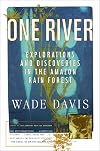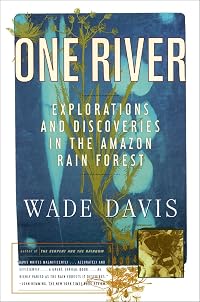
One River
by Wade Davis
On This Page
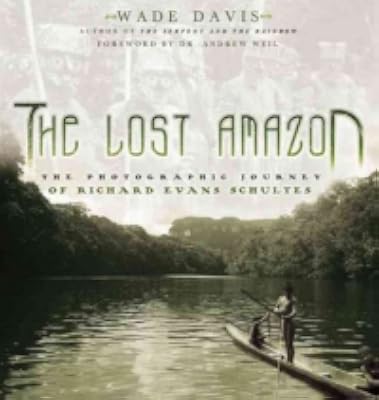
Description
"Enjoyable and insightful work was written as a tribute to the scientific achievements of Richard Evans Schultes, an Amazonia explorer active during 1940s-50s. Also relates explorations of the author and of Timothy Plowman, both Schultes' students. Intended for a popular audience"--Handbook of Latin American Studies, v. 57.Tags
Recommendations
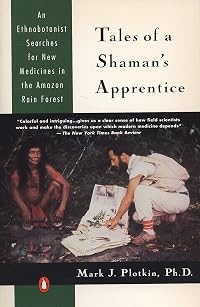

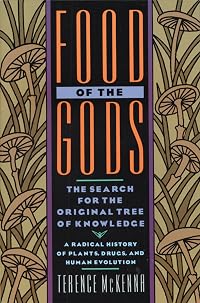
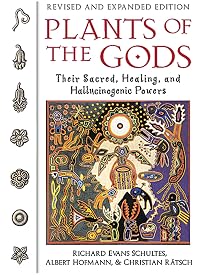






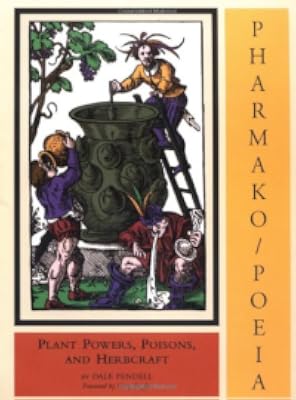
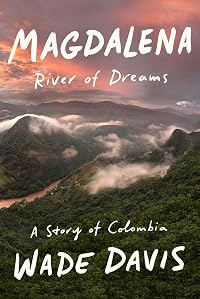
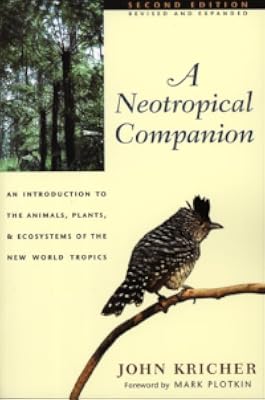

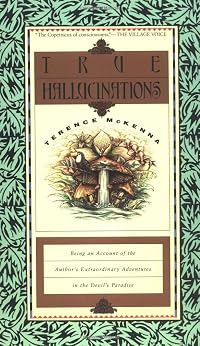










Member Recommendations
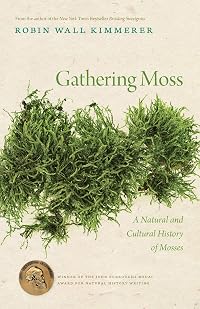
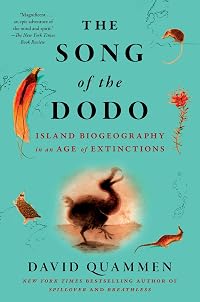
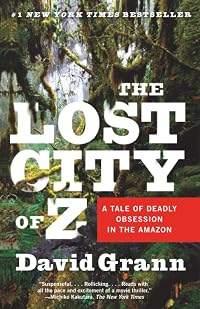
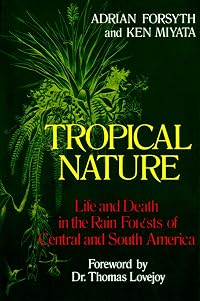
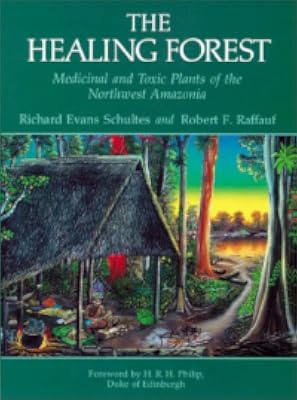
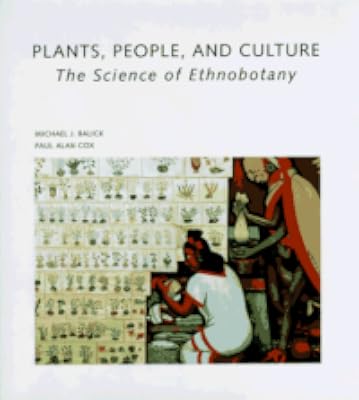
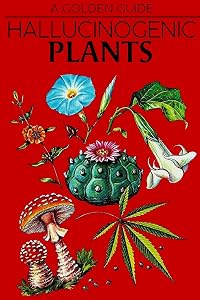
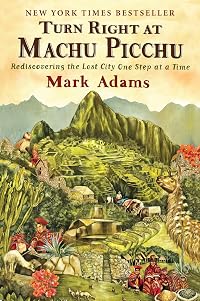
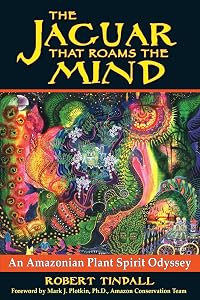
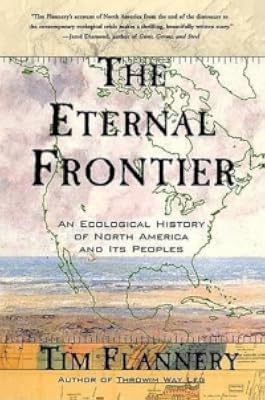
wandering_star Both detailed explorations of one aspect of the natural world.
Member Reviews
Davis dishes up myths and adventures and history at an alarming rate in perhaps the first non-fiction "page turner" I've ever read. I never knew so many exciting things could happen in so few pages. Except, unlike a fictional page turner, which yields some sort of conclusion and thus satisfaction for tearing through it, this book gently reminds you how little you know and therefore makes you savor it that much slower so that you won't be left with the task of finding some equally entertaining source of information on South American mysteries. I am told "Wizard of the Upper Amazon" is excellent, but I am dubious I'll ever find anything quite as juicy as this.
From an introduction to the genius of Inca civilization, to the history of the show more rubber tree (the most important modern plant we don't hear about), to the miracle of coca and the ritual consumption of countless hallucinogens, to the birth of the American drug culture, to the simple and mysterious magic of the undisturbed natural phenomenon that is the unforgiving Amazon forest and rivers. Yes, that wasn't a complete sentence, but who needs more when there are so many excellent ones in this book?
For those acquainted with Marquez, and Borges and de Bernieres' magical realism, the landscape and culture encountered by centuries of explorers described herein will be instantly recognizable. Inspiration awaits in every chapter. Truly, fact is stranger than fiction.
I can't recommend this book enough. To anyone who likes travelogues and adventures, to anyone who likes plants, to any environmentalist, to doctors and budding scientists, or to those looking for a "cure" to anything. The forest has something to offer all of us. The Amazon has definitely jumped up my list of "have to visit" after reading this.
I suppose the one downside to this book is that it may be overwhelming to some, the breadth Davis tries to capture. Like other reviewers have noted, there are several full length books lurking in these pages. More depth in all of the topics would have been excellent, and now I'm afraid that if I pursue any of them further I will be sorely disappointed with the readability. But I guess you can't blame Davis for people not writing more non-fiction Amazon adventure tales. show less
From an introduction to the genius of Inca civilization, to the history of the show more rubber tree (the most important modern plant we don't hear about), to the miracle of coca and the ritual consumption of countless hallucinogens, to the birth of the American drug culture, to the simple and mysterious magic of the undisturbed natural phenomenon that is the unforgiving Amazon forest and rivers. Yes, that wasn't a complete sentence, but who needs more when there are so many excellent ones in this book?
For those acquainted with Marquez, and Borges and de Bernieres' magical realism, the landscape and culture encountered by centuries of explorers described herein will be instantly recognizable. Inspiration awaits in every chapter. Truly, fact is stranger than fiction.
I can't recommend this book enough. To anyone who likes travelogues and adventures, to anyone who likes plants, to any environmentalist, to doctors and budding scientists, or to those looking for a "cure" to anything. The forest has something to offer all of us. The Amazon has definitely jumped up my list of "have to visit" after reading this.
I suppose the one downside to this book is that it may be overwhelming to some, the breadth Davis tries to capture. Like other reviewers have noted, there are several full length books lurking in these pages. More depth in all of the topics would have been excellent, and now I'm afraid that if I pursue any of them further I will be sorely disappointed with the readability. But I guess you can't blame Davis for people not writing more non-fiction Amazon adventure tales. show less
Davis dishes up myths and adventures and history at an alarming rate in perhaps the first non-fiction "page turner" I've ever read. I never knew so many exciting things could happen in so few pages. Except, unlike a fictional page turner, which yields some sort of conclusion and thus satisfaction for tearing through it, this book gently reminds you how little you know and therefore makes you savor it that much slower so that you won't be left with the task of finding some equally entertaining source of information on South American mysteries. I am told "Wizard of the Upper Amazon" is excellent, but I am dubious I'll ever find anything quite as juicy as this.
From an introduction to the genius of Inca civilization, to the history of the show more rubber tree (the most important modern plant we don't hear about), to the miracle of coca and the ritual consumption of countless hallucinogens, to the birth of the American drug culture, to the simple and mysterious magic of the undisturbed natural phenomenon that is the unforgiving Amazon forest and rivers. Yes, that wasn't a complete sentence, but who needs more when there are so many excellent ones in this book?
For those acquainted with Marquez, and Borges and de Bernieres' magical realism, the landscape and culture encountered by centuries of explorers described herein will be instantly recognizable. Inspiration awaits in every chapter. Truly, fact is stranger than fiction.
I can't recommend this book enough. To anyone who likes travelogues and adventures, to anyone who likes plants, to any environmentalist, to doctors and budding scientists, or to those looking for a "cure" to anything. The forest has something to offer all of us. The Amazon has definitely jumped up my list of "have to visit" after reading this.
I suppose the one downside to this book is that it may be overwhelming to some, the breadth Davis tries to capture. Like other reviewers have noted, there are several full length books lurking in these pages. More depth in all of the topics would have been excellent, and now I'm afraid that if I pursue any of them further I will be sorely disappointed with the readability. But I guess you can't blame Davis for people not writing more non-fiction Amazon adventure tales. show less
From an introduction to the genius of Inca civilization, to the history of the show more rubber tree (the most important modern plant we don't hear about), to the miracle of coca and the ritual consumption of countless hallucinogens, to the birth of the American drug culture, to the simple and mysterious magic of the undisturbed natural phenomenon that is the unforgiving Amazon forest and rivers. Yes, that wasn't a complete sentence, but who needs more when there are so many excellent ones in this book?
For those acquainted with Marquez, and Borges and de Bernieres' magical realism, the landscape and culture encountered by centuries of explorers described herein will be instantly recognizable. Inspiration awaits in every chapter. Truly, fact is stranger than fiction.
I can't recommend this book enough. To anyone who likes travelogues and adventures, to anyone who likes plants, to any environmentalist, to doctors and budding scientists, or to those looking for a "cure" to anything. The forest has something to offer all of us. The Amazon has definitely jumped up my list of "have to visit" after reading this.
I suppose the one downside to this book is that it may be overwhelming to some, the breadth Davis tries to capture. Like other reviewers have noted, there are several full length books lurking in these pages. More depth in all of the topics would have been excellent, and now I'm afraid that if I pursue any of them further I will be sorely disappointed with the readability. But I guess you can't blame Davis for people not writing more non-fiction Amazon adventure tales. show less
Highly readable. The subject matters, botany, biography, pharmacology, anthropology, geology are all fascinating. A good map, the smaller scale the better, will help because those provided aren't up to the job. But that's a minor point.
The significant parts of this book are the understanding that Davis has of the indigenous world view of Andean and Amazonian tribes. He embraces it because the tribal views of existence are a coherent set of beliefs that can be explained through the natural world. One of the many devices used to connect with the spiritual world is through the use of coca. We Westerners have a wildly pathological view of the drug. Davis shows how nutritious, life sustaining and essential a drug it is to those who have a show more respect for it. (I am not talking about cocaine).
A page turner and thoroughly informative. show less
The significant parts of this book are the understanding that Davis has of the indigenous world view of Andean and Amazonian tribes. He embraces it because the tribal views of existence are a coherent set of beliefs that can be explained through the natural world. One of the many devices used to connect with the spiritual world is through the use of coca. We Westerners have a wildly pathological view of the drug. Davis shows how nutritious, life sustaining and essential a drug it is to those who have a show more respect for it. (I am not talking about cocaine).
A page turner and thoroughly informative. show less
One River is full of great stories and anecdotes as well as a sense of place and time that are unforgettable. I'm giving it four stars for reasons stated below and so won't focus on the positives which have already been so well covered by many reviewers. These are fairly minor quibbles in an otherwise good book.
Stylistically, the narrative doesn't always flow well. Wade presents the life of the books central character, Richard Schultes, in some sort of chronological order, but interjects anecdotal stories out of order requiring the reader to have a good memory to keep everything straight. This is a long detail-rich book with 1000s of people and place names covering about a 150 year timespan from the Amazon Jungle, to the Andes to show more Central America and the American West.
The amount of detail is at times excessive, in particular with place names and locations, Wade sometimes spends as much time describing where a place is (a 50 person village in the jungle) as he does about the place itself before moving on to the next place - it feels like a rote travel log at times, probably because he used Schultes private botany journals as one source. There is so much detail it sometimes crowds out the big picture, lost in the trees. I think the book could have been edited back 100 pages or so, there is just a lot of material that is pure anecdote or trivia.
Finally and probably most importantly, as a life of Richard Schultes, this is pure hagiography. He is the hero of the story in all respects. Perhaps hagiography is helpful in motivating students to become scientists, but it is not a balanced objective biography, it is a tribute by one of his admiring students, Wade plays up Schultes accomplishments but does not question or examine his failures. For example, Schultes spent the majority of his career in the Amazon studying the rubber tree and became the world expert, yet he never did complete a book about it, what a tragic loss. I don't mean to disparage Schultes, but given his stature and reputation, the lack of any criticism naturally draws the question Wade never asks. The book was written in 1996 and Shultes died in 2001 so with time we may see a more balanced perspective.
--Review by Stephen Balbach, via CoolReading (c) 2008 cc-by-nd show less
Stylistically, the narrative doesn't always flow well. Wade presents the life of the books central character, Richard Schultes, in some sort of chronological order, but interjects anecdotal stories out of order requiring the reader to have a good memory to keep everything straight. This is a long detail-rich book with 1000s of people and place names covering about a 150 year timespan from the Amazon Jungle, to the Andes to show more Central America and the American West.
The amount of detail is at times excessive, in particular with place names and locations, Wade sometimes spends as much time describing where a place is (a 50 person village in the jungle) as he does about the place itself before moving on to the next place - it feels like a rote travel log at times, probably because he used Schultes private botany journals as one source. There is so much detail it sometimes crowds out the big picture, lost in the trees. I think the book could have been edited back 100 pages or so, there is just a lot of material that is pure anecdote or trivia.
Finally and probably most importantly, as a life of Richard Schultes, this is pure hagiography. He is the hero of the story in all respects. Perhaps hagiography is helpful in motivating students to become scientists, but it is not a balanced objective biography, it is a tribute by one of his admiring students, Wade plays up Schultes accomplishments but does not question or examine his failures. For example, Schultes spent the majority of his career in the Amazon studying the rubber tree and became the world expert, yet he never did complete a book about it, what a tragic loss. I don't mean to disparage Schultes, but given his stature and reputation, the lack of any criticism naturally draws the question Wade never asks. The book was written in 1996 and Shultes died in 2001 so with time we may see a more balanced perspective.
--Review by Stephen Balbach, via CoolReading (c) 2008 cc-by-nd show less
Sprawling, ambitious and begging to be many individual books, this was great in parts. I really think it would make several very good books, but there's just too much here- a biography of Richard Evans Schultes, detailed biographical sketches of Richard Spruce and Tim Plowman, ethnobotanical histories, and more. I wanted more about every subject, and I wanted it presented in a more coherent fashion. Still, quite worth picking up.
Boy, was this book hard to read, I felt that I needed a giant map at hand all the time of Northern South America to plot the journeys three main protagonists. That and the small print meant a great deal of re-reading. I was mainly interested in the travels and work of Richard Schultes, particularly his work on rubber and the story of Richard Spruce. I found it much harder to be interested in hallucinogenic substances, although the section on coca and its history was fascinating. Overall the writing style is good although at times much too detailed for the ordinary reader.
A quite stunning book about the travels and tribulations through South America of the famous Botanist Richard Shultes. The imagery conjured up by the book, and the sadness of the fact that much of that land has gone to loggers and industry makes me weep with frustration. A wonderful and highly recommended read.
Members
- Recently Added By
Author Information

30+ Works 4,709 Members
Wade Davis is Explorer-in-Residence at the National Geographic Society. An ethnographer, photographer, filmmaker, and writer, he is the author of Light at the Edge of the World, One River, the international bestseller The Serpent and the Rainbow, and other books. His articles have appeared in Outside, Cond Nast Traveler, National Geographic, show more Scientific American, and many other publications. show less
Awards and Honors
Common Knowledge
- Original publication date
- 1996
- People/Characters
- Richard Shultes; Richard Spruce; Timothy Plowman; Wade Davis
- Important places
- Amazon Rainforest, Amazon Basin, South America; Amazon River
- Blurbers
- McKenna, Terence
Classifications
- Genres
- Anthropology, Science & Nature, Nonfiction, Travel, General Nonfiction, Biography & Memoir
- DDC/MDS
- 581.6109811 — Natural sciences & mathematics Plants (Botany) Specific topics in natural history of plants Miscellaneous nontaxonomic kinds of plants
- LCC
- GN20 .D38 — Geography, Anthropology and Recreation Anthropology Anthropology
- BISAC
Statistics
- Members
- 597
- Popularity
- 49,342
- Reviews
- 12
- Rating
- (4.07)
- Languages
- English, Spanish
- Media
- Paper, Ebook
- ISBNs
- 15
- ASINs
- 6