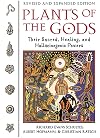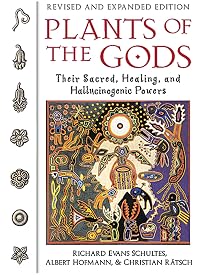
Plants of the Gods: Their Sacred, Healing, and Hallucinogenic Powers
by Richard Evans Schultes, Albert Hofmann, Christian Rätsch
On This Page
Description
The use of hallucinogenic plants has been a part of human experience for millennia, yet modern Western societies have only recently become aware of the significance that these plants have had in shaping the history of diverse cultures. Capable of bringing human beings in closer touch with the spirit worlds, hallucinogenic plants have long been venerated as aids to mental health and as the sacred connection to the mystical. The authors of this definitive book examine the cross-cultural show more ceremonial and ritual use of many hallucinogenic substances. Profusely illustrated, this book contains an extensively researched plant lexicon, providing common and botanical names, history, ethnography, preparation, chemical components, usage in healing, and effects for 91 hallucinogenic plants. show lessTags
Recommendations










Member Reviews
Three scientific titans join forces to completely revise the classic text on the ritual uses of psychoactive plants. They provide a fascinating testimony of these "plants of the gods," tracing their uses throughout the world and their significance in shaping culture and history. In the traditions of every culture, plants have been highly valued for their nourishing, healing, and transformative properties. The most powerful of those plants, which are known to transport the human mind into other dimensions of consciousness, have always been regarded as sacred. The authors detail the uses of hallucinogens in sacred shamanic rites while providing lucid explanations of the biochemistry of these plants and the cultural prayers, songs, and show more dances associated with them. The text is lavishly illustrated with 400 rare photographs of plants, people, ceremonies, and art related to the ritual use of the world's sacred psychoactive flora. show less
"Entheogens ... could be the appropriate medicine for hyper-materialistic humanity."
Beautifully illustrated with art, poetry, and hundreds of photos, this book is a respectful study of the biology, chemistry, anthropology, history, and culture of the use and cultivation of entheogens. Fascinating revelations about how plants & humans co-evolved.
Beautifully illustrated with art, poetry, and hundreds of photos, this book is a respectful study of the biology, chemistry, anthropology, history, and culture of the use and cultivation of entheogens. Fascinating revelations about how plants & humans co-evolved.
Sopivaa luettavaa mm. shamanismista kiinnostuneille. Mielenkiintoinen ja laadukas kokonaisuus mutta valitettavasti sidontaan käytetty liima oli kuraa.
A good overall view. Definitely interested in things like Salvia and Iboga. Some of it was just boring reference stuff that I had to skim. Much of the last chapter was devoted to experiments with hallucinogens and psychoanalysis in the West. Pretty heady stuff.
This is the only book I own that I will never lend out, I really treasure it as it has a wealth of information on hallucogenic plants, their cultural backgrounds and uses, and the pharmacology involved. It's intelligent and scolarly without being dry and inaccessible, well illustrated with drawings and photos. A great reference book.
A good overall view. Definitely interested in things like Salvia and Iboga. Some of it was just boring reference stuff that I had to skim. Much of the last chapter was devoted to experiments with hallucinogens and psychoanalysis in the West. Pretty heady stuff.
Impressionante compendio sobre Plantas medicinais, ou as chamadas "Plantas de poderes". Plantas de los Deuses, faz uma ampla investigação a respeito da relação do homem com as plantas entre as várias épocas e culturas
Members
- Recently Added By
Lists

Nonordinary States of Consciousness
184 works; 7 members
Author Information
39+ Works 1,330 Members

27+ Works 1,453 Members
Dr. Albert Hofmann is a world renowned scientist and Fellow member of the World Academy of Art and Science. A leader in pharmaceutical-chemical research, he is the author of several prominent books, among them "LSD-My Problem Child." (McGraw-Hill, New York 1980). Now retired, yet still active in scientific and philosophical pursuits, Dr. Hofmann show more lives in Burg, Switzerland. show less
19 Works 683 Members
Common Knowledge
- Original publication date
- 1979
Classifications
Statistics
- Members
- 566
- Popularity
- 52,359
- Reviews
- 9
- Rating
- (4.42)
- Languages
- 6 — Czech, Dutch, English, French, German, Spanish
- Media
- Paper
- ISBNs
- 17
- ASINs
- 8