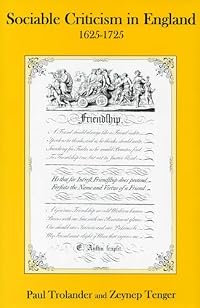
Sociable Criticism in England, 1625-1725
by Paul Trolander
On This Page
Description
Sociable Criticism in England explores how from 1625 to 1725 cultural practices and discourses of sociability (rules for small-group discussion, friendship discourse, and patron-client relationships) determined the venues within which critical judgments were rendered, disseminated, and received. It establishes how individuals operating in small groups were authorized to circulate critical judgments and commentary, why certain modes of critical exchange were treated as beyond the ken of good show more social manners, and how such expectations were subverted or manipulated to avoid the imputation that individuals had violated the standards for offering public criticism. Philips, George Villiers, John Dryden, Lady Margaret Cavendish, John Dennis, and Joseph Addison, this study argues that seventeenth- and early eighteenth-century criticism could circulate either orally, in manuscript, or in print so long as it appeared to originate in interpersonal encounters considered appropriate to critical discussion. show lessMembers
- Recently Added By
Author Information
2 Works 4 Members
Paul Trolander is professor of British literature in the English Department at Berry College.
Classifications
- Genres
- Literature Studies and Criticism, Fiction and Literature
- DDC/MDS
- 820.9 — Literature & rhetoric English & Old English literatures English and Old English (Anglo-Saxon) literatures History, description, critical appraisal of works in more than one form
- LCC
- PR63 .T76 — Language and Literature English English Literature Criticism
- BISAC
Statistics
- Members
- 1
- Popularity
- 8,791,400
- Languages
- English
- Media
- Paper
- ISBNs
- 1