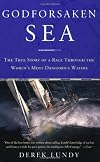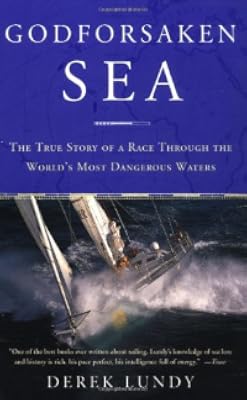
Godforsaken Sea: The True Story of a Race Through the World's Most Dangerous Waters
by Derek Lundy
On This Page
Description
HTML:Godforsaken Sea is the hair-raising account of the world's most demanding, dangerous, and deadly sailing race. Around the world, one sailor, one boat, no stops, no assistance. Author Derek Lundy's vivid book follows the field of the 1996 - 1997 Vendee Globe through the race's grueling four-month circumnavigation of the globe, most of it through the terror of the Southern Ocean.Lundy narrates the race through the eyes and experiences of sixteen sailors - fourteen men and two women - who show more embdoy the best and most eccentric aspects of our human condition. There's the gallant Brit who spends days beating back against the worst seas to save a fellow sailor; the Frenchman who bothers to salvage only a bottle of champagne from his broken and sinking boat; the sailor who comes to love the albatross that trails her for months, naming it Bernard; the sailor who calmly smokes a cigarette as his boat capsizes; and the Canadian who, hours before he disappears forever, dispatches this message:
If you drag things out too long here, you're sure to come to grief.
With the literary touch of Saint-Exupery and Conrad, Derek Lundy harnesses hurricane-force winds, six story waves, icebergs, and deafening noise. And he lays bare the spirit of the men and women who push themselves to the outer limits of human endeavor - even if it means never returning home.
. Sports & Recreations. Nonfiction. show less
Tags
Recommendations



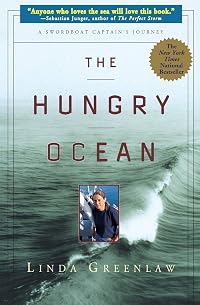
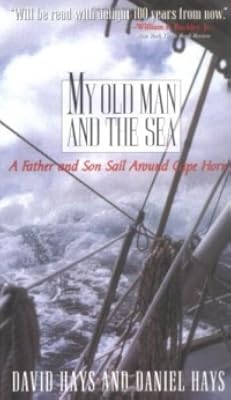
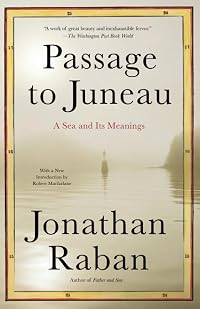

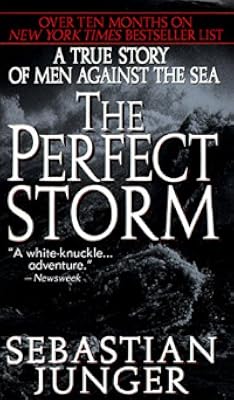











Member Reviews
I would call the Vendee Globe sailing's answer to the Barkley Marathons. The rules of the 27,000 mile race make the endeavor one of the most challenging competitions in the world. Sailors must sail solo without a crew. Once underway sailors cannot receive help from anyone on shore, either. They can moor their boat for a stop to make repairs, but they themselves cannot step foot beyond the high tide mark. At the time of publication the minimum funding needed to enter and prepare for the Vendee Globe was four million pounds. Only the truly dedicated (or insane) attempt the Vendee Globe.
Lundy, an avid sailor himself, chronicles the trials and tribulations of the sixteen sailors attempting the 1996-1997 Vendee Globe. He focuses most of the show more adventure on the extreme weather conditions around the most difficult leg of the race, the Southern Ocean. Only six of the sixteen vessels to enter the race will finish. As a result of the outcome of the 1996-1997 Vendee Globe race officials created new rules, making boats safer for future competitions.
I appreciated the anatomy of a ocean vessel I have never been aboard. Even more than that, I thrilled to learn the Beauford Wind Scale: the assigned number to the force of the wind and corresponding wind speed in knots, miles per hour, meters per second and kilometers per hour; the World Meteorological Organization categories (calm to hurricane); and what the water looks like from the land (mirror to air filled with foam and the sea completely white with driving spray. You know that the weather is terrible when you cannot tell the sea from the sky from the clouds.
Confessional: I have always been a dreamer about the idea of reincarnation. To think that a fellow sailor came back as an albatross to keep Chaband company was pure magic. show less
Lundy, an avid sailor himself, chronicles the trials and tribulations of the sixteen sailors attempting the 1996-1997 Vendee Globe. He focuses most of the show more adventure on the extreme weather conditions around the most difficult leg of the race, the Southern Ocean. Only six of the sixteen vessels to enter the race will finish. As a result of the outcome of the 1996-1997 Vendee Globe race officials created new rules, making boats safer for future competitions.
I appreciated the anatomy of a ocean vessel I have never been aboard. Even more than that, I thrilled to learn the Beauford Wind Scale: the assigned number to the force of the wind and corresponding wind speed in knots, miles per hour, meters per second and kilometers per hour; the World Meteorological Organization categories (calm to hurricane); and what the water looks like from the land (mirror to air filled with foam and the sea completely white with driving spray. You know that the weather is terrible when you cannot tell the sea from the sky from the clouds.
Confessional: I have always been a dreamer about the idea of reincarnation. To think that a fellow sailor came back as an albatross to keep Chaband company was pure magic. show less
Since I write naval fiction, I read A LOT of sea stories since that is the only way to get a good sense of what it is like to be in a terrible storm or just being at sea which, judging from diaries and letters, is often boring, even in wartime.
This book is about a handful of people whose sanity one must call into question: the men and women who sail, by themselves, through the most dangerous waters in the world in the Vendee Globe race which lasts at least four months. For much of the time, they are in waters so stormy they can't see anything but the giant waves which surround them and reach the heights of large buildings. I would be scared enough to pee in my pants. Almost every one of these boats not only gets knocked down on a show more regular basis, that is the force of the wind on the sail simply knocks the boat over one hundred eighty degrees and if one is lucky, the weight of the keel brings the boat back up.
Suffice it to say that this book is beautifully written, the descriptions of the sea in all of its most violent states are breathtaking. The author, Derek Lundy, is a sailor and author although he doesn't participate in these kinds of races. Like any good story, this one is told through the eyes of those who were there and we feel their fear, triumph, and courage. I've read this book four times. I wish I knew Mr. Lundy. show less
This book is about a handful of people whose sanity one must call into question: the men and women who sail, by themselves, through the most dangerous waters in the world in the Vendee Globe race which lasts at least four months. For much of the time, they are in waters so stormy they can't see anything but the giant waves which surround them and reach the heights of large buildings. I would be scared enough to pee in my pants. Almost every one of these boats not only gets knocked down on a show more regular basis, that is the force of the wind on the sail simply knocks the boat over one hundred eighty degrees and if one is lucky, the weight of the keel brings the boat back up.
Suffice it to say that this book is beautifully written, the descriptions of the sea in all of its most violent states are breathtaking. The author, Derek Lundy, is a sailor and author although he doesn't participate in these kinds of races. Like any good story, this one is told through the eyes of those who were there and we feel their fear, triumph, and courage. I've read this book four times. I wish I knew Mr. Lundy. show less
A truly awe inspiring awful sea. The southern ocean is a both beautiful but awful place to be. Probably the most dangerous place to sail in, especially in boats designed to sail fast primarily down wind to win a race. The chance of drowning is high and chances of rescue are minimal. Not my kind of sailing.
The Vendee Globe race is the
pinnacle for sailors who want to
push their racing skills to the limit.
It’s a race around the world in single-
man, very high-tech, fast sailboats
that stretch technology and human endurance
to their limits. The worst part of the
25,000-mile race is the Southern Ocean, where
waves reach unimaginable heights and the cold
is never ending. Virtually half the race, some
13,000 miles of it takes place in these nightmarish
conditions.
The 1996-1997 race was typical: of the fourteen
men and two women who began the race
one disappeared, another had to perform surgery
on his own elbow following an injury one (Goss) became an instant and certifiable hero
by beating his boat back against the wind to
locate and rescue a capsized show more comrade just before
death from exposure would have occurred
and three were wrecked.
Ironically, all who could, chose to finish the
race even if they had been disqualified. The
rules prohibit touching land except at the start
or the finish. Two of the racers chose to sail
back to the start, several thousand miles, for
repairs rather than risk disqualifications. Others
who were forced to stop for repairs continued
on just to be able to finish the race. Lundy
intersperses the intense high drama of his race
narrative with fascinating insights into the
world of the sailors and builders who spent millions
preparing for the race. “Visualize a
never-ending series of five- or six-story buildings,
with sloping sides of various angles. . .
moving toward the sailors at forty miles an
hour. Some of the time, the top one or two
stories will collapse on top of them.” Knockdowns,
where a boat is flattened on its side,
were common, and just the necessity of bracing
against walls to prevent being thrown about
was terribly wearing on the skippers.
Sleep was so important it became a technical
issue. Studies were conducted for many of
the skippers to determine just how little sleep
they could get by on and what times of day
and what length of time were best for short
naps. One discovered he could get by on six
hours of sleep in a twenty-four hour period and
could break it down into periods as short as
thirty minutes. That was the theory. In actual
practice, most got hardly any sleep at all. So
many things could interrupt their sleep.
Having to constantly brace oneself against
often irregular motions of the boat required the
development of new muscles and could be absolutely
exhausting. They needed constantly
to fix things that broke. The boats were all
mono-hulled and had a heavy keel that extended
below the bottom and would act like a
pendulum, righting the boat even after it capsized
— in theory — although those who had
been through it said their nervous systems
were never quite the same again. This movement
could also put tremendous strain on the
keel and the hull. The faster the boat, the less
likely it is to capsize — operating, I suspect,
similarly to a bicycle or motorcycle. They are
thinner and have less surface area for the
waves to pound on. They also right themselves
easier. Multi-hulled boats are more stable inverted
(but less likely to capsize), so skippers
of these craft will cut hatches in the bottom so
they can get out should one capsize. They also
learned to surf down the huge waves at an angle,
sometimes going twenty-five to thirty knots
down the waves. It’s important not to exceed
the maximum speed permitted by the autopilot,
because if it loses control all hell breaks
loose. Constantly monitoring how to attack
each enormous wave at just the right angle
can become very tiring. Pitch-poling
(remember Perfect Storm?) Where a boat
goes bow over stern is a real danger. Noise is
another problem. The boats are built of
very strong carbon fiber that has great strength
and lightness but transmits sound very well.
The noise of waves hitting the hull or even just
rushing by could be deafening and took time to
get used to it.
It’s a miracle that any of them made it back
given the horrible weather conditions, yet they
seem to thrive on the danger and lack of sleep,
all vowing to return again for the next Vendee
Glove. A wild ride for us armchair sailors. show less
pinnacle for sailors who want to
push their racing skills to the limit.
It’s a race around the world in single-
man, very high-tech, fast sailboats
that stretch technology and human endurance
to their limits. The worst part of the
25,000-mile race is the Southern Ocean, where
waves reach unimaginable heights and the cold
is never ending. Virtually half the race, some
13,000 miles of it takes place in these nightmarish
conditions.
The 1996-1997 race was typical: of the fourteen
men and two women who began the race
one disappeared, another had to perform surgery
on his own elbow following an injury one (Goss) became an instant and certifiable hero
by beating his boat back against the wind to
locate and rescue a capsized show more comrade just before
death from exposure would have occurred
and three were wrecked.
Ironically, all who could, chose to finish the
race even if they had been disqualified. The
rules prohibit touching land except at the start
or the finish. Two of the racers chose to sail
back to the start, several thousand miles, for
repairs rather than risk disqualifications. Others
who were forced to stop for repairs continued
on just to be able to finish the race. Lundy
intersperses the intense high drama of his race
narrative with fascinating insights into the
world of the sailors and builders who spent millions
preparing for the race. “Visualize a
never-ending series of five- or six-story buildings,
with sloping sides of various angles. . .
moving toward the sailors at forty miles an
hour. Some of the time, the top one or two
stories will collapse on top of them.” Knockdowns,
where a boat is flattened on its side,
were common, and just the necessity of bracing
against walls to prevent being thrown about
was terribly wearing on the skippers.
Sleep was so important it became a technical
issue. Studies were conducted for many of
the skippers to determine just how little sleep
they could get by on and what times of day
and what length of time were best for short
naps. One discovered he could get by on six
hours of sleep in a twenty-four hour period and
could break it down into periods as short as
thirty minutes. That was the theory. In actual
practice, most got hardly any sleep at all. So
many things could interrupt their sleep.
Having to constantly brace oneself against
often irregular motions of the boat required the
development of new muscles and could be absolutely
exhausting. They needed constantly
to fix things that broke. The boats were all
mono-hulled and had a heavy keel that extended
below the bottom and would act like a
pendulum, righting the boat even after it capsized
— in theory — although those who had
been through it said their nervous systems
were never quite the same again. This movement
could also put tremendous strain on the
keel and the hull. The faster the boat, the less
likely it is to capsize — operating, I suspect,
similarly to a bicycle or motorcycle. They are
thinner and have less surface area for the
waves to pound on. They also right themselves
easier. Multi-hulled boats are more stable inverted
(but less likely to capsize), so skippers
of these craft will cut hatches in the bottom so
they can get out should one capsize. They also
learned to surf down the huge waves at an angle,
sometimes going twenty-five to thirty knots
down the waves. It’s important not to exceed
the maximum speed permitted by the autopilot,
because if it loses control all hell breaks
loose. Constantly monitoring how to attack
each enormous wave at just the right angle
can become very tiring. Pitch-poling
(remember Perfect Storm?) Where a boat
goes bow over stern is a real danger. Noise is
another problem. The boats are built of
very strong carbon fiber that has great strength
and lightness but transmits sound very well.
The noise of waves hitting the hull or even just
rushing by could be deafening and took time to
get used to it.
It’s a miracle that any of them made it back
given the horrible weather conditions, yet they
seem to thrive on the danger and lack of sleep,
all vowing to return again for the next Vendee
Glove. A wild ride for us armchair sailors. show less
A fantastic read, the book brings to life the tremendous challenge involved on around the world, solo sailing, including the dangerous and stormy Southern Ocean. I loved this book, glad to have found it.
I really lost interest half way through and didn't finish it.
Vendee Global sailboat race around the Southern Ocean
Members
- Recently Added By
Lists

Non-Fiction Worth Reading
1,025 works; 264 members
Author Information

7+ Works 685 Members
Derek Lundy is the author of Godforsaken Sea: The True Story of a Race Through the World's Most Dangerous Waters. He lives in Salt Spring Island, British Columbia, with his wife and daughter
Awards and Honors
Work Relationships
Common Knowledge
- Original publication date
- 1998
- Important places
- Southern Ocean
- Important events
- Vendée Globe Yacht Race (1996)
- Epigraph
- There is a poetry of sailing as old as the world.-ANTOINE DE SAINT- EXUPERY
- Dedication
- To Alexander Dickenson Lundy (1921-1995)
once a sailor - First words
- Until Christmas Day, 1996, the race had been a typically robust version of previous Vendée Globe and BOC races.
- Last words
- (Click to show. Warning: May contain spoilers.)Since then, I often think that that's what it must be like in the Southern Ocean -- the power of nature beyond imagination, a human lord of the earth just a tiny object in the huge wilderness of wind and waves, survival a chance impersonal toss-up, hanging on, hoping to come through.
Classifications
- Genres
- Nonfiction, General Nonfiction, Sports and Leisure, Biography & Memoir
- DDC/MDS
- 797.1 — Arts & recreation Recreation, sports, and performing arts Aquatic and air sports Boating
- LCC
- GV832 .L86 — Geography, Anthropology and Recreation Recreation. Leisure Recreation. Leisure Sports Water sports: Canoeing, sailing, yachting, scuba
- BISAC
Statistics
- Members
- 386
- Popularity
- 81,484
- Reviews
- 7
- Rating
- (3.97)
- Languages
- 5 — English, German, Italian, Latvian, Spanish
- Media
- Paper, Audiobook, Ebook
- ISBNs
- 18
- UPCs
- 1
- ASINs
- 5