On This Page
Description
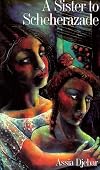
Isma and Hajila are both wives of the same man, but they are not rivals. Isma - older, vibrant, passionate, emancipated - is in stark contrast to the passive, cloistered Hajila. In alternating chapters, Isma tells her own story in the first person, and then Hajila's in the second person. She details how she escaped from the traditional restraints imposed upon the women of her country - and how, in making her escape, she condemns Hajila to those very restraints. When Hajila catches a glimpse show more of an unveiled woman, she realized that she, too, wants a life beyond the veil, and it is Isma who offers her the key to her own freedom. show lessTags
Recommendations






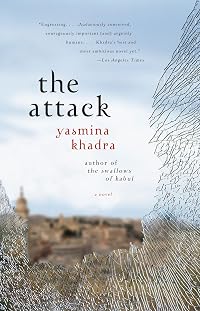

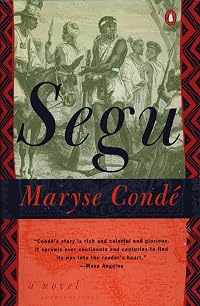

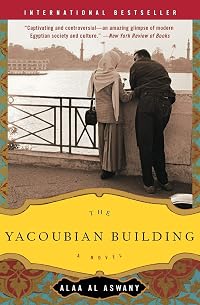
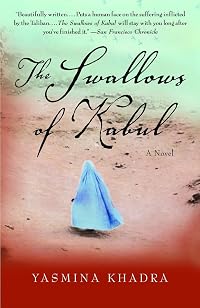


Member Recommendations
Member Reviews
This is the second volume of a "quartet" and I don't know how it relates and how much it depends on other books. If the characters recur, then it would be advisable to revisit the story on completion.
I wasn't in the mood for Djebar's lyrical, associative, impressionistic style so I don't feel I can do the book justice.
There are two women, Isma who speaks in her own voice, and Hajila whose chapters are told in the second person--it seems Isma is telling her story too.
Isma had, unknown to Hajila, arranged for the latter to become the second wife of Isma's husband. The husband is referred to only as "the man". Isma and "the man" had once been very much in love and have a child together, ten-year-old Meriem. There is also a younger boy, show more Nazim, whose mother is not Isma. Possibly (there is no hint to this in the book) it was the man's affair with Nazim's mother that ended the happiness in Isma's marriage?
In any case, Isma is looking forward to her replacement by Hajila as to her "liberation". For whatever reason she's not divorcing "the man" but they are not to live in the same town. Meriem doesn't like Hajila and asks to go to live with Isma, which is granted.
Hajila is forced into this marriage by her family's poverty. "The man" treats her like a slavey and governess and she herself appears not to expect anything other. There's no communication between them, Hajila spends her days in housework and talks only with the children. One day, while taking them to the park, she sees a woman playing with a baby. The woman, she thinks, must be Arab, native (hennaed hair), but she isn't wearing a veil, her whole being breathes freedom.
Hajila ventures outside one day when the children are in school, just a short distance, then takes off her veil and her cloak and starts walking around the neighbourhood like that. Just walking on her own in the city, without stopping or talking to anyone, is something epic for someone like her.
After six months reprieve (minus the excruciating sexual fondling she must endure when the man ritualistically calls for his ashtray), the man brutally rapes Hajila. She falls pregnant. The man starts drinking a lot and beats and almost kills her. Isma meets her a few times in the baths.
It's not clear to me whether Isma understands Hajila's miserable position, or whether she thinks she had done the poor girl a favour.
The fate of the characters is left hanging for the next volumes, I suppose.
"As you slow down, the woollen veil slips off your head; you try to imagine what you look like, bare-headed, your black hair drawn back. Now your long pigtail, that had been bunched up under the veil, emerges from hiding. You shrink back. Your hands reach for your neck, trembling:
"Out of doors... O Lord! O sweet Messenger of the Lord!"
You walk, you skip. This hawthorn hedge that suddenly appears... you could climb over it easily. On the other side of the street there is a ditch running along a fairly high wall: oh! to be able to look over it and satisfy a mischievous curiosity! You come to a sudden stop; with a dancer's sharp gesture, you shrug one shoulder, then the other; suddenly the woollen cloth falls about your hips, revealing your blouse. The wool of a shroud..." show less
I wasn't in the mood for Djebar's lyrical, associative, impressionistic style so I don't feel I can do the book justice.
There are two women, Isma who speaks in her own voice, and Hajila whose chapters are told in the second person--it seems Isma is telling her story too.
Isma had, unknown to Hajila, arranged for the latter to become the second wife of Isma's husband. The husband is referred to only as "the man". Isma and "the man" had once been very much in love and have a child together, ten-year-old Meriem. There is also a younger boy, show more Nazim, whose mother is not Isma. Possibly (there is no hint to this in the book) it was the man's affair with Nazim's mother that ended the happiness in Isma's marriage?
In any case, Isma is looking forward to her replacement by Hajila as to her "liberation". For whatever reason she's not divorcing "the man" but they are not to live in the same town. Meriem doesn't like Hajila and asks to go to live with Isma, which is granted.
Hajila is forced into this marriage by her family's poverty. "The man" treats her like a slavey and governess and she herself appears not to expect anything other. There's no communication between them, Hajila spends her days in housework and talks only with the children. One day, while taking them to the park, she sees a woman playing with a baby. The woman, she thinks, must be Arab, native (hennaed hair), but she isn't wearing a veil, her whole being breathes freedom.
Hajila ventures outside one day when the children are in school, just a short distance, then takes off her veil and her cloak and starts walking around the neighbourhood like that. Just walking on her own in the city, without stopping or talking to anyone, is something epic for someone like her.
After six months reprieve (minus the excruciating sexual fondling she must endure when the man ritualistically calls for his ashtray), the man brutally rapes Hajila. She falls pregnant. The man starts drinking a lot and beats and almost kills her. Isma meets her a few times in the baths.
It's not clear to me whether Isma understands Hajila's miserable position, or whether she thinks she had done the poor girl a favour.
The fate of the characters is left hanging for the next volumes, I suppose.
"As you slow down, the woollen veil slips off your head; you try to imagine what you look like, bare-headed, your black hair drawn back. Now your long pigtail, that had been bunched up under the veil, emerges from hiding. You shrink back. Your hands reach for your neck, trembling:
"Out of doors... O Lord! O sweet Messenger of the Lord!"
You walk, you skip. This hawthorn hedge that suddenly appears... you could climb over it easily. On the other side of the street there is a ditch running along a fairly high wall: oh! to be able to look over it and satisfy a mischievous curiosity! You come to a sudden stop; with a dancer's sharp gesture, you shrug one shoulder, then the other; suddenly the woollen cloth falls about your hips, revealing your blouse. The wool of a shroud..." show less
En bok om livet som kvinna i Algeriet. Man kan ju konstatera att jämlikhet mellan könen ligger något efter i den muslimska kulturen. Krävande bok men riktigt fin prosa.
Oct 19, 2012Swedish
Rystende skildring af kvindeliv i Algeriet. Lidt forvirrende til at begynde med indtil man finder ud af forbindelsen. Krævende, men meget poetisk sprog.
Jul 20, 2008Danish
Assi a Djebar,1936 - 2015, 2 Haremsfrauen Isma und Haljila flüchten,
Apr 3, 2015German
Ratings
Members
- Recently Added By
Lists

Arab and Arab Diaspora Literature We Recommend
112 works; 53 members
Author Information

27+ Works 1,559 Members
Assia Djebar was born Fatima-Zohra Imalayan in Cherchell, Algeria on June 30, 1936. She read history at the Sorbonne in Paris, and, after teaching at Tunis and Rabat universities, emigrated to France with her husband and children. Her first novel, La Soif (The Mischief), was published in 1957. She wrote more than 15 novels during her lifetime show more including Algerian White, So Vast the Prison, The Tongue's Blood Does Not Run Dry, and The Children of the New World. She was also a playwright and filmmaker. In 2005, she became the fifth woman to be elected to the Académie Française. She received numerous awards for her work including the International Prize of Palmi, the Peace Prize of the Frankfurt Book Fair, the International Critics' Prize at the Venice Biennale for the film La Nouba des Femmes du Mont Chenoua, and the International Literary Neustadt Prize. She died on February 7, 2015 at the age of 78. (Bowker Author Biography) show less
Some Editions
Awards and Honors
Awards
Notable Lists
Series

Belongs to Publisher Series
Common Knowledge
- Canonical title
- A Sister to Scheherazade
- Original title
- Ombre sultane
- Alternate titles*
- A Sister to Scheherazade; Skyggesøster
- Original publication date
- 1987
- People/Characters*
- Hajila; Isma; Touma; Meriem; Nazim; der Mann
- Important places*
- Algerien
- Epigraph*
- "Nie schien mir das Licht so schön."
Pierre Bonnard, 1946 - First words*
- Schatten und Sultanin; Schatten hinter der Sultanin.
- Quotations*
- Derra ... In Arabisch wird die neue Frau, die Rivalin der ersten Ehefrau des gleichen Mannes, mit diesem Wort bezeichnet, das "Wunde" bedeutet; sie ist diejenige, die verletzt, die Wunden öffnet, oder die selbst verletzt wir... (show all)d, das ist das gleiche!
- Last words*
- (Click to show. Warning: May contain spoilers.)Am Ende der langen Nacht ist die Sklavin auf der Flucht.
(Click to show. Warning: May contain spoilers.)(Epilog:) O meine Schwester, ich fürchte mich; dabei habe ich geglaubt, dich aufzuwecken. Ich habe Angst, daß wir alle beide, alle drei, daß wir alle - ausgenommen die Hebammen, die Mütter-Wärterinnen, die Großmütter-Totengräberinnen - von neuem gefesselt werden, hier in "diesem Okzident des Orients", diesem Ort auf Erden, wo die Morgenröte für uns so langsam aufgegangen ist, daß uns die Dämmerung schon wieder von allen Seiten umschließt. - Original language
- French
*Some information comes from Common Knowledge in other languages. Click "Edit" for more information.
Classifications
Statistics
- Members
- 133
- Popularity
- 246,344
- Reviews
- 4
- Rating
- (3.06)
- Languages
- 9 — Danish, Dutch, English, French, German, Italian, Norwegian (Bokmål), Spanish, Swedish
- Media
- Paper
- ISBNs
- 17