On This Page
Description
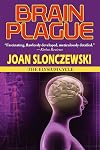
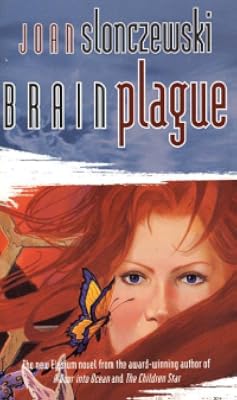
Brain Plague is the new hard SF novel by Joan Slonczewski, set in the same future universe as her award-winning A Door into Ocean and The Children Star (a New York Times Notable Book). An intelligent microbe race that can live symbiotically in other intelligent beings is colonizing the human race throughout the civilized universe.And each colony of microbes has its own personality, good or bad. In some people, carriers, they are brain enhancers, and in others a fatal brain plague, a living show more addiction. This is the story of one woman's psychological and moral struggle to adjust to having an ambitious colony of microbes living permanently in her own head. This novel is one of the most powerful and involving SF novels of the year. AUTHORBIO: Joan Slonczewski lives in Gambier, Ohio and teaches biology at Kenyon College. show lessTags
Recommendations
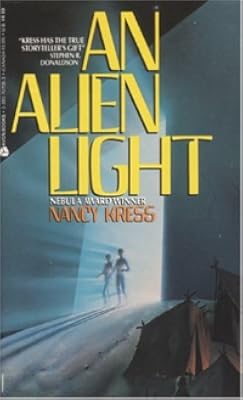
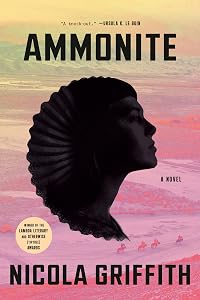
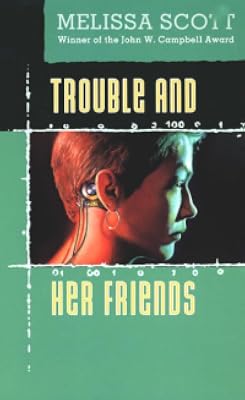
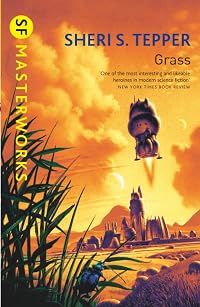
























Member Recommendations

sandstone78 For sentience at the microscopic level affecting human life and behavior.
kaydern Speculative fiction focusing on the interaction between humans and radically different alien species.
Member Reviews
Pros: brilliant world-building, fascinating characters, thought-provoking
Cons:
Chrysoberyl of Dolomoth is a pyroscape artist with the Seven Stars. In order to improve her financial and artistic positions she agrees to become a carrier. Carriers play host to sentient microbial symbionts, visible to the host via their optic neuroports. Chrys’ ‘people’, the Eleutherians, call her the God of Mercy, but they don’t always act in her best interests. And there are other strains of micros going around, ones that take over their hosts, turning them into vampires and drug addicts. These hosts eventually travel to the Slave World, a place no one ever returns from.
You’re dropped into this complex world with no explanation, so it takes a show more few chapters to become familiar with all the terms, characters, and ideas. You do learn about the micros and how being a carrier works along with Chrys, but there’s a lot outside of that to take in: Chrys’ art, elves, sentients, simians, the Underworld, vampires, anti-simian groups, etc. The world is multi-layered and realistically complex.
The characters, both humanoid and micro, are quite fascinating. Chris must learn how to deal with the little people in her head and their demands on her time (for themselves and for the larger micro community as a whole) while also continuing with her own life (her art, lost friends, religious family, learning how to handle money, personal relationships).
The book does… meander a bit. While there are several linear plot threads, there are also a fair number of asides into complementary issues. The author examines different problems associated with being a host, and how different hosts treat their people. It also goes into how the hosts treat each other - both in the carrier community and outside of it. Then there’s the inter-racial problems: simians and physician sentients face discrimination, elves believe their society is perfect and so ignore the real threat one of their members poses everyone, should micros have the same rights as carriers, etc.
I really enjoyed the book. It’s fascinating seeing the different groups interact, and the micros are so much fun. show less
Cons:
Chrysoberyl of Dolomoth is a pyroscape artist with the Seven Stars. In order to improve her financial and artistic positions she agrees to become a carrier. Carriers play host to sentient microbial symbionts, visible to the host via their optic neuroports. Chrys’ ‘people’, the Eleutherians, call her the God of Mercy, but they don’t always act in her best interests. And there are other strains of micros going around, ones that take over their hosts, turning them into vampires and drug addicts. These hosts eventually travel to the Slave World, a place no one ever returns from.
You’re dropped into this complex world with no explanation, so it takes a show more few chapters to become familiar with all the terms, characters, and ideas. You do learn about the micros and how being a carrier works along with Chrys, but there’s a lot outside of that to take in: Chrys’ art, elves, sentients, simians, the Underworld, vampires, anti-simian groups, etc. The world is multi-layered and realistically complex.
The characters, both humanoid and micro, are quite fascinating. Chris must learn how to deal with the little people in her head and their demands on her time (for themselves and for the larger micro community as a whole) while also continuing with her own life (her art, lost friends, religious family, learning how to handle money, personal relationships).
The book does… meander a bit. While there are several linear plot threads, there are also a fair number of asides into complementary issues. The author examines different problems associated with being a host, and how different hosts treat their people. It also goes into how the hosts treat each other - both in the carrier community and outside of it. Then there’s the inter-racial problems: simians and physician sentients face discrimination, elves believe their society is perfect and so ignore the real threat one of their members poses everyone, should micros have the same rights as carriers, etc.
I really enjoyed the book. It’s fascinating seeing the different groups interact, and the micros are so much fun. show less
This book in the same universe as Door Into Ocean and Daughter of Elysium is as different from them as they were from each other. Though many SFNal elements are shared with Daughter, where that book began slowly with mostly cultural observations spread over out several chapters, this book begins with an info-dump that in a few pages sets out a pulp novel baseline befitting its title: vampires (we would call them zombies these days) are biting people, spreading the brain plague, and taking their victims to the Slave World. The main character is an artist whose life on a slummy lower level involves avoiding both the vampires and cancerous patches of nanoplast, the material from which the entire city is built. After that blast from the show more 1930s, things settle down, perhaps a little too much. The main character stays fairly naive for a bit too long, while everyone around her knows more about what is going on than she does.
Still and all, this ends up being more the kind of biological SF that I had hoped for from this author. The core idea is intelligent microbes who colonize the arachnoid matter of the human brain. There are many -- um -- cultures of these microbes. Our hero's culture has grand artistic visions as she does but also subversive revolutionary ambitions. One of the best parts of the book's premise is that it leads to two parallel tales in two very different timeframes. Her story of gradual awakening to social issues and taking a stance takes place over a few months. The microbial timeframe is a several hundred times faster so a multi-generational saga is told of an evolving civilization. Another interesting idea is how each carrier (human with microbes) is like a different continent. There are occasional visits, invasions, and cultural assimilation of microbes from different hosts. The dangers in the relationship between carriers and microbes are several. There is the god-complex relationship between microbes and their hosts, which serves neither side well, but the bigger danger is that only cultural prohibitions -- and eventual host-death -- prevent the microbes from enslaving their hosts through the repeated triggering of the pleasure response via dopamine release. This tension -- that humans can and frequently do wipe out entire microbial civilizations and microbes can and frequently do enslave their hosts -- creates a solid base of tension throughout the book. The microbes are too human-like in my opinion, but I feel that way about the aliens in almost all SF.
The richness of ideas and awkwardness of exposition makes this book feel like a first novel, but the ideas win out. Recommended. show less
Still and all, this ends up being more the kind of biological SF that I had hoped for from this author. The core idea is intelligent microbes who colonize the arachnoid matter of the human brain. There are many -- um -- cultures of these microbes. Our hero's culture has grand artistic visions as she does but also subversive revolutionary ambitions. One of the best parts of the book's premise is that it leads to two parallel tales in two very different timeframes. Her story of gradual awakening to social issues and taking a stance takes place over a few months. The microbial timeframe is a several hundred times faster so a multi-generational saga is told of an evolving civilization. Another interesting idea is how each carrier (human with microbes) is like a different continent. There are occasional visits, invasions, and cultural assimilation of microbes from different hosts. The dangers in the relationship between carriers and microbes are several. There is the god-complex relationship between microbes and their hosts, which serves neither side well, but the bigger danger is that only cultural prohibitions -- and eventual host-death -- prevent the microbes from enslaving their hosts through the repeated triggering of the pleasure response via dopamine release. This tension -- that humans can and frequently do wipe out entire microbial civilizations and microbes can and frequently do enslave their hosts -- creates a solid base of tension throughout the book. The microbes are too human-like in my opinion, but I feel that way about the aliens in almost all SF.
The richness of ideas and awkwardness of exposition makes this book feel like a first novel, but the ideas win out. Recommended. show less
Oh, how I love Joan Slonczewski and the Door Into Ocean universe! So much so that I somehow got two copies of this from paperbackswap. Ooops. Once I got the second copy in the mail, it was clearly time to start reading one of them.
I believe this is the fourth book in the Elysium Cycle. It takes place soon after The Children Star. Like that book, this one continues to explore what it means to be sentient. Taking place back on Valedon, we follow an artist, Chrys, as Valans struggle to adapt to the influence of the micros from The Children Star. Some, elite members of society flourish with their "microbial enhancers," though they must be kept under close medical (and social) supervision. Ever the danger that they may fall prey to "the show more brain plague" -- "bad" micros who take over their hosts, keep them strung out, seeking arsenic, rewarded or punished by the neurochemicals the micros control -- ending up as shuffling "vampires" or hijacking ships to take to The Slave World -- the existence of which the Valan government (among others), is trying desperately to find.
Like all Slonczewski's work, this one explores fascinating ideas. The relationship between civilizations and their god, -- the need for genetic and cultural interchange between civilizations. The nature of addiction. Inequity in access to healthcare.
My only complaint of this book? The love scenes. Oh, my dear, sweet Lord, the love scenes. I still don't know what happened in the first of these -- but what I do know? It wasn't sexy. Even though it was a payoff to a relationship I had long been watching and hoping for. Thankfully, these instances are brief and confined to a short section of the novel.
I will continue to recommend Slonczewski's work far and wide. Though I will also continue recommending Door Into Ocean as the first work -- not only because it is the first book of the Elysium Cycle (as far as I know), but also remains, in my mind, the best. show less
I believe this is the fourth book in the Elysium Cycle. It takes place soon after The Children Star. Like that book, this one continues to explore what it means to be sentient. Taking place back on Valedon, we follow an artist, Chrys, as Valans struggle to adapt to the influence of the micros from The Children Star. Some, elite members of society flourish with their "microbial enhancers," though they must be kept under close medical (and social) supervision. Ever the danger that they may fall prey to "the show more brain plague" -- "bad" micros who take over their hosts, keep them strung out, seeking arsenic, rewarded or punished by the neurochemicals the micros control -- ending up as shuffling "vampires" or hijacking ships to take to The Slave World -- the existence of which the Valan government (among others), is trying desperately to find.
Like all Slonczewski's work, this one explores fascinating ideas. The relationship between civilizations and their god, -- the need for genetic and cultural interchange between civilizations. The nature of addiction. Inequity in access to healthcare.
My only complaint of this book? The love scenes. Oh, my dear, sweet Lord, the love scenes. I still don't know what happened in the first of these -- but what I do know? It wasn't sexy. Even though it was a payoff to a relationship I had long been watching and hoping for. Thankfully, these instances are brief and confined to a short section of the novel.
I will continue to recommend Slonczewski's work far and wide. Though I will also continue recommending Door Into Ocean as the first work -- not only because it is the first book of the Elysium Cycle (as far as I know), but also remains, in my mind, the best. show less
Chrysoberl is an artist just barely making her rent when she receives word: the medical experiment she volunteered for is ready for her. To her surprise, instead of a new drug she gets an entire race of microbial people who live inside her brain, patrol her body for ill-health, and worship her as a god. She and the microbial people enter into a tentative detente--she will feed them arsenic and give them light, and they won't turn her into a slave using their ability to manipulate her sensations of pain and pleasure.
This is the fourth and possibly last book in Slonczewski's acclaimed Elysium cycle, a series that spans a number of worlds and hundreds of years, yet never lost its personal touch. Like all of the books, the main character show more has personal problems and concerns, yet is still involved in a much larger social change or revolution taking place. And like the others, this book features a unique mix of hard sf (Slonczewski is fantastic at using biochem to create realistic aliens and future tech without ever infodumping) with a thoughtful exploration of morality. show less
This is the fourth and possibly last book in Slonczewski's acclaimed Elysium cycle, a series that spans a number of worlds and hundreds of years, yet never lost its personal touch. Like all of the books, the main character show more has personal problems and concerns, yet is still involved in a much larger social change or revolution taking place. And like the others, this book features a unique mix of hard sf (Slonczewski is fantastic at using biochem to create realistic aliens and future tech without ever infodumping) with a thoughtful exploration of morality. show less
I read this back when it was first published and felt the need to revisit it again, even to the point of buying two different copies of it.
Starving artist Chrysoberyl agrees as part of an experimental protocol to become the host to a community of sentient microbes. The specific strain she gets, Eutheria, turns out to be highly temperamental and creative. There is more than a bit of science fiction handwavium in the medicine and biology involved, but it gets right to the meat of the issue.
Most of the novel centers on multi-species ethics and responsibility. Humans are gods to the intelligent microbes, with the power of life and death. However the microbes are not powerless in this relationship, having the ability to control human beings show more by directly manipulating dopamine in the brain. On the one side are the Olympians who control their microbial populations through sometimes brutal executions and genocide. On the other side is the microbial Leader of Infinite Light who entraps humans with the promise of unending pleasure and addiction. The conflict of the novel centers on trying to find a compromise between these two extremes.
The setting is beautifully realized. Points I liked about it was the somewhat careful consideration of a culture in which inter-species relationships are potentially more scandalous than same-sex relationships, good development of Chrysoberyl as a heroine, and richly considered and detailed settings.
It falls a bit short in plot and pacing. It's hard to tell where the climax comes, and stretching out the romantic relationship was a bit strained. Chrysoberyl's solutions to problems works perhaps one more time than it should, and the shifts in supporting characters at the ending seem a bit too tidy for my taste. For a work that's so focused on biological aspects of cognition, it seems a bit glib regarding the possibilities that sexual orientation and gender identity might be physical. show less
Starving artist Chrysoberyl agrees as part of an experimental protocol to become the host to a community of sentient microbes. The specific strain she gets, Eutheria, turns out to be highly temperamental and creative. There is more than a bit of science fiction handwavium in the medicine and biology involved, but it gets right to the meat of the issue.
Most of the novel centers on multi-species ethics and responsibility. Humans are gods to the intelligent microbes, with the power of life and death. However the microbes are not powerless in this relationship, having the ability to control human beings show more by directly manipulating dopamine in the brain. On the one side are the Olympians who control their microbial populations through sometimes brutal executions and genocide. On the other side is the microbial Leader of Infinite Light who entraps humans with the promise of unending pleasure and addiction. The conflict of the novel centers on trying to find a compromise between these two extremes.
The setting is beautifully realized. Points I liked about it was the somewhat careful consideration of a culture in which inter-species relationships are potentially more scandalous than same-sex relationships, good development of Chrysoberyl as a heroine, and richly considered and detailed settings.
It falls a bit short in plot and pacing. It's hard to tell where the climax comes, and stretching out the romantic relationship was a bit strained. Chrysoberyl's solutions to problems works perhaps one more time than it should, and the shifts in supporting characters at the ending seem a bit too tidy for my taste. For a work that's so focused on biological aspects of cognition, it seems a bit glib regarding the possibilities that sexual orientation and gender identity might be physical. show less
Brain Plague by Joan Slonczewski is the forth book in the Elysium Cycle Series (the other three are A Door Into Ocean, Daughter of Elysium, and The Children Star) but it is also a stand-alone science fiction novel. In many ways Brain Plague encompasses a treatise on symbiotic relationships between individuals and societies, nanotechnology (with the microbes), artistic creativity, free will and personal responsibility, and what it means to be a god.
On the planet Valedon a struggling artist, Chrysoberyl (Chrys), agrees to be colonized by Eleutherian Micros, an race of intelligent, sentient microbes. The Micros live just beneath the skull, in the arachnoid, a web of tissue between the outer linings of the brain. They communicate with her show more neurally and live an accelerated life -something like an hour for us is a year to them.
Chrys accepts the Eleutherians Micros originally for better health care and a healthy bank account, as well as protection against the other, plague carrying Micros but soon they are helping her with her art, and serving as collaborators all while living a very accelerated life. Chrys' Micros can be helpful, annoying and rebellious.
While parts of the novel are very intriguing it does become bogged down as Chrys deals with her own rebellious Micros and the ever present and repeated threat of Plague-carrying slaves. Even though I liked the concept of worlds within worlds and enjoyed Brain Plague in many ways, I'm not sure it was entirely successful for me.
The biggest problem I had was the flaw I perceived in communication between humans and their Micros. Chrys and her Micros talked in real time to each other and other carriers but the Micros are supposed to be living a very accelerated life which, logically, makes that communication impossible to accept. Additionally, she would also threaten them with an eclipse (shutting her eyes for a short period of time) but that darkness would already be happening when she slept. I also became very tired of the word "plast." If I were giving numbers, this is a 3.5 -
Highly recommended - as long as you overlook the inconsistencies involving the accelerated time for the Micros. http://shetreadssoftly.blogspot.com/
show less
On the planet Valedon a struggling artist, Chrysoberyl (Chrys), agrees to be colonized by Eleutherian Micros, an race of intelligent, sentient microbes. The Micros live just beneath the skull, in the arachnoid, a web of tissue between the outer linings of the brain. They communicate with her show more neurally and live an accelerated life -something like an hour for us is a year to them.
Chrys accepts the Eleutherians Micros originally for better health care and a healthy bank account, as well as protection against the other, plague carrying Micros but soon they are helping her with her art, and serving as collaborators all while living a very accelerated life. Chrys' Micros can be helpful, annoying and rebellious.
While parts of the novel are very intriguing it does become bogged down as Chrys deals with her own rebellious Micros and the ever present and repeated threat of Plague-carrying slaves. Even though I liked the concept of worlds within worlds and enjoyed Brain Plague in many ways, I'm not sure it was entirely successful for me.
The biggest problem I had was the flaw I perceived in communication between humans and their Micros. Chrys and her Micros talked in real time to each other and other carriers but the Micros are supposed to be living a very accelerated life which, logically, makes that communication impossible to accept. Additionally, she would also threaten them with an eclipse (shutting her eyes for a short period of time) but that darkness would already be happening when she slept. I also became very tired of the word "plast." If I were giving numbers, this is a 3.5 -
Highly recommended - as long as you overlook the inconsistencies involving the accelerated time for the Micros. http://shetreadssoftly.blogspot.com/
show less
review of
Joan Slonczewski's Brain Plague
by tENTATIVELY, a cONVENIENCE - June 9, 2015
I've only read one previous bk by Slonczewski, A Door into Ocean (1986) ( https://www.goodreads.com/book/show/121606.A_Door_Into_Ocean?search_version=serv... ). Much to my surprise, I haven't reviewed it - wch means that I read it no later than the middle of 2007: 8 yrs ago! I liked it but I haven't managed to read a single other thing by her in what seems like a rather long ensuing period.
A Door into Ocean was remarkable for its thorough depiction of passive & successful resistance to aggressive imperialism - set in a Science Fiction context. I was impressed by what seemed like the authenticity of the author's engagement w/ such a political show more position.
Brain Plague (2000) is different. There's a fairly deep non-oversimplifying socio-political sensitivity to it but it's not as much the central content as it is woven into the overall plot fabric. The bk's dedicated "For Elizabeth Anne Hull and Frederik Pohl" Hull is described on Frederik Pohl's "The Way the Future Blogs" as:
"Blond and brainy, Elizabeth Anne Hull (known as Betty to most of her friends and called Betty Anne by her husband, Frederik Pohl), is Professor Emerita of William Rainey Harper College in Palatine, Illinois, where she taught English and science fiction for over 30 years, earning the school’s Distinguished Faculty Award in 1997. The Alumni Association of Northwestern University honored Betty’s contributions to her profession with its Award of Merit in 1995.
Betty has authored essays and short stories, lectured on sf around the world, and led many writing workshops. She edited the anthologies Gateways: Original New Stories Inspired by Frederik Pohl and, with Fred, Tales from the Planet Earth." - http://www.thewaythefutureblogs.com/elizabeth-anne-hull/
Pohl himself, is one of my favorite SF writers & one that I've found to be consistently politically sensitive. Slonczewsk is a biology prof. Brain Plague is about the potentials of microbe communities interfacing w/ human hosts for their mutual benefit or detriment. The hosts become 'Gods' for the microbes insofar as they become the microbe's world upon wch they're dependent. Unintentionally, I followed this novel w/ an intelligent-bacterial-community-vis-à-vis-human-hosts one called Vitals (2002) by Greg Bear so I'm somewhat inundated w/ informed biological prediction at the moment.
Not surprisingly (given conventional novelistic development), the reader is slowly introduced to the "brain plague" & its implications, starting off in a Draconian way:
"The brain-plagued hijackers shipped their captives to the hidden Slave World, where they were building an armed fortress for their mysterious Enlightened Leader," - p 14
Eventually the Slave World is depicted like an opium den: "Within the room full of cots, the air was fetid, and flies settled everywhere. The slaves barely treated their wastes, either, she guessed. The humans, all thin and pale, seemd mostly asleep, although some sat up in chairs, their eyes glazed, rocking. One was being spoon-fed by a slave. "Rose? Is this what you call Endless Light?" (p 285)
In between, we learn that:
""Micros are intelligent," he said.
""Well, sure." Intellient buildings, intelligent medical machines—everything was "intelligent" these days.
""Intelligent people."" - p 30
Yes, but are they DIGITAL?! & do they listen to IDM?!
The artist protagonist becomes known to the micros that she hosts as the "God of Mercy" b/c she doesn't usually take advantage of her ability to kill rebellious micros:
"Chrys started to reply but thought better of it. She spread her hands. "If you kill the minion, that's the way to make the whole population read her stuff. Believe me."
""Your population," Selenite corrected. "Mine know better. Very well, you may keep her—but if she ever returns to my arachnoid, she's dead."" - p 140
I'm always interested in the way neologisms work their way into common usage in SF & elsewhere: Heinlein's "waldos" being one example. I don't know who coined "nanoplast" (nanotechnology plastic) but I did find multiple industry references for such a product online. Here's an example:
"Nano-Plast coating is a natural, invisible and ultra thin, “breathing” and environmentally friendly coating optimally developed for the plastics industries, for polymer, synthetic surfaces, characterized by various plastic compositions and shades.
"The material excels in massive chemical durability to abrasion, with phenomenal lifespan extending properties for repelling water (hydrophobic) oil (oleophobic)." - http://www.nanoztec.com/Nano-Plast-NP-300-400.html
Slonczewski refers to it: "A breeze from the sea swept her face as it keened across the towers of plast—nanoplast, the intelligent material that grew vast sentient buildings, as easily as it grew the nanotex bodysuits the artists wore. Plast formed the bubble cars that glided over the intelligent pavement". Clearly Slonczewski sees this as a 'material of the (near) future' &, yes, there's a Nanotex company already!: http://www.nano-tex.com/ . Does Slonczewski take money from them to promote their products?
I'm also interested in SF writers cross-referencing each other in other ways: ""Moraeg and Carnelian left for Solaris right after the show, as usual." Solaris, the number one leisure world" (p 141) Solaris, the name of a Stanislav Lem novel & 2 movies based on it: 1 by Tarkovsky, 1 by Soderbergh. Solaris is a thinking ocean planet that finds things in human observer minds that it then somehow materializes for them. It's hard to imagine that Slonczewski isn't making a bit of an inter-textual joke here.
Then there's "wetware". Who originated the term? I don't know. I 1st ran across it in (a) novel(s) by Rudy Rucker.
"Though its exact definition has shifted over time, the term Wetware and its fundamental reference to "the physical mind" has been around from the mid-1950s. Mostly used in relatively obscure articles and papers, it was not until the heyday of cyberpunk, however, that the term found broad adoption. Among these first uses of the term in popular culture were the 1987 novel "Vacuum Flowers" by Michael Swanwick as well as several books from the hand of Rudy Rucker, one of which he titled "Wetware"." - http://en.wikipedia.org/wiki/Wetware_(brain)
"The chair of the board was the giant black sea urchin, reputedly a top market investor like Garnet. Its twenty-odd limbs stood out straight from its body, each ending in a different mechanism for grasping, screwing, or drawing. The sea urchin methodically reviewed the city's needs: so much residential volume, of a dozen categories, from snake-egg to transit system; so many power connections, service conduits, and seage lines; and something called "wetware."" - Brain Plague, p 276
Health insurance is even more of a hot button topic than it was in 2000 when this was copyrighted:
""What a nuisance," agreed Topaz. "Back to the clinic and wait two hours." Topaz and Pearl had Comprehensive Health Care Plan Three. They could afford Plan Three, thanks to the sale of Topaz's portraits. Lady Moraeg, on Plan Ten, looked twenty years for her two hundred. Chrys got by on Plan One, which provided neuroports but did not service them." - p 16
Ah, yes, health insurance in the US - even under the NOT-Affordable Health Care Act it ultimately boils down s/he-who-has-the-money-gets-the-care - wch means the biggest crooks get to live longest. Crime does pay after all, esp if you're connected to Haliburton or some other warlord manifestation masquerading as peace-keeping & reconstruction. Being on Plan Ten enables one to choose their age: "The plan rep molded to the holostage. "Now, according to our records," she observed, "you have yet to choose your age and appearance."" (p 59)
Slonczewski's main character is an artist. "She blinked to close her window for the night, then set the volcano above her bed to explode at seven in the morning." (p 23) Ha ha! I had an alarm clock that was designed to look like a block of dynamite.
The micros make Chrys rich by funneling their architectural genius thru her: "The roots of the Comb spread gradually wider through each level they penetrated. At the seventeenth level, the roots housed a shopping center frequented by middle-class simians and university students. That was the level Selenite chose to inject the virus containing all the instructions the micros had programmed." (pp 168-169) I suppose that's the "root-down" theory instead of the "trickle-down" one.
In Slonczewski's future, the Theremin has become a portable instrument for minstrels: "By the twelfth course, the golden servers started strolling with harp and theremin". (p 203)
One of the funnier touches is when a microbial artist encourages the human artist who hosts her to start making what's tantamount to microbial porn:
"The next one drew silence, and the next. A very long silence.
""Well?"
""They're . . . effective," he admitted, his eyes still focused.
""Should I show them in public?"
""I don't know. You might get a reputation."
""I knew it," she exclaimed. "I knew that Jonquil would have me peddling porn."
""The children look okay," he assured her. "They're just doing what micro children naturally do. But elders—or elders with children—that's profoundly disturbing."" - p 213
An 'elder' microbe having sex w/ a 'child' microbe is something a bit hard for a human being to imagine. It's too anthropomorphic - but anthropomorphizing microbes is a large part of what this bk is about:
"Incapable of work, the grayish ring jostled aimlessly among the red cells, begging for vitamins. Fireweed brushed its filaments to pass it a few.
" "Why?" asked Jonquil. "Why prolong its miserable existence?"
" "The One True God decreed, 'Love Me, love My people.'"
" "You call that brainless microbe a person?" Mutant children whose brains failed to reach Eleutherian standards were barred from the nightclubs, never eexposed to the pheremones that ripened for breeding, nor did they mature as elders. Worth no more than a virus.
" "There, but for a twist of DNA, go you or I," flashed Fireweed. "All people are one."" - p 222
Microbe 'charity'. I wonder if organized versions of it has CEOs who make enormous profits off donations while very little actually goes to helping anyone. show less
Joan Slonczewski's Brain Plague
by tENTATIVELY, a cONVENIENCE - June 9, 2015
I've only read one previous bk by Slonczewski, A Door into Ocean (1986) ( https://www.goodreads.com/book/show/121606.A_Door_Into_Ocean?search_version=serv... ). Much to my surprise, I haven't reviewed it - wch means that I read it no later than the middle of 2007: 8 yrs ago! I liked it but I haven't managed to read a single other thing by her in what seems like a rather long ensuing period.
A Door into Ocean was remarkable for its thorough depiction of passive & successful resistance to aggressive imperialism - set in a Science Fiction context. I was impressed by what seemed like the authenticity of the author's engagement w/ such a political show more position.
Brain Plague (2000) is different. There's a fairly deep non-oversimplifying socio-political sensitivity to it but it's not as much the central content as it is woven into the overall plot fabric. The bk's dedicated "For Elizabeth Anne Hull and Frederik Pohl" Hull is described on Frederik Pohl's "The Way the Future Blogs" as:
"Blond and brainy, Elizabeth Anne Hull (known as Betty to most of her friends and called Betty Anne by her husband, Frederik Pohl), is Professor Emerita of William Rainey Harper College in Palatine, Illinois, where she taught English and science fiction for over 30 years, earning the school’s Distinguished Faculty Award in 1997. The Alumni Association of Northwestern University honored Betty’s contributions to her profession with its Award of Merit in 1995.
Betty has authored essays and short stories, lectured on sf around the world, and led many writing workshops. She edited the anthologies Gateways: Original New Stories Inspired by Frederik Pohl and, with Fred, Tales from the Planet Earth." - http://www.thewaythefutureblogs.com/elizabeth-anne-hull/
Pohl himself, is one of my favorite SF writers & one that I've found to be consistently politically sensitive. Slonczewsk is a biology prof. Brain Plague is about the potentials of microbe communities interfacing w/ human hosts for their mutual benefit or detriment. The hosts become 'Gods' for the microbes insofar as they become the microbe's world upon wch they're dependent. Unintentionally, I followed this novel w/ an intelligent-bacterial-community-vis-à-vis-human-hosts one called Vitals (2002) by Greg Bear so I'm somewhat inundated w/ informed biological prediction at the moment.
Not surprisingly (given conventional novelistic development), the reader is slowly introduced to the "brain plague" & its implications, starting off in a Draconian way:
"The brain-plagued hijackers shipped their captives to the hidden Slave World, where they were building an armed fortress for their mysterious Enlightened Leader," - p 14
Eventually the Slave World is depicted like an opium den: "Within the room full of cots, the air was fetid, and flies settled everywhere. The slaves barely treated their wastes, either, she guessed. The humans, all thin and pale, seemd mostly asleep, although some sat up in chairs, their eyes glazed, rocking. One was being spoon-fed by a slave. "Rose? Is this what you call Endless Light?" (p 285)
In between, we learn that:
""Micros are intelligent," he said.
""Well, sure." Intellient buildings, intelligent medical machines—everything was "intelligent" these days.
""Intelligent people."" - p 30
Yes, but are they DIGITAL?! & do they listen to IDM?!
The artist protagonist becomes known to the micros that she hosts as the "God of Mercy" b/c she doesn't usually take advantage of her ability to kill rebellious micros:
"Chrys started to reply but thought better of it. She spread her hands. "If you kill the minion, that's the way to make the whole population read her stuff. Believe me."
""Your population," Selenite corrected. "Mine know better. Very well, you may keep her—but if she ever returns to my arachnoid, she's dead."" - p 140
I'm always interested in the way neologisms work their way into common usage in SF & elsewhere: Heinlein's "waldos" being one example. I don't know who coined "nanoplast" (nanotechnology plastic) but I did find multiple industry references for such a product online. Here's an example:
"Nano-Plast coating is a natural, invisible and ultra thin, “breathing” and environmentally friendly coating optimally developed for the plastics industries, for polymer, synthetic surfaces, characterized by various plastic compositions and shades.
"The material excels in massive chemical durability to abrasion, with phenomenal lifespan extending properties for repelling water (hydrophobic) oil (oleophobic)." - http://www.nanoztec.com/Nano-Plast-NP-300-400.html
Slonczewski refers to it: "A breeze from the sea swept her face as it keened across the towers of plast—nanoplast, the intelligent material that grew vast sentient buildings, as easily as it grew the nanotex bodysuits the artists wore. Plast formed the bubble cars that glided over the intelligent pavement". Clearly Slonczewski sees this as a 'material of the (near) future' &, yes, there's a Nanotex company already!: http://www.nano-tex.com/ . Does Slonczewski take money from them to promote their products?
I'm also interested in SF writers cross-referencing each other in other ways: ""Moraeg and Carnelian left for Solaris right after the show, as usual." Solaris, the number one leisure world" (p 141) Solaris, the name of a Stanislav Lem novel & 2 movies based on it: 1 by Tarkovsky, 1 by Soderbergh. Solaris is a thinking ocean planet that finds things in human observer minds that it then somehow materializes for them. It's hard to imagine that Slonczewski isn't making a bit of an inter-textual joke here.
Then there's "wetware". Who originated the term? I don't know. I 1st ran across it in (a) novel(s) by Rudy Rucker.
"Though its exact definition has shifted over time, the term Wetware and its fundamental reference to "the physical mind" has been around from the mid-1950s. Mostly used in relatively obscure articles and papers, it was not until the heyday of cyberpunk, however, that the term found broad adoption. Among these first uses of the term in popular culture were the 1987 novel "Vacuum Flowers" by Michael Swanwick as well as several books from the hand of Rudy Rucker, one of which he titled "Wetware"." - http://en.wikipedia.org/wiki/Wetware_(brain)
"The chair of the board was the giant black sea urchin, reputedly a top market investor like Garnet. Its twenty-odd limbs stood out straight from its body, each ending in a different mechanism for grasping, screwing, or drawing. The sea urchin methodically reviewed the city's needs: so much residential volume, of a dozen categories, from snake-egg to transit system; so many power connections, service conduits, and seage lines; and something called "wetware."" - Brain Plague, p 276
Health insurance is even more of a hot button topic than it was in 2000 when this was copyrighted:
""What a nuisance," agreed Topaz. "Back to the clinic and wait two hours." Topaz and Pearl had Comprehensive Health Care Plan Three. They could afford Plan Three, thanks to the sale of Topaz's portraits. Lady Moraeg, on Plan Ten, looked twenty years for her two hundred. Chrys got by on Plan One, which provided neuroports but did not service them." - p 16
Ah, yes, health insurance in the US - even under the NOT-Affordable Health Care Act it ultimately boils down s/he-who-has-the-money-gets-the-care - wch means the biggest crooks get to live longest. Crime does pay after all, esp if you're connected to Haliburton or some other warlord manifestation masquerading as peace-keeping & reconstruction. Being on Plan Ten enables one to choose their age: "The plan rep molded to the holostage. "Now, according to our records," she observed, "you have yet to choose your age and appearance."" (p 59)
Slonczewski's main character is an artist. "She blinked to close her window for the night, then set the volcano above her bed to explode at seven in the morning." (p 23) Ha ha! I had an alarm clock that was designed to look like a block of dynamite.
The micros make Chrys rich by funneling their architectural genius thru her: "The roots of the Comb spread gradually wider through each level they penetrated. At the seventeenth level, the roots housed a shopping center frequented by middle-class simians and university students. That was the level Selenite chose to inject the virus containing all the instructions the micros had programmed." (pp 168-169) I suppose that's the "root-down" theory instead of the "trickle-down" one.
In Slonczewski's future, the Theremin has become a portable instrument for minstrels: "By the twelfth course, the golden servers started strolling with harp and theremin". (p 203)
One of the funnier touches is when a microbial artist encourages the human artist who hosts her to start making what's tantamount to microbial porn:
"The next one drew silence, and the next. A very long silence.
""Well?"
""They're . . . effective," he admitted, his eyes still focused.
""Should I show them in public?"
""I don't know. You might get a reputation."
""I knew it," she exclaimed. "I knew that Jonquil would have me peddling porn."
""The children look okay," he assured her. "They're just doing what micro children naturally do. But elders—or elders with children—that's profoundly disturbing."" - p 213
An 'elder' microbe having sex w/ a 'child' microbe is something a bit hard for a human being to imagine. It's too anthropomorphic - but anthropomorphizing microbes is a large part of what this bk is about:
"Incapable of work, the grayish ring jostled aimlessly among the red cells, begging for vitamins. Fireweed brushed its filaments to pass it a few.
" "Why?" asked Jonquil. "Why prolong its miserable existence?"
" "The One True God decreed, 'Love Me, love My people.'"
" "You call that brainless microbe a person?" Mutant children whose brains failed to reach Eleutherian standards were barred from the nightclubs, never eexposed to the pheremones that ripened for breeding, nor did they mature as elders. Worth no more than a virus.
" "There, but for a twist of DNA, go you or I," flashed Fireweed. "All people are one."" - p 222
Microbe 'charity'. I wonder if organized versions of it has CEOs who make enormous profits off donations while very little actually goes to helping anyone. show less
Members
- Recently Added By
Lists

Favorite Science Fiction by Women Authors
741 works; 203 members
Author Information

17+ Works 2,565 Members
Awards and Honors
Awards
Series

Common Knowledge
- Canonical title
- Brain Plague
- Original publication date
- 2000
Classifications
Statistics
- Members
- 324
- Popularity
- 98,682
- Reviews
- 7
- Rating
- (3.96)
- Languages
- English, Hungarian
- Media
- Paper, Ebook
- ISBNs
- 5
- ASINs
- 3