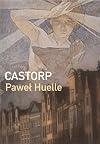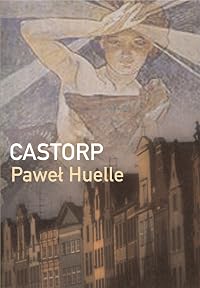
Castorp
by Paweł Huelle
On This Page
Description
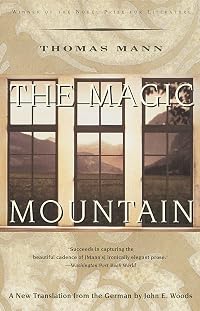
Shortlisted for theIndependent Foreign Fiction Prize, 2008 "Delightful . . . gently, deceptively provocative."--The Observer "Full of depth and allusion . . . wonderfully absurd humour."--The Independent on Sunday Inspired by Thomas Mann'sThe Magic Mountain,Castorp recounts Hans Castorp's student years in Gdansk, Poland. Pawel Huelle imagines what happened when Castorp encounters people, events, and ideas that anticipate the years to come, including an enigmatic woman who becomes his show more obsession. Set at the dawn of the twentieth century,Castorp conveys with elegant restraint the accelerating pressure as Europe hurtles toward the First World War. Pawel Huelle is a novelist, playwright, and newspaper columnist. He lives in Gdansk, Poland. His previous novels includeMercedes-Benz. show lessTags
Recommendations



















Member Reviews
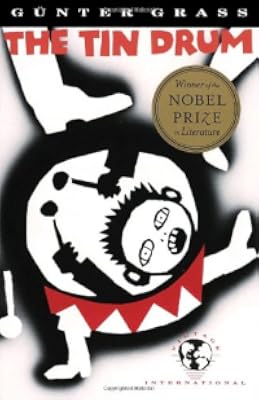
This story of Hans Castorp's school days in Danzig works pretty well on its own as a shrewd and fluent amusement, and the amusement is doubled and trebled by little references to Schnitzler's Traumnovelle or Grass's Danzig novels, but it's of course the new lens it brings to The Magic Mountain that's the real point of interest. Huelle precapitulates Mann's novel for purposes that are often straight-up satirical, like the conversations in the bathhouse between the English proto-Settembrini (we need a word or suffix for "proto-" but with an implication of already-in-the-context-of-the-thing-being-protoedness, in other words, a situation where proto-x comes before x but is nevertheless framed by it) and the German proto-Naphta, or the way show more the Decline-of-the-West pre-WWI stuff with Clavdia Chauchat about Germans and Slavs in the original gets made explicit here--at the end, rolled out in more or less thesis form by a sudden 21st-century narrator. But the book goes deeper too, and the fact that these things happened, will have happened, had already happened, had always had to happen, before the events of the MM changes Castorp from a sheepish Everyman into someone a bit numinous, a character to whom unexpected journeys to magical kingdoms and the descent of visions suffused with yearning are destined to happen, and whose ultimate destiny (I won't spoil the end of The Magic Mountain here) makes him a kind of dreamy blankish slate forced into the role of representative of and sacrificial lamb for the old bourgeois Europe. When Hans is caught looking out the window in math class and oh-snaps the professor with a heavy nineteenth-century comeback about Fermat's last theorem, the other students don't start to call him Cloudgazer or imbue him a reputation for legendary wit. They call him "Practical Castorp," against all the evidence. He's being forced into the role. This makes his Maria Mancinis and good meals and punctilious habits no longer cloying physical indulgences but humanizing details, and his bicycle rides, like the later walk in the snow, attempts to escape the role. It makes the essence of Castorp not practicality and innocence but enchantment and doom--and looking back, all four things were true of the pre-war world. Thus, the two-part story that Castorp and The Magic Mountain now become are revealed as a walk to the gallows no longer of a decadent and distracted world that doesn't know it's coming, but of an agitated and desperate one that suspects, and isn't yet aware that it suspects, but is looking desperately for a way out that isn't there, not in the highest mountain or the fluffiest Baltic cloud. show less
Ratings
Members
- Recently Added By
Author Information

Some Editions
Awards and Honors
Notable Lists
Work Relationships
Was inspired by
Common Knowledge
- Canonical title*
- Castorp
- Original title
- Castorp
- Original publication date
- 2004 (original Polish) (original Polish); 2007 (English: Lloyd-Jones) (English: Lloyd-Jones)
- People/Characters
- Hans Castorp
- Important places
- Gdańsk, Pomeranian Voivodeship, Poland; Sopot, Pomorskie, Polen
*Some information comes from Common Knowledge in other languages. Click "Edit" for more information.
Classifications
- Genres
- Fiction and Literature, General Fiction, Historical Fiction
- DDC/MDS
- 891.8538 — Literature & rhetoric Literatures of other languages East Indo-European and Celtic literatures West and South Slavic languages (Bulgarian, Slovene, Polish, Czech, Slovak, Serbo-Croatian, and Macedonian) Polish Polish fiction 1989–
- LCC
- PG7167 .U86 .C3713 — Language and Literature Slavic languages and literatures. Baltic languages. Albanian language Slavic. Baltic. Albanian Slavic Polish
- BISAC
Statistics
- Members
- 70
- Popularity
- 449,631
- Reviews
- 1
- Rating
- (3.77)
- Languages
- 5 — English, German, Hungarian, Polish, Spanish
- Media
- Paper
- ISBNs
- 8